wayground logo

Free Printable Worksheets

Font size

S
M
L
XL
Worksheets

Intro to Chem Chapter 2 Review Honors Biology

Total questions: 71

Worksheet time: 48mins

Name
Class
Date
1.
Atoms that have the same number of protons, but different neutrons are... 
a)
ions
b)
atoms
c)
isotopes
d)
none of these 
2.
How are the elements arranged on the Periodic Table?
a)
Alphabetical order by name
b)
Increasing Mass
c)
Increasing Atomic number
d)
Alphabetical order by symbol 
3.
What is the function of the proton? 
a)
controls mass
b)
controls charge
c)
defines the element
d)
none of the above 
4.
What is the atomic number of this isotope? 
a)
6
b)
14
c)
8
d)
none of these 
5.
How many neutrons does this isotope of Carbon have? 
a)
6
b)
14
c)
8
d)
none of these 
6.
How many valence electrons does C have? 
a)
6
b)
4
c)
12
d)
none of these 
7.

An atom of Sodium has 11 protons, 12 neutrons and 11 electrons. What is the mass number of Sodium?

a)

11

b)

23

c)

1

d)

22

8.

How many electrons can the second energy level hold?

a)

2

b)

8

c)

18

d)

unlimited

9.

These electrons are located on the outermost energy level.

a)

Valence

b)

negative

c)

opposite

d)

Cation

10.

Which two particles have a charge?

a)

protons and electrons

b)

protons and neutrons

c)

neutrons and electrons

d)

All three particles have a charge.

11.
What two elements make up water?
a)
Helium and oxygen
b)
Hydrogen and oxygen
c)
helium and carbon
d)
oxygen and carbon
12.
What word describes when water is attracted to other substances?
a)
cohesion
b)
adhesion
c)
capillary action
d)
surface tension
13.
Attractions between the negative Oxygen atom of one water molecule and the positive Hydrogen atom of another water molecule are called
a)
Covalent bonds
b)
Ionic bonds
c)
Polar bonds
d)
Hydrogen bonds
14.
Why does ice float?
a)
As water freezes, it expands and its density decreases.
b)
As water freezes, it takes up more hydrogen from the atmosphere, causing it to have a greater buoyancy.
c)
As water freezes, air becomes trapped between the hydrogen bonds of water molecules.
d)
As water freezes, it takes up more oxygen from the atmosphere, causing it to have a greater buoyancy.
15.
Which end of the water molecule has a slightly positive charge?
a)
the oxygen end
b)
the hydrogen end
c)
both ends are slightly positive
d)
neither end is positive
16.
Water is a universal solvent because it...
a)
It can be found anywhere
b)
It freezes when it gets cold
c)
floats when frozen
d)
Dissolves most substances
17.
Which of the following is LEAST likely to dissolve in water?
a)
nonpolar fats and oils
b)
polar sugar molecules
c)
salt made of a positive sodium ion and a negative chloride ion
d)
all of the substances will dissolve easily in water
18.
Large bodies of water, such as lakes and oceans, do not quickly fluctuate in temperature. What is the reason for this phenomenon?
a)
Water is an acid.
b)
Water is a versatile solvent.
c)
Water has a high heat capacity.
d)
 Water acts as a buffer.
19.
 Small insects can walk across the surface of calm water. Their feet push the surface of the water down slightly, somewhat like a person walking across a trampoline, but they do not break the surface. What is the best explanation for why this happens?
a)
The insects are light enough so that they do not break the hydrogen bonds holding the water molecules together
b)
The insects actually use their wings to hover slightly above the water's surface and they only skim it with their feet
c)
The insects' feet are non-polar, so they are repelled by the polar water molecules and are pushed away from the water's surface
d)
The insects are small enough to see the individual water molecules, so they are able to step carefully from one molecule to the next
20.
Why does water move from the roots to the leaves of plants?
a)
Water is pushed by solutes
b)
Capillary action pulls the water molecules like a chain
c)
Water is pulled by gravity
d)
Water’s cohesion causes it to “pull” towards the leaves
21.
A(n) _______ is a substance with a pH greater than 7.
a)
Base
b)
Acid
c)
Buffer
d)
Water
22.
What is the only substance with a neutral pH of 7?
a)
Milk
b)
Orange Juice
c)
Water
d)
Blood
23.

Surface tension of the water is the cohesive force between water molecule on the surface of water.

a)

True

b)

False

24.
Large bodies of water do not quickly fluctuate in temperature. Why?
a)
Water is a solvent.
b)
Water has a high heat capacity.
c)
Water acts as a buffer.
d)
Water is non-polar.
25.
The fact that ice floats on liquid water is due to the fact that water's solid is ___________ than it's liquid form
a)
less polar
b)
more polar
c)
less dense
d)
more dense
26.
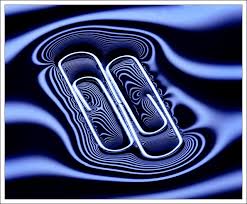
The tightness across the surface of water that enables paper clips to float is ____________.
a)
adhesion
b)
capillary action
c)
surface tension
d)
polarity
27.
Large bodies of water help to keep nearby climates from being too hot or too cold  because they...
a)
absorb heat in the spring and slowly release that heat in the fall
b)
absorb heat in the fall and slowly release that heat in the spring
c)
absorb heat in the summer and slowly release that heat in the winter
d)
absorb heat in the winter and slowly release that heat in the summer
28.
In a water molecule the hydrogen and oxygen atoms hold together by sharing _________.
a)
protons 
b)
neutrons
c)
electrons
d)
nuclei
29.
Water is often called the "universal solvent" because many substances can be dissolved in water. What property of water allows it to be such a versatile solvent? 
a)
purity
b)
polarity and cohesion
c)
high heat capacity
d)
expansion upon freezing
30.
A florist places a bouquet of white carnations in water containing blue dye. After a time, the flowers turn blue. What process helped the carnations to change color?
a)
Specific heat 
b)
Surface tension
c)
Cohesion and adhesion of water molecules 
d)
Formation of covalent bonds between hydrogen and oxygen molecules
31.
Water has a much higher specific heat than most other covalent compounds. What do you predict might happen if water had a low specific heat instead?
a)
Flooding would occur and animals would be forced to migrate
b)
 Harmful organisms living in water would reproduce at a rapid rate
c)
Organisms that are sensitive to changes in temperature would die
d)
Plants would not have enough water to effectively carry out photosynthesis
32.
 Which of the following characteristics of water is not a result of hydrogen bonding?
a)
adhesive strength
b)
capillarity
c)
cohesive strength
d)
All of the above are a result of hydrogen bonding.
33.
 Many fish and aquatic plants can survive a cold winter because the layer of ice that forms at the top of the lake insulates the water below and prevents the lake from freezing solid. What unique property of water contributes to this effect? 
a)
Water absorbs heat when it evaporates and forms a gas 
b)
 Water expands and becomes less dense when it freezes.
c)
Water molecules completely separate into ions in solutions.
d)
 Water forms hydrogen bonds with ions and other polar substances. 
34.

Which is the correct formula for the breakdown of water?

a)

2 H2O → H3O+ + OH-

b)

2 H3O → H2O- + OH+

c)

H3O+ + OH- → 2 H2O

d)

6H2O → 3H3O+ + 3OH-

35.

Name the products of the chemical reaction that breaks down water. (Check all that apply)

a)

ammonium (N4+)

b)

water (H2O)

c)

hydroxide ion(OH-)

d)

hydronium ion (H3O+)

e)

glucose (C6H12O6)

36.

Which is the correct definition for acidity?

a)

The concentration of hydroxide ions in a solution.

b)

The concentration of hydrogen is a solution

c)

The concentration of water ions in a solution

d)

The concentration of hydronium ions in a solution.

37.

the H in pH stands for

a)

hood

b)

happy

c)

hydrogen

d)

help

38.

a base has a pH of

a)

lower than 7

b)

higher than 7

c)

7

d)

it only has a pOH

39.

the more H+ ions the

a)

stronger the acid

b)

weaker the acid

c)

it neutralizes

40.
Human blood has a pH between 7.35 and 7.45. Which of the following best describes human blood?
a)
strongly acidic
b)
slightly acidic
c)
strongly basic
d)
slightly basic
41.
Which of these pH values would indicate that a solution is a weak base?
a)
4
b)
5.6
c)
8
d)
13
42.
Buffer is defined as
a)
ability to resist pH change
b)
ability to prevent pH from decreasing
c)
ability to resist a pH increase
d)
ability to resist pH change when small amount of acid added
43.

What might happen if buffers did not exist within the human body?

a)

Our blood and other bodily fluids might become too acidic or basic.

b)

Our stomach acid would not be able to break down food.

c)

We would not be able to process glucose within our cells.

d)

We would not be able to inhale oxygen into our lungs.

44.
Complete the sentence.
A substance that is more basic has a _____ pH than a substance that is acidic.
a)
lower
b)
higher
c)
the same
d)
none of the above
45.

In a test of pH levels, a baking soda has a pH of 9 and bleach has a pH of 12. What is true about there relationship?

a)

Both of the solution are Bases

b)

Both of the solution are Acids

c)

The Baking soda is an acid and the Bleach is a base

d)

The baking soda is a base and the Bleach is an Acid.

46.

The picture below shows the relative concentrations of H+ and OH- in a solution. Is the solution an acid or a base?

a)

acid

b)

base

47.

Why would a potato have a buffering system?

a)

To survive if its environment changes

b)

To vary the pH according to the environment

c)

To keep the pH of the potato low

d)

To keep the pH very acidic

48.

Why were the biological samples generally good buffers?

a)

Water is a poor buffer

b)

They need to maintain a pH of 8.0 at all times

c)

All living organisms need to maintain homeostasis in terms of pH

d)

The samples came in liquid form

49.
Which of the following is true about acids and bases?
a)
The lower the pH, the stronger the acid
b)
the higher the pH, the stronger the acid
c)
The lower the pH, the more neutral the acid
d)
The higher the pH, the weaker the base
50.
What is mean by homeostasis?
a)
Controls and coordinates body activities through chemical 
b)
controls and coordinates body activities through electrical impulses
c)
For maintenance of a steady state in the internal environment
d)
remove metabolic waste products from the cel
51.
In a cell, what does a buffer help maintain?
a)
A constant temperature
b)
A low temperature 
c)
A constant pH
d)
A low pH
52.
CO2 is an example of a(n) _____ bond.
a)
covalent
b)
adhesive
c)
ionic
d)
cohesive
53.
What makes a molecule polar?
a)
Equal sharing of valence electrons
b)
Unequal sharing of valence electrons
c)
Stealing of electrons
d)
Temporary charges that come and go
54.
LiF is an example of a(n) _____ bond.
a)
covalent
b)
adhesive
c)
ionic
d)
cohesive
55.
Covalently bonded molecules are made of atoms that
a)
share electorns
b)
shoot their electrons out into space
c)
move their electrons to the nucleus of the atom
d)
give electrons to and accept electrons from each other
56.
Ionically bonded compounds are made of atoms that 
a)
share electrons
b)
shoot their electrons out into space
c)
move their electrons to the nucleus of the atom
d)
give electrons to and accept electrons from each other
57.
You dump a Kool-Aid packet into water. What substance is the solute?
a)
water
b)
Kool-Aid
58.
Because water has a positively charged end and a negatively charged end, it can be described as
a)
amphipathic
b)
hydrophobic
c)
polar
d)
nonpolar
59.
Water molecules require a lot of energy to break the hydrogen bonds.  This gives water a high
a)
density
b)
polarity
c)
solvency
d)
specific heat
60.
The substance being dissolved in a solution.
a)
sands
b)
solute
c)
solvent
d)
alloy
61.
The substance in which a solute is dissolved
a)
sands
b)
solvent
c)
alloy
d)
negative particles
62.
Solutions are composed of __________ .
a)
salts and solutes
b)
solvents and salts
c)
solutes and alloys
d)
solutes and solvents
63.
In a sample of salt water, NaCl would be considered the ______.
a)
Solution
b)
Solute
c)
Solvent
d)
Solvation
64.
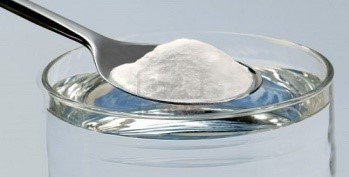
In this mixture, which of the following will be the solute?
a)
The water in the glass
b)
The glass that holds the final mixture
c)
The solution containing both powder and water
d)
The powder on the spoon
65.
Lemonade - Water, lemon juice, and sugar
Identify the solute
a)
water
b)
lemon juice
c)
sugar and lemon juice 
66.
What is a solvent?
a)
The substance that does the dissolving in a solution.
b)
The substance that is being dissolved in a solution.
c)
The mixing of different substances.
d)
The process in which neutral molecules lose or gain electrons
67.
What is a compound? 
a)
 the simplest form of a substance 
b)
a combination only of 3 elements 
c)
a combination of 2 or more elements 
d)
a place where people are held 
68.
a)

solute

b)

solvent

69.
a)

solute

b)

solvent

70.
a)

solute

b)

solvent

71.
a)

solute

b)

solvent