wayground logo

Free Printable Worksheets

Font size

S
M
L
XL
Worksheets

Conservation of Physics Test Review

Total questions: 54

Worksheet time: 52mins

Name
Class
Date
1.
The total momentum before a collision is _________ the total momentum after a collision.
a)
equal to 
b)
less than 
c)
more than
d)
It depends on the type of collision
2.
A 5 N force is applied to a 3 kg ball to change its velocity from +9 m/s to +3 m/s.  The impulse on the ball is  ______ N s.
a)
-2.5
.
.
b)
-10
c)
-18
d)
-45
3.
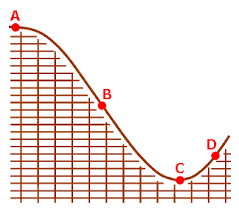
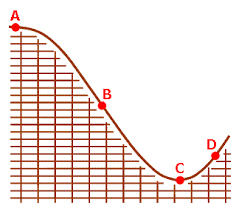
At which point(s) on the roller coaster is the gravitational potential energy at its maximum?
a)
A
b)
B
c)
C
d)
D
4.
At which point(s) on the roller coaster is the kinetic energy at its maximum?
a)
A
b)
B
c)
C
d)
D
5.
What is mechanical energy?
a)
It is what metal creates when heated.
b)
All potential and kinetic energy in a system.
c)
It is motion of all matter.
d)
Energy of momentum.
6.
What does the Law of Conservation of Energy state?
a)
Energy cannot be created or destroyed
b)
Nothing can exchange energy
c)
Energy will increase over time.
d)
Energy will decrease over time.
7.
Is energy always conserved?
a)
Always
b)
Often
c)
Never
d)
Sometimes
8.
Energy of motion is which type of energy?
a)
Potential
b)
Kinetic
c)
Sound
d)
Gravitational
9.
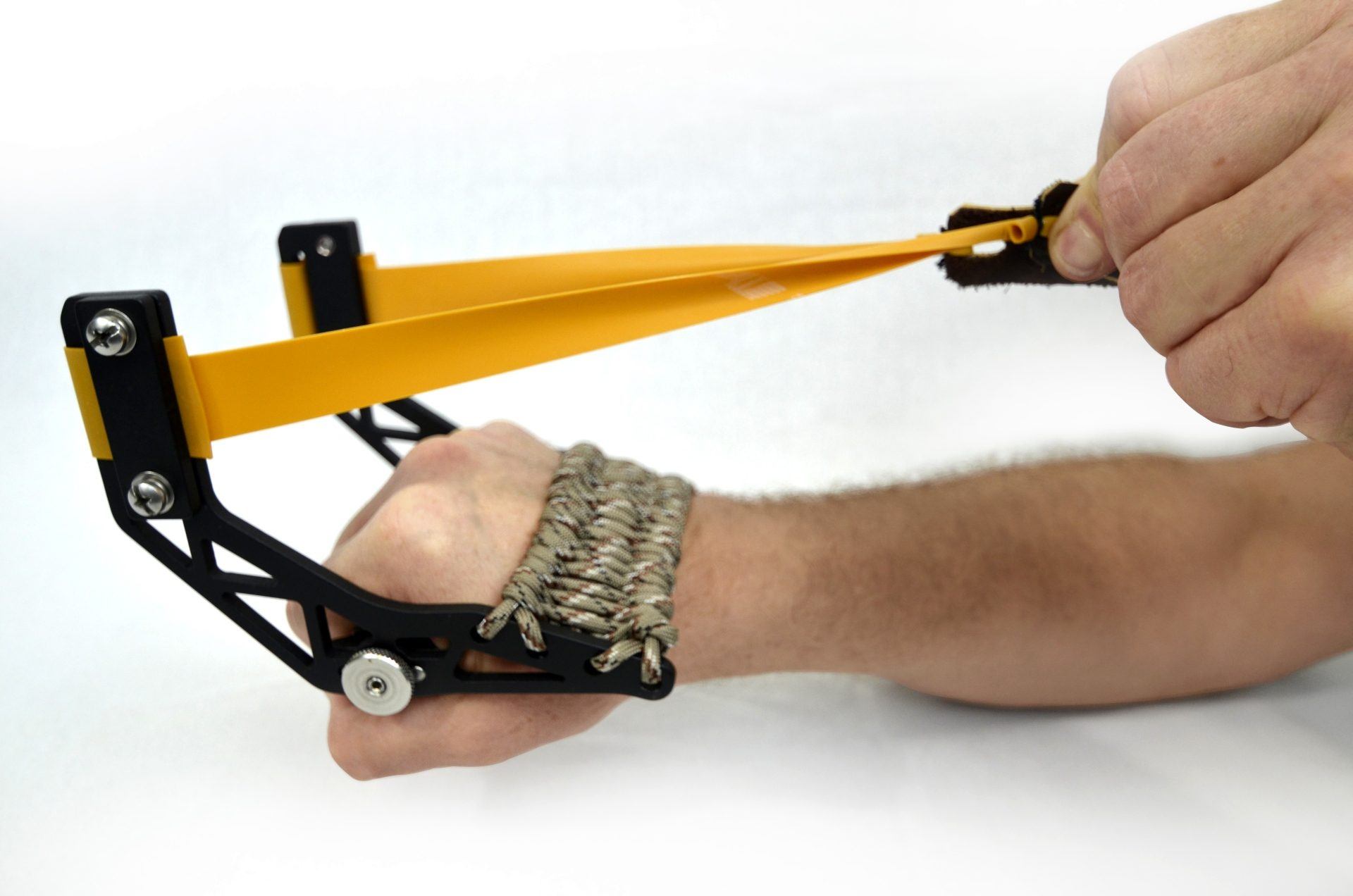
What type of energy is in this picture?
a)
Kinetic
b)
Potential
c)
Chemical
d)
Sound
10.
Work is:
a)
A transfer of energy by a force to move and object
b)
Something you get paid for
c)
Something you take home
d)
Makes you sweat
11.
The formula for work is:
a)
d = r x t
b)
p = m x v
c)
f = m x a
d)
w = d x f
12.
A biker with a mass of 75 kg moves along the path with a constant velocity of 5 m/s. What is the biker's momentum?
a)
25 m/s
b)
375 m/s
c)
25 kg m/s
d)
375 kg m/s
13.
Which takes more force  to catch, a bowling ball or a ping pong ball?
a)
bowling ball because it has more momentum
b)
ping pong ball because it has more momentum
c)
both require the same amount of force when catching
d)
bowling ball because it has less momentum
14.
A runner has a momentum of 670 kg m/s and is traveling at a velocity of 9 m/s. What is his mass?
a)
6030 kg
b)
0.0134 kg
c)
74.4 kg
d)
80 kg
15.
An object with a mass of 2000 kg at rest has what momentum?
a)
2000 kg m/sec
b)
0 kg m/sec
c)
2000 kg
d)
2000 m/sec
16.
When the speed of an object is doubled, its momentum
a)
remains unchanged in accord with the conservation of momentum.
b)
doubles
c)
quadruples
d)
decreases
17.

A boy kicks a football with a force of 20 N, the time the force acts for is 0.3 s. Calculate the impulse on the ball.

a)

1 N⋅s

b)

6 N⋅s

c)

33.3 N⋅s

18.
How can a tennis ball and a bowling ball have the same momentum?
a)
have the same speed
b)
have different speeds
c)
one is moving backwards
d)
they can't
19.

The units for Impulse are

a)

kg

b)

NsN\cdot s

c)

N

d)

m/s

e)

kgmskg\cdot\frac{m}{s}

20.
Softer landings tend to
a)
increase impact force
b)
increase force
c)
increase collision time
d)
increase change in momentum
21.
The difference between a car hitting a wall vs. a car hitting a hay stack is
a)
the Impulse on the car hitting the wall is greater
b)
the change in momentum of the car hitting the wall is greater
c)
the force on the car hitting the hay stack is greater
d)
the collision time of the car hitting the hay stack is greater
22.
The purpose of crumble zones on a car is to
a)
decrease time of impact.
b)
increase force of impact.
c)
increase the time of impact.
d)
decrease the impulse during impact.
23.
The impulse-momentum theorem states that
a)
the impulse on an object is equal to the change in momentum it causes 
b)
the force on a moving object is equal to the magnitude of the impulse.
c)
the impulse on an object is greater than the change in momentum it causes 
d)
the impulse on an object is less than the change in momentum it causes
24.
A constant force of 4.5 N acts on a 7.2-kg object for 10.0 s. What is the     change in the object's velocity? 
a)
6.3 m/s
b)
3.2 m/s
c)
1.2 m/s 
d)
4.33 m/s
25.
In this type of collision, objects tend to "stick" together.
a)
elastic
b)
inelastic 
c)
They "stick" together in both types of collisions
26.

When comparing the momentum of two moving objects, which of the following is correct?

a)

the object with the higher velocity will have less momentum if the masses are equal

b)

the more massive object will have less momentum if its velocity is greater

c)

the less massive object will have less momentum if the velocities are the same

d)

the more massive object will have less momentum if the velocities are the same

27.

Two skaters stand facing each other. One skater's mass is 60 kg, and the other's mass is 72 kg. If the skaters push away from each other without spinning,

a)

the lighter skater has lees momentum

b)

their momenta are equal but opposite

c)

their total momentum doubles

d)

their total momentum decreases

28.

In a two-body collision,

a)

momentum is always conserved

b)

kinetic energy is always conserved

c)

neither momentum nor kinetic energy is conserved

d)

both momentum and kinetic energy are always conserved

29.

Two billiard balls collide. Identify the type of collision.

a)

elastic

b)

perfectly elastic

c)

inelastic

d)

perfectly inelastic

30.

What is energy?

a)

moving energy

b)

stored energy

c)

renewable energy

d)

The ability to do work.

31.

What is potential energy?

a)

moving energy

b)

stored energy

c)

renewable energy

d)

non renewable energy

32.

What is kinetic energy?

a)

moving energy

b)

potential energy

c)

stored energy

d)

renewable energy

33.

When energy changes from one form to another, we call it a _______________.

a)

transformation

b)

creation

c)

expiration

d)

compilation

34.

A computer uses what type of energy to operate?

a)

Mechanical

b)

Light

c)

Electric

d)

Sound

35.

Which is an example of light energy?

a)

lawn mower

b)

blender

c)

flash light

d)

speaker

36.

What is an example of sound energy?

a)

headphones

b)

traffic light

c)

sun

d)

bicycle

37.

The picture shows what type of transformation

a)

Electrical to mechanical

b)

light to electric

c)

electrical to light

d)

light to light

38.
As a pendulum swings from its highest to lowest position, what happens to its kinetic and potential energy? 
a)
Both the potential energy and kinetic energy decrease
b)
The potential energy decreases while the kinetic energy increases 
c)
The kinetic energy decreases while the potential energy increases 
d)
Bothe the potential energy and kinetic energy increase 
39.

A student needs 10 Newtons of force to lift a box to the top of a 2 meter shelf. How much work do they do?

a)

12 J

b)

8 J

c)

20 J

d)

5 J

40.

A worker climbs a ladder and does 8 J of work on a 2 N object. What is the distance they lift the object?

a)

18 m

b)

4 m

c)

10 m

d)

6 m

41.

At which point of this roller coaster is the energy 1/2 kinetic and 1/2 potential?

a)

A

b)

B

c)

C

d)

D

42.

Two workers use 100 N of force to move a sofa 2 meters in 2 seconds. How much power is required?

a)

100 watts

b)

400 watts

c)

104 watts

d)

50 watts

43.
Energy from a compressed spring would be an example of...
a)
kinetic
b)
elastic
c)
gravitational
d)
chemical
44.
If 150 Joules of work is needed to move a box 10 meters, what force was used? 
a)
1500 N
b)
15 N
c)
1.5 N
d)
150 N
45.
The faster an object moves, the ________ kinetic energy it has. 
a)
more
b)
less
c)
none of the above
d)
all of the above 
46.
Gravitational potential energy depends on the ________ and ________ of the object. 
a)
Height and mass
b)
Friction and movement
c)
Mass and Movement
d)
Height and Friction 
47.

How does conservation of energy explain why something that is falling should speed up?

a)

It gains kinetic energy because it gains potential energy.

b)

It loses kinetic energy because no work was done on it.

c)

It gains kinetic energy because it loses potential energy.

d)

It loses kinetic energy because the Earth gains potential energy.

48.
A 2600 kilogram car is moving at a speed of 25 m/s. How much kinetic energy does the car have?
a)
427,500 J
b)
237,500 J
c)
437,500 J
d)
537,500 J
49.
A 60.0 kg person walks from the ground to the roof of a 74.8 m tall building. How much gravitational potential energy does she have at the top of the building?
a)
43982.4 J
b)
63982.3 J
c)
43962.4 J
d)
83942.4 J
50.

Energy and work are measured in

a)

kilograms

b)

meters

c)

Joules

d)

m/s

51.
True or false: the net work done on a body is equal to its change in kinetic energy.
a)
True
b)
False
52.

What does work equal when the final change in kinetic energy equals 20,000 J?

a)

0J

b)

2041J

c)

20,000J

d)

4164931J

53.

The unit of power (aka Joule per second)

a)

Joule

b)

Minute

c)

Watt

d)

Pound

54.

This theorem states, "Whenever work is done, energy changes.

a)

Work-Energy Theorem

b)

Paul-Newman Theorem

c)

Action-Reaction Theorem

d)

Study-Now Theorem