wayground logo

Free Printable Worksheets

Font size

S
M
L
XL
Worksheets

Biology

Total questions: 252

Worksheet time: 4hrs 11mins
Name
Class
Date
1.
Which of the following statements is not part of the cell theory?
a)
Cells are the basic unit of structure and function in all living things.
b)
All cells are produced from other cells.
c)
Only animal cells are composed of cells.
d)
All living things are composed of cells.
2.
The invention of the microscope made it possible for people to discover and learn about
a)
Plants
b)
Skin 
c)
Animals 
d)
Cells
3.
What is one way in which all living things on Earth are alike?
a)
All living things have hair.
b)
All living things are made of cells and come from other cells.
c)
The cells of all living things have chloroplast.
d)
All living things can move. 
4.

When cells are damaged, new cells are created by cell a process called cell division. How does the cell theory support this fact?

a)

It states that all cells have a nucleus which divides.

b)

It states that all living things are made up of one or more cells.

c)

It states that cells come from previously existing cells.

d)

It states that the basic units of structure and function are cells.

5.
The ___ is the basic unit of sturucture and function of organisms
a)
atom
b)
cell
c)
matter
d)
all other answers are correct
6.
Which statement is a part of the cell theory?
a)
all cells come from preexisting cells
b)
bacteria are prokaryotic cells
c)
eukaryotic cells are complex
d)
humans are multicellular
7.
Osmosis is the movement of _____ across a membrane.
a)
food
b)
energy
c)
oxygen
d)
water
8.
What can only be found in plant cells?
a)
Cell membrane
b)
Vacuole
c)
Chloroplast
d)
Mitochondrion
9.
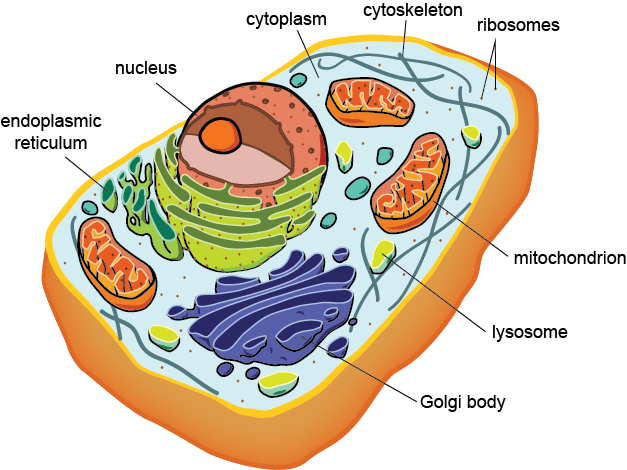
Where are proteins made?
a)
Golgi body
b)
Mitoichondrion
c)
Chromosomes
d)
Ribosomes
10.
What is found in both plant and animal cells but is much larger in plant cells?
a)
Nucleus
b)
Mitochondrion
c)
Chloroplast
d)
Vacuole
11.
Cell membranes are found in
a)
Only animal cells
b)
Only plant cells
c)
Some plant and animal cells
d)
All plant and animal cells
12.
What makes the endoplasmic reticulum rough?
a)
Vessicles
b)
Vacuoles
c)
Ribosomes
d)
Chromosomes
13.
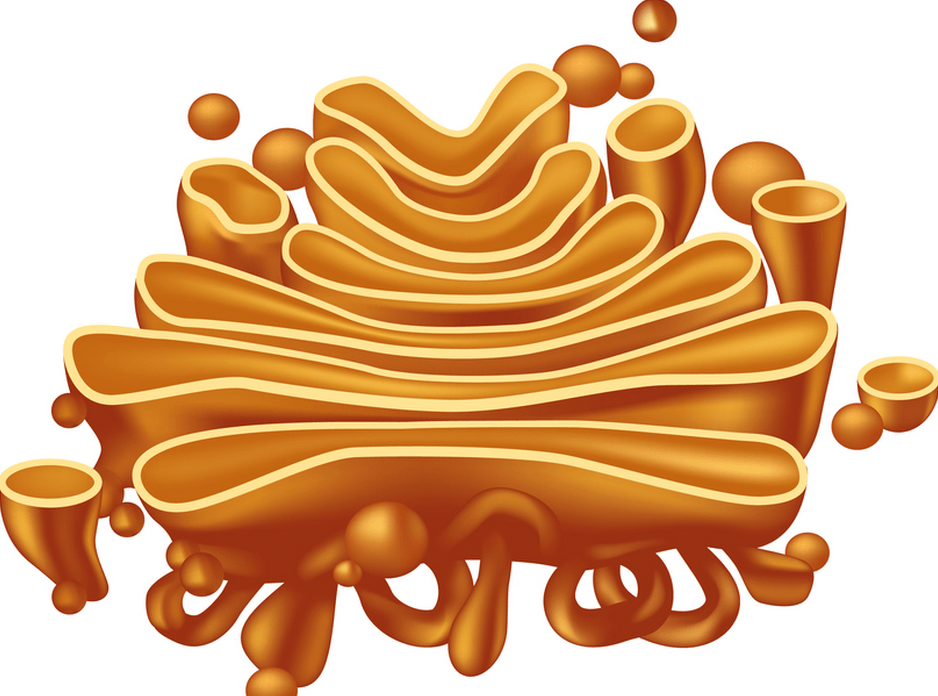
packages proteins for delivery
a)
Endoplasmic reticulum
b)
ribosomes
c)
golgi bodies
d)
lysosomes
14.
break down (digest) worn out cell parts, mostly in animal cells
a)
cytoplasm
b)
lysosomes
c)
mitochondria
d)
vacuoles
15.
"Gatekeeper" Separates the cell from the rest of the environment and helps control what passes in and out of the cell.  Semi-permeable: allows some materials to pass through but not all
a)
Cell Wall
b)
Cytoplasm
c)
Mitochondria
d)
Cell Membrane
16.
Which organelle converts the energy in food into energy for the cell (cellular respiration)?
a)
Ribosomes
b)
Nucleolus
c)
Mitochondria
d)
Golgi Body
17.

A flexible covering that protects the inside of a cell from the environment outside a cell.

a)

cell wall

b)

cell membrane

c)

cytoplasm

d)

cytoskeleton

e)

nucleus

18.

Stiff structure outside the cell membrane

a)

Cell wall

b)

cell membrane

c)

cytoplasm

d)

cytoskeleton

e)

nucleus

19.

Fluid inside of a cell that contains salts and other molecules

a)

Cell wall

b)

cell membrane

c)

cytoskeleton

d)

cytoplasm

e)

mitochondria

20.

Network of threadlike proteins that are joined together to form a framework inside a cell

a)

cell wall

b)

cell membrane

c)

cytoskeleton

d)

cytoplasm

e)

mitochondria

21.

Cells with no organelles. Most are unicellular organisms

a)

Eukaryotic cells

b)

prokaryotic cells

c)

animal cells

d)

plant cells

e)

All of these

22.

Cells that contain organelles

a)

Eukaryotic cells

b)

prokaryotic cells

c)

bacterial cells

d)

All of these

e)

None of these

23.

Parts of eukaryotic cells that have specialized functions

a)

organs

b)

systems

c)

plants

d)

animals

e)

organelles

24.

Part of the eukaryotic cell that directs cell activities and contains genetic information stored in DNA

a)

ribosomes

b)

golgi bodies

c)

vacuoles

d)

nucleus

e)

lysosomes

25.

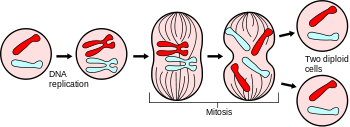
Organelles and chromosomes are copied during...

a)

cytokinesis.

b)

the first stage of the eukaryotic cell cycle.

c)

the third stage of the eukaryotic cell cycle.

d)

the second stage of the eukaryotic cell cycle.

26.

What is the division of cytoplasm called?

a)

chromosome

b)

mitosis

c)

cytokinesis

d)

the cell cycle

27.

What is the process of cell division that forms two nuclei?

a)

homologous chromosomes

b)

mitosis

c)

cell cycle

d)

chromosomes

28.

Cells need to produce new cells in order to...

a)

replace cells that have died.

b)

create new chromosomes.

c)

obtain energy from sunlight.

d)

release energy from food.

29.

During cytokinesis in plant cells...

a)

the cell wall breaks.

b)

a cell plate forms, and the cell splits in two.

c)

a cell plate forms inside the two new cells.

d)

the cell loses some of its DNA.

30.

What is the structure in which DNA, hereditary material that controls cell activities, can be found.

a)

chromatids

b)

centromere

c)

chromosome

d)

mitosis

31.

A cell produces more cells by first copying its...

a)

centioles

b)

DNA

c)

chromatids

d)

cell membranes

32.

Eukaryotic cells...

a)

do not divide.

b)

undergo binary fission.

c)

undergo mitosis.

d)

have cell walls.

33.
The cell carries out normal functions during..
a)
interphase
b)
cytokinesis
c)
mitosis
34.
Which of the following is not a part of interphase?
a)
G2
b)
M
c)
G1
d)
S
35.
the uncontrolled division of cells that results in malignant growth 
a)
tissues
b)
cancer
c)
mitosis
d)
anaphase
36.
Which of the following statements is true of cytokinesis
a)
takes place in plant cells only
b)
completes the cell cycle
c)
organizes DNA
d)
occurs in prophase
37.
During interphase, a cell grows, dublicates organelles, and...
a)
copies DNA
b)
divides the nucleus
c)
divides the cytoplasm
d)
produces a new cell
38.
Stage in which the cells nuclear material divides and seperates
a)
G1
b)
Synthesis
c)
G2
d)
Mitosis
39.
Which of the following is NOT a reason we need mitosis.
a)
Growth
b)
Recovering from injuries
c)
Replacement of dead cells
d)
Sexual reproduction
40.
Which of the following is NOT a reason we need mitosis.
a)
Growth
b)
Recovering from injuries
c)
Replacement of dead cells
d)
Sexual reproduction
41.
DNA is replicated during ______ of the cell cycle.
a)
G1
b)
S
c)
G2
d)
G0
42.
In which stage of the cell cycle is the cell preparing for division? 
a)
G1
b)
S
c)
G2
d)
M
43.
Where does DNA synthesis happen in eukaryotic cells?
a)
cytoplasm
b)
mitochondria
c)
nucleus
d)
Golgi apparatus
44.
Which of the following shows the correct sequence of the cell cycle?
a)
Mitosis-> G1->S->G2->cytokinesis
b)
S->G1-> G2-> mitosis-> cytokinesis
c)
cytokinesis->mitosis->G1->S->G2
d)
 G1->S->G2->mitosis->cytokinesis
45.
This organelle creates the energy for the cell
a)
mitochondria
b)
cell membrane
c)
ribosome
d)
endoplasmic reticulum
46.
The ____________ regulates what enters and leaves the cell.
a)
mitochondria
b)
cell membrane
c)
golgi bodies
d)
cytoplasm
47.
The _________ holds the dna for the cell
a)
vacuole
b)
smooth ER
c)
rough ER
d)
nucleus
48.
What creates the protein for the cell?
a)
Cytoplasm
b)
Nucleus
c)
Golgi bodies
d)
Ribosomes
49.
Jelly-like material that makes up most of the cell
a)
cytoskeleton
b)
cytoplasm
c)
cyclops
d)
cytoliquid
50.
What gives the cell its structure?
a)
cell membrane
b)
cytoskeleton
c)
cytoplasm
d)
vacuole
51.
_________ ship and package materials
a)
Golgi bodies
b)
Mitochondria
c)
Rough endoplasmic reticulum
d)
Smooth endoplasmic reticulim
52.
This organelle creates lipids
a)
Smooth endoplasmic reticulum
b)
Rough endoplasmic reticulum
c)
Ribosomes
d)
Nucleus
53.
The _____________ carries the proteins though the cell.
a)
ribosomes
b)
nucleus
c)
smooth endplasmic reticulum
d)
rough endoplasmic reticulum
54.
Energy that is usable by a cell is called ___________.
a)
ATP
b)
ASAP
c)
AVP
d)
JYU
55.
Mitosis results in the formation of...
a)
Two identical cells with all of the original chromosomes
b)
Two different cells with half of the original chromosomes
c)
Four identical cells with all of the original chromosomes
d)
Four different cells with half of the original chromosomes
56.
What is the longest phase of the cell cycle?
a)
Prophase
b)
Interphase
c)
Cytokinesis
d)
Metaphse
57.
Which phase of the cell cycle is #1?
a)
Interphase
b)
Prophase
c)
Anaphase
d)
Metaphase
58.
Which phase of the cell cycle is #2?
a)
Interphase
b)
Prophase
c)
Anaphase
d)
Metaphase
59.
Which phase of the cell cycle is #3?
a)
Interphase
b)
Prophase
c)
Anaphase
d)
Metaphase
60.
Which phase of the cell cycle is #4?
a)
Interphase
b)
Prophase
c)
Telophase
d)
Metaphase
61.
Which phase of the cell cycle is #5?
a)
Interphase
b)
Prophase
c)
Telophase
d)
Metaphase
62.
What is the correct order of the phases of mitosis?
a)
Prophase
 Anaphase
Metaphase
Telophase
b)
Prophase
Metphase
Anaphase
Telophase
c)
Interphase
Cytokinesis
Metaphase
Prophase
d)
Interphase
Prophase
Metphase
Telophase
63.
What is the purpose of mitosis?
a)
To increase the surface area of a cell
b)
To allow cells to divide for growth, repair, and renewal
c)
For increasing genetic variation within a species
d)
To allow for DNA replication and protein synthesis
64.
If a parent cell going through mitosis starts with 22 chromosomes, how many chromosomes will be in the daughter cells?
a)
22
b)
11
c)
44
d)
15
65.
What are stem cells?
a)
Plant cells that form the plant's stem
b)
Cells that are unspecialized (undifferentiated)
c)
Cells that come from adults
d)
A fertilized egg and sperm cell
66.
Which of the following describes cancer?
a)
Nondisjunction of gamete cells
b)
Cell division without replication of DNA
c)
Mitosis without cytokinesis
d)
Uncontrolled cell division
67.

What is number 1 pointing to?

a)

cell wall

b)

ribosomes

c)

lysosomes

d)

chloroplast

68.

What is number 2 pointing to?

a)

cell wall

b)

chloroplast

c)

cytoplasm

d)

cell membrane

69.

What is number 1 pointing to?

a)

endoplasmic reticulum

b)

golgi

c)

mitochondria

d)

lysosome

70.

What is number 9 pointing to?

a)

cell wall

b)

cell membrane

71.

What is number 10 pointing to? Hint: tiny dots

a)

lysosomes

b)

mitochondria

c)

golgi

d)

ribosomes

72.

What is letter A pointing to?

a)

golgi

b)

endoplasmic reticulum

c)

nucleus

d)

vacuole

73.

What is letter C pointing to?

a)

golgi

b)

endoplasmic reticulum

74.

What is letter G pointing to?

a)

golgi

b)

endoplasmic reticulum

75.

In both the animal and plant cells, what is the letter B pointing to?

a)

chloroplast

b)

ribosomes

c)

nucleus

d)

mitochondria

76.

What is number 6 pointing to?

a)

chloroplast

b)

cytoplasm

c)

nucleus

d)

cell wall

77.

What is number 5 pointing to?

a)

lysosome

b)

mitochondria

78.

Click all 3 things that only plant cells have.

a)

cell membrane

b)

cell wall

c)

chloroplast

d)

large vacuole

79.
Name structure #5.
a)
rough ER
b)
nucleus
c)
vesicle
d)
cytoplasm
80.
Name structure #6.
a)
rough ER
b)
Golgi body
c)
Smooth ER
d)
cytoplasm
81.
What is the structure labeled #5?
a)
Vacuole
b)
Chloroplast
c)
Mitochondria
d)
Lysosome
82.
What is the structure labeled #9?
a)
Cell Wall
b)
Cytoplasm
c)
Chloroplast
d)
Mitochondria
83.
What is the structure labeled #8?
a)
Vacuole
b)
Golgi body
c)
Nucleus
d)
Lysosome
84.
What is the structure labeled #4?
a)
Vacuole
b)
Cell wall
c)
Cytoplasm
d)
Cell membrane
85.
What is the structure labeled #2?
a)
Lysosome
b)
Vesicle
c)
Ribosome
d)
Mitochondria
86.
What is the structure labeled #10?
a)
Cell membrane
b)
Cell wall
c)
Cytoplasm
d)
Centriole
87.
makes ribosomes
a)
rough enodplasimic reticulum
b)
golgi body
c)
nucleus
d)
nucleolus
88.
Jellylike space between the membrane and the nucleus.
a)
cell wall
b)
chloroplast
c)
cytoplasm
d)
mitochondria
89.
I am a protein packaging and shipping machine! Who am I?
a)
vacuole
b)
ribosome
c)
mitochondrion
d)
golgi apparatus
90.
What produces proteins that helps the cell grow? 
a)
vesicle
b)
cell membrane
c)
mitochondria
d)
ribosomes
91.
What stores food, water, or waste? 
a)
vacuole
b)
tissue
c)
vesicle
d)
nucleus
92.
You might think of me as the trash collector, but recycler is maybe more accurate. What am I?
a)
mitochondria
b)
lysosome
c)
vacuole
d)
ribosome
93.
Directs all cell activities through the DNA located there.
a)
Lysosomes
b)
Nucleus
c)
ribosomes
d)
Mitochondria
94.
This organelle is a rigid outer layer that protects plant cells.
a)
Cell Membrane
b)
Cell Wall
c)
Nucleus
d)
Chloroplast 
95.
This organelle controls what goes in and out of plant and animal cells.
a)
Cell Wall
b)
Cell Membrane
c)
Cytoplasm
d)
Cytoplasm
96.
The _____________ is like JELL-O, and is a gel-like fluid that fills plant and animal cells, and is where the organelles are found.
a)
Cytoplasm
b)
Cell Membrane
c)
Cell Wall
d)
JELL-O
97.
Label B
a)
plasma membrane
b)
ribosome
c)
lysosome
d)
mitochondria
98.
Label D
a)
mitochondria
b)
ribosome
c)
vacuole
d)
endoplasmic reticulum
99.
Label I
a)
nucleolus
b)
lysosome
c)
cytoskeleton
d)
nucleus
100.

What is Apoptosis?

a)

Cell programmed Death

b)

Inflammation of cell

c)

Phagocytosis

d)

Plasmolysis

101.

What could be the cause for a cell to undergo apoptosis?

a)

DNA Damage

b)

Nutrient deficiency

c)

Radiation

d)

All of the above

102.

Why is apoptosis required?

a)

Glycolysis

b)

Cell division: Meiosis and mitosis

c)

Growth and elimination of threats such as viruses and DNA damage

103.

Which of these is a tumor that is noncancerous and does not spread?

a)

Malignant

b)

Benign

104.

What is cell differentiation?

a)

The process where unspecialized cells become different in structure and function.

b)

When DNA controls the cell cycle.

c)

The ability of cells to make more cells.

d)

The ability of cells to maintain homeostasis.

105.
Which is true about Embryonic Stem Cells.
a)
They no longer do mitosis, their cell type is set and can not change
b)
They are limited to the type of cell they can become
c)
They can become any cell type in the body
d)
They are found in adults
106.

In order for a tumor to be cancerous it must ...

a)

Be benign

b)

Be malignant

c)

Not metastasize

d)

Be benign and spread to parts of the body

107.

Which type of specialized cell carries oxygen from the lungs all over the body?

a)

red blood cells

b)

squamous (skin) cells

c)

muscle cells

d)

white blood cells (macrophages)

e)

nerve cells (neurons)

108.

Which type of specialized cell has many mitochondria and changes size (contracts)?

a)

red blood cells

b)

squamous (skin) cells

c)

muscle cells

d)

white blood cells (macrophages)

e)

nerve cells (neurons)

109.

Which type of specialized cell protects the body by destroying germs?

a)

red blood cells

b)

squamous (skin) cells

c)

muscle cells

d)

white blood cells (macrophages)

e)

nerve cells (neurons)

110.

Which type of specialized cell carries electrical signals through the body to the brain?

a)

red blood cells

b)

squamous (skin) cells

c)

muscle cells

d)

white blood cells (macrophages)

e)

nerve cells (neurons)

111.

Which type of specialized cell are waxy and waterproof to protect the plant?

a)

xylem

b)

guard cells

c)

epidermis cells

d)

phloem

e)

root hair cells

112.

Guard cells are thin on the outside and thick on the inside.

a)

This statement describes a STRUCTURE.

b)

This statement describes a FUNCTION.

113.

Red blood cells have room to carry more oxygen.

a)

This statement describes a STRUCTURE.

b)

This statement describes a FUNCTION.

114.

Neurons have branches on the end of a long body.

a)

This statement describes a STRUCTURE.

b)

This statement describes a FUNCTION.

115.

Neurons create a complex network of the branches of multiple neurons to carry signals.

a)

This statement describes a STRUCTURE.

b)

This statement describes a FUNCTION.

116.

Root hair cells have thin walls and stick out.

a)

This statement describes a STRUCTURE.

b)

This statement describes a FUNCTION.

117.

Muscle cells are long, thin fibers.

a)

This statement describes a STRUCTURE.

b)

This statement describes a FUNCTION.

118.

What is a STEM CELL?

a)

Cells found in the stems of plants.

b)

Cells that can differentiate into specialized cells.

c)

Cells that control your genes to be expressed.

d)

Cells that provide nutrients to your blood.

119.

What is the function of red blood cells?

a)

Help to digest your food.

b)

Help you breathe.

c)

Provide nutrients to your organs.

d)

Carry oxygen throughout your body.

120.

Cell differentiation is most directly regulated by...

a)

ATP

b)

DNA

c)

Lipids

d)

Sugars

121.

What is the function of nerve cells?

a)

Allow for gas exchange to happen.

b)

Transport oxygen throughout the body.

c)

Control DNA expression.

d)

Transmit electrical signals to different parts of the body.

122.
This type of cell stores energy that can be used for the body's processes. It is what makes up adipose tissue.
a)
fat cell
b)
bone cell
c)
muscle cell
d)
nerve cell
123.
Structure (a) is a ____.
a)
chromosome
b)
chromatid
c)
centromere
124.

What is the function of the skeletal muscle cells?

a)

maintain posture, stabilize bones and joints

b)

remove carbon dioxide

c)

transmit electrical impulses

d)

pump blood throughout the body

125.

Why would some cells contain more mitochondria than others?

a)

They need more oxygen

b)

They require more energy

c)

They are bigger

d)

They wouldn't; all cells contain the same amount of mitochondria

126.
This type of cell is found in females and is needed for reproduction.
a)
egg cell
b)
sperm cell
c)
fertilization cell
d)
yolk cell
127.
The ___________ is the basic unit of life
a)
organ
b)
cell
c)
atom
d)
tissue
128.
Organs and tissues that perform the same function is called _____________?
a)
cells
b)
tissues 
c)
organ system
d)
organs
129.
A group of tissues that perform a similar function is called_____. (Examples include the heart, lungs or stomach)
a)
cells
b)
tissues
c)
organs
d)
organ system
130.
What is the correct order of organization
a)
tissues-cells-organs-organ systems-organism
b)
cell-tissue-organs-organ systems-organism
c)
organism-cells-tissues-organ systems-organism
d)
tissues-cells-organs-organ sytems-organism
131.
Organ systems working together form a living _____.
a)
Chloroplast
b)
Tissue
c)
Cell
d)
Organism
132.

What type of cell is this?

a)

bacterium

b)

muscle cell

c)

amoeba

d)

plant cell

133.
Which of the following is a plant cell?
a)
A
b)
B
c)
C
d)
D
134.
This cell can swim to find the  female egg cell
a)
sperm
b)
ciliated cell
c)
red blood cell
d)
nerve cell
135.
1
a)
Mouth 
b)
Salivary Glands
c)
Esophagus
d)
Stomach
136.
2
a)
Mouth 
b)
Salivary Glands
c)
Small Intestine
d)
Rectum
137.
3
a)
Esophagus
b)
Salivary Glands
c)
Stomach
d)
Pancreas
138.
4
a)
Gallbladder
b)
Liver
c)
Stomach
d)
Pancreas
139.
5
a)
Stomach
b)
Small Intestine
c)
Large intestine
d)
Rectum
140.
6
a)
Stomach
b)
Small Intestine
c)
Large intestine
d)
Rectum
141.
7
a)
Anus
b)
Small Intestine
c)
Large intestine
d)
Rectum
142.
8
a)
Liver
b)
Gallbladder
c)
Appendix
d)
Pancreas
143.
9
a)
Stomach
b)
Small Intestine
c)
Large Intestine
d)
Rectum
144.
10
a)
Stomach
b)
Liver
c)
Gallbladder
d)
Pancreas
145.
11
a)
Stomach
b)
Liver
c)
Gallbladder
d)
Pancreas
146.
What does mucus do?
a)
Digests food in the mouth.
b)
Digests food in the stomach
c)
Protects the stomach from digesting iteself
d)
Absorbs nutrients from food so the body has energy.
147.
What do the villi do?
a)
Digests food in the mouth.
b)
Digests food in the stomach
c)
Protects the stomach from digesting iteself
d)
Absorbs nutrients from food so the body has energy.
148.
What does saliva do?
a)
Chemically digests food in the mouth.
b)
Chemically digests food in the stomach
c)
Protects the stomach from digesting iteself
d)
Absorbs nutrients from food so the body has energy.
149.
What does stomach acid do?
a)
Chemically digests food in the mouth.
b)
Chemically digests food in the stomach
c)
Protects the stomach from digesting iteself
d)
Absorbs nutrients from food so the body has energy.
150.
Where does digestion begin?
a)
Mouth
b)
Esophagus
c)
Stomach
d)
Small Intestine
151.
What organ makes bile?
a)
Gallbladder
b)
Liver
c)
Pancreas
d)
Appendix
152.
What parts of the digestive system help with mechanical digestions?
a)
Esophagus and Small Intestine
b)
Mouth and Stomach
c)
Liver and Gallbladder
d)
Rectum and Anus
153.
Why do we eat food?
a)
To keep our stomachs full
b)
To put oxygen into the body cells
c)
To get nutrients and energy
d)
To make waste products
154.
Which of the following is an accessory organ?
a)
Stomach
b)
Small Intesting
c)
Liver
d)
Large Intestine
155.

What part of the digestive system is highlighted?

a)

Esophagus

b)

Appendix

c)

Small Intestine

d)

Stomach

156.

What part of the digestive system is highlighted?

a)

Large intestine

b)

Small intestine

c)

Stomach

d)

Appendix

157.
The process by which the body breaks down food so that it can be used for energy.
a)
composition
b)
digestion
c)
deposition
d)
absorption
158.
A long folded tube inside the body attached to the stomach where nutrients in the food are absorbed.
a)
large intestine
b)
small intestine
c)
esophagus
d)
rectum
159.
The muscular organ in the body where chemical and mechanical digestion take place.
a)
pancreas
b)
liver
c)
stomach
d)
esophagus
160.
A series of wave-like muscle contractions that moves food to different processing stations in the digestive tract.
a)
adduction
b)
primary wave
c)
peristalsis
d)
inversion
161.

What does your heart do?

a)

pumps blood through your body

b)

protects your body

c)

helps your exercize

162.

Your heart is about the size of your __________.

a)

mouth

b)

fist

c)

show

163.

Your heart pumps blood throughout your entire body through little tubes called _____________.

a)

veins

b)

arteries

c)

hoses

164.

Blood is carried back to your heart in little tubes called ____________.

a)

veins

b)

arteries

c)

hoses

165.

You can feel your heart beating when you feel your _____________.

a)

pulse

b)

breathing

c)

stomach growling

166.

Your heart is a _____________.

a)

tube

b)

muscle

c)

vein

167.

Which describes all the parts of the circulatory system?

a)

heart, lungs, stomach, muscles

b)

heart, blood, arteries, and veins

c)

bones, skin, hair

168.
How many types of blood vessels are in our body?
a)
1
b)
2
c)
3
d)
4
169.

Veins carry oxygen poor blood back to the heart.

a)

False

b)

True

170.

Arteries carry oxygen rich blood away from the heart.

a)

True

b)

False

171.
______________ are the smallest blood vessels.
a)
Arteries
b)
Veins
c)
Capillaries
172.
______________ are the second largest blood vessel. 
a)
Arteries
b)
Veins
c)
Capillaries
173.
The circulatory system works with the ___________ system to provide our body with oxygen.
a)
respiratory
b)
digestive
c)
muscular
d)
skeletal
174.
The circulatory system works with the __________ system to obtain energy from nutrients that we eat. 
a)
respiratory 
b)
digestive
c)
skeletal
d)
nervous
175.
The heart has ___ chambers.
a)
1
b)
2
c)
3
d)
4
176.
What does Deoxygenated mean?
a)
Oxygen-rich
b)
Blood flow
c)
Oxygen-poor
d)
Water Flow
177.
What does blood do?
a)
Carries Water to cells
b)
Carries Oxygen to cells
c)
Carries Food to cells
d)
All of the above 
178.
Major artery at the top of the heart sends oxygenated blood from the left ventricle to the rest of the body.
a)
aorta
b)
pulmonary artery
c)
inferior vena cava
179.
Build up of plaque causing the narrowing of the walls of the arteries of the heart. 
a)
Atherosclerosis
b)
Arrhythmia
c)
Stroke
180.
Name this part.
a)
Right atrium
b)
Left ventricle
c)
Right ventricle
d)
Left atrium
181.
Name this part.
a)
Left ventricle
b)
Pulmonary artery
c)
Right atrium
d)
Pulmonary veins
182.
Name this part.
a)
Right ventricle
b)
Aorta
c)
Right atrium
d)
Atrium
183.
Name this part.
a)
Right ventricle
b)
Pulmonary artery
c)
Left ventricle
d)
Right atrium
184.
Name the part.
a)
Left ventricle
b)
Vena cava
c)
Right atrium
d)
Right ventricle
185.
A flap of tissue that prevents blood from flowing backward
a)
Aorta
b)
Atrium
c)
Septum
d)
Valve
186.
Identify
a)
Left atrium
b)
Right atrium
c)
Left ventricle
d)
Right ventricle
187.

What is the arrow pointing to?

a)

right atrium

b)

left atrium

c)

right ventricle

d)

left ventricle

188.

What is the arrow pointing to?

a)

right atrium

b)

left atrium

c)

right ventricle

d)

left ventricle

189.

What is the arrow pointing to?

a)

right atrium

b)

left atrium

c)

right ventricle

d)

left ventricle

190.

What is the arrow pointing to?

a)

right atrium

b)

left atrium

c)

right ventricle

d)

left ventricle

191.

What is the arrow pointing to?

a)

vena cava

b)

mitral valve

c)

tricuspid valve

d)

aorta

192.

What is the arrow pointing to?

a)

vena cava

b)

mitral valve

c)

tricuspid valve

d)

aorta

193.

What is the arrow pointing to?

a)

vena cava

b)

mitral valve

c)

tricuspid valve

d)

aorta

194.
Which 2 substances are exchanged in the Respiratory System?
a)
oxygen and nitrogen
b)
carbon dioxide and oxygen
c)
oxygen and glucose
d)
glucose and carbon dioxide
195.
The windpipe is also known as which organ?
a)
Lung
b)
Trachea
c)
Alveoli
d)
Nose
196.
The place in the lungs where oxygen and carbon dioxide are exchanged 
a)
Diaphragm
b)
Alveolus
c)
Bronchi Tube
d)
Trachea
197.
Tubes that move air from the trachea to the lungs.
a)
Alveoli
b)
Bronchi
c)
Veins
d)
Arteries
198.
Letter D is pointing to which Respiratory organ?
a)
Alveoli
b)
Diaphragm
c)
Lung
d)
Bronchi
199.
Which part of the Respiratory System collects air from the environment & heats/moistens the air before entering the body?
a)
lungs
b)
nose
c)
heart
d)
brain
200.
The main organ of the Respiratory System where the gas exchange takes place.
a)
Heart
b)
Small Intestine
c)
Lungs
d)
Anus
201.
When the diaphragm contracts and moves down, the lungs are...
a)
expanding with air
b)
shrinking - pushing air out
202.
When the diapragm relaxes and moves back up, the lungs are...
a)
expanding with air
b)
shrinking - pushing air out
203.
What are the tiny air sacs at the end of the Bronchioles, that transfer oxygen into the blood stream?
a)
Trachea
b)
Bronchi
c)
Alveoli
d)
Larynx
204.
Tube that carries oxygen from the mouth to the Bronchi. (#5)
a)
Bronchioles
b)
Alveoli
c)
Esophagus
d)
Trachea
205.
The Trachea splits into 2 branches and each of these goes into 1 of the lungs.
a)
Bronchioles
b)
Alveoli
c)
Bronchi
d)
Esophagus
206.
The Bronchi branch out into many different smaller tubes which take oxygen to the alveoli. What are these tiny tubes called?
a)
Trachea
b)
Larynx
c)
Pharynx
d)
Bronchioles
207.

What is the function of the nervous system?

a)

to control and coordinate body functions and systems.

b)

to protect the body from harm.

c)

to identify pain and begin healing.

d)

to break down food.

208.

Select all of the organs of the nervous system:

a)

Brain

b)

Heart

c)

Spinal Cord

d)

Nerves

e)

Stomach

209.

Which of the following is the nervous system?

a)
b)
c)
d)
210.

The basic unit of structure and function in the nervous system is a nerve cell. Nerve cells are also called-

a)

Osteocytes

b)

Dendrites

c)

Neurons

d)

Spinal Cords

211.

What is the function of a nerve?

a)

To transport needed food around the body

b)

To control body movement for reflexes.

c)

To carry messages (impulses) to and form the Central Nervous System

d)

All of the above

212.

The Central Nervous system includes what two organs?

a)

Brain and Nerves

b)

Brain and Spinal Cord

c)

Spinal cord and Nerves

d)

Nerves and Neurons

213.

What controls the nervous system and all decision-making?

a)

Brain

b)

Spinal Cord

c)

Nerves

d)

Neurons

214.

The column of tissue connecting the brain to nerves is...

a)

spinal cord

b)

central nervous system

c)

peripheral nervous system

d)

All of the above

215.

What is the gap between two neurons called?

a)

Impulse

b)

Synapse

c)

CNS

d)

Inter neuron

216.

Select the VOLUNTARY action.

a)
b)
c)
d)
217.

Select the INVOLUNTARY action.

a)
b)
c)
d)
218.
What are the 2 major divisions of the peripheral nervous system (PNS)?
a)
Sensory & Motor
b)
Peripheral & Central
c)
Somatic & Autonomic
d)
Brain & Spinal Cord
219.
What is the central nervous system (CNS) made of?
a)
brain and spinal cord
b)
brain and cranial nerves
c)
spinal cord and spinal nerves
d)
cranial nerves and spinal nerves
220.
Sensory neurons carry nerve impulses from the sense organs and internal organs (like your stomach) to the
a)
peripheral nervous system (PNS)
b)
central nervous system (CNS)
c)
muscles
d)
sense organs
221.
What is NOT part of the peripheral nervous system (PNS)?
a)
axons
b)
sensory receptors
c)
spinal cord
d)
motor neurons
222.
part of a neuron that receives information from other neurons
a)
axon
b)
dendrites
c)
myelin sheath
d)
synapse
223.
Location at which a neuron can transfer an impulse to another cell with the use of neurotransmitters is called __________.
a)
myelin sheath
b)
axon
c)
threshold
d)
synapse
224.
Label the Neuron-What does the letter "A" represent?
a)
Dendrite
b)
Axon
c)
Myelin Sheath
d)
Node of Ranvier
225.
Label the Neuron-What does the letter "F" represent?
a)
Myelin Sheath
b)
Axon
c)
Axon Terminal
d)
Dendrite
226.
Label the Neuron-What does the letter "H" represent?
a)
Myelin Sheath
b)
Axon
c)
Axon Terminal
d)
Dendrite
227.
These carry signals from tissues and organs to the brain and spinal cord
a)
Sensory Neurons
b)
Motor Neurons
c)
Efferent Neurons
d)
Glial Cells
228.
This part of the nervous system regulates involuntary actions such as heart function, blood pressure, breathing, digestion.
a)
Autonomic Nervous System
b)
Sensory Nervous System
c)
Motor Nervous System
d)
Peripheral Nervous System
229.
What is  a tissue?
a)
A group of similar cells working together
b)
A group of similar organs working together
c)
A specific structure inside of an organism
d)
The largest structure in a eukaryotic organism
230.
Skeletal muscles always work _____.
a)
in groups
b)
in pairs
c)
singly
d)
none of the above
231.
Smooth muscle and cardiac muscle are considered _____ muscles because we can’t control them consciously.
a)
Immovable
b)
Involuntary
c)
Skeletal
d)
none of the above
232.
Looking at diagram (to the right): What system is represented?
a)
Respiratory System
b)
Skeletal System
c)
Circulatory System
d)
Integumentary System
233.
A ______________________ attach bones to each other at joints.
a)
Ligament
b)
Bone
c)
Joint
d)
Cell
234.
A ______ is a strong connective tissue that attaches muscle to bone.
a)
Tendon
b)
Ligament
c)
Cartilage
235.
TRUE or FALSE: Bones are living tissue.
a)
True
b)
False
236.

Approximately how many muscles are in our body

a)

600

b)

200

c)

350

d)

12

237.

What is it called where two or more bones connect

a)

Joint

b)

Tendon

c)

ligaments

d)

cartilage

238.

The skeletal system has several jobs. Select one of the following that describe its jobs.

a)

send messages between the brain and the body

b)

provides a framework for the body

c)

creates hormones

d)

identifies and acts upon germs and bacteria that invade the body

239.

The skeletal system has several jobs. Select one of the following that describe its jobs.

a)

identifies and acts upon germs and bacteria that invade the body

b)

breaks down food and absorbs nutrients into the blood stream

c)

protects internal organs

d)

carries blood through out the body

240.

The skeletal system has several jobs. Select one of the following that describe its jobs.

a)

send messages between the brain and the body

b)

makes red blood cells and stores minerals

c)

creates hormones

d)

carries blood through out the body

241.

Approximately how many bones does the adult human body have?

a)

200

b)

350

c)

600

d)

12

242.
What is the total magnification of a microscope with two lenses when one lens has a magnification of 10x, and the other lens has a magnification of 30x?
a)
15x
b)
30x
c)
40x
d)
300x
243.
If the eyepiece of your scope has a power of 10, and the selected objective lens has a power of 20,what is the total magnification?
a)
20x
b)
30x
c)
200x
d)
2000x
244.
If your teacher asks you to move a microscope to table, how do you carry it?
a)
by the body tube and the eyepiece
b)
with one hand
c)
one hand on the arm and the other under the base
d)
with one hand on the base and the other on the eyepiece.
245.
Which part of the microscope controls the amount of light available?
a)
coarse adjustment knob
b)
diaphragm
c)
objective lens
d)
revolving nosepiece
246.
Which part lets you turn up the power of magnification, such increasing from 40x to 100x?
a)
coarse adjustment knob
b)
diaphragm
c)
field-of-view
d)
revolving nosepiece
247.
What is part 1?
a)
eye piece
b)
body tube
c)
arm
d)
coarse adjust
248.
What part is 3?
a)
eye piece
b)
base
c)
arm 
d)
coarse adjust
249.
What part is 5?
a)
coarse adjustment
b)
fine adjustment
c)
diaphragm
d)
stage
250.
What is part 11?
a)
coarse adjustment
b)
fine adjustment
c)
diaphragm
d)
stage
251.
What is part 2?
a)
arm
b)
base
c)
body tube
d)
illuminator
252.
What is part 6?
a)
arm 
b)
base
c)
body tube
d)
illuminator