wayground logo

Free Printable Worksheets

Font size

S
M
L
XL
Worksheets

UNIT TEST HEAT AND MASS TRANSFER

Total questions: 35

Worksheet time: 26mins

Name
Class
Date
1.

Heat exchanger is an equipment used to transfer heat from the hot fluid to cold fluid.

a)

True

b)

False

2.

Figure shows ___________heat exchanger.

a)

Double-pipe

b)

Multipass

c)

Cross-flow

d)

None of above

3.

This figure represents what type of heat exchanger?

a)

Double pipe

b)

Plate and frame

c)

Shell and tube

d)

Compact

4.

Select method/s used in the analysis of

heat exchangers.

a)

Arithmetic Mean Temperature Different

b)

Log Mean Temperature Different (LMTD)

c)

Effectiveness-NTU

d)

All of above

5.

Figure represents equation for ?

a)

Fouling factor

b)

Effectiveness-NTU

c)

LMTD

d)

Overall heat transfer coefficient

6.

Which of the following is NOT a type of heat exchanger?

a)

Recuperator

b)

Regenerator

c)

Mixer

d)

none of the above

7.

In how many categories heat exchangers are classified on the basis of direction of flow of fluids?

a)

4

b)

3

c)

2

d)

1

8.

The energy transfer between the hot fluid and cold fluids is brought about by their complete physical mixing in

a)

Direct contact heat exchanger

b)

Recuperators

c)

Regenerators

d)

Boilers

9.

Usually, the flow arrangement of two fluids in compact heat exchangers is

a)

parallel flow

b)

counter flow

c)

cross flow

d)

none of the above

10.

Which of the following is /are example of direct contact type heat exchanger?

a)

Jet condenser

b)

Desuper heater

c)

Cooling tower

d)

All of the above

11.

The compact heat exchangers are commonly used in

a)

Gas to gas heat transfer

b)

Gas to liquid heat transfer

c)

Both A&B

d)

none of the above

12.

What is the type of heat exchanger shown??

a)

Recuperator

b)

Regenerator

c)

Compact

d)

None

13.

What is the type of flow arrangement shown?

a)

Parallel flow

b)

Counter flow

c)

Cross flow

d)

None

14.

What is the type of flow arrangement shown?

a)

Parallel flow

b)

Counter flow

c)

Mixed Flow

d)

Cross flow

15.
The kind of heat transfer that travels through space in electromagnetic waves is ______________________.
a)
insulation.
b)
Radiation
c)
Conduction
d)
Convection
16.

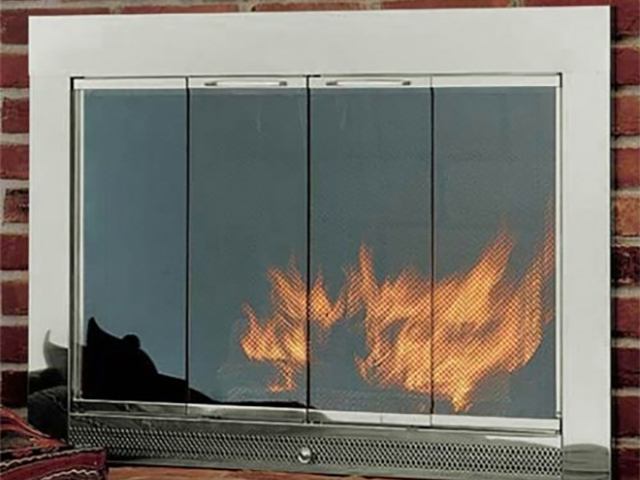
A chair is placed several feet from a fire in a fireplace. The fireplace has a glass screen. The side of the chair facing the fireplace gets warm because of

a)

Convection

b)

Conduction

c)

Radiation

17.

Which of the following object is best absorber for heat radiation?

a)
b)
c)
d)
18.

Rho gives ______________

a)

TRANSMISSIVITY

b)

REFLECTIVITY

c)

ABSORBTIVITY

d)

NONE OF THE ABOVE

19.

The rate of emission of radiation depends on

a)

The wavelength or frequency of radiation

b)

The temperature of the surface

c)

The nature of the surface.

d)

All of the above

20.

is defined as the total amount of radiation emitted by a body per unit time and unit area

a)

MONOCHROMATIC EMISSIVE POWER

b)

EMISSIVE POWER

c)

STEFAN BOLTZMAN CONSTANT

d)

ALL OF THE ABOVE

21.

The name of the law ___________.

a)

WIENS LAW

b)

PLANCKS LAW

c)

STEFAN BOLTZMAN LAW

d)

KIRCHOFFS LAW

22.

The name of the law

a)

WIENS LAW

b)

STEFANS LAW

c)

KIRCHOFFS LAW

d)

PLANCKS LAW

23.
The process of transfer of mass as a result of species concentration difference in a mixture is known as __________.
a)
Heat transfer
b)
Energy transfer
c)
Mass transfer
d)
Work transfer
24.
_________ is the example of Mass transfer.
a)
Humidifcaiton of air in cooling tower
b)
Evaporation of petrol in the carburettor
c)
The transfer of water vapour into dry air
d)
All of the above
25.
Modes of mass transfer _____________
a)
Diffusion
b)
Convection
c)
Both A and B
d)
None of the above
26.
When one of the diffusion fluids in turbulent motion ___________ will takes place.
a)
Eddy diffusion
b)
Humidification
c)
Molar concentration
d)
Molecular diffusion
27.
_____________ is a process of mass transfer occurs between surface and a fluid medium when they are at different concentration.
a)
Diffusion
b)
Convection
c)
Both A and B
d)
None of the above
28.
If the fluid motion is produced due to change in density resulting from concentraion gradients, the mode of mass transfer is called _________.
a)
Free convection
b)
Forced convection
c)
Forced conduction
d)
None of the above
29.
Evaporation of alcohol is an example of _____________.
a)
Forced convection
b)
Free convection
c)
Forced conduction
d)
None of the above
30.
If the fluid motion is produced by means of blower or fan in concentraion gradients, the mode of mass transfer is called _________.
a)
Free convection
b)
Forced convection
c)
Forced conduction
d)
None of the above
31.
Evaporation of water from hot pot when placed under fan is an example of ___________.
a)
Forced convection
b)
Free convection
c)
Forced conduction
d)
None of the above
32.
The ratio of mass of a component per unit volume of a mixture is called as ____________.
a)
Molar concentration
b)
Mass concentration
c)
Mass fraction
d)
Mole Fraction
33.
The ratio of number of molecules of a component per unit volume of a mixture is called as _______________
a)
Molar concentration
b)
Mass concentration
c)
Mass fraction
d)
Mole Fraction
34.
The ratio of mass concentration of a species to the total mass density of the mixture is called as ____________.
a)
Molar concentration
b)
Mass concentration
c)
Mass fraction
d)
Mole Fraction
35.

What is the purpose of using baffles in shell-and-tube heat exchangers?

a)

to enhance heat transfer

b)

to maintain uniform spacing between tubes

c)

both

d)

none