wayground logo

Free Printable Worksheets

NEW

Font size

S
M
L
XL
Worksheets

Anatomical Positions & Planes of Motion

Total questions: 36

Worksheet time: 24mins

Name
Class
Date
1.
Anatomical Position 
a)
Posterior
b)
Anterior
c)
Inferior
d)
Superior
2.
Anatomical Position 
a)
Posterior
b)
Medial
c)
Proximal
d)
Anterior
3.
Anatomical Position 
a)
Inferior
b)
Proximal
c)
Superior
d)
Superficial
4.
Anatomical Position 
a)
Inferior
b)
Proximal
c)
Superior
d)
Superficial
5.
Anatomical Position 
a)
Deep
b)
Medial
c)
Lateral
d)
Distal
6.
Anatomical Position 
a)
Deep
b)
Medial
c)
Lateral
d)
Distal
7.
Anatomical Position 
a)
Prone
b)
Lateral
c)
Supine
d)
Proximal
8.
Anatomical Position 
a)
Prone
b)
Lateral
c)
Distal
d)
Proximal
9.
Anatomical Position
a)
Superficial
b)
Deep
c)
Proximal
d)
Prone
10.

How many anatomical planes are there?

a)

three

b)

four

c)

six

d)

two

11.

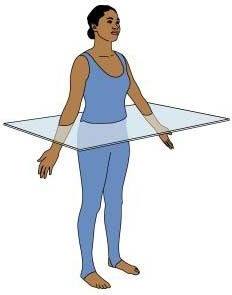
Which anatomical plane is the ONLY horizontal plane?

a)

sagittal

b)

transverse

c)

frontal

12.

Which anatomical plane divides the body into equal right and left sides?

a)

Transverse

b)

Horizontal

c)

Sagittal

13.

Which anatomical plane divides the body into front and back

a)

frontal/coronal

b)

transverse/horizontal

c)

sagittal plane

d)

none of the above

14.
What is the term used to refer to the front of the body?
a)
cranial
b)
anterior/ventral
c)
posterior/dorsal
d)
proximal
15.
Superficial (external)
a)
away from the body surface; more internal
b)
toward or at the body surface
c)
divides the body into right and left parts
d)
cuts made diagonally
16.

Which side is facing you?

a)

Ventral

b)

Dorsal

c)

Lateral

d)

Medial

17.

Which side is facing you?

a)

Anterior

b)

Posterior

c)

Lateral

d)

Medial

18.

Which side is facing you?

a)

Ventral

b)

Dorsal

c)

Lateral

d)

Medial

19.

Which side is facing you?

a)

Anterior

b)

Posterior

c)

Lateral

d)

Medial

20.
Divides body into top and bottom portions (superior-head; inferior-feat)
a)
Medial Plane
b)
Sagittal
c)
Proximal 
d)
Transverse Plane
21.
The head is ______ to the chest.
a)
superior
b)
dorsal
c)
inferior
d)
ventral
22.
The bone is _____ to the skin.
a)
inferior
b)
superficial
c)
deep
d)
posterior
23.
The right shoulder is ______ to the sternum.
a)
medial
b)
proximal
c)
distal
d)
lateral
24.

Your elbows are proximal to your

a)

shoulder

b)

wrist

c)

humerus

d)

ears

25.

The study of the structures of the body

a)

biology

b)

physiology

c)

anatomy

d)

geology

26.

The knee is _________ to the ankle

a)

lateral

b)

medial

c)

proximal

d)

distal

27.

The navel is ___________ to the spine.

a)

posterior

b)

lateral

c)

anterior

d)

medial

28.

Your toes are ____________ to your ankle

a)

proximal

b)

distal

c)

lateral

d)

medial

29.

Your sternum (breastplate) is __________ to your shoulder.

a)

medial

b)

lateral

c)

proximal

d)

distal

30.
Movement away from the mid-line is called _____________.
a)
abduction
b)
adduction
c)
internal rotation
d)
external rotation
31.
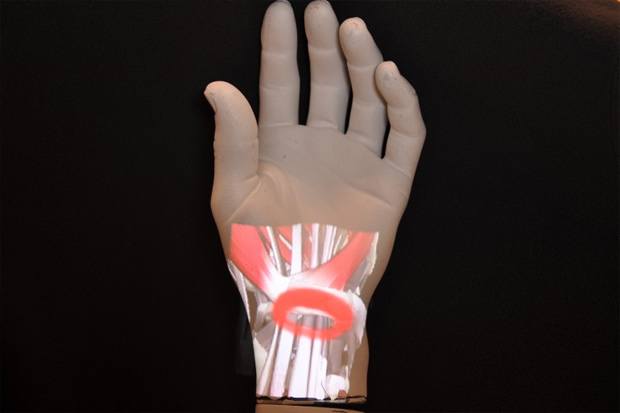
Turning the hand so that the palm is upward or facing anteriorly (in anatomical position).
a)
supination
b)
pronation
c)
flexion
d)
dorsiflexion
32.
Turning the foot so the plantar surfaces faces medially.
a)
plantar flexion
b)
eversion
c)
inversion
d)
dorsiflexion
33.
The lateral motion TOWARDS the midline is called ______.
a)
adduction
b)
abduction
c)
internal rotation
d)
external rotation
34.
Rotation of the forearm until the palm faces DOWN is called __________.
a)
supination
b)
pronation
c)
flexion
d)
dorsiflexion
35.
Rotation of the forearm until the palm faces UP is called _________.
a)
supination
b)
external rotation
c)
plantar flexion
d)
pronation
36.
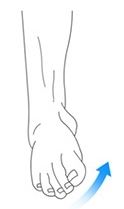
Pointing your toe
a)
dorsiflexion
b)
plantar flexion
c)
flexion
d)
extension