wayground logo

Free Printable Worksheets

Font size

S
M
L
XL
Worksheets

Final Exam Review

Total questions: 130

Worksheet time: 29hrs 49mins

Name
Class
Date
1.
1000 grams = _____ kilograms
a)
0.0001
b)
1,000,000
c)
10
d)
1
2.
5,000 mg = ____ g
a)
50
b)
5
c)
500
d)
5,000
3.

Convert this number into scientific notation: 0.068

a)

6.9 x 10⁶

b)

6.8 x 10⁻⁹

c)

6.8 x 10⁻²

d)

None of the above

4.

Convert this number into scientific notation: 950,000

a)

9.5 x 10⁵

b)

9.5 x 10⁻⁹

c)

9.5 x 10²

d)

None of the above

5.
An example of ...
a)
A mixture
b)
A compound
c)
An element 
6.
Combination of two or more substances that are not chemically combined.
a)
mixture
b)
solution
c)
solvent
d)
solute
7.
What is Kool-aid?
a)
element
b)
Heterogeneous Mixture
c)
Homogeneous Mixture
d)
Compound
8.
Italian Salad Dressing
a)
heterogeneous mixture
b)
homogeneous mixture
9.

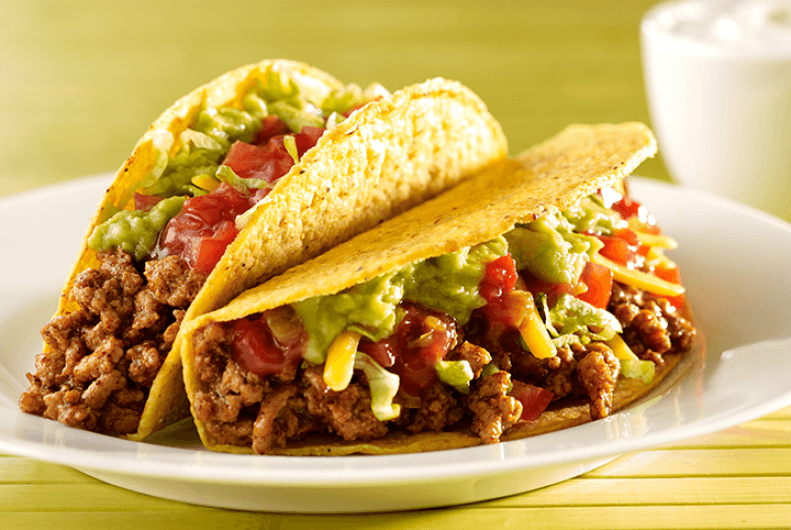
A Taco is an example of a

a)

Homogeneous Mixture

b)

Heterogeneous Mixture

10.

What type of material is pictured?

a)

Element

b)

Compound

c)

Homogeneous mixture

d)

Heterogeneous mixture

11.
Valence electrons are: 
a)
Electrons farthest away from the nucleus
b)
Electrons closest to the nucleus
c)
Electrons that just come and go - they don't stay with the atom
12.
When an atom loses a valence electron, it becomes a(n) _____________ ion.
a)
positive
b)
negative
c)
neutral
d)
polyatomic
13.
Negative ions form when atoms _________ valence electrons.
a)
lose
b)
gain
c)
share
14.
the central region of an atom where its neutrons and protons are is its 
a)
nucleus 
b)
electron cloud
c)
core 
d)
center 
15.
The positive particles of an atom are 
a)
electrons 
b)
positrons 
c)
neutrons 
d)
protons 
16.
an atom with atomic number 6 would have how many protons 
a)
6
b)
12
c)
3
d)
cannot be determined 
17.

Mg ionizes to a charge of ______.

a)

+1

b)

+2

c)

-1

d)

-2

18.

N ionizes to a charge of _______.

a)

+3

b)

-3

c)

+2

d)

-2

19.

Which particles change the charge in atoms when ions are formed?

a)

Protons

b)

Electrons

c)

Neutrons

20.

Cations are...

a)

Positive

b)

Negative

c)

Neutral

21.

Anions are...

a)

Positive

b)

Negative

c)

Neutral

22.

An atom becomes _________ when it gains electrons.

a)

Positive

b)

Negative

c)

Neutral

23.
What carries no charge 
a)
Neutrons
b)
Electrons
c)
Protons
24.
How many neutrons does the isotope of lithium have?
a)
8
b)
3
c)
4
d)
5
25.
How many electrons are in an atom that has an atomic number of 34, an atomic mass of 74 and a charge of -2?
a)
34
b)
36
c)
2
d)
40
26.
What is an isotope? 
a)
A charged atom
b)
An atom with different amounts of neutrons
c)
An atom with different amounts of protons
d)
A neutral atom
27.

How many neutrons does a Sodium-24 isotope have?

a)
12
b)
13
c)
14
d)
15
28.
How many neutrons does a Calcium 48 isotope have?
a)
16
b)
20
c)
28
d)
12
29.
What is the mass number defined as?
a)
the number of protons
b)
the number of protons and neutrons
c)
the number of neutrons
d)
the number of protons and electrons
30.

An atom of silicon has 14 protons and 15 neutrons. What is the mass number of this atom of silicon?

a)

14

b)

15

c)

29

d)

28.085

31.
a)
2
b)
8
c)
3
d)
13
32.
a)
19
b)
20
c)
1
d)
4
33.
a)
10
b)
2
c)
8
d)
18
34.

Elements in the same group or column have the same ...

a)

# of valence electrons

b)

# of shells

c)

# of protons

d)

Mass Number

35.

Rows on the periodic table are called ___________.

a)

Periods

b)

Sentences

c)

Fences

36.

The columns in the periodic table are called ___________.

a)

Towers

b)

Herds

c)

Groups

37.
What atom matches this electron configuration?
1s22s22p63s23p64s23d10
a)
Zinc
b)
Copper
c)
Nickel
d)
Germanium
38.

What is the maximum number of electrons that an S orbital can have?

a)

1 electron

b)

2 electrons

c)

3 electrons

d)

4 electrons

39.
How many valence electrons are represented here?
a)
7
b)
5
c)
2
d)
8
40.
How many p orbitals are there in a sublevel?
a)
2
b)
1
c)
4
d)
3
41.
What atom matches this electron configuration?
1s2s2p3s2
a)
Neon
b)
Magnesium
c)
Aluminum
d)
Potassium
42.

Region of high probability of finding an electron

a)

atomic orbital

b)

ground state

c)

Heisenberg uncertainty principle

d)

electron configuration

43.
This could be the dot diagram of 
a)
Ne
b)
Si
c)
Al
d)
Be
44.

Which of the following is a correct electron dot structure?

a)
b)
c)
d)
45.
An ionic bond forms when atoms ___________ electrons.
a)
gain
b)
share
c)
increase
d)
transfer
46.
Covalent compounds
a)
Share electrons
b)
transfer electrons
c)
contain a sea of electrons
d)
conduct electricity
47.
What type of bond forms between two or more atoms that are charged (+/-)?
a)
Covalent bond
b)
Incomplete bond
c)
Ionic bond
d)
Metallic bond
48.
Which of the following is an example of an IONIC COMPOUND?
a)
NaCl
b)
H2O
c)
CO2
d)
NO
49.
Which of the following is an example of a COVALENT COMPOUND?
a)
H2S
b)
KI
c)
CaCl2
d)
MgO
50.
Ionic bonds are between _______ and ________. 
a)
nonmetals and nonmetals 
b)
metals and metals 
c)
metals and nonmetals
d)
none
51.

Copper (II) Oxide has the formula:

a)

CuO

b)

Cu2O

c)

Cu2O2

d)

CuO2

52.

Which of the following is true about Ionic Bonds? (select ALL TRUE options)

a)

High melting point

b)

Low melting point

c)

Can dissolve in water

d)

Cannot dissolve in water

e)

Can conduct electricity when dissolved

53.

The name for K2S is

a)

Dipotassium Sulfur

b)

Dipotassium Sulfide

c)

Potassium Sulfide

d)

Potassium Sulfur

54.

What is the correct formula for Calcium Oxide?

a)

CaO

b)

Ca2O

c)

CaO2

d)

CaO3

55.
Molecules spread out and move FAST!
a)
solid
b)
gas
c)
liquid
56.
If you increase the pressure of a constant volume of gas, what will happen to the temperature?
a)
Increase
b)
Decrease
c)
Stay the same
d)
It will Blow Up
57.
How are pressure and volume related?
a)
Directly
b)
Indirectly
c)
They aren't related
58.
Pressure is caused by ______.
a)
gravity.
b)
gas molecules colliding with each other.
c)
gas molecules colliding with surfaces of the container.
d)
gas molecules reacting with each other.
59.
What happens to the average kinetic energy of matter when it is heated?
a)
It increases
b)
It decreases 
c)
It doesn't change
d)
It cannot be determined
60.
What about gasses can be measured?
a)
Pressure and Volume
b)
Temperature, Volume, and Pressure
c)
Volume and Temperature
d)
Pressure, Temperature, Volume, and Moles
61.
How many atoms of carbon (C) are in C6H12O6?
a)
3
b)
6
c)
12
d)
24
62.
NaBr + Ca(OH)2 →CaBr2 + NaOH Coefficient for Calcium Bromide
a)
1
b)
2
c)
3
d)
4
63.
NaBr + Ca(OH)2 →CaBr2 + NaOH Coefficient for Sodium Hydroxide
a)
1
b)
2
c)
3
d)
4
64.
Na + Cl2 → NaCl Coefficient for Sodium Chloride
a)
1
b)
2
c)
4
d)
5
65.

What id the molar mass of UF6?

a)

101 g/mol

b)

238 g/mol

c)

257 g/mol

d)

352 g/mol

66.

Calculate the molar mass of Ba(C2H3O2)2

a)

255.3 g/mol

b)

237.3 g/mol

c)

228.3 g/mol

d)

196.3 g/mol

67.

Calculate the molar mass for Al(OH)3

a)

78.0 g/mol

b)

72 g/mol

c)

28 g/mol

d)

25 g/mol

68.
How many molecules are in 2.5 mol of NaCl?
a)
1.51x10²³
b)
146
c)
4.15
d)
1.51x1024
69.
How many atoms of carbon are in 6.00g of carbon?
a)
1.20x1024atoms C
b)
6.02x10²³atoms C
c)
3.01x10²³atoms C
d)
1.50x10²³atoms C
70.
How many atoms of carbon are in 6.00g of carbon?
a)
1.20x1024atoms C
b)
6.02x10²³atoms C
c)
3.01x10²³atoms C
d)
1.50x10²³atoms C
71.
How many grams are in 1.2 x 1024 molecules of CO?
a)
28 grams
b)
56 grams
c)
6.02 grams
d)
1.2 grams
72.
What is the mass of 0.89 mol of CaCl2?
a)
111 grams
b)
0.008 grams
c)
98.9 grams
d)
none of the choices
73.
2H2  +   O2  →  2H2O
How many moles of oxygen are consumed if 8 moles H2 are used?
a)
2
b)
4
c)
6
d)
8
74.
For the Balanced Reaction: 3 Mg + 1 Fe2O3 → 3 MgO + 2 Fe; What is the Ratio of moles of MgO to moles Fe?
a)
3mol Mg / 2 mol Fe
b)
2 mol Mg/ 3 mol Fe
c)
1 mol Fe/ 2 mol Fe
d)
3 mol MgO / 2 mol Fe
75.
2Na + 2H2O → 2NaOH+ H2
How many grams of hydrogen are produced if 120 g of Na are available?
a)
5.2 g
b)
2.6 g
c)
690 g
d)
45 g
76.
 SiO2 + 3C → SiC + 2CO
I need to add 8 moles of Carbon to the reaction. How many grams of Carbon should I weigh?
a)
96 g
b)
0.67 g
c)
2.67 g
d)
48 g
77.

How much KNO3 solute is saturated at 40 degrees?

a)

75

b)

55

c)

65

d)

85

78.

At what temperature can you fully dissolve 140g of NaNO3?

a)

62

b)

73

c)

81

d)

You cannot determine this

79.

What type of a solution is 55g KCl at 70ºC in 100g H2O?

a)

Saturated

b)

Unsaturated

c)

Supersaturated

80.

What type of a solution is 25g NaCl at 70ºC in 100g H2O?

a)

Saturated

b)

Unsaturated

c)

Supersaturated

81.

What type of a solution is 260g sugar at 50ºC in 100g H2O?

a)

Saturated

b)

Unsaturated

c)

Supersaturated

82.
What is the molarity of 4 grams of sodium chloride in 3,800 mL of solution?
a)
0.018 M
b)
0.018 mol
c)
1.052 M
d)
1.052 mol
83.
The ___ is the thing being dissolved
a)
solute
b)
solvent
84.
How many L are required to make 3.5 M hydrochloric acid using 1.1 moles? 
a)
3.18 L
b)
0.31 L
c)
3.85 L
d)
4.6 L
85.
What is the molarity of 3 mole of hydrochloric acid in 3 L of water. 
a)
3
b)
1
c)
6
d)
9
86.
Ammonia has a pH of 12.  Ammonia is __________.
a)
an acid
b)
a base
c)
an element
d)
a metal
87.
Soap is a weak base.  What is true about the taste of bases?
a)
they taste sour
b)
they taste sweet
c)
they taste bitter
d)
they taste salty
88.
Which type of ion does a base produce when it is dissolved in water?
a)
oxide
b)
oxygen
c)
hydrogen
d)
hydroxide
89.
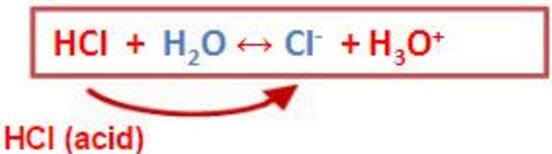
Which of the following shows the correct conjugate acid base pair?
a)
HCI (acid) / H3O+ (conjugate base)
b)
HCI (acid) / CI- (conjugate base)
c)
HCI (base) / CI- (conjugate acid)
d)
HCI (base) / H3O+ (conjugate acid)
90.
Which of the following shows the correct conjugate acid base pair?
a)
H2O (base) / H3O+ (conjugate acid)
b)
H2O (acid) / CH3COO- (conjugate base)
c)
CH3COOH (acid) / H3O+ (conjugate base)
d)
CH3COOH (base) / CH3COO- (conjugate acid)
91.
A hydrogen ion, H+, is the same as a(n):
a)
neutron
b)
electron
c)
proton
d)
hydroxide ion
92.

A Bronsted Lowry base:

a)

donates H+ to another substance

b)

accepts H+ from another substance

c)

produces H+

d)

produces OH-

93.

What does pH measure?

a)

the amount of hydrogen (H+) ions

b)

the amount of hydroxide (OH-) ions

c)

amount of water

d)

all of the above

94.
If the [H+] of a solution is 1 x 10⁻² mol/L the pH is
a)
2
b)
12
c)
-2
d)
1
95.
If the pH of a solution is 5 the [H+] is
a)
1.0 x 10 M
b)
1.0 x 10 M
c)
5.0 x 10 M
d)
1.0 x 10⁻⁵  M
96.
What is the name of CuCl2
a)
copper (II) chloride
b)
copper chloride
c)
copper monochloride
d)
copper (I) chloride
97.
Name the compound S2F8
a)
sulfur (II) fluoride
b)
disulfur octafluoride
c)
sulfur fluorine
d)
sulfur octafluoride
98.

What is Ca3N2 called?

a)

calcium nitride

b)

calcium (II) nitride

c)

calcium nitrogen

d)

tricalcium dinitride

99.
Give the name for the polyatomic ion PO43- 
a)
phosphorous tetraoxide
b)
phosphorous oxide
c)
phosphorous (III) oxygen
d)
phosphate
100.
How would you say Ni3P2?
a)
nickel (II) phosphide
b)
nickel phosphide
c)
trinickel diphosphide
d)
nickel phosphorous
101.
Write the name for Mn(CO3)2 
a)
manganese (IV) carbonate
b)
manganese (II) carbonide
c)
manganese dicarbonate
d)
manganese carbonate
102.
What is the name for VF3?
a)
vanadium trifluoride
b)
vanadium fluorine
c)
vanadium (III) fluorine
d)
vanadium (III) fluoride
103.
What is the name for SrO?
a)
strontium monoxide
b)
strontium oxide
c)
strontium (II) oxide
d)
strontium oxygen (II)
104.
What is the correct formula for Sodium Oxide?
a)
NaO
b)
NaO2
c)
Na2O
d)
Na2O2
105.
What is the correct formula for Calcium Oxide?
a)
CaO
b)
CaO2
c)
N
Ca2O
d)
Ca2O2
106.
Al +3  and  P -3
a)
Al3P3
b)
AlP
c)
P3Al3
d)
Pal
107.
Al +3  and  Cl-
a)
AlCl3
b)
Al3Cl
c)
AlCl
d)
Cl3Al
108.
The chemical formula of tetraphosphorus heptaoxide is
a)
F₄O₁₀
b)
P₄O7
c)
PO
d)
P₁₀O₄
109.
What is the formula for aluminum fluoride?
a)
AlF
b)
Al2F3
c)
AlF3
d)
Al3F2
110.
Which is the formula for nickel (III) hydroxide?
a)
Ni(OH)3
b)
NiOH
c)
Ni3(OH)3
d)
NiOH3
111.
What is the correct formula for titanium (IV) permanganate?
a)
TiMnO4
b)
Ti2MnO4
c)
Ti(MnO4)2
d)
Ti(MnO4)4
112.

What is the correct name for OH- ?

a)

ammonium cation

b)

monoxygen monohydride

c)

oxygen monohydride

d)

hydroxide anion

113.

What is the formula for Manganese(III) carbonate?

a)

Mn2(CO3)3

b)

Mn3CO3

c)

Mn3CO6

d)

Mn2C3O9

e)

MnCO3

114.

If the pH of an acid is 3, then it's pOH will be ...

a)

11

b)

3

c)

14

d)

12

115.

How are pH and pOH related?

a)

pH+pOH = 14pH+pOH\ =\ 14

b)

pH=pOHpH=pOH

c)

pHpOH=14pH-pOH=14

d)

pH = 1pOHpH\ =\ \frac{1}{pOH}

116.
What geometry will this molecular structure have?: H2S
a)
bent
b)
tetrahedral
c)
linear
d)
trigonal pyramidal
117.
Choose the correct shape for this molecule:
a)
linear
b)
Trigonal pyramidal
c)
Bent
d)
Tetrahedral
118.
Choose the correct shape for this molecule:
a)
Tetrahedral
b)
Trigonal pyramidal
c)
Bent
d)
Trigonal planar
119.
What is the shape of H2O?
a)
linear
b)
tetrahedral
c)
bent
d)
trigonal pyramidal
120.

What is the correct Lewis Dot Structure for ammonia NH3

a)
b)
c)
d)
121.
Which of the following is an acceptable Lewis structure for CH3Cl?
a)
Option A
b)
Option B
c)
Option C
d)
Option D
122.

Is this the correct structure for CH2O?

a)

Yes

b)

No

123.

In HCN (Carbon is usually the central atom) what kind of bond is between the C and N

a)

Single

b)

Double

c)

Triple

124.
What is the equilibrium-constant expression for 
CO2(g) + H2(g) ↔ CO(g) + H2O(l)
a)
Kc= [CO][H2O] / [CO2][H2]  
b)
Kc= [CO2][H2] / [CO]
c)
Kc= [CO2][H2] / [CO][H2O]
d)
Kc= [CO] / [CO2][H2]  
125.

What is the Keq expression for this reaction?

2 NO(g) + O2(g) ⇌ 2 NO2(g)

a)

Keq = [NO2]2 / [NO]2 [O2]

b)

Keq = [NO]2 [O2] / [NO2]2

c)

Keq = [NO]2 [O2] [NO2]2

d)

Keq = [NO2]2 / [NO]2 + [O2]

126.

What are the two factors to look for when determining if the reaction is at equilibrium?

a)

Forward reaction rate is faster than the reverse reaction rate and amounts of reactants are greater than the products

b)

Forward and reverse reaction rates are equal and amounts of reactants and products are constant

c)

Forward reaction rate is slower than the reverse reaction rate and amounts of reactants are greater than the products

d)

Forward reaction rate is faster than the reverse reaction rate and amounts of products are greater than the reactants

127.

At what time does the reaction reach equilibrium?

a)
t1
b)
t2
c)
t3
d)
t4
128.

Consider the following reaction. The initial concentrations are [HSO4 – ] = 0.50 M, [H3O+ ] = 0.020 M, [SO4 2–] = 0.060 M.
HSO4 – (aq) + H2O (l)    \leftrightarrow  H3O+ (aq) + SO4 2– (aq) 


 K = 0.012 


Which way would the reaction shift to reach equilibrium? 

a)

The system is already in equilibrium

b)

The system will shift toward the product

c)

The system will shift toward the reactants

129.
Consider the following reaction :    
SO2 (g) +  NO2 (g) 
 SO3 (g) + NO (g)  
had reached a state of equilibrium, was found to contain   0.40 M SO3 , 0.30 M NO, 0.15 M NO2 , and 0.20 M SO2. Calculate the equilibrium constant  for this reaction.

a)
4
b)
.42
c)
.25
d)
1
130.
When K is large, 
a)
There are more products than reactants when the reaction reached equilibrium.
b)
There are more reactant than products when the reaction reached equilibrium.
c)
The amount of reactants is equal to the amount of products.