
 Worksheets
Meiosis, Chromosomal Mutations & Karyotypes
Total questions: 35
Worksheet time: 1hrs 10mins
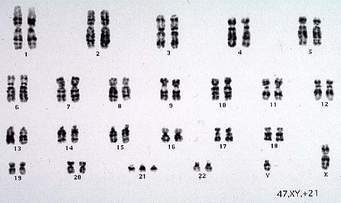

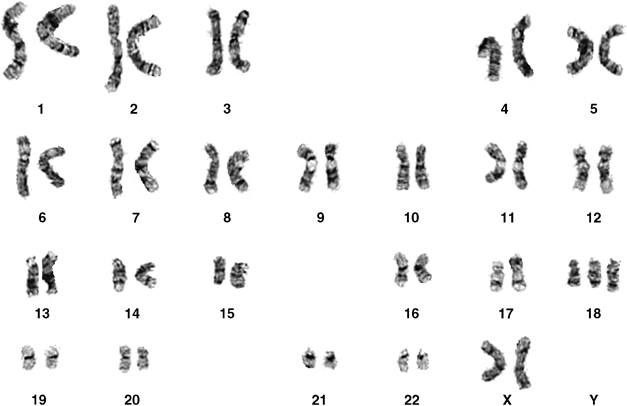
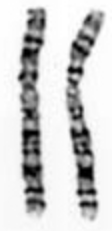
A pair of identical chromosomes shown in a karyotype, one inherited from the female, and one inherited from the male are called
sister chromotids
centromeres
homologous chromosomes
autosomes

Chromosome mutation involving loss of a piece of chromosome.
Deletion
Inversion
Translocation
Removal
Chromosome mutation involving the repeat of a piece of chromosome.
Deletion
Inversion
Translocation
Duplication
Chromosome mutation involving a segment of a chromosome breaking off and attaching to a non-homologous chromosome.
Deletion
Inversion
Translocation
Duplication

Deletion
Inversion
Translocation
Duplication

Deletion
Inversion
Translocation
Duplication

What process occurs during meiosis when chromosomes do not pull apart correctly that can result in chromosomal disorders?
crossing over
non-disjunction
anaphase I
prophase II

CROSSING OVER INCREASES
LIFE SPAN
GENETIC VARIATION
THE NUMBER OF OFF-SPRING
ALL ARE TRUE

CROSSING OVER TAKES PLACE DURING
PROPHASE II
PROPHASE I
INTERPHASE
METAPHASE I
MEIOSIS
REDUCES THE NUMBER OF CHROMOSOMES BY ONE HALF
PRODUCES UNIQUE SEX CELLS-1N
ALLOWS TRAITS TO BE PASSED TO OFFSPRING
ALL ARE TRUE
INCREASE GENETIC VARIATION
MITOSIS
INCREASES GENETIC VARIATION
ALLOWS TRAITS TO BE PASSED ON TO OFFSPRING
PRODUCES 2 IDENTICAL DAUGHTER CELLS
ALL ARE TRUE
FERTILIZATION OCCURS WHEN
THE SPERM UNITES WITH THE EGG
THE SPERM UNDERGO MEIOSIS
THE EGG UNDERGOES MEIOSIS
THE EGG AND SPERM UNDERGOES MEIOSIS
MEIOSIS PRODUCES 4 CELLS, THEY ARE
N
2N
3N
NORMAL HUMANS HAVE 46 CHROMOSOMES, HOW MANY WILL THE GERM CELLS HAVE AFTER MEIOSIS?
46
23
12
92

The process in the image shows... ?
metaphase
non-disjunction
crossing over
mitosis
This law describes how each member of a homologous pair lines up randomly at the metaphase plate and is pulled randomly to one side or another in anaphase I
Law of Segregation
Law of Independent Assortment
Law of Gravity
Law of Mathematical Order
What is the purpose of meiosis?
growth
repair
replacing old cells
sexual reproduction
What is the purpose of mitosis?
sexual reproduction
growth, repair & replace old cells
to increase genetic variation

Cancer cells are different than other cells in your body, this is because they cannot enter G0 and are likely to...
Mutate during G1 phase
Repeat the cell cycle continuously
The activities in the cell cycle occur during specific phases. In which phase is DNA replicated ?
Mitosis
G1 phase
G2 Phase
S Phase
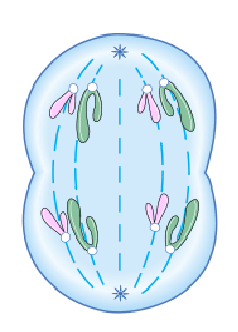
What phase am I?
Interphase
Prophase
Metaphase
Anaphase
Telophase
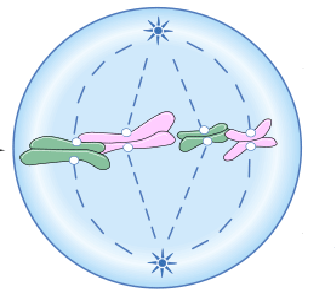
What phase am I?
Interphase
Prophase
Metaphase
Anaphase
Telophase
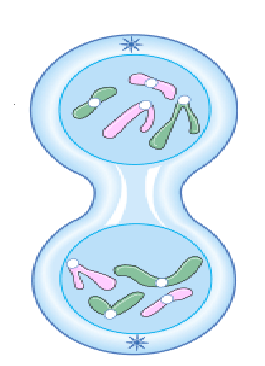
What phase am I?
Interphase
Prophase
Metaphase
Anaphase
Telophase
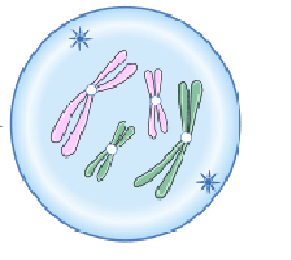
What phase am I?
Interphase
Prophase
Metaphase
Anaphase
Telophase

