wayground logo

Free Printable Worksheets

Font size

S
M
L
XL
Worksheets

Winter Benchmark Review

Total questions: 34

Worksheet time: 1hrs 2mins

Name
Class
Date
1.
This cell organelle helps organisms maintain homeostasis by controlling what substances may enter or leave cells.
a)
vacuole
b)
nucleus
c)
cell membrane
d)
cell wall
2.
Active Transport typically uses ______ to transport materials across the cell membrane.
a)
ATP
b)
Glucose
c)
Na+
d)
K+
3.

What do viruses have in common with living cells? They both...

a)

store genetic information

b)

have chloroplasts

c)

use glucose for cellular respiration

d)

have endoplasmic reticulum

4.
What kind of organic molecule is DNA?
a)
Protein
b)
Nucleic Acid
c)
Lipid 
d)
Carbohydrate
5.
Plants perform photosynthesis through this organelle.  It captures energy from the sun and uses it to produce food for the cell.
a)
Chlorophyll
b)
Chloroplasts
c)
Mitochondria
d)
Golgi Apparatus
6.
succession that occurs in an area with no soil
a)
ecological succession 
b)
primary succession 
c)
secondary succession
d)
pioneer speciles
7.

A CELL WITHOUT A NUCLEUS IS...

a)

PROKARYOTIC

b)

PLANT

c)

ANIMAL

d)

PROTIST

8.

A CELL WITH A NUCLEUS IS...

a)

PROKARYOTIC

b)

VIRUS

c)

BACTERIA

d)

EUKARYOTIC

9.
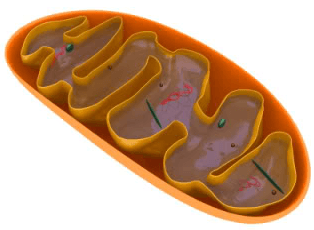
What are tiny organelles that convert glucose into ATP?
a)
Ribosomes
b)
Vesicles
c)
Cytoskeleton
d)
Mitochondria
10.
Which sequence of DNA bases would pair with this partial strand
ATG TGA CAG
a)
ATG TGA CAG
b)
TAC ACT GTC
c)
GTA AGT GAC
d)
CAT TCA CTG
11.
Type of cell shown?
a)
Bacterial
b)
Prokaryotic
c)
Eukaryotic
d)
Red blood 
12.
What type of cell is pictured?
a)
Prokaryotic
b)
Eukaryotic
c)
Plant
d)
Animal
13.
Which biomolecule helps form muscles?
a)
Nucleic Acid
b)
Carbohydrate
c)
Protein
d)
Lipids
14.
Which biomolecule is responsible for insulation and energy storage?
a)
Protein
b)
Nucleic Acid
c)
Lipid
d)
Carbohydrate
15.

Which biomolecule is sugars, starches, and found in plant cell walls?

a)

Lipids

b)

Proteins

c)

Carbohydrates

d)

Nucleic Acid

16.
Which of the following conclusions can be drawn from this graph?
a)
The optimum pH of the enzyme is 6.6.
b)
The optimum pH of the enzyme is 5.8
c)
The enzyme’s activity increases as pH increases 5.0 to 9.0
d)
The enzyme’s activity is greater around pH of 8.0 .
17.
Every enzyme has a optimal temperature and pH. True or False?
a)
True 
b)
False
18.
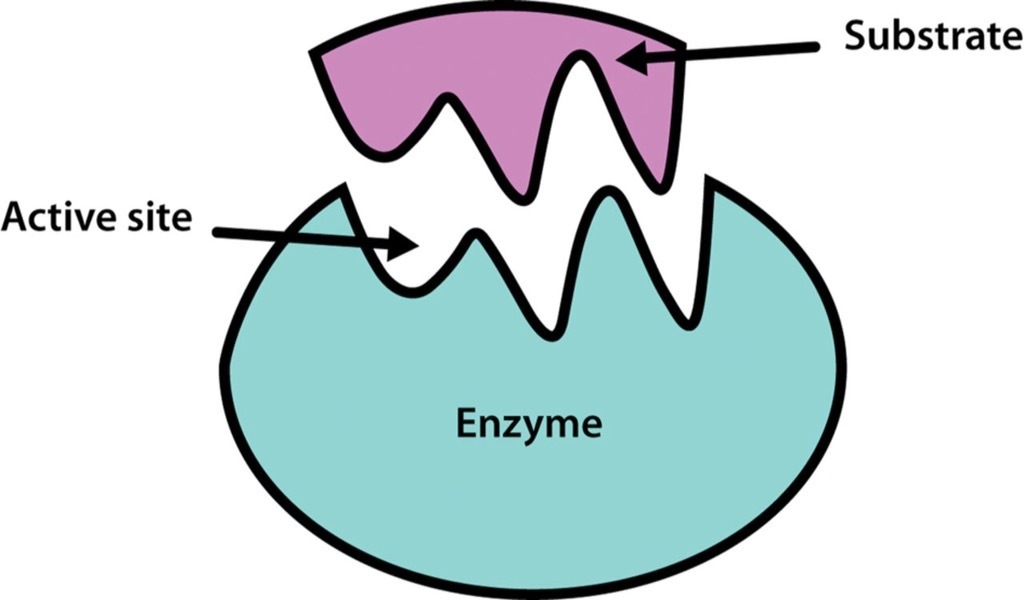
What biomolecule do enzymes belong to? 
a)
Carbohydrate
b)
Lipid
c)
Nucleic Acid
d)
Protein
19.

Which biomolecule makes up cell membranes?

a)

Protein

b)

Carbohydrate

c)

Lipid

d)

Nucleic acid

20.
During which part of the cell cycle does the cell divide?
a)
Interphase
b)
Mitosis
c)
S phase
21.
During which parts of the cell cycle does the cell grow?
a)
G1 and G2
b)
G1 and S
c)
M phase and cytokinesis
22.
During which part of the cell cycle is DNA copied?
a)
Mitosis
b)
Cytokinesis
c)
S phase
23.

Uncontrolled cell division which usually leads to tumors and disease is called:

a)

Metaphase

b)

Cytokinesis

c)

Cancer

d)

Diabetes

24.
In mitosis, the two resulting cells are
a)
different from the starting cell and identical to each other.
b)
different from the starting cell and different from each other.
c)
identical to the starting cell and different from each other.
d)
identical to the starting cell and identical to each other.
25.
Fruit fly body cells have 8 chromosomes. After mitosis, you would expect a resulting fruit fly daughter cell to have -
a)
16 chromosomes.
b)
46 chromosomes.
c)
8 chromosomes.
d)
4 chromosomes.
26.
What do viruses need to reproduce?
a)
they need genetic material
b)
They need a host cell
c)
They need  bacteria
d)
They need insulin
27.
What is the difference between the lytic and lysogenic virus reproductive cycles?
a)
lysogenic is longer
b)
they are the same
c)
Lytic is longer
d)
Both are different each time
28.
A _____________________ infection involves the phage combining its DNA with the host cells DNA. Often hiding for years.
a)
lysogenic
b)
lytic
c)
vaccine
d)
vinerial
29.

Which one is typically smaller in size?

a)

Virus

b)

Bacteria

30.

Which of the types of transport are passive?

a)

A only.

b)

A and B only.

c)

B and C only.

d)

C only.

31.

A red blood cell is placed into a solution. The red blood cell has a lower concentration of protein and sugar than the solution, as shown in the diagram. What is most likely to occur?

a)

Water from the solution will move into the red blood cell.

b)

Water from the red blood cell will move into the solution.

c)

Protein and sugar will move from the solution into the red blood cell.

d)

Protein and sugar will move from the red blood cell into the solution.

32.
 In the given scenario what will happen?  An egg with a dissolved shell is placed in pure water for 48 hours.
a)
Water will move in and out of the cell equally, and the cell with neither shrink nor swell.
b)
The egg will gain water and swell.
c)
The egg will lose water and shrink.
33.
 An animal cell placed in a hypertonic (salty) solution will
a)
Stay the same
b)
Shrink- get smaller
c)
Swell- get bigger
34.

In which cycle, does a virus reproduce in your body very quickly?

a)

Lytic

b)

Lysogenic