wayground logo

Free Printable Worksheets

Font size

S
M
L
XL
Worksheets

Biology Semester Exam Review

Total questions: 86

Worksheet time: 1hrs 16mins
Name
Class
Date
1.
The cells produced via meiosis are called:
a)
sex cells
b)
somatic cells
c)
body cells
d)
skin cells
2.
Unlike mitosis, meiosis in male mammals results in the formation of
a)
one haploid gamete
b)
three diploid gametes
c)
four diploid gametes
d)
four haploid gametes
3.
Name the growth phase of the cell cycle for both Mitosis and Meiosis.
a)
metaphase
b)
telophase
c)
interphase
d)
anaophase
4.
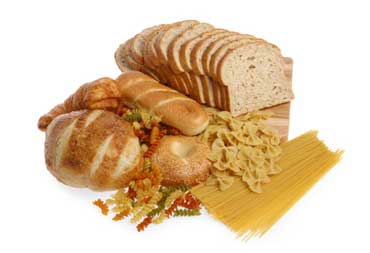
Which biomolecule is found in pasta and bread?
a)
Lipid
b)
Protein
c)
Nucleic Acid
d)
Carbohydrate
5.
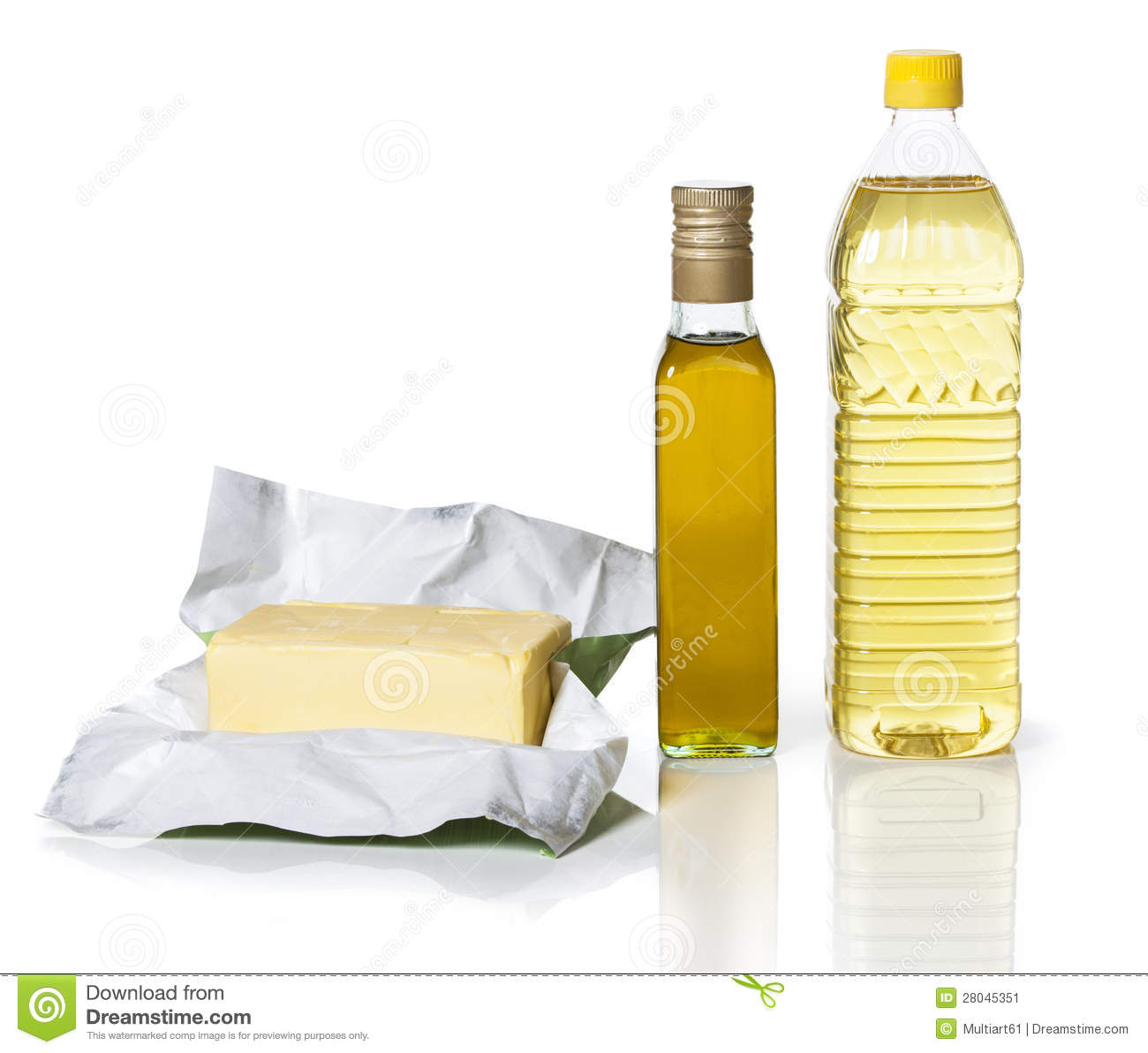
Which biomolecule is found in fats, oils, and waxes and is a source of long-term energy
a)
Proteins
b)
Nucleic Acid
c)
Lipids
d)
Carbohydrate
6.
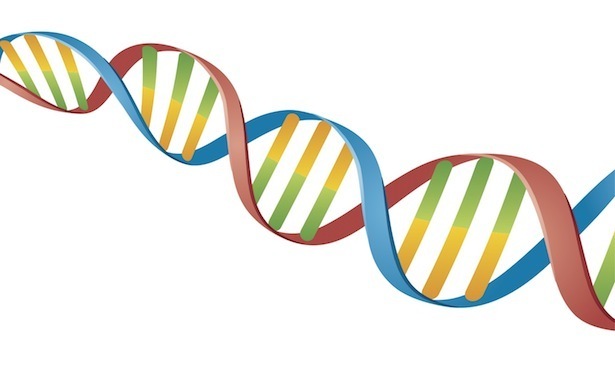
What is the function of a nucleic acid?
a)
Stores genetic information
b)
Stores energy
c)
Quick source of energy
d)
Builds structures
7.
Carbon, Hydrogen, Oxygen and Nitrogen are elements in what biomolecule?
a)
Carbohydrate
b)
Lipid
c)
Protein
d)
Nucleic acid
8.
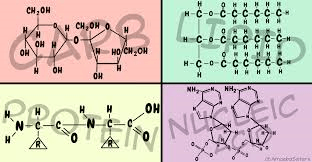
What elements are common to all 4 biomolecules?
a)
Carbon, hydrogen, nitrogen
b)
Carbon, Nitrogen, Phosphorus
c)
Carbon, Hydrogen, Oxygen
d)
Carbon, Hydrogen, Phosphorus
9.
A monomer is ...
a)
a single atom
b)
a building block for polymers
c)
a single element
d)
is an inorganic molecule
10.
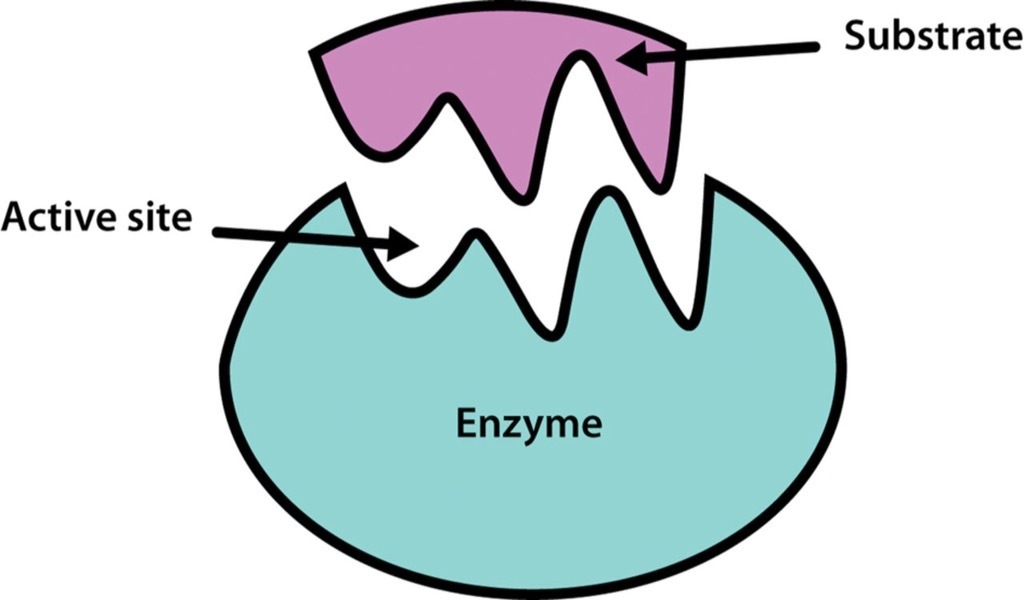
What biomolecule do enzymes belong to? 
a)
Carbohydrate
b)
Lipid
c)
Nucleic Acid
d)
Protein
11.
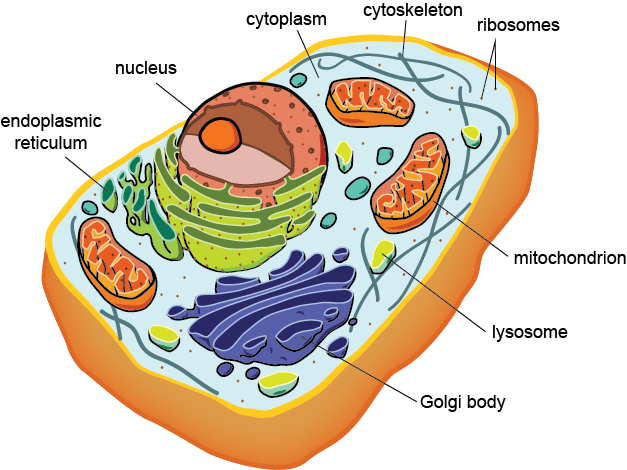
surrounds the cell; regulates what enters/leaves cell; maintains homeostasis
a)
vacuole
b)
cell wall
c)
cell membrane
d)
lysosome
12.
control the cell's activities; contains the cell's DNA
a)
mitochondria
b)
cell membrane
c)
nucleus
d)
golgi body
13.
What is the main difference between prokaryotic and eukaryotic cells?
a)
Prokaryotic cells have a nucleus and Eukaryotic cells do not
b)
Prokaryotic cells are unicellular and Eukaryotic cells are multicellular.
c)
Prokaryotic cells do not have a nucleus, Eukaryotic cells do have a nucleus.
d)
Prokaryotic cells are plant cells and Eukaryotic cells are animal cells.
14.
What is the cell organelle that stores water, food and waste called?
a)
The cytoplasm
b)
The lysosomes
c)
The vacuole
d)
The mitochondria
15.
The main function of chloroplasts is:
a)
To control what enters and leaves the cell.
b)
To break down food to release energy for the cell.
c)
To control all activities of the cell.
d)
To produce food for the cell using the sun's energy.
16.
This organelle helps plants keep their rigid structure. 
a)
Cell wall
b)
Cell membrane
c)
Chloroplast
d)
Nucleus
17.
The basic unit of structure and function in living things is the ___________.
a)
Organ Systems
b)
Tissues
c)
Organs
d)
Cells
18.
How does RNA differ from DNA?
a)
RNA contains uracil and deoxyribose
b)
RNA contains ribose and thymine
c)
RNA contains uracil and ribose
d)
RNA contains adenine and ribose
19.
How would the DNA sequence GCTATA be transcribed to mRNA?
a)
GCUAUA
b)
CGATAT
c)
CGAUAU
d)
GCUTUT
20.
Which of the following describes RNA?
a)
RNA is usually double-stranded and contains the base thymine
b)
RNA is usually single-stranded and contains the base uracil
c)
RNA is longer than DNA and uses five bases to encode information
d)
RNA is made in the nucleus of eukaryotic cells and stays there to carry out its functions
21.

Transcribe the following DNA sequence:


AAT TAG GGC TCG

a)

AAT TAG GGC TCG

b)

TTA ATC CCG AGC

c)

UUA AUC CCG AGC

d)

TTU UTC CCG UGC

22.
Replicate the following strand of DNA: 
AATCATGGA
a)
AATCATGGA
b)
TTAGTACCT
c)
UUAGUACCU
d)
GGATAUCUA
23.

What is the order for Protein Synthesis?

a)

Transcription -> Translation -> Protein

b)

Translation - > Transcription -> Protein

c)

Protein -> Transcription -> Translation

d)

Translation -> Protein -> Transcription

24.
This is the simplest form of passive transport:
a)
osmosis
b)
diffusion
c)
facilitated diffusion
d)
endocytosis
25.
Controlling what goes into or out of the cell with the help of energy is called
a)
active transport
b)
endocytosis
c)
passive transport
d)
exocytosis
26.
Most active transport proteins use energy from the breakdown of:
a)
nucleus
b)
cell membrane
c)
ATP
d)
mitochondria
27.

The broadest taxon is

a)

Domain

b)

Species

c)

Phylum

d)

Order

28.

The most specific taxon is

a)

Domain

b)

Species

c)

Phylum

d)

Order

29.

Which of the following lists the taxa in order from most inclusive to least inclusive?

a)

Domain - Kingdom - Phylum - Order - Family - Class - Genus - Species

b)

Species - Genus - Family - Class - Order - Kingdom - Phylum - Domain

c)

Domain - Kingdom - Phylum - Class - Order - Family - Genus - Species

d)

Species - Genus - Family - Order - Class - Phylum - Kingdom - Domain

30.

An organisms scientific name consists of which two taxa?

a)

Domain and Kingdom

b)

Genus and Species

c)

Family and Species

d)

Genus and Domain

31.

Organisms are placed into their taxa based on the characteristics they exhibit.

a)

True

b)

False

32.

Which picture best represents active transport?

a)
b)
c)
d)
33.

The process which water travels from high concentration to low concentration through a membrane:

a)

active transport

b)

facilitated diffusion

c)

exocytosis

d)

osmosis

34.

Which definition best explains this picture?

a)

Diffusion- the process of small particles moving through a membrane.

b)

Facilitated diffusion- the process which particles travel from [H] to [L] concentration through a protein.

c)

Active transport- the process which particles travel from [L] to [H] concentration and requires ATP.

d)

Endocytosis- the process which cells bring large particles into the cell.

35.

The reactants for photosynthesis are __________.

a)

oxygen and sugar

b)

oxygen, carbon dioxide, and water

c)

carbon dioxide, water, and light energy

d)

ATP, ADP, phosphate

36.

The purpose of cellular respiration is to make __________.

a)

food from energy

b)

ATP from glucose

c)

heat for the organism

d)

oxygen

37.

What are the products of cellular respiration?

a)

water, carbon dioxide, and ATP

b)

oxygen and glucose

c)

oxygen and carbon dioxide

d)

oxygen, carbon dioxide, and water

38.

Fermentation occurs when there is a lack of __________.

a)

oxygen

b)

water

c)

glucose

d)

carbon dioxide

39.

When animals exercise with a lack of oxygen their muscles can form __________.

a)

lactic acid

b)

alcohol

c)

carbon dioxide

d)

oxygen

40.

Where does photosynthesis take place?

a)

Mitochondria

b)

Cytoplasm

c)

Chloroplasts

d)

Chlorophyll

41.

Mitosis includes:

a)

Interphase, Prophase, and Cytokinesis

b)

Prophase, Metaphase, Anaphase, Telophase

c)

Prophase, Cytokinesis, Anaphase

d)

Interphase, M2 Phase, Metaphase, Cytokinesis

42.

Organized structures of DNA are referred to as:

a)

Deoxyribonucleuic Acid

b)

Chromatid

c)

Chromosome

d)

Centromere

43.

Which two parts of the cell are unique to plant cells?

a)

Cell membrane and cytoplasm

b)

Cell wall and cytoplasm

c)

Cell wall and chloroplasts

d)

Cell membrane and chloroplasts

44.
Which of the following statements is not part of the cell theory?
a)
Cells are the basic unit of structure and function in all living things.
b)
All cells are produced from other cells.
c)
Only animal cells are composed of cells.
d)
All living things are composed of cells.
45.
Which of the following is the correct equation for PHOTOSYNTHESIS?
a)
CO+ light + H2O --> O+ Sugar
b)
CO+ sugar + H2O --> O+ light
c)
O2 + light + H2O --> CO+ Sugar
d)
CO+ O2 + H2O --> Light+ Sugar
46.
This is the first step of cellular respiration
a)
Glycolysis
b)
Lactic Acid Fermentation
c)
Alcoholic Fermentation
d)
Aerobic Respiration
47.

How do enzymes speed up chemical reaction?

a)

Increasing activation energy

b)

Decreasing activation energy

c)

Increasing deactivation energy

d)

Decreasing deactivation energy

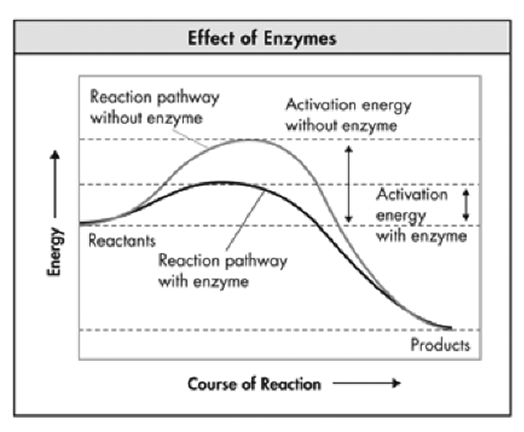
48.
The graph shows how enzymes affect reactions in cells. Which statement best summarizes the information shown in the graph?
a)
Enzymes increase the energy of the reactants.
b)
Enzymes decrease the energy level of the products.
c)
Enzyme decrease the activation energy of the reaction.
d)
Enzymes reverse the direction of the reaction.
49.
What is a valence electron?
a)
an electron that is found in the outermost shell of an atom. 
b)
an electron found in the innermost shell of an atom.
c)
an electron found in the middle shell.
50.
A water molecule (H2O) is an example of a covalent bond becuase ____.
a)
The hydrogen gains an electron an the oxygen loses one.  
b)
Electrons are shared btween the hydrogen and oxygen
c)
They do not form a eutral goup of atoms. 
d)
Hydrogen and oxygen are both negative ions.   
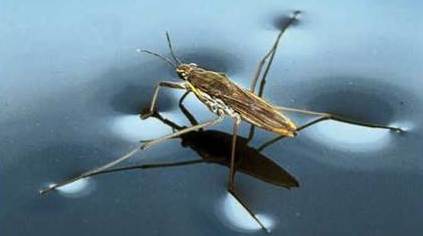
51.
Refer to the picture; this is occurring due to:
a)
Adhesion
b)
Cohesion
52.

DNA replication occurs

a)

during the S phase of interphase

b)

during M phase

c)

during cytokinesis

53.
The three particles that make up atoms are
a)
protons, neutrons, and isotopes.
b)
neutrons, isotopes, and electrons.
c)
positives, negatives, and neutrals.
d)
protons, neutrons, and electrons.
54.
Water molecules are polar, with the
a)
oxygen side being slightly positive and the hydrogen side being slightly negative
b)
oxygen and hydrogen sides being slightly positive
c)
oxygen and hydrogen sides being slightly negative.
d)
oxygen side being slightly negative and the hydrogen side being slightly positive
55.
Why is carbon so special compared to other elements?
a)
Carbon atoms can bond to one another and form a lot of different structures.
b)
Carbon atoms have four valence electrons and can form quadruple bonds.
c)
Only carbon atoms can form covalent bonds with oxygen and hydrogen
d)
Only carbon atoms can be dissolved in water solutions and suspensions
56.
Which of the following statements is true about catalysts?
a)
catalyst slow down the rate of chemical reactions
b)
all catalysts are enzymes
c)
catalysts are used up during chemical reactions
d)
catalysts lower the activation energy of chemical reactions
57.
There are two types of data. Which type of data involves numbers that are obtained by counting or measuring?
a)
quantitative
b)
qualitative
58.
Which invention from the 17th century allowed for the development of modern cell theory?
a)
x-rays
b)
computers
c)
the light microscope
d)
the scanning electron microscope
59.
A cross of a black chicken (BB) with a white chicken (WW) produces all speckled offspring (BW). This type of inheritance is known as
a)
incomplete dominance.
b)
polygenic inheritance.
c)
codominance.
d)
multiple alleles.
60.
A mutation that occurs in the gametes of an organism will most likely be transferred to which of the following?
a)
offspring 
b)
siblings 
c)
parents 
d)
mating partner 
61.
A pattern of inheritance in which one allele for a gene is not completely dominant over another allele for that gene are called
a)
multiple alleles 
b)
incomplete domincance 
c)
polygenic traits
d)
multiple genes 
62.
Which of the following can be observed in a karyotype?
a)
change in a DNA base 
b)
an extra chromosome 
c)
genes 
d)
alleles 
63.
How does DNA in cells determine an organism’s complex traits?
a)
DNA contains codes for proteins, which are necessary for the growth and functioning of an organism.
b)
DNA separates into long single strands that make up each part of an organism.
c)
DNA produces energy an organism needs in order to grow.
d)
DNA folds into the nucleus of each of the cells of an organism
64.
Crossing over increases 
a)
gametes 
b)
genetic variation 
c)
gene expression 
d)
polyploidy 
65.
Gametes have
a)
half the number of chromosomes found in body cells 
b)
twice the number of body cells found in gametes 
c)
homologous chromosomes 
d)
two sets of chromosomes 
66.
In rats, the gene for brown fur (B) is dominant over the gene for white fur (b). Which set of genotypes represents a cross of two brown rats that could produce offspring with white fur?
a)
BbxBb
b)
bbxbb
c)
BBxbb
d)
BBxBB
67.
True or False: In a human karyotype, 44 of the chromosomes are autosomes.
a)
True 
b)
False 
68.
If two checkered chickens (BW) are mated, according to the principle of codominance, what percent of the offspring are expected to be checkered? 
a)
25
b)
50
c)
100
d)
0
69.
Two parents have Huntington’s disease, which is an autosomal dominant trait. May these parents produce offspring who does not have Huntington’s disease?
a)
yes 
b)
no
70.
The physical appearance or the way a gene looks is known as it's....
a)
genotype
b)
allele
c)
gene
d)
phenotype
71.
An allele or gene that always shows is
a)
recessive
b)
dominant
c)
hidden
d)
present
72.
Two of the same genes for a trait (sometimes called purebred). BB or bb
a)
homozygous
b)
hetrozygous
c)
protein
d)
chromosome
73.
Two different genes for a trait (sometimes called hybrid). Bb
a)
protein
b)
homozygous
c)
heterozygous
d)
genotype
74.
G = dominant green and y = recessive yellow
A fish has a Gy genotype, what will its phenotype be?
a)
yellow
b)
green
c)
greenish-yellow
d)
red
75.
T - tall and t = short
In the punnett square below, what belongs in the missing square
a)
tt
b)
Tt
c)
Bb
d)
TT
76.
A ________________________ is used to predict the possible genotype from certain parents
a)
Mendel Grid
b)
Genetic Tic Tac Toe
c)
Punnett Square
d)
Pedigree Plot
77.
What is a gene?
a)
An entire chromosome that  codes for a trait
b)
a piece of clothing
c)
a piece of a DNA on chromosome that codes for a trait
d)
Chemical messengers in your brain that code for a trait
78.
What is a genotype? 
a)
The genetic make up (code)
b)
The physical trait
79.
Tall is dominant to short. What is the phenotype of this organism?
Tt
a)
tall
b)
short
80.
Darwin said that the number of offspring an organism has ___________________
a)
stays the same
b)
is more than can survive
c)
is less than needed
81.
Organisms with differences/variations that are helpful will ______________________
a)
live longer
b)
become extinct
c)
show no change
82.
What can happen to a species over time if some of the organisms have an advantage?
a)
The population will decrease
b)
The population will become extinct
c)
The population will slowly increase
83.
Where the better adapted organisms survive to pass traits along to offspring.
a)
Evolution
b)
Natural Selection
c)
Extinction
d)
Artifical Selection
84.
Why are advantageous traits more likely to be passed onto offspring?
a)
Because they are more likely to survive and reproduce.
b)
Because they come from dominant alleles.
c)
Because they come from recessive alleles.
d)
Because the trait is an acquired phenotype.
85.
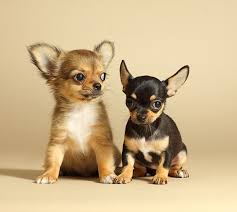
Dogs such as Chihuahuas are examples of....
a)
Artificial Selection 
b)
Natural Selection 
c)
Mutations 
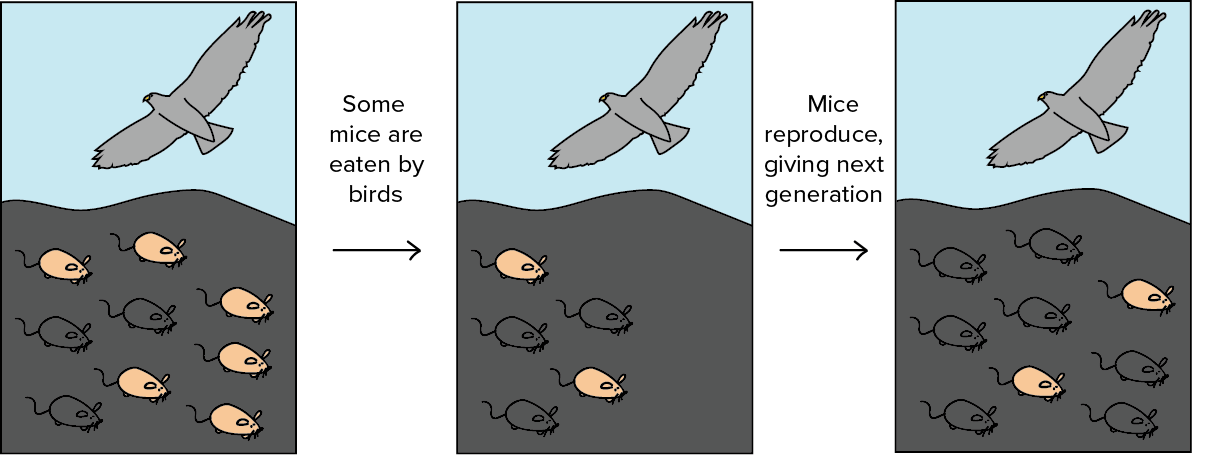
86.
Why is the mouse population changing over time?
a)
The light mice can reproduce more successfully than the dark mice
b)
The hawks eat more dark mice than light mice because the dark mice taste better
c)
The hawks eat more light mice than dark mice because they can see the light mice more easily
d)
The hawks eat more dark mice than light mice because they can see the dark mice more easily