wayground logo

Free Printable Worksheets

Font size

S
M
L
XL
Worksheets

Review for Midterm

Total questions: 265

Worksheet time: 66hrs 15mins

Name
Class
Date
1.

What is the atomic number?

a)

the number of protons in the nucleus

b)

the number of protons and neutrons in the nucleus

c)

the number of neutrons in the nucleus

d)

the number of protons in the energy levels

2.

What is the mass number?

a)

the number of protons in the nucleus

b)

the number of protons and neutrons in the nucleus

c)

the number of neutrons in the nucleus

d)

the number of protons and electrons in the atom
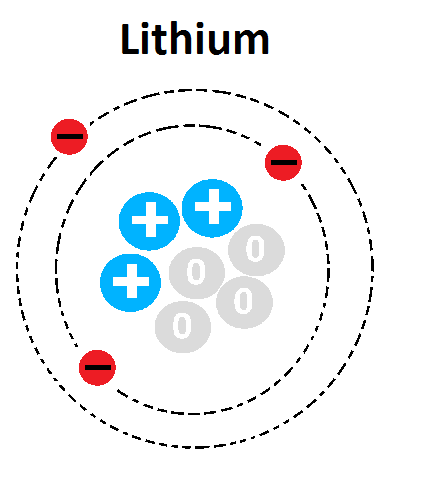
3.

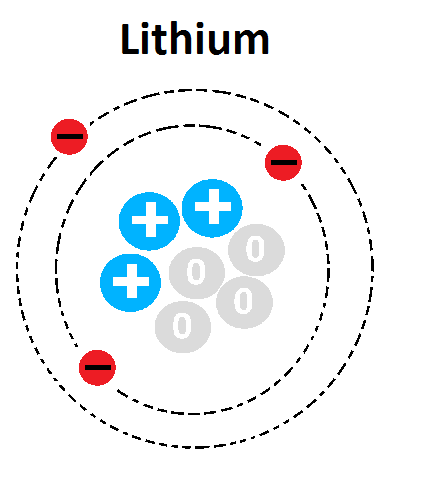
What is the atomic number of this atom?

a)

1

b)

3

c)

4

d)

7

4.

What is the mass number of this atom?

a)

1

b)

3

c)

4

d)

7

5.
Most of the mass in an atom is made up of _____________________?
a)
protons and electrons
b)
protons and neutrons
c)
neutrons and electrons
d)
electrons and quarks
6.
In order for an atom to be neutral what has to be true?
a)
The atom has more protons than neutrons
b)
The atom has more neutrons than protons
c)
The atom has the same number of protons and neutrons
d)
The atom has the same number of protons and electrons
7.
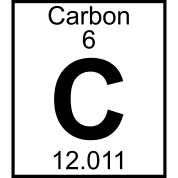
What does the C represent?
a)
atomic mass
b)
atomic number
c)
element name
d)
chemical symbol 
8.
How is the number of neutrons in the nucleus of an atom calculated?
a)
Add the number of e- and p+ together
b)
Subtract the number of e- from p+
c)
Subtract the number of p+ from the mass number
d)
Add the mass number to the number of e-
9.
What subatomic particles would you find in the nucleus of an atom?
a)
Protons only
b)
Protons and Neutrons
c)
Neutrons and Electrons
d)
Protons and Electrons 
10.
Which subatomic particles contribute the most to the mass of an atom?
a)
Protons, Neutrons, Electrons
b)
Protons only
c)
Protons and Electrons
d)
Protons and Neutrons
11.
If an atom has 12 positively charged subatomic particles, which of the following must it also have to be considered a neutral atom?
a)
12 neutrons
b)
12 electrons
c)
12 protons
d)
24 protons and neutrons
12.

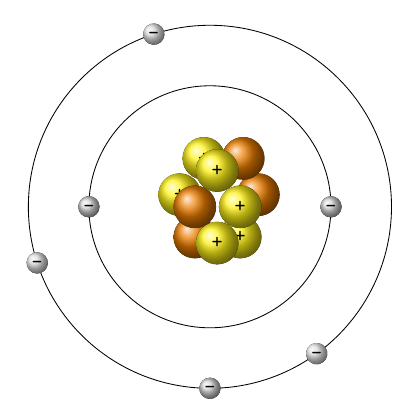
How many electrons does this atom have?

a)

2

b)

4

c)

6

d)

10

13.

An atom has 10 protons, 15 neutrons and 10 electrons what is its mass number.

a)

20

b)

10

c)

35

d)

25

14.
The atomic number of an element that has 9 protons, 9 electrons, and 10 neutrons is _____.
a)
9
b)
10
c)
19
d)
28
15.
An element with a mass number of 11 and an atomic number of 5 has how many neutrons?
a)
11
b)
5
c)
6
d)
16
16.
Where is most of the mass in an atom located?
a)
in the nucleus
b)
in the protons
c)
in the neutrons
d)
in the electrons
17.
Each column in the periodic table is called a 
a)
period
b)
group
c)
cluster
d)
unit
18.
Which group of the periodic table is composed of inert (not reactive)  gases?
a)
alkali metals
b)
alkaline earth metals
c)
halogens
d)
noble gases
19.
Elements which are shiny, conduct electricity and heat are called
a)
metal
b)
nonmetal
c)
metalloid
d)
nonexistent
20.
Which element is not a metal?
a)
H
b)
Re
c)
Al
d)
B
21.
The atoms along the staircase are called 
a)
metals
b)
nonmetals
c)
metalloids
d)
noble gases
22.
Which is a halogen?
a)
Helium
b)
Chlorine
c)
Oxygen
d)
Neptune
23.
Which is an alkali metal?
a)
Magnesium
b)
Iron
c)
Sodium
d)
Europium
24.
A horizontal row of elements in the periodic table.
a)
column
b)
group
c)
period
25.
A vertical column in the periodic table.  Elements share similar properties.
a)
row
b)
group
c)
period
26.
Elements in a ..................have similar chemical properties.  
a)
period
b)
group
c)
row
27.
The simplest substance is..?
a)
Carbon
b)
An element
c)
Water
d)
A simple compound 
28.
A neutron has a charge of
a)
+2
b)
No charge
c)
-1
d)
+1
29.

What are the elements in group 1 (the far left) of the periodic table called?

a)

Alkali metals

b)

Alkaline earth metals

c)

Halogens

d)

Noble gases

30.

What are the elements in group 2 of the periodic table called?

a)

Alkali metals

b)

Alkaline earth metals

c)

Halogens

d)

Noble gases

31.

What are the elements in group 17 of the periodic table called?

a)

Alkali metals

b)

Alkaline earth metals

c)

Halogens

d)

Noble gases

32.

Hydrogen is a:

a)

Alkali metal

b)

Metalloid

c)

Non-metal

d)

Noble gas

33.

The positively charged particle in the nucleus of an atom is a:

a)

Proton

b)

Neutron

c)

Electron

d)

Shell

34.

The vertical columns on the periodic table that have common properties are called

a)

Groups

b)

Periods

c)

Shells

d)

Valences

35.

The Russian scientist who created one of the first periodic tables by using atomic mass was:

a)

Bohr

b)

Rutherford

c)

Mendeleev

d)

Thomson

36.

The subatomic particles that are located the farthest from the nucleus are:

a)

Valence electrons

b)

Valence protons

c)

Periodic electrons

d)

Periodic protons

37.

The number of electron shells an atom has is equal to the element's:

a)

Period number

b)

Group number

c)

Valence number

d)

Atomic number

38.

The number of valence electrons an element has is equal to its:

a)

Period number

b)

Group number

c)

Valence number

d)

Atomic number

39.

The model of an atom that shows electrons in circular orbits around the nucleus is called the:

a)

Bohr Model

b)

Lewis Dot Structure

c)

Rutherford Model

d)

Thomson Model

40.

The order of elements in the periodic table is based on

a)

the number of protons in the nucleus.

b)

the electric charge of the nucleus.

c)

the number of neutrons in the nucleus.

d)

atomic mass.

41.

Atoms of elements that are in the same group have the same number of

a)

protons.

b)

neutrons.

c)

valence electrons.

d)

protons and neutrons.

42.

How was Mendeleev's periodic table arranged?

a)

by increasing atomic mass

b)

by decreasing atomic mass

c)

by increasing atomic number

d)

by decreasing atomic number

43.

Mendeleev left gaps in his periodic table because

a)

the table was too small.

b)

protons belonged there.

c)

the table was too full.

d)

no known elements fit there.

44.

The three main groups of elements are metals, nonmetals, and

a)

inert gases.

b)

alkali metals.

c)

radioactive isotopes.

d)

semiconductors/metalloids.

45.

Which statement about the alkali metals is correct?

a)

They are located in the left-most column of the periodic table.

b)

They are extremely nonreactive.

c)

They are usually gases.

d)

They form negative ions with a 1- charge.

46.

Which of the following is a property of group 18 elements?

a)

malleable

b)

brittleness

c)

high electrical conductivity

d)

unlikely to react with other elements

47.

Na ionizes to a charge of _______

a)

+1

b)

+2

c)

-1

d)

-2

48.

Li ionizes to a charge of _________

a)

+2

b)

+1

c)

-1

d)

-2

49.

Be ionizes to a charge of ________.

a)

+1

b)

+2

c)

-1

d)

-2

50.

Mg ionizes to a charge of ______.

a)

+1

b)

+2

c)

-1

d)

-2

51.

N ionizes to a charge of _______.

a)

+3

b)

-3

c)

+2

d)

-2

52.

P ionizes to a charge of _______.

a)

+3

b)

-3

c)

+2

d)

-2

53.

As ionizes to a charge of _______.

a)

-3

b)

+3

c)

-2

d)

+2

54.

O ionizes to a charge of ________.

a)

+1

b)

+2

c)

-1

d)

-2

55.

S ionizes to a charge of _______.

a)

-2

b)

-1

c)

+1

d)

+2

56.

Te ionizes to a charge of ________.

a)

-2

b)

-1

c)

+2

d)

+1

57.
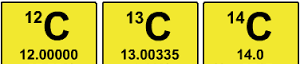
What do these isotopes of carbon all have in common?
a)
neutrons & mass number
b)
atomic number and neutrons
c)
atomic number and electrons
d)
protons, atomic number, and mass number
58.
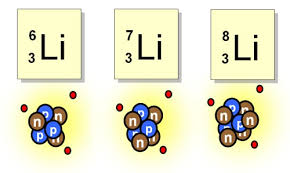
How many neutrons does the isotope of lithium have?
a)
8
b)
3
c)
4
d)
5
59.
What quantities vary between isotopes of an element?
a)
protons, electrons, and atomic mass
b)
protons, electrons, and atomic number
c)
neutrons and electrons
d)
neutrons and atomic mass
60.
which atom has  4 neutrons?
a)
Li-6
b)
Li-7
c)
Li-8
d)
they have the same # of neutrons
61.
How many neutrons in C-14?
a)
6
b)
7
c)
14
d)
8
62.
Isotopes are atoms of the same element with different #’s of __________ & therefore different __________.
a)
n0 ;  atomic #’s
b)
p+ ; atomic #’s
c)
e- ; atomic masses
d)
n0 ; atomic masses
63.
How many neutrons does the isotope below have?     89 36Kr
a)
53
b)
36
c)
89
d)
125
64.
If X is the symbol for an element, which of the following two symbols represent    isotopes of the same element?     I. 7735X  II. 7733X  III. 8137X  IV. 8135 X
a)
I and II
b)
III and IV
c)
I and IV
d)
I and III
65.
How many neutrons does an atom of the isotope Neon-22 have?
a)
12
b)
10
c)
22
d)
20
66.
Four isotopes of lead include lead-204, lead-206, lead-207, and lead-208.  The average atomic mass of lead is 207.2.  Which isotope of lead is likely to be the most abundant.
a)
204
b)
206
c)
207
d)
208
67.
An atom is electrically neutral when
a)
protons and neutrons are the same
b)
protons and electrons are the same
c)
neutrons and electrons are the same
d)
neutrons balance the protons and electrons
68.
Two isotopes of carbon are carbon-12 and carbon-14.  These isotopes differ from one another by two protons.
a)
true
b)
false
69.

Isotopes of an element have a different number of...

a)

Protons

b)

Neutrons

c)

Electrons

d)

Mass

70.

Bromine-80 has how many neutrons?

a)

41

b)

42

c)

44

d)

45

71.

76 protons and 114 neutrons

a)

Osmium-114

b)

Osmium-76

c)

Osmium-190

d)

Osmium-190.23

72.

Potassium-39 has how many neutrons?

a)

19

b)

18

c)

20

d)

21

73.

Nickel-59 has how many neutrons?

a)

30

b)

31

c)

32

d)

33

74.

12 protons and 13 neutrons

a)

Mg-12

b)

Mg-13

c)

Mg-25

d)

Mg-24.305

75.
24.1% of all the isotopes of a an element have a mass of 75.23 amu, 48.7% have a mass of 74.61 amu, and 27.2% have a mass of 75.20 amu.
What is the average mass of this element?
a)
74.92 amu
b)
24.97 amu
c)
75.01 amu
d)
74.51 amu
76.
What does the 1.00794 stand for?
a)
Hydrogen
b)
atomic number
c)
atomic mass
d)
atomic explosion
77.

The atomic mass of an element is the ___.

a)

average of the mass number and the atomic number for the element

b)

weighted average of the masses of the isotopes of the element

c)

total mass of the isotopes of the element

d)

total number of subatomic particles in the nucleus

78.

Calculate the average atomic mass of the element iron (Fe) using the following data:

[Isotope / % abundance]

[Iron 54 / 6% ] [Iron 56 / 92% ] [ Iron 57 / 2% ]

a)

53.7 amu

b)

54.9 amu

c)

5592.0 amu

d)

55.9 amu

79.
Which is NOT a step in the scientific method?
a)
Make observation
b)
Form a theory
c)
Collect data
d)
Form a hypothesis
80.
A series of steps used by scientists to solve a problem or answer a question. 
a)
scientific method
b)
recipe
c)
data collection
d)
metric system
81.
This variable in an experiment is the one being changed by the scientist. 
a)
dependent variable
b)
independent variable
c)
data
d)
control group
82.
Testing a hypothesis often involves a(n):
a)
answer
b)
experiment
c)
problem
d)
safety check
83.
The summary at the end of an experiment that explains the results. 
a)
conclusion
b)
procedures
c)
materials
d)
responding variable
84.
The name of the information that you get from your experiment (you organize it into charts and graphs).
a)
observations
conclusion
b)
data
c)
variables
d)
hypothesis
85.
An experiment is performed on plants to see how different liquids affect plant growth. Each plant in the experiment is given a different liquid; water, apple juice, or milk. Each plant has the same amount of soil, sunlight, and listens to the same music. In this investigation, the independent variable is ...
a)
The type of plant
b)
The amount of sunlight
c)
The type of music
d)
The type of liquid
86.
Dependent variable means
a)
the scientist controls what to test
b)
educated guess
c)
ask a question
d)
what is being measured
87.
If you increase the amount of spinach you eat, then you will increase the iron in your blood. 
What's the dependent variable?
a)
increase the amount of iron in your blood
b)
spinach you eat
88.
If I ride my bike to school instead of walking, then I will get to school faster. What is the dependent variable?
a)
True
b)
How fast you get to school
c)
Riding a bike or walking
d)
False
89.
Will a construction paper air plane fly faster than an airplane made from notebook paper? Choose the best hypothesis.
a)
If I make a paper airplane from notebook paper, then it will fly faster than construction paper.
b)
Yes.
c)
No.
d)
I think the construction paper air plane will fly faster.
90.
If I study for my scientific method test, then I will have a better test score. What is the dependent variable?
a)
Scientific Method
b)
Studying
c)
Independent variable
d)
Test score
91.
This is the group that we will compare our experimental group to. This group stays "normal."
a)
Control Group
b)
Experimental Group
c)
 Normal Group
d)
Weird Group
92.
This is the group that is affected by the independent variable or the group that is changed.
a)
Control Group
b)
Experimental Group
c)
Changed Group
d)
Cool Group
93.
In a controlled experiment, how many variables can be worked with at a time? 
a)
one
b)
none
c)
two or more
d)
how ever many makes sense.
94.
How many electrons does Si contain? (click to see image)
a)
14
b)
28
c)
2
d)
4
95.
Which has the greater EN: 
H or F?
a)
H
b)
F
96.
Put these in increasing order:
F, N, B
a)
B < N < F
b)
B < F < N
c)
N < F < B
d)
F < N < B
97.
Electronegativity is...
a)
how good an atom is at attracting electrons
b)
the ability of an atom to lose electrons
c)
the energy required to remove an electron from a specific atom
d)
how easy it is to make friends. 
98.
The element with the largest electronegativity in the halogens is - 
a)
At
b)
F
c)
Cl
d)
Br
99.
The element with the lowest electronegativity in Period 3 is - 
a)
Na
b)
Cl
c)
Ar
d)
Mg
100.
Compared to ionic compounds, molecular compounds generally have...
a)
good conductivity
b)
greater densities
c)
more chemical bonds
d)
a low boiling point
101.
Compared to ionic compounds, molecular compounds generally have...
a)
stronger chemical bonds
b)
poor conductivity
c)
a high melting point
d)
lower densities
102.
The chemical bond formed when two atoms share electrons  is called a(an) IONIC bond. 
a)
True
b)
False
103.
How do covalent bonds form?
a)
Donating & receiving valence e- between atoms.
b)
Opposite slight charges attract each other between compounds.
c)
Scientists are still not sure how they form.
d)
Sharing valence e- between atoms.
104.
What two types of atoms make a covalent bond?
a)
2 Nonmetals
b)
1 Nonmetal and 1 Metal
c)
2 Metals
d)
2 Noble Gases
105.

Water, H2O, is classified as what type of molecule?

a)

a polar molecule

b)

a nonpolar molecule

c)

a coordinate covalent compound

d)

an ionic compound

106.

A molecule made up entirely of the same element will have an electron distribution that is ___

a)

completely symmetrical

b)

asymmetrical

c)

decreasing from left to right

d)

polar

107.

What is the measure of the tendency of an atom to attract bonding electrons called?

a)

ionization energy

b)

electron charisma

c)

dipole momentum

d)

electronegativity

108.

What does electronegativity do as you go across a period?

a)

decrease

b)

no pattern

c)

stay the same

d)

increase

109.

Why does electronegativity decrease as you go down a group?

a)

As you go down a group, the outer electrons are further away from the nucleus

b)

As you go down a group, the nucleus is less able to attract electrons in a bond

c)

Both of these

d)

None of these

110.

Which of the following describes covalent bonds?

a)

Bonds form because of opposite charges

b)

electrons are shared to fill outer electron shells

c)

Electrons are transferred between atoms

d)

Covalent bonds are magical

111.

For metals (groups 1-3), its easier to _____ electrons to have a full outer shell.

a)

gain

b)

lose

c)

share

112.
An ionic bond is the attraction between:
a)
oppositely charged ions
b)
similarly charged ions
c)
neutral ions
d)
neutral atoms
113.
The electron configuration of an atom is 1s22s22p6.  The number of electrons in the atom is 
a)
3
b)
6
c)
8
d)
10
114.

There are __ energy levels

a)

1

b)

2

c)

7

d)

8

115.
How many atomic orbitals are there in the p sublevel?
a)
2
b)
3
c)
4
d)
5
116.
Which electron configuration belongs to Chlorine (Cl)?
a)
1s2s2p3s3p5
b)
1s2s2p3s3p6
c)
1s2s2p3s3p7
117.
Electrons occupy orbitals of lowest energy first is part of what electron configuration rule?
a)
Hund’s Rule
b)
Aufbau Principle
c)
Pauli Exclusion Principle
118.
What does Pauli exclusion principle state ?
a)
states that each electron occupies the lowest energy orbital available
b)
states that a maximum of two electrons can occupy a single atomic orbital, but if only if the electros have opposite spins
c)
states that single electrons electrons with the same spin must occupy each-energy orbital before additional electrons with opposite spins can occupy the same orbitals
119.
What does Hund's rule states ?
a)
states that single electrons electrons with the same spin must occupy each-energy orbital before additional electrons with opposite spins can occupy the same orbitals
b)
states that each electron occupies the lowest energy orbital available
c)
states that a maximum of two electrons can occupy a single atomic orbital, but if only if the electros have opposite spins
120.
How many electrons can the first energy level hold?
a)
1
b)
2
c)
8
d)
0
121.

How many electrons can a d sublevel hold?

a)

14

b)

10

c)

2

d)

6

122.

How many orbitals does an s sublevel have?

a)

1

b)

3

c)

5

d)

7

123.

How many orbitals does a d sublevel have?

a)

1

b)

3

c)

5

d)

7

124.

How many orbitals does an f sublevel have?

a)

1

b)

3

c)

5

d)

7

125.

What are the orbitals for n=4

a)

s

b)

s, p

c)

s, p, d

d)

s, p, d, f

126.

How many electrons can an d sublevel hold?

a)

5

b)

10

c)

6

d)

2

127.

What are the orbitals that make up the n=1 energy level?

a)

s

b)

s, p

c)

s, p, d

d)

s, p, d, f

128.

Electrons fill energy levels and sublevels _____ in energy first.

a)

lower

b)

higher

129.
The second energy level (n=2) contains a total of 5 electrons...how many more electrons can fit in the 2nd energy level?
a)
0
b)
3
c)
5
d)
7
130.
Which of the following statements is true about the 3s and the 4s sublevels?
a)
These sublevels have the same energy
b)
These sublevels are the same distance from the nucleus
c)
These sublevels hold different amounts of electrons
d)
These sublevels have the same shape
131.
Which of the following statements is true about the 3s and the 4s sublevels?
a)
These sublevels have the same energy
b)
These sublevels are the same distance from the nucleus
c)
These sublevels hold different amounts of electrons
d)
These sublevels have the same shape
132.

The maximum number of electrons that can fit into the 2nd energy level is

a)

2

b)

8

c)

18

d)

32

133.

Which of the following units is represented simply by a letter?

a)

orbital

b)

energy level

c)

sublevel

d)

quantum number

134.
What is the shape of s orbitals?
a)
Dumbbell shaped
b)
Peanut shaped
c)
Spherical shaped
d)
Hybrid structure
135.

Region of high probability of finding an electron

a)

atomic orbital

b)

ground state

c)

Heisenberg uncertainty principle

d)

electron configuration

136.
I am an element in the 3rd row of the periodic table...I have one unpaired electron in my last sublevel...I have 3 valence electrons...who am I?
a)
Na
b)
Al
c)
Cl
d)
Ar
137.
What is the shape of a p orbital?
a)
sphere
b)
it's just too complex to thing about it
c)
dumbbell
d)
I don't know this stuff.
138.

Which orbital does the image represent?

a)

s

b)

p

c)

d

d)

f

139.
What is the maximum number of electrons that can be on the p sublevel?
a)
6
b)
3
c)
2
d)
4
140.

What shape are d orbitals?

a)

clover shaped

b)

Spherical shaped

c)

Dumbbell shaped

d)

Flower shaped

141.
Hund’s rule states…
a)
Atomic orbitals have opposite spins and 2 electrons each
b)
Electrons occupy orbitals of highest energy first and energy level changes as you go up
c)
Electrons occupy orbitals of lowest energy first, starting with 1s
d)
Electrons occupy orbitals of equal energy, one electron enters EACH orbital ONE AT A TIME until orbitals of the entire energy level have one electron with the SAME SPIN.
142.
How many orbitals are there in the "d" sublevel?
a)
1
b)
3
c)
5
d)
7
143.
How many orbitals are there in the "s" sublevel?
a)
1
b)
3
c)
5
d)
7
144.
How many orbitals are there in the "p" sublevel?
a)
1
b)
3
c)
5
d)
7
145.
Compared to ionic compounds, molecular compounds generally have...
a)
good conductivity
b)
greater densities
c)
more chemical bonds
d)
a low boiling point
146.
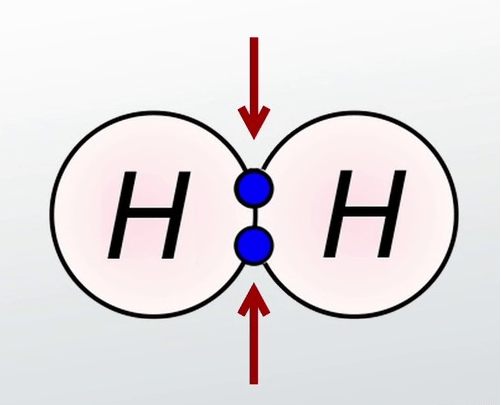
What type of bond is shown in this image?
a)
Ionic
b)
Polar Covalent
c)
Nonpolar Covalent
d)
Van der Waals Force
147.
Diatomic elements are defined as IDENTICAL elements that bond with each other (i.e. Oxygen with Oxygen).  What type of bond should they form?
a)
Ionic
b)
Polar Covalent
c)
Nonpolar Covalent
d)
Van der Waals force
148.

What type of chemical bond holds NaCl, an ionic crystal, together?

a)

Metallic Bond

b)

Ionic Bond

c)

Covalent Bond

149.

Which property of metals is represented by the image ?

a)

High boiling and melting points

b)

Density

c)

Ductility

d)

Malleability

150.
What is the basis of a metallic bond?
a)
the attraction of neutral metal atoms.
b)
the attraction between protons and neutrons.
c)
the attraction between positive metal ions and interlocking electrons.
d)
the attraction between positive metal ions and free floating electrons.
151.
A mixture of two or more metals is called:
a)
mixture
b)
solution
c)
compound
d)
alloy
152.

Compounds composed of a ______________ and _____________ like the compound CaCl2 , are ionic compounds.

a)

metal ... metal

b)

nonmetal ... nonmetal

c)

metal ... nonmetal

153.

What property is describing an ionic compound?

a)

shares electrons

b)

high melting point

c)

weak bonds

d)

made up of nonmetals.

154.
Molten compound conducts electricity.
a)
ionic compound
b)
covalent compound
155.
When dissolved in water, the solution is a good conductor of electricity.
a)
ionic compounds
b)
covalent compounds
156.
When dissolved in water, the solution does NOT conduct electricity.
a)
ionic compounds
b)
covalent compounds
157.
Water striders can walk across the surface of calm water. Their feet push the surface of the water down slightly, but they do not break the surface. Why?
a)
The insects are light enough so they do not break the hydrogen bonds holding the water molecules together
b)
The insects actually use their wings to hover slightly above the water’s surface and they only skim it with their feet.
c)
The insect’s feet are non-polar, so they are repelled by the polar water molecules and are pushed away from the water’s surface.
d)
The insects are small enough to see the individual water molecules, so they are able to step carefully from one molecule to the next
158.
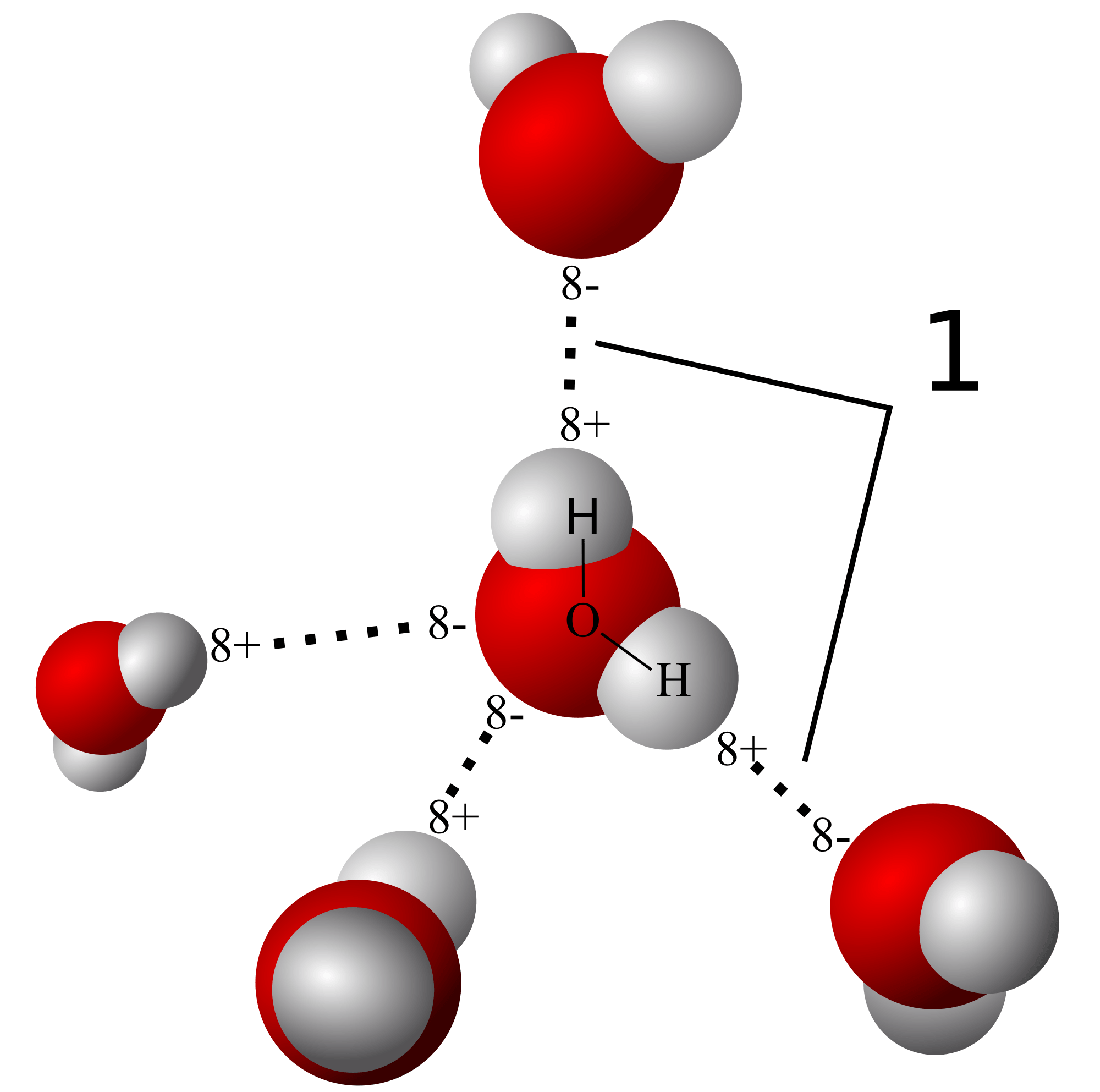
Attractions between water molecules are called
a)
Covalent bonds
b)
Ionic bonds
c)
Polar bonds
d)
Hydrogen bonds
159.
Water is polar because...
a)
The unequal sharing of electrons gives the water molecule a slight negative charge near its oxygen atom and a slight positive charge near its hydrogen atoms.
b)
The molecule has two poles, at which the it is colder than other regions of the molecule.
c)
The unequal sharing of electrons gives the water molecule a slight negative charge near its hydrogen atoms and a slight positive charge near its oxygen atom.
d)
The water molecule is neutral.
160.
Which of the following compounds does NOT contain molecules?
a)
H2
b)
NaCl
c)
CO2
d)
H2O
161.

The following properties are all characteristics of ionic compounds EXCEPT

a)

high melting and boiling points

b)

soft

c)

crystal lattice structure

d)

conduct electricity when dissolved in water

162.

What type of forces hold on an ionic lattice together?

a)

Electrostatic attraction forces

b)

Covalent bond

c)

Metallic bond

d)

Van der Waals forces

163.

Which end of the water molecule has a slightly negative charge?

a)

the oxygen end

b)

the hydrogen end

c)

both ends are slightly negative

d)

neither end is negative

164.

Atoms are electrically attracted by the

a)

electrostatic force

b)

Star Wars force

c)

gravitational force

165.

Which of the following represents the electron arrangement for the compound sodium chloride, NaCl?

a)
b)
c)
d)
166.
Which scientist developed the atomic theory?
a)
JJ Thomson
b)
Ernest Rutherford
c)
John Dalton
d)
James Chadwick
167.
Electron cloud is based on
a)
Quantum Mechanics
b)
Gold Foil Experiment
c)
Matter is made up of small particles called atoms
d)
Nuclear Theory
168.
He developed the planetary model of the atom.
a)
Rutherford
b)
Bohr
c)
Chadwick
d)
Dalton
169.
James Chadwick discovered the ________.
a)
proton
b)
neutron
c)
electron
d)
nucleus
170.
What did Thomson discover?
a)
electron
b)
proton
c)
neutron
d)
electron cloud
171.

Subatomic particles with a negative charge

a)

Electrons

b)

Neutrons

c)

Protons

d)

Quarks

172.
Subatomic particles with a positive charge
a)
neutrons
b)
atomic mass
c)
protons
d)
isotopes
173.

He claimed that matter was made of small, hard particles that he called “atomos.”

a)

Democritis

b)

Dalton

c)

Moseley

d)

Einstein

174.
The scientist responsible for "discovering" the nucleus is:
a)
Bohr
b)
Rutherford
c)
Schroedinger
d)
Einstein
175.

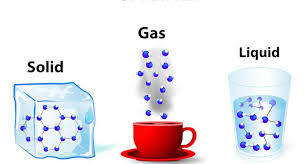
According to the Kinetic Molecular Theory a liquid's (SELECT ALL THAT APPLY)

a)

particles are held close together by intermolecular forces

b)

particles are in constant motion

c)

particles are vibrating in place and closely packed

d)

particles are not moving

176.

Is more energy required melt or to boil the same amount of water?

a)

Boiling requires more energy

b)

melting requires more energy

c)

it takes the same amount of energy to melt water or to boil water

177.
What is the only natural substance on Earth found in the liquid, solid, and gas states?
a)
water
b)
oxygen
c)
hydrogen
d)
metal
178.

Why does ice float on liquid water?

a)

Ice does not float on liquid water.

b)

It has a higher density than liquid water.

c)

It floats because it has lower density than liquid water.

d)

adhesion and cohesion

179.
Of these three states of matter, which one has the most kinetic energy? 
a)
Solid 
b)
Liquid 
c)
Gas
180.
Solids are described as having a 
a)
definite shape and indefinite volume
b)
indefinite shape and indefinite volume
c)
definite shape and definite volume
d)
indefinite shape and definite volume
181.
From 30 degrees to 55 degrees, what state of matter is the substance?
a)
Solid
b)
Liquid
c)
Gas
d)
Plasma
182.

Phase of matter where particles move around each other while being slightly attracted to each other through intermolecular forces

a)

Plasma

b)

Solid

c)

Liquid

d)

Gas

183.

Phase of matter where particles have enough kinetic energy to break intermolecular forces and spread apart greatly

a)

Plasma

b)

Solid

c)

Liquid

d)

Gas

184.

Phase of matter where particles have so much kinetic energy they break down into electrons and ions

a)

Plasma

b)

Solid

c)

Liquid

d)

Gas

185.

A space entirely devoid of matter is called:

a)

A Black Hole

b)

A Vacuum

c)

Outer Space

d)

Pressure

186.
Which liquid is the least dense?
a)
oil
b)
water
c)
syrup 
d)
plastic bottle
187.
Which liquid is the most dense?  
a)
oil
b)
water
c)
syrup
d)
plastic bottle
188.
A object has a volume of 17 mL.  The same object has a mass of 212 g.  What is the density of this object?
a)
12.4 g/m3
b)
12.4 g/mL
c)
1.24 g/mL
d)
12/4 mL/g
189.
What is the volume of Object X?
a)
10.0 cm3
b)
15.0 cm3
c)
20.0 cm3
d)
25.0 cm3
190.
The density of this material is 2 g/cm3.
There are 24 cm3  Find the total mass.
a)
12 grams
b)
48 grams
c)
12 g/cm3
d)
48 g/cm3
191.
You are given the following information: mass = 48 g; volume = 24 cm3. What is the density of this substance? 
a)
2 g/cm3
b)
1,152 g/cm3
c)
0.5 g/cm3
d)
72 g/cm3
192.
If you have a gold brick that is 2 cm by 3 cm by 4 cm and has a density of 19.3 g/cm3, what is its mass?
a)
463.2 g/cm3
b)
463.2 g
c)
0.804 kg
d)
0.804 g
193.
Calculate the mass of a substance which has a volume of 35 cm3 and a density of 0.5g/cm3.
a)
70 g
b)
0.014 g
c)
17.5 g 
d)
35.5 g
194.
What is the density of a rock if its mass is 36g and its volume is 12 cm3?
a)
432 g/cm3
b)
0.33 g/cm3
c)
48 g/cm3
d)
3 g/cm3
195.
If a block of wood has a density of 0.6 g/cm3 and a mass of 120 g, what is its volume?
a)
200 cm3
b)
0.005 cm3
c)
200.0 ml
d)
72 ml
196.
What is the density of an object with a mass of 60 g and a volume of 2 cm3?
a)
30 g/cm3
b)
62 g/cm3
c)
120 g/cm3
d)
0.033 g/cm3
197.
Name the following ionic compound: BeCl2
a)
beryllium chlorine
b)
beryllium II chloride
c)
beryllium chloride
d)
beryllium dichloride
198.
What is the correct formula for the compound, lithium oxide?
a)
LiO
b)
Li2O
c)
LiO2
d)
Li2O2
199.

Which of the following is NOT an ionic compound?

a)

CaO

b)

NaOH

c)

BaCl2

d)

Br2

200.
CsCl
a)
Monocesium monochloride
b)
Cesium monochloride
c)
Cesium Chloride
201.
MgS 
a)
Magnesium sulfide
b)
Monomagnesium monosulfide
c)
Magnesium monosulfide
202.
Na2S
a)

Disodium sulfide

Disodium sulfide

b)
Sodium sulfide
c)
Sodium monosulfide
203.
Al2S3
a)
Dialuminum Trisulfide
b)
Aluminum sulfide
204.
What is the formula for magnesium phosphide?
a)
Mg3P2
b)
Mg2P3
c)
Mg2PO3
d)
Mg3(PO3)2
205.
The chemical formula for an ionic compound of potassium and oxygen is
a)
KO.
b)
K2O.
c)
K2O2.
d)
KO2.
206.
Name this compound: 
KF
a)
Potassium fluoride
b)
Potassium fluorite
c)
Fluorine potasside 
d)
Potassium fluorate
207.
What is the name of N2O3
a)
Nitrogen trioxide
b)
Dinitrogen oxide
c)
Dinitrogen trioxide
d)
Nitrogen oxide
208.
What is the chemical formula for Tetrasulfur pentoxide?
a)
SO
b)
S4O
c)
S4O5
d)
S5O4
209.
What is the name of C3Cl?
a)
Carbon octachloride
b)
Tricarbon octachloride
c)
Carbon trichloride
d)
Octacarbon trichloride
210.
What is the chemical formula for Nitrogen triiodide?
a)
NI
b)
N3I
c)
NI3
d)
None of these
211.

What is the name of Br6F10 ?

a)

Bromium fluoride

b)

Hexabromine fluoride

c)

Bromium decafluoride

d)

Hexabromine decafluoride

212.

What is the chemical formula for Tetraphosphorous Pentachloride ?

a)

4P5Cl

b)

PCl

c)

P4Cl5

d)

none of the above

213.
What is the name of CO
a)
Carbon oxide
b)
Carbon dioxide
c)
Carbon monoxide
d)
Carbon II oxide
214.
What is the chemical formula for Fluorine trisulfide ?
a)
S3F
b)
FS3
c)
FS
d)
none of the above
215.
What is the chemical formula for carbon monoxide?
a)
CO2
b)
CO
c)
CO3
d)
C2O
216.
What is the name of S2Br6?
a)
sulfur hexabromide
b)
disulfur hexabromine
c)
disuflur hexabromide
d)
disulfur pentabromide
217.
What is the chemical formula for phosphorus triiodide?
a)
P3I
b)
PI
c)
P3I3
d)
PI3
218.
What is the chemical formula for chlorine pentaoxide?
a)
ClO5
b)
CO5
c)
Cl5O
d)
C5O
219.
1 m = ___ cm
a)
1
b)
10
c)
100
d)
1000
220.
1 km = ___ m
a)
1
b)
10
c)
100
d)
1000
221.
71 km = ___ m
a)
71
b)
710
c)
7,100
d)
71,000
222.
___ m = 400 cm
a)
4
b)
40
c)
400
d)
4000
223.
13 km 20 m = _________ m
a)
13 20
b)
1320
c)
13,020
d)
13,200
224.
1 kg = ___ g
a)
1
b)
10
c)
100
d)
1000
225.
21 kg 415 g = _________ g
a)
436 g
b)
21,415 g
c)
210,415 g
d)
9
226.
7 decimeters equals how many millimeters?
a)
.007
b)
70
c)
7
d)
700
227.
4 meters equals how many decimeters?
a)
400
b)
40
c)
600
d)
40000
228.
3 kilometers equals how many meters?
a)
3000
b)
30
c)
3
d)
400
229.
4.35% of all X atoms have a mass of 39.946 amu. 83.79% have a mass of 41.941 amu, 9.50% have a mass of 42.941 amu, and 2.36% have a mass of 43.939 amu. What is the average atomic mass of atom X?
a)
41.97 amu
b)
42.19 amu
c)
10.43 amu
d)
40.04 amu
230.
Ions are: 
a)
atoms with a positive or negative charge
b)
atoms with no charge
c)
atoms with ONLY a positive charge
d)
atoms with ONLY a negative charge
231.
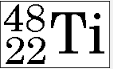
How many protons does this isotope of titanium have?
a)
48
b)
22
c)
26
d)
70
232.

As the elements in Group 2 in the periodic table are considered in order of increasing atomic number, there is a general increase in

a)

stability

b)

atomic radius

c)

electronegativity

d)

first ionization energy

233.

How would you classify NaCl?

a)

element

b)

compound

c)

heterogeneous mixture

d)

homogeneous mixture

234.

Which atom has the largest atomic radius?

a)

potassium

b)

rubidium

c)

francium

d)

cesium

235.
As you move down the periodic table atoms get bigger.  This is because ____________.
a)
The atoms have more mass.
b)
The atoms have more protons.
c)
The atoms have more energy levels
d)
The atoms have more nuetrons
236.
As you move across the periodic table atoms tend to get smaller because, ______________.
a)
the atoms have more mass.
b)
the atoms have less mass
c)
the atoms have more protons.
d)
the atoms have less electrons.
237.

Which statement correctly and completely identifies a trend?

a)

Atomic radius decreases across a period and increases down a group.

b)

Electronegativity decreases across a period and decreases down a group.

c)

Ionization energy increases across a period and increases down a group.

d)

Ionic radius increases across a period and increases down a group.

238.

When an atom gains an electron, the size of atom

a)

will increase

b)

will decrease

c)

will not change

239.

When an atom loses an electron the size of atom

a)

will increase

b)

will decrease

c)

will not change

240.

This circles in this diagram could represent

a)

Sulfur

b)

Potassium

c)

Phosphorous

d)

Bromine

241.

What are 3 examples of metals:

a)

Lithium

Sodium

Calcium

b)

Nitrogen

Oxygen

Fluorine

c)

Helium

Neon

Argon

242.

Which element is this Bohr diagram from?

a)

Selenium, because it has 34 electrons

b)

Sulfur, because it has 16 electrons

c)

Sodium, because it has 11 electrons

243.

What is the octet rule?

a)

When an atom has 8 electrons in the outer valence shell

b)

When you have 8 arms

c)

When an atom has a total of 8 electrons

d)

When an atom has more than 8 total electrons

244.

If there are 8 grams of product produced by the chemical reaction, how many grams of reactant were consumed?

a)

0

b)

2

c)

6

d)

8

245.

Explain why the model of this chemical reaction obeys the Law of Conservation of Matter.

a)

because they both start and end with two sets of particles

b)

because they both start and end with the same types of particles

c)

because they both start and end with diatomic (two-atomed) molecules

d)

because there are the same number of atoms of each element shown on both sides

246.

You are given two unknown solutions, A and B. One of the solutions contains water and table salt, and the other contains water and table sugar. Without any testing, using the data table and your knowledge of chemical bonds, you are able to determine which solution contains sugar and which contains salt. Which solution is which?

a)

A contains sugar and B contains salt, because

salt is ionic and a good conductor of electricity.

b)

A contains salt and B contains sugar, because

sugar is ionic and is a good conductor of electricity.

c)

A contains salt and B contains sugar, because

salt is covalent and is poor conductor of electricity.

d)

A contains sugar and B contains salt, because

sugar is covalent and is a good conductor of electricity.

247.
Identify the phosphide ion
a)
P5+
b)
P3+
c)
P3-
d)
P4-
248.

What is the mass number?

a)

the number of protons in the nucleus

b)

the number of protons and neutrons in the nucleus

c)

the number of neutrons in the nucleus

d)

the number of protons and electrons in the atom

249.

What is the mass number of an atom of gold with 117 neutrons?

a)

117

b)

196

c)

196.97

d)

197

250.

If an atom of oxygen has a charge of -2, how many electrons does the atom have?

a)

18

b)

6

c)

8

d)

10

251.

Which of the following would produce an anion?

a)

Ca

b)

Al

c)

K

d)

F

252.

Anions are _______ that form ____________ ions and __________ electrons.

a)

nonmetals, positive, lose

b)

nonmetals, negative, gain

c)

metals, positive, gain

d)

metals, positive, lose

253.

Cations are _______ that form ____________ ions and __________ electrons.

a)

nonmetals, positive, lose

b)

nonmetals, negative, gain

c)

metals, positive, gain

d)

metals, positive, lose

254.
Make sure you get enough Potassium in your diet!
a)
Huh?
b)
K
c)
I <3 bananas
d)
Sure
255.
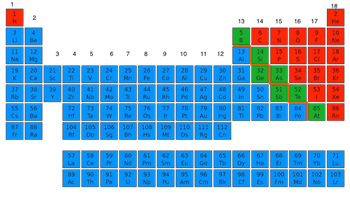
Where are the nonmetals located on the periodic table? 
a)
Blue
b)
Red
c)
Green
256.
What is the correct formula for this molecule?
a)
NH
b)
N3H
c)
NH3
d)
NH4
257.
Which of the following is a characteristic property of ionic compounds?
a)
They form hard, brittle crystals with characteristic shapes
b)
They have low melting points
c)
They have low boiling points
d)
They contain no charged particles
258.
In what form can an ionic compound conduct electricity?
a)
when dissolved in water
b)
as a solid
c)
as a crystal
d)
when warmed slightly
259.
Which of the following is NOT formed by a covalent bond?
a)
K2S
b)
H2O
c)
I2
d)
CO2
260.
What do we call a covalent bond where electrons are shared UNEVENLY or UNEQUALLY?
a)
Ionic
b)
Polar Covalent
c)
Nonpolar Covalent
d)
Van der Waals Force
261.

Ionic or Covalent Bonding?

a)

Ionic Bonding

b)

Covalent Bonding

262.
How many lone pairs are in this molecule's structure?
a)
6
b)
2
c)
0
d)
4
263.
Is melting butter for popcorn a chemical or physical change?
a)
chemical
b)
physical
264.
Is burning wood a chemical or physical change?
a)
chemical
b)
physical
265.
Which of the following is a sign that a chemical reaction has occurred?
a)
change in shape
b)
melting
c)
formation of a gas
d)
dissolving