
 Worksheets
English 3 Semester Exam
Total questions: 100
Worksheet time: 3hrs 17mins
Since the Romantics liked Nature, what did they want to protect for our nation?
Worker's rights
Human rights
Nature (national parks)
the Climate
In the Puritans' colonial writings, what were two popular themes?
Survival and family values
Life is a trial and daily life with God
Survival and Religious freedom
This literary period focused on the new American hero, noble savage, manifest destiny, and beauty of Nature. Which period is it?
Colonial
Age of Reason
Romantic
Transcendental
This literary period focused on protecting natural beauty and didn't like industrialism. Which period is it?
Age of Reason
Romantic
Transcendental
Dark Romantic
This literary period focused on obsession and the dark side of human nature. Which period is it?
Colonial
Transcendental
Romantic
Dark Romantic
What are these phrases examples of?
"matron and maid" (Thanatopsis); "While I pondered, weak and weary" ("The Raven").
Foreshadowing
Symbolism
Alliteration
Choose 2 literary devices that the quote is an example of.
"Because I could not stop for Death--
He kindly stopped for me--
The Carriage held but just Ourselves--
And Immortality." (Emily Dickinson)
Personification
Metaphor
Irony
Allusion
What is this quote an example of?
"O Captain! my Captain! our fearful trip is done.
The ship has weather'd every rack, the prize we sought is won" (Walt Whitman)
Symbolism
Allusion
Metaphor
Foreshadowing
the underlying message of a text; the lesson that the author wants the reader to learn
connotation
idiom
theme
alliteration
the use of clues to hint at what will happen later in the text
diction
foreshadowing
euphemism
connotation
comparing two things without using like or as
simile
metaphor
foreshadowing
diction
Comparison of two things using the words "like" or "as"
simile
foreshadowing
metaphor
oxymoron
how the author feels about the topic
tone
mood
diction
foreshadowing
Using the other words in a sentence to help determine the meaning of an unknown word
simile
diction
context clues
foreshadowing
giving human characteristics to non-human things and objects
theme
oxymoron
diction
personification
literary device in which parts of the sentence are grammatically the same or similar in construction
oxymoron
parallelism
hyperbole
euphemism
using the information given to make educated deductions; reading between the lines
context clues
conflict
simile
inference
What was Jonathan Edwards' purpose in "Sinners in the Hands of an Angry God"?
show how powerful he is
give his congregation insight into their future
make his congregation fearful of committing sins
gain more followers
According to Edwards, how do people avoid going to Hell?
by living well
by believing in God
by the mercy of God
by prayer
What are the key elements of an argumentative essay?
Introduction, quotes, and conclusion
Counterclaim, setting, and introduction
Claim, reasons, and evidence
Something to provoke thought
What should be in an introduction paragraph of an argumentative essay?
Arguing and proving the other side wrong
claim, reasons and evidence
counterclaim and 3 reasons
an attention grabber, the claim, and 3 reasons to support the claim
The rhetorical appeal ethos...
is an ethical appeal which persuades the audience using credibility/knowledge
is an emotional appeal which persuades the audience by using emotional language
is a logical appeal which persuades the audience using reason

The narrative perspective of this passage is...
third person omniscient
first person
third limited
An advertisement for toothpaste with a dentist recommending the toothpaste is what kind of rhetorical appeal?
logos
pathos
ethos
External conflict...
is a problem that takes place between a character and an outside source
is a problem that takes place internally for the character
The rhetorical appeal logos...
is an ethical appeal which persuades the audience using credibility/knowledge
is an emotional appeal which persuades the audience by using emotional language
is a logical appeal which persuades the audience using reason
The rhetorical appeal pathos...
is an ethical appeal which persuades the audience using credibility/knowledge
is an emotional appeal which persuades the audience by using emotional language
is a logical appeal which persuades the audience using reason


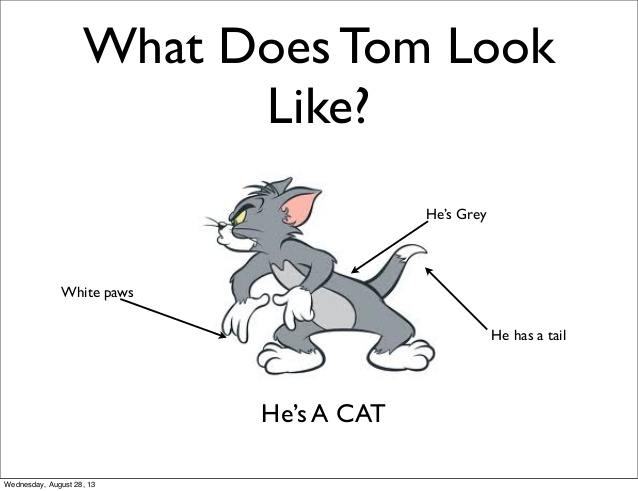
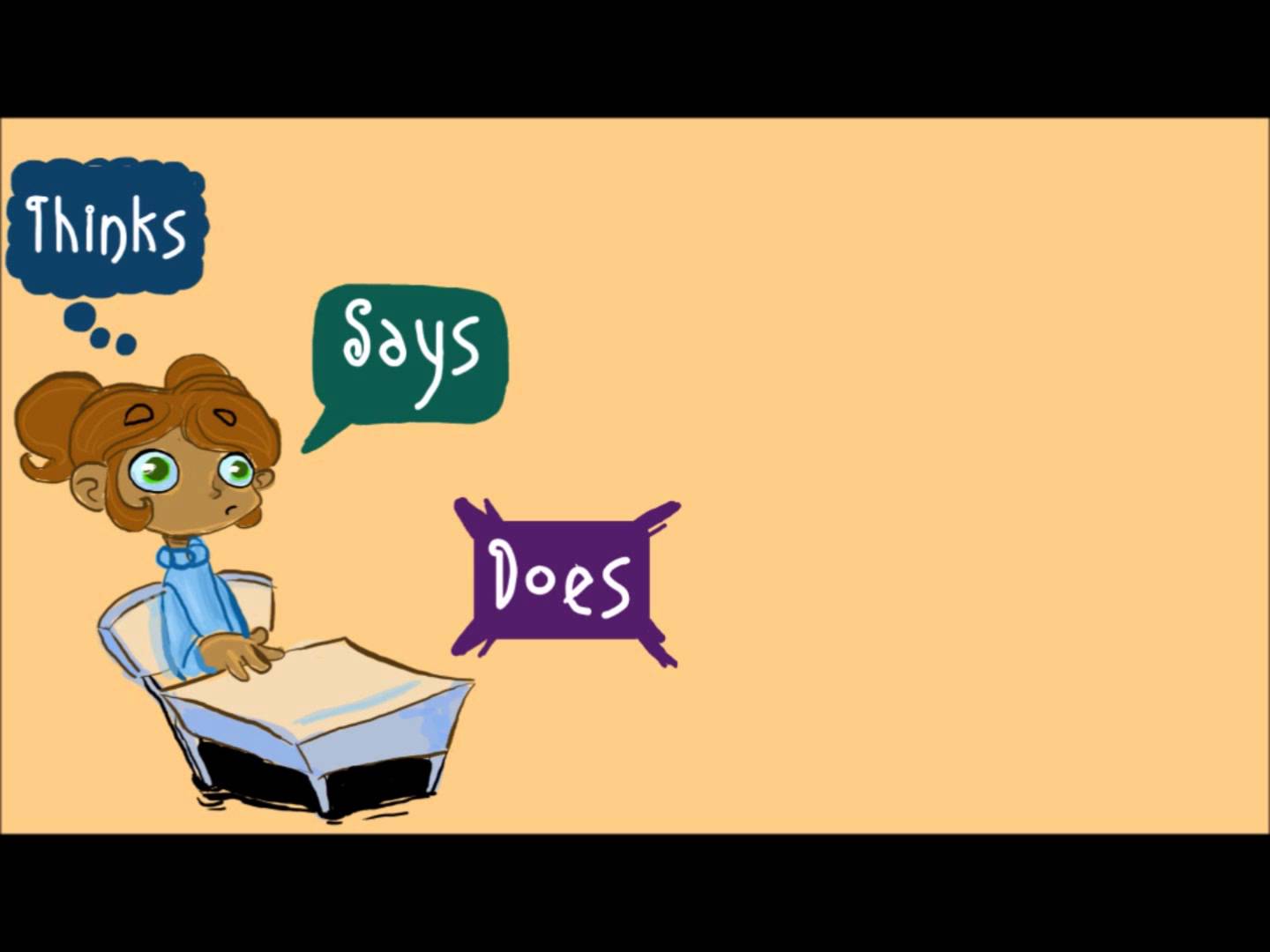
“We did it! We did it! We did it!” Mei boasted, slapping her hand against the table, scattering toast crumbs, knocking aside teaspoons and almost smearing the butter in her zeal.“Whoa!” her brother exclaimed, startled. “Well, congratulations!”Mei stood up and triumphantly strutted around the kitchen, transforming her walk around the breakfast table into a victory parade.Her brother laughed, surprised and amused. “Who are you, and what have you done with my sister, Mei?” he teased.
Based on the passage, what can you infer about the main character Mei?
Back at school, a bully named Derrick Dunne used to torment Stanley. The teachers never took Stanley’s complaints seriously, because Derrick was so much smaller than Stanley. Some teachers even seemed to find it amusing that a little kid like Derrick could pick on someone as big as Stanley.
Based on this flashback, what conclusion can be made about Stanley?
What is the theme?
What is the difference between theme and main idea?
Main idea is what the text is mainly about and theme is the lesson or moral in the story
Theme is what the text is mainly about and Main idea is the lesson or moral in the story
Theme is specific to characters in the story and main idea is not
True or false. The theme of the text is always stated.
True, authors tell you the lesson of the story.
False, the theme of the story is usually implied based on what characters experience
False, most stories do not have a theme
How should you cite a quote using parenthetical reference?
In chapter three the protagonist says, "I'm free to do as I please" (Ann Williams page 20).
In chapter three the protagonist says, "I'm free to do as I please (Ann Williams page 20)."
In chapter three the protagonist says, "I'm free to do as I please" (Williams 20).
In chapter three the protagonist says, "I'm free to do as I please (Williams p. 20)."
How should your page be spaced
Single space
Double space
One and a half space
It doesn't matter
Which of these is properly cited?
Atticus stated, "you never really understand a person until you consider things from his point of view." (Lee 280)
Atticus stated, "you never really understand a person until you consider things from his point of view " (Lee, 280).
Atticus stated, "you never really understand a person until you consider things from his point of view" (Lee 280).
Atticus stated, "you never really understand a person until you consider things from his point of view." (Lee 280).
We can infer that…
It is likely that:
It is likely that:
In Poe's short story "The Masque of the Red Death", the events of the story are related to
a popular ballroom dance
a spreading, infectious disease
a nickname for Prince Prospero
costumes for masquerade ball
In "The Masque of the Red Death", what is unusual about where the masquerade takes place?
There is a ballroom as large as the entire imperial suite
Musicians play in a curved hall
It begins at sundown and does not end until the ebony clock strikes
There are colored rooms that are not connected to each other or situated along a straight hall
In "The Masque of the Red Death", few people dare to enter the black apartment because
face look frightening there, and an ebony clock makes a strange sound
without light, no one can see or dance
it is the room where Prince Prospero wears the masque of the Red Death
in this room a strange voice can be heard whose origins no one can trace
In "The Masque of the Red Death", what happened to the revellers in the end?
They ran out of Prince Prospero's abbey or palace.
They all died.
They killed the stranger.
The Crucible: Niece of Samuel Parris, an orphan, leads girls to accusations, seventeen years old
Abigail Adams
Abigail Williams
Abigail Parris
Mercy Lews
The Crucible: From Barbados, first accused of witchcraft, calls out others to try to save herself, she is also a slave
Susanna Walcott
Abigail Williams
Mary Warren
Tituba
The Crucible: Controversial and insecure minister of Salem
Reverend Run DMC
Reverend Samuel Jackson
Reverend Samuel Parrs
Reverend Giles Corey
The Crucible: Who said: "More weight."
John Proctor
Giles Corey
Rev. John Hale
Abigail Williams
The Crucible: Who is the "he" Elizabeth Proctor is referring to?
"I came to think [he] fancied Abigail. As so one night I lost my wits, I think, and put her out on the high road."
John Proctor
Giles Corey
Thomas Putnam
Rev. Sam Parris
The Crucible: Who is the "she" that Ezekiel Cheever is referring to?
"[She] sat to dinner in Reverend Parris's house tonight, and without a word nor warnin' [she] falls to the floor. Like a struck beast, he says, and screamed a scream that a bull would weep to hear."
Ruth Putnam
Betty Parris
Abigail Williams
Mary Warren
The Crucible: What is the purpose of the quote:
"He plow on Sunday, sir."
To make Rev. Parris look like a terrible minister
To make Rev. Hale seem unknowledgeable
To make John Proctor look unchristian
To make Thomas Putnam look greedy
The Crucible: "Abby'll charge lechery on you, Mr. Proctor!"
What does lechery mean?
Witchcraft
Adultery
Murder
Lying
The narrator in Emily Dickinson's "I Heard a Fly Buzz When I Died" is:
Told by someone who witnessed another's death
A person who has passed away and is explaining their last moments
Explained from the vantage point of the fly
Emily Dickinson predicting what will happen when she dies
Emily Dickinson's "Because I Could Not Stop for Death" uses which of the following literary devices to describe death?
Simile
Anaphora
Personification
Caesura
In Dickinson's poem, "I Heard a Fly Buzz When I Died," the fly likely represents:
The last thing we see before we die
An open window in the room
Death
The poem takes place in the summertime
In Dickinson's "Because I Could Not Stop for Death," the "house" the carriage stops in front of is actually:
Her childhood home
The school yard
Where another passenger lives
A grave
Which of the following is/are a belief(s) of Emerson based on "Self-Reliance?" (please select all that apply)
You give up your identity if you conform to society.
You can find yourself if you conform to society.
Being part of society and conforming to the beliefs of everyone around is the key to happiness.
Self-reliance is the only way to remedy conformity.
What does the following quote from "Self-Reliance" mean?
"It is easy in the world to live after the world's opinion; it is easy in solitude to live after our own; but the great man is he who in the midst of the crowd keeps with perfect sweetness the independence of solitude…."
You should always try to seek approval and make friends with everyone.
The only way to be yourself is to live in solitude.
Being part of the crowd is the only way to be considered great.
If you want to be great, you need to be able to be yourself despite the opinions of those around you.
In "Nature" what does Emerson compare himself to when it comes to how he feels about himself in nature?
an egotistic eyeball
a transparent eyeball
a tranquil eyeball
an uncontained eyeball
In "Self-Reliance," at what conviction does Emerson say that all people arrive during their education?
That people shouldn't be jealous of others and accept who they are.
That people will never get better so they should give up hope of a better life.
That society is just too big to fight and they should just give in
That you would be better off in life if you stopped studying
In "Self-Reliance," what two fears does Emerson identify as those that stop people from trusting themselves?
fear of other's reactions and fear of the truth
fear of other's reactions and fear of dying
fear of other's reactions and fear of being inconsistent
fear of other's reactions and fear of rabbits
A nonconformist is someone who
does everything they are told to do.
does not follow the beliefs of the majority.
does not like farms.
follows the beliefs of a carefully outlined code of conduct.
What does Emerson call consistency?
"A great warrior against chaos"
"The secret sage of intelligence"
"The elf on the shelf"
"The hobgoblin of little minds"
Read the sentences from page 4: “Alaska has long been a magnet for dreamers and misfits, people who think the unsullied enormity of the Last Frontier will patch all the holes in their lives. The bush is an unforgiving place, however, that cares nothing for hope or longing” (Krakauer 4).
The sentences give the implied evidence that
The author feels Alaska is a perfect place to find peace.
The author feels that Alaska is the perfect place for misfits.
The author feels that Alaska is a place to carry out your dreams
The author feels that Alaska is ruthless
Read the sentences from page 11: “Thompson, Samel, and Swanson, however, are contumacious Alaskans with a special fondness for driving motor vehicles where motor vehicles aren’t really designed to be driven” (Krakauer 11).
What is the meaning of the underlined word as it is used in the sentence?
Skilled
Pleasant
Rebellious
Happy
Read this definition: Refute: verb 1. to prove to be false or erroneous, as an opinion or charge. 2. to prove (a person) to be in error.
Which statement or example best refutes the notion that McCandless was “mentally disturbed?”
The example Krakauer gives of a similar male named McCunn who “neglected to arrange for the pilot to fly him back to civilization at summer’s end” (81).
The examples Krakauer gives of a similar male named Waterman who “committed himself to the Anchorage Psychiatric Institute but left after two weeks, convinced there was a conspiracy….then…he launched yet another solo attempt on Denali” (79).
“Like Rosellini and Waterman, McCandless was a seeker and had an impractical fascination with the harsh side of nature” (Krakauer 85).
“But unlike Waterman, McCandless wasn’t mentally ill. And unlike McCunn, he didn’t go into the bush assuming someone would automatically appear to save [him] (Krakauer 85).
After writing about a similar story regarding a young male named Ruess, Krakauer writes, “Ruess was just as romantic as McCandless, if not more so, and equally heedless of personal safety (Krakauer 92).
The word romantic as it is used in the sentence, can best be described as:
Loving
Impractical
Tender
Fancy
Congenial
Present at birth
Rash, impetuous
Friendly
Aggressive
Antimony
Divorce payment
Free from defects
Having consistency
Metallic element
Plebeian
Aristocratic
Ominous
Witty
Common
Anomaly
Irreverent
Ghost
Sick animal
inconsistency
Mien
Eccentric
Tainted
Proper
Appearance
Egress
withered, dry
going out, exit
inconsistency
salty

