
 Worksheets
energy & plant test review
Total questions: 65
Worksheet time: 2hrs 34mins
phloem : food transport
Plants are both _____________ & _______________.
multicellular & eukaryotic
unicellular & eukaryotic
multicellular & prokaryotic
unicellular & prokaryotic
What substance is made through photosynthesis and is food for the plant?
chlorophyll
chloroplast
glucose
dextrose
The tiny opening on the plant that lets air in and holds water in is called the ___________________.
guard cell
stomata
petal
cuticle
Growth of plant towards light
gravitropism
phototropism
thigmotropism
Growth of plant in response to touch
gravitropism
phototropism
thigmotropism
Growth of plant towards or away from gravity
gravitropism
phototropism
thigmotropism
The vascular tissues of the plant are the ____________ which brings water up to from the roots of the plant and the _______________ which brings nutrients from the leaves to other parts of the plant
xylem, phloem
phloem, xylem
stomata, guard cell
guard cell, stomata


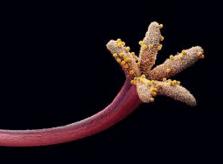
Which of the following is describes Self-Pollination?
Pollen grains are transferred from anther to stigma of another flower.
Pollen grains are transferred from filament to stigma of the same flower.
Pollen grains are transferred from anther to stigma of the same flower.
Pollen grains are transferred from stigma to anther of the same flower.
The stalk that supports or holds up the anther is the
style
filament
ovary
pistil

What is the name of flower part #10 ?
sepal
pollen tube
filament
stigma

Name of the process:
The pollen travels from the anther to the stigma
Fertilisation
Dispersion
Germination
Pollination
What is the energy source needed for photosynthesis to occur.
sugar
water
sunlight
A Drake soundtrack
What is the plant organelle called that performs photosynthesis
Chloroplast
Mitochondria
Nucleus
DNA
Reactants (ingredients) needed by the plant to do photosynthesis include sunlight and
Sugar and oxygen
oxygen and water
Autotrophs
Carbon Dioxide and water
Carbon Dioxide enters the plant through openings on the underside of their leaves called
Stomata
Chloroplasts
Autotrophs
Chlorophyl
Which of the following are the reactants of respiration?
O2 + CO2
H2O + Glucose
Glucose + O2
H2O + CO2 + Sunlight
Which of the following are the products of respiration?
O2 + Glucose + ATP
Glucose + Sunlight + CO2
CO2 + H2O + ATP
CO2 + H2O + Sunlight
Which organisms normally perform photosynthesis?
Heterotrophs
Autotrophs
All organisms
Green things

How are photosynthesis and respiration related?
ATP is a product of both reactions
The same products are made in both reactions
The two processes occur in the same organelle
The products of one are the reactants of the other

Which process is shown in the picture? Where does it occur?
Photosynthesis; Mitochondria
Photosynthesis; Chloroplast
Respiration; Mitochondria
Respiration; Chloroplast

Which process is shown in the picture? Where does it occur?
Photosynthesis; Mitochondria
Photosynthesis; Chloroplast
Respiration; Mitochondria
Respiration; Chloroplast
What is the energy conversion during photosynthesis?
chemical --> light
thermal --> electrical
chemical --> electrical
light --> chemical
What is an autotroph?
an organism that can make their own food.
an organism that cannot make their own food
an organism that magically makes their own food
Which term is also known as a consumer?
autotroph
heterotroph

what is a vascular system
have a tube like network
does not have a tube like network
The vascular system contains:
root and root hairs
xylem and phloem
phloem and stomata
stomata and xylem
the vascular system acts like which body system
muscular system
integumentary system
circulatory system
skeletal system

what are root hairs responsible for
increase surface area and absorption
decrease surface area and absorption
what do ROOTS do?
anchor the plant
where photosynthesis occurs
provides gas exchange
the site where sugars are made

what type of tropism is shows in the image
phototropism
thigmotropism
geotropism
gravitropism
the growth in a plant is due to what
gas
water
minerals
hormones
Sun Flowers are called Sun trackers Why?
Gravitropism
Phototropism
Thigmotropism
Heliotropism


This example for
Internal stimuli
Thigmotropism
Phototropism
no answer correct
Internal stimuli are chemicals, called ____________________ that a plant produces
Light
tough
Temperature
Hormones
What term refers to a plant growing or moving away from a stimulus?
Touch
Dormancy
Tropism
Development
A stimulus is______________________?
a change in a organisms surrondings
process in which organism grow larger
the result of sexual reproduction
a reaction in change of surrondings
Which part anchors the plant?
Stem
Fruit
Roots
Seed
Which part transports water and nutrients to different plant parts?
Flower
Leaves
Stem
Roots
Xylem tubes transport substances in which direction?
Up
Up and down

what is #1
carbon dioxide & glucose
glucose & oxygen
oxygen and water
water and glucose
what is #2
carbon dioxide & glucose
glucose & oxygen
oxygen and water
water and carbon dioxide

what is letter A representing
nucleus
chloroplast
mitochondria
ribosome
what is letter B representing
nucleus
chloroplast
mitochondria
ribosome

what is S?
light energy
chemical energy
what is U?
carbon dioxide and glucose
glucose and water
oxygen and carbon dioxide
glucose and oxygen
which is correct
light energy to chemical energy
chemical energy to light energy

