Wayground logo

Free Printable Worksheets

Font size

S
M
L
XL
Worksheets

7th Grade Review--Midterm Exam

Total questions: 200

Worksheet time: 50hrs 0mins

Name
Class
Date
1.
 The following footwear is best in the laboratory. 
a)
shoes appropriate for the weather
b)
open-toed shoes
c)
closed-toed shoes
d)
sandals
2.
Which of the following would be safe to do during a lab activity?
a)
Running in the classroom
b)
Leaving a water spill on the floor
c)
Touching hot surfaces
d)
Following lab rules
3.
What is this science tool?
a)
thermometer
b)
hand lens
c)
graduated cylinder
d)
beaker
4.
The most important reasons for keeping your workspace neat is to ...
a)
make the teacher happy
b)
prevent accidents or unsafe situations
c)
lose materials in the lab
d)
prevent the room from looking messy
5.
What does this graduated cylinder measure?
a)
mass
b)
volume
c)
weight
d)
length
6.
Students placed some frogs in a tank to study their behavior.  What should the students do for safety reasons after feeding the frogs?
a)
Wash the floor with soap and water
b)
Wash their hands with soap and water
c)
Rinse the frog tank with cool water
d)
Rinse the frogs with cool water
7.
What is this science tool?
a)
sun glasses
b)
safety goggles
c)
hand lenses
d)
beaker
8.
You are heating a substance in a test tube. Always point the open end of the tube
a)
towards your body
b)
toward your lab partner
c)
towards another classmate
d)
away from all people
9.
The proper technique for smelling chemicals is ______________
a)
keeping your nose close to the glassware
b)
wafting
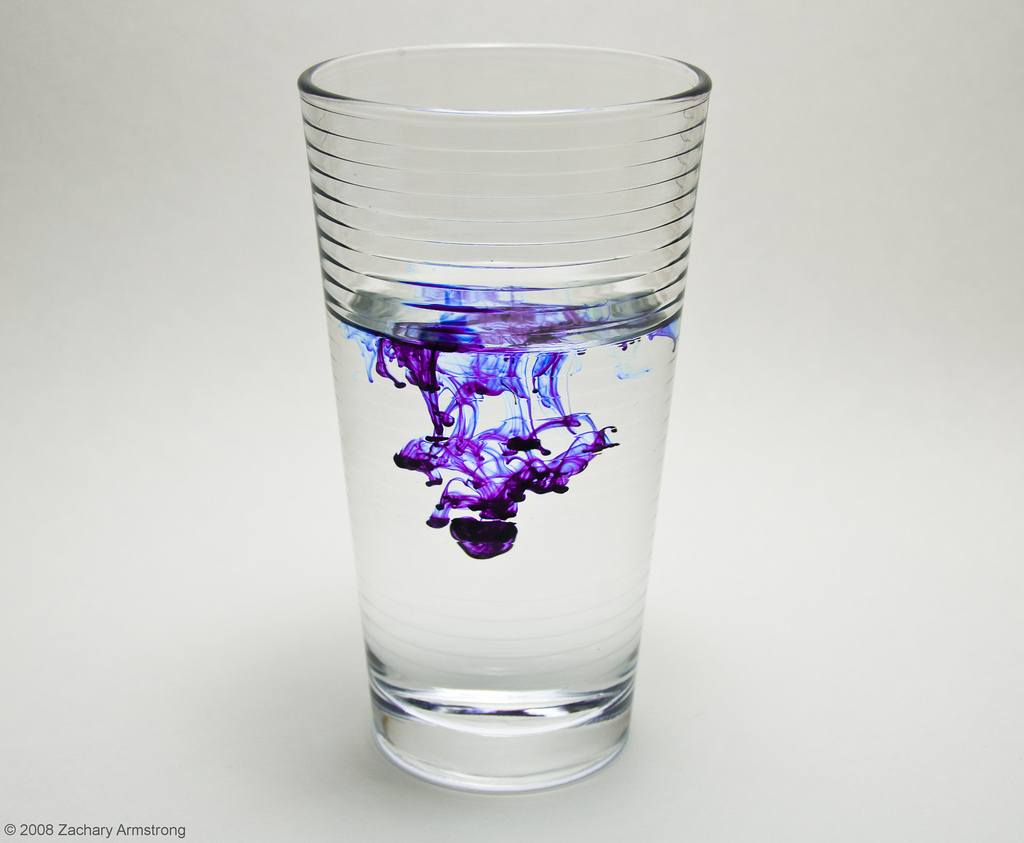
c)
to sniff only a small amount
d)
Trick question; you never are allowed to smell chemicals in class
10.

What is this tool ?

a)

test tubes

b)

graduated cylinders

c)

beakers

d)

flask

11.

What is this tool ?

a)

test tubes

b)

graduated cylinders

c)

beakers

d)

flask

12.

What tool is this?

a)

ruler

b)

meter stick

c)

stopwatch

d)

triple beam balance

13.

Safe or Unsafe: Before leaving the class the students wash and dry their hands.

a)

safe

b)

unsafe

14.

Safe or Unsafe: Julie went to get two microscopes from the cabinet. She held each of them by the arms and she carried them across the room.

a)

safe

b)

unsafe

15.

Safe or Unsafe: Michael enters science class and sees glass beakers with colorful liquids inside. They look like chemicals he used last year in a Fizz lab so he decides to mix them all together to see them fizz.

a)

safe

b)

unsafe

16.

Safe or Unsafe: Grace thought a substance smelled weird so he took a deep whiff of it. He didn’t think it smelled poisonous and tasted a little bit of the substance.

a)

safe

b)

unsafe

17.

Safe or Unsafe: Cindy broke a glass test tube. She raised her hand and told the teacher about the accident.

a)

safe

b)

unsafe

18.
What is a hypothesis?
a)
A hypothesis is the right answer to an experiment.
b)
A hypothesis is the wrong answer to an experiment.
c)
A hypothesis is an educated guess.
d)
I don't know.
19.
During this step of the scientific method, a scientist would gather background information. 
a)
Hypothesis
b)
Research
c)
Observation
d)
Experiment 
20.
The information you record in an experiment is called your ____________.
a)
data
b)
conclusions
c)
notebook
d)
inquiry
21.
What is using your 5 senses (seeing, hearing, touching, smelling, and tasting when appropriate) along with the right tools to gather information called?
a)
hypothesizing
b)
communicating
c)
observing
d)
questioning
22.

List the Scientific Process steps in order.

a)

Observation, Question, Hypothesis, Experiment, Data, Conclusion

b)

Conclusion, Observation, Experiment, Data, Hypothesis

c)

Observation, Experiment, Hypothesis, Conclusion, Data, Question

d)

None of the above

23.

Which of these contains the steps of the scientific method in the correct order?

a)

Ask a question, do background research, state your hypothesis, conduct an experiment, analyze data, make a conclusion

b)

State your hypothesis, ask a question, do background research, conduct an experiment, analyze data, make a conclusion

c)

Ask a question, state your hypothesis, do background research, conduct an experiment, make a conclusion, analyze data

d)

State your hypothesis, ask a question, do background research, make a conclusion, conduct an experiment, analyze data

24.

The __________________________________ is the organized way scientists answer questions and solve problems.

a)

scientific method

b)

scientific explanation

c)

scientific notation

d)

scientific guesses

25.

Choose the best-written hypothesis that answers the question:

Question: Why is my room warmer during the day than at night?

a)

Sunlight is making my room warmer.

b)

Mr. Nuzzo has the heat turned on in the morning.

c)

If I close my blinds during the day, then my room will be cooler because sunlight cant get in.

d)

Sunlight actually cools down a room.

26.
This variable in an experiment is the one being changed by the scientist. 
a)
dependent variable
b)
independent variable
c)
data
d)
control group
27.
An experiment is performed on plants to see how different liquids affect plant growth. Each plant in the experiment is given a different liquid; water, apple juice, or milk. Each plant has the same amount of soil, sunlight, and listens to the same music. In this investigation, the independent variable is ...
a)
The type of plant
b)
The amount of sunlight
c)
The type of music
d)
The type of liquid
28.
Dependent variable means
a)
the scientist controls what to test
b)
educated guess
c)
ask a question
d)
what is being measured
29.
If you increase the amount of spinach you eat, then you will increase the iron in your blood. 
What's the dependent variable?
a)
increase the amount of iron in your blood
b)
spinach you eat
30.
If I ride my bike to school instead of walking, then I will get to school faster. What is the dependent variable?
a)
True
b)
How fast you get to school
c)
Riding a bike or walking
d)
False
31.
If I read this question carefully, then I will answer it correctly. What is the independent variable?
a)
I hope so
b)
Yes
c)
Reading or not reading carefully
d)
Likelihood of a correct answer
32.
This is the group that we will compare our experimental group to. This group stays "normal."
a)
Control Group
b)
Experimental Group
c)
 Normal Group
d)
Weird Group
33.
What is an inference?
a)
An observation
b)
Conclusions or deductions based on observation
c)
A safety rule
d)
The unit of measurement for mass
34.
Is the phrase an inference, qualitative observation, or a quantitative observation? 
She had six fingers.
a)
Inference
b)
Qualitative 
c)
Quantitative
35.
Is the phrase an inference, qualitative observation, or a quantitative observation? 
The tree was tall.
a)
Inference
b)
Qualitative
c)
Quantitative
36.
Is the phrase an inference, qualitative observation, or a quantitative observation? 
They like each other.
a)
Inference
b)
Qualitative
c)
Quantitative
37.
Is the phrase an inference, qualitative observation, or a quantitative observation? 
The number 5 was painted brown.
a)
Inference
b)
Qualitative
c)
Quantitative
38.
Is the phrase an inference, qualitative observation, or a quantitative observation? 
It looks like it may rain.
a)
Inference
b)
Qualitative
c)
Quantitative
39.

What is the scientific method?

a)

A systematic procedure for how to conduct a scientific experiment

b)

The process of solving a problem

c)

A way of making non-scientific observations

d)

A way to summarize findings from multiple investigations

40.

Which of the following is NOT a testable question?

a)

How do rockets work?

b)

Does fertilizer help plants grow bigger?

c)

Does heart rate increase with exercise?

d)

Does the freezing point of water change at different elevations?

41.

What is a hypothesis?

a)

An educated prediction or answer to a testable question

b)

A random guess

c)

An observation based on feelings or emotions

d)
42.

An observation that is measurable and made with tools (such as a ruler or scale) is what type

a)

quantitative

b)

qualitative

c)

koalatative

43.

Constants are factors in an experiment that stay the same. True or False?

a)

True

b)

False

44.

What should an experimenter do after analyzing data?

a)

carry out the experiment

b)

draw conclusions

c)

observe and infer

d)

identify the problem

45.
If plants are exposed to sunlight, then they will grow taller.
What part of the scientific method is this an example of?
a)
Procedure
b)
Hypothesis
c)
Question
d)
Results
46.
What is being changed in this experiment?
a)
ramp height
b)
the speed that the ball rolls
c)
type of ball
47.
Why do we want to test one variable at a time?
a)
Because it is hard to setup a data table with more
b)
To know what is causing the changes. This helps us understand cause and effect.
c)
It is what has always been done
48.

Mrs. Lewis sets up an experiment to see how the mass of a ball affects the distance it rolls off a ramp. Identify the dependent variable.

a)

height of the ramp

b)

distance traveled by the ball

c)

mass of the ball

d)

weight of the ball

49.

Students were investigating some properties of rocks. They wanted to compare the volumes of the rocks.


Which tool should the students use to accurately measure the volume of each rock?

a)
b)
c)
d)
50.

Some researchers are developing a new fertilizer designed to improve the growth of plants in hot, dry climates. The fertilizer was applied to one hundred desert plants in a greenhouse. The average daytime temperature in the greenhouse was 90°F, and the humidity levels were low. Which is best for the researchers to do next?

a)

A compare plants that received fertilizer to similar plants that received none

b)

B begin selling the fertilizer to gardeners living in hot, dry climates

c)

C change the conditions in the greenhouse and retest the fertilizer

d)

D test the fertilizer on plants that are adapted to cooler climates

51.

A scientist investigates the effect of carbon dioxide on plant height. The scientist grows plants in several closed containers. All the plants receive the same amounts of water and light, but the air in each container has a different amount of carbon dioxide. What is the independent variable in this experiment?

a)

the amount of carbon dioxide in each container

b)

the number of plants in each container

c)

the amount of water provided to the plants

d)

the height of each plant after a period of time

52.

Which statement was NOT included in cell theory?

a)

All living things are composed of cells.

b)

Living cells come only from other living cells.

c)

Each cell contains a cell membrane, cytoplasm, nucleus, mitochondria, and endoplasmic reticulum.

d)

Cells are the smallest structure of living things that can perform the functions necessary for life.

53.

Which instrument is credited for helping scientists develop cell theory?

a)
b)
c)
d)
54.
Which of the following controls movement of materials in and out of a cell? 
a)
Cell wall
b)
Cell membrane
c)
Cytoplasm
d)
Nucleus
55.
The jellylike substance that contains proteins, nucleic acids, minerals, ions, and organelles is what?
a)
Prokaryote
b)
Nucleus
c)
Cytoplasm
d)
Eukaryote
56.
Which organelle is the protein factory? 
a)
Ribosomes
b)

Mitochondria

c)
Centriole
d)
Lysosomes
57.
Microscopic single-cells that do not have a nucleus or other membrane-bound organelles. 
a)
DNA
b)
RNA
c)
Eukaryotes
d)
Prokaryotes
58.
A plant and an animal are both living things. According to the Cell Theory, what can you conclude about these two very different organisms?
a)
Plants have cells but animals do not.
b)
They are both made of one or more cells. 
c)
They both come from the same kind of cell.
d)
They both come from a non-living organism.
59.
Cell theory states:
a)
All living cells must have a cell wall.
b)
 All living cells require glucose for survival.
c)
The basic unit of life is a cell.
d)
All cells contain a nucleus
60.
The smallest unit that can perform the basic activities of life is
a)
a cell 
b)
a tissue
c)
an organ
d)
an organism
61.

In what organelle is the genetic material found inside?

a)

cell membrane

b)

chloroplast

c)

nucleus

d)

ribosome

62.

What organelle is called the "powerhouse" of a cell?

a)

mitochondria

b)

nucleus

c)

cell wall

d)

cell membrane

63.

A large central vacuole is found in a _____ cell.

a)

animal

b)

plant

64.

What is the function of a chloroplast?

a)

makes proteins for animal cells

b)

allows materials in and out of the cell

c)

provides structure and support

d)

absorbs sunlight for photosynthesis

65.

What is the structure that contains DNA and directs the cell?

a)

endoplasmic reticulum

b)

central vacuole

c)

cell wall

d)

nucleus

66.

Looking in a microscope, you see cells that have rectangular shapes and a green color. What type of cells are you probably viewing?

a)

plant cells

b)

animals cells

c)

muscle cells

d)

blood cells

67.

Identify the structure that is indicated by the arrow in the image.

a)

cell wall

b)

central vacuole

c)

chloroplast

d)

nucleus

68.

Identify the structure that is indicated by the arrow in the image.

a)

cell wall

b)

central vacuole

c)

chloroplast

d)

cell membrane

69.

The arrow is showing the fluid inside the cell that surrounds the cell organelles. What is the arrow pointing to in the cell?

a)

cytoplasm

b)

mitochondria

c)

ribosomes

d)

nucleus

70.

Identify the structure that is labeled "C" in the image.

a)

central vacuole

b)

nucleus

c)

chloroplast

d)

mitochondria

e)

cell membrane

71.

Identify the structure that is labeled "H" in the image.

a)

cell wall

b)

chloroplast

c)

mitochondria

d)

nucleus

e)

cell membrane

72.
This organelle is a rigid outer layer that protects plant cells.
a)
Cell Membrane
b)
Cell Wall
c)
Nucleus
d)
Chloroplast 
73.
What organelle stores waste and water in both plant and animal cells?
a)
Lysosomes
b)
Golgi Complex
c)
Vacuoles
d)
Endoplasmic Reticulum
74.
What organelle is considered to be the “gatekeeper” for plant and animal cells?

a)
Cell Wall
b)
Cytoplasm
c)
Nucleous
d)
Cell Membrane
75.
What is the name of the genetic material that is inside the nucleus?
a)
ER
b)
ATP
c)
YOLO
d)
DNA
76.
Which type of cell contains a nucleus?
a)
Prokaryotic
b)
Eukaryotic
77.
Which type of cell?
a)
Prokaryote
b)
Eukaryote
78.
A single-celled organism that lacks a membrane-bound nucleus, mitochondria, or any other membrane -bound organelle .
a)
Prokaryote
b)
Eukaryote
c)
Nucleus
d)
Single-celled organism
79.
Where is the DNA found in a eukaryotic cell? 
a)
floating around in the cytoplasm 
b)
in the nucleus 
80.
What does DNA stand for?
a)
Deoxyribonucleic acid
b)
Denitrogenous acid
c)
Deribonucleic acid
d)
Diribonucleic acid
81.
Which of the following best describes a DNA molecule?
a)
double helix
b)
contains ribose
c)
made of amino acids
d)
contains Uracil
82.
DNA is a polymer made of:
a)
Nucleotides
b)
Ribosomes
c)
Purines
d)
Pyrimidines
83.

In a molecule of double-stranded DNA, the amount of Adenine present is always equal to the amount of _____. (Meaning it will always pair up with)

a)

cytosine

b)

guanine

c)

thymine

d)

uracil

84.
Which organelle is DNA usually found in?
a)
cell membrane
b)
vacuole
c)
ribosome
d)
nucleus
85.
Guanine bonds with ______________.
a)
Adenine
b)
Guanine
c)
Cytosine
d)
Thymine
86.
What determines the code, or information, of a DNA molecule?
a)
the shape (structure) of the nitrogen bases
b)
the order (sequence) of the nitrogen bases
c)
the color of the nitrogen bases
d)
the frequency (number) of nitrogen bases
87.
Which 2 molecules form the sides (backbone) of the DNA ladder?
a)
deoxyribose sugar and adenine
b)
deoxyribose sugar and a hydrogen bond
c)
deoxyribose sugar and the nucleus
d)
deoxyribose sugar and phosphate
88.
What will the matching sequence be on a strand that reads AAGCTAT?
a)
AACGATA
b)
TTCGTTA
c)
CCTGATA
d)
TTCGATA
89.
What are the three components of a nucleotide?
a)
sugar, hydrogen, nitrogen base
b)
sugar, oxygen, nitrogen base
c)
sugar, phosphate, nitrogen base
d)
sugar, phosphate, protein
90.
How does RNA differ from DNA?
a)
RNA contains uracil and deoxyribose
b)
RNA contains ribose and thymine
c)
RNA contains uracil and ribose
d)
RNA contains adenine and ribose
91.

What base does RNA have that DNA does not?

a)

uracil

b)

thymine

c)

cytosine

d)

guanine

92.
Where does transcription take place?
a)
at a ribosome
b)
in the nucleus
c)
at a mitochondria
d)
at a lysosome
93.
Where does translation take place?
a)
in the nucleus
b)
at a ribosome in the cytoplasm
c)
at a mitochondria
d)
at a lysosome
94.

What does RNA stand for?

a)

Ribosenucleic Acid

b)

Ribonucleic Acid

c)

Ribonose Acid

d)

Riba Nuke Leic Acid

95.
What is the process of turning DNA into mRNA?
a)
Central Dogma
b)
Transcription
c)
Translation
d)
Trapezoid
96.

What is made at the end of translation?

a)

an mRNA molecule

b)

protein

c)

2 semi-conservative strands of DNA

d)

a tRNA molecule

97.

What is the function of tRNA?

a)

It is what makes the ribosome.

b)

It carries the message from DNA to the ribosome.

c)

It transfers the amino acid to the growing protein on the ribosome.

d)

It is in the cell membrane and controls what moves in and out.
98.
Osmosis is the movement of _____ across a membrane.
a)
food
b)
energy
c)
oxygen
d)
water
99.
During osmosis
a)
water moves from high to low concentration
b)
large or oddly shaped molecules move across a cell membrane
c)
water moves when energy is used
d)
proteins are built
100.
Where is there a low concentration of dye?
a)
at the bottom of cup
b)
in the color
c)
at the top of cup 
d)
no concenteraion gradient
101.
When both inside and outside of a cell have the same amount of water it is said that the cell has reached a state of
a)
Osmosis
b)
Diffusion
c)
Equilibrium
102.
What is diffusion?
a)
when molecules move 
b)
when molecules move from a high concentration to a low.
c)
no movement 
d)
molecules move everywhere
103.
What is the diffusion of water only across a cell or semi-permeable membrane?
a)
Osmosis
b)
Diffusion
c)
Active Transport
d)
Passive Transport
104.
A student noticed that placing wilted lettuce in a bowl of cool water caused the lettuce to become more crisp and firm. What is the best explanation for his observation?
a)
Water moved into the lettuce cells by active transport.
b)
Water moved into the lettuce cells by osmosis.
c)
Salt moved into the lettuce cells by diffusion.
d)
Water moved out of the lettuce cells by osmosis.
105.
Active transport requires energy because...
a)
The cell is moving something against a concentration gradient
b)
The cell is moving something with a concentration gradient
106.
 If the volume of a cell increases when it is placed in a solution, that solution is said to be __________ to the cell
a)
 hypertonic
b)
subatomic
c)
 isotonic
d)
 hypotonic 
107.
Permeable means
a)
things can pass through
b)
the concentration levels are different
c)
it is permanent
d)
things are stuck
108.
Passive transport requires no
a)
concentration gradients
b)
osmosis
c)
motion
d)
energy
109.
Where is there a low concentration of perfume?
a)
in the bottle
b)
on the hand
c)
in the room
d)
in the top
110.
The term used to describe when some molecules are able to pass through a membrane and others are not.
a)
Osmosis
b)
Diffusion
c)
Selective Permeability
d)
Equilibrium
111.

Membrane folds around large substances so they can leave the cell. Requires ATP. Type of active transport

a)

phospholipid

b)

solute

c)

Exocytosis

d)

Endocytosis

112.

Membrane folds around large substances so they can enter the cell. Requires ATP. Type of active transport

a)

Endocytosis

b)

Channel Protein

c)

Cell Membrane

d)

Diffusion

113.

The movement of water across a semi-permeable membrane through diffusion. (semi-permeable means lets some things in and not others)

a)

Endocytosis

b)

Exocytosis

c)

Osmosis

d)

Diffusion

114.
Movement of particles from high to low concentration. 
a)
Passive Transport
b)
Active Transport
115.
A cell in an isotonic solution will
a)
swell
b)
shrink
c)
stay the same size
d)
impossible to tell
116.
When a cell is placed in a hypertonic solution water
a)
moves from the inside of the cell to the solution
b)
moves from the solution to the inside of the cell
c)
moves equally in and out of the cell
d)
none of these
117.
What are the products of photosynthesis?
a)
water and carbon dioxide
b)
oxygen and glucose
c)
oxygen and carbon dioxide
d)
oxygen and water
118.
What molecule absorbs sunlight for photosynthesis?
a)
chloroplast
b)
thylakoid
c)
grana
d)
chlorophyll
119.
What three things are needed for a plant to do photosynthesis?
a)
Glucose, Oxygen, Sunlight
b)
CO2, Oxygen, Sunlight
c)
CO2, Water, Sunlight
d)
Oxygen, Water, Sunlight
120.

What is the tiny openings that let in the carbon dioxide needed for photosynthesis?

a)

stomata

b)

xylem

c)

phloem

d)

chloroplast

121.

Which organelle is the site of photosynthesis?

a)

Chloroplast

b)

Mitochondria

122.
Which organisms perform Photosynthesis?
a)
Only Autotrophs
b)
Only Heterotrophs
c)
Autotrophs and Heterotrophs
123.

What is photosynthesis?

a)

The process in which plants make energy

b)

THe process animals go through to digest food

c)

Using light to take pictures

d)

The process in which plants make their food.

124.
Please select who performs cellular respiration: 
a)
Animals 
b)
Both animals and plants 
c)
plants 
125.
Cellular respiration is...
a)
the process by which cells break down glucose into energy. 
b)
the process by which cells break light down into energy. 
c)
the process by which cells communicate with other cells. 
126.
Cellular respiration occurs in 
a)
chloroplasts 
b)
mitochondria
c)
golgi aparatus 
d)
thylakoid 
127.
In which way are photosynthesis and cellular respiration different?
a)
Cellular respiration stores ATP, while photosynthesis releases ATP.
b)
Cellular respiration produces oxygen, while photosynthesis uses oxygen.
c)
Photosynthesis releases energy, while cellular respiration stores energy.
d)
Photosynthesis used carbon dioxide, while cellular respiration produces carbon dioxide.
128.
What are the products in cellular respiration?
a)
water and carbon dioxide
b)
water and glucose
c)
carbon dioxide and oxygen
d)
glucose and oxygen
129.
What are the reactants in cellular respiration?
a)
glucose and oxygen
b)
glucose and carbon dioxide
c)
water and carbon dioxide
d)
oxygen and glucose
130.

This phase of the cell cycle is where cells perform cell functions, grow and mature. What phase is this referring to?

a)

Prophase

b)

Interphase

c)

Anaphase

d)

Telophase

131.

Which is image shows a cell in Metaphase?

a)

A

b)

E

c)

C

d)

F

132.
In mitosis, the two resulting cells are
a)
different from the starting cell and identical to each other.
b)
different from the starting cell and different from each other.
c)
identical to the starting cell and different from each other.
d)
identical to the starting cell and identical to each other.
133.

Which answer choice lists the stages of the cell cycle in the correct order?

a)

interphase, mitosis, cytokinesis

b)

cytokinesis, mitosis, interphase

c)

mitosis, interphase, cytokinesis

d)

interphase, cytokinesis, mitosis

134.

What is this phase of mitosis where chromosomes split up, then chromatids separate and move to opposite poles?

a)

Prophase

b)

Anaphase

c)

Telophase

d)

Metaphase

135.

What is the phase of mitosis where spindles form, chromosomes become visible, and the nuclear membrane breaks down?

a)

Prophase

b)

Anaphase

c)

Telophase

d)

Metaphase

136.

Chromosomes line up along the middle of the cell during ____________.

a)

Prophase

b)

Metaphase

c)

Anaphase

d)

Telophase

137.

Which of the following lists the correct order of the phases of mitosis from beginning to end?

a)

interphase, metaphase, anaphase, telophase

b)

prophase, metaphase, anaphase, telophase

c)

prophase, metaphase, anaphase, interphase

d)

prophase, anaphase, metaphase, telophase

138.

Results of cell division or mitosis include all of the following EXCEPT?

a)

growth

b)

repair damaged cells

c)

replace damaged cells

d)

dead cells

139.
Structure B is pointing to the _____. 
a)
chromosome
b)
centromere
c)
DNA
d)
chromatid
140.
Structure C is pointing to one ____. 
a)
sister chromatid
b)
chromosome
c)
centromere
d)
gene
141.
What is the name of the structure labeled X?
a)
Centriole
b)
Centrosome
c)
Chromatid
d)
Chromosome 
142.
The sister chromatids of each chromosome are separated (come apart) and move to opposite ends of the cell. Name that Stage!
a)
Prophase
b)
Metaphase
c)
Anaphase
d)
Telophase
143.
The cytoplasm is divided between the cells splitting the cell into two. Name that Stage!
a)
Cytokinesis
b)
Interphase
c)
Prophase
d)
Metaphase
144.
Nucleolus and nuclear membrane start to disappear, chromatin condenses into chromosomes, and spindle fibers start to form. Name that Stage!
a)
Interphase
b)
Prophase
c)
Metaphase
d)
Anaphase
145.
When you focus on a new specimen, always begin with
a)
low power and coarse adjustment.
b)
low power and fine adjustment
c)
high power and coarse adjustment
d)
high power and fine adjustment
146.
If you move the slide left while viewing, in which direction will it appear to move?
a)
right 
b)
left
c)
up 
d)
down
147.
If you move the slide down while viewing, in which direction will it appear to move?
a)
right 
b)
left
c)
up 
d)
down
148.
If you move the slide down while viewing, in which direction will it appear to move?
a)
right 
b)
left
c)
up 
d)
down
149.
If your teacher asks you to move a microscope to table, how do you carry it?
a)
by the body tube and the eyepiece
b)
with one hand
c)
one hand on the arm and the other under the base
d)
with one hand on the base and the other on the eyepiece.
150.
Which part of the microscope controls the amount of light available?
a)
coarse adjustment knob
b)
diaphragm
c)
objective lens
d)
revolving nosepiece
151.
What part is 3?
a)
eye piece
b)
base
c)
arm 
d)
coarse adjust
152.
What part is 5?
a)
coarse adjustment
b)
fine adjustment
c)
diaphragm
d)
stage
153.
What part is 3?
a)
eye piece
b)
base
c)
arm 
d)
coarse adjust
154.
What is part 1?
a)
eye piece
b)
body tube
c)
arm
d)
coarse adjust
155.
What is part 2?
a)
arm
b)
base
c)
body tube
d)
illuminator
156.
What is part 6?
a)
arm 
b)
base
c)
body tube
d)
illuminator
157.
In mitosis, the two resulting cells are
a)
different from the starting cell and identical to each other.
b)
different from the starting cell and different from each other.
c)
identical to the starting cell and different from each other.
d)
identical to the starting cell and identical to each other.
158.
Which of these lists presents the stages of the cell cycle in the correct order?
a)
interphase, mitosis, cytokinesis
b)
cytokinesis, mitosis, interphase
c)
mitosis, interphase, cytokinesis
d)
interphase, cytokinesis, mitosis
159.

Cells of organism must replicate for ?

a)

growth

b)

repair of damaged tissue

c)

replacement of dying cells.

d)

All of the above

160.
The cell spends most of it's life in ________________.
a)
mitosis
b)
cytokinesis
c)
Interphase
d)
None of the above
161.

The correct sequence of mitosis:

a)

metaphase, anaphase, telophase, prophase

b)

prophase, metaphase, anaphase, telophase

c)

prophase, anaphase, metaphase, telophase

d)

telophase, metaphase, prophase, anaphase

162.
Baker’s yeast is a tiny, single-celled fungus that makes bread dough rise and converts sugars in alcohol. This yeast reproduces by budding. As the small bud grows, it receives a copy of the parent’s nucleus. When the bud pinches off, the new cell is smaller than the parent cell but genetically identical  What type of reproduction is this?
a)
Asexual
b)
Sexual
163.
When comparing the offspring of sexually and asexually reproducing organisms, we would expect the genetic material (DNA) of the sexually reproducing organism to -
a)
contain fewer mutations
b)
be lesser in quantity
c)
be simpler overall
d)
show more variation
164.
In asexual reproduction, all of the offspring are:
a)
Physically Identical
b)
Genetically Identical
c)
The same age
d)
Not Identical
165.
What is one disadvantage for asexual reproduction?
a)
Happens very quickly
b)
Only needs one parent
c)
Lack of genetic diversity
d)
All offspring are exact copies of parent
166.
What is an advantage of sexual reproduction?
a)
Higher chance of adapting or evolving over time
b)
Only needs one parent
c)
Happens very quickly and easily 
d)
Produces many offspring
167.
If two organisms reproduce sexually, then their offspring will exhibit a genetic makeup that is -
a)
identical to only one parent
b)
identical to all of its siblings
c)
a unique combination of traits
d)
the recessive traits of each parent
168.
Provided is a table of organisms and some data on their characteristics. Based on the information in the table, which organism is likely to produce offspring with the greatest genetic diversity?
a)
Black mold
b)
Bell tree dahlia
c)
Spruce
d)
Hydra
169.
What type of asexual reproduction is illustrated in this picture?
a)
budding
b)
fragmentation
c)
binary fission
d)
vegetative propagation
170.
Starfish can asexually reproduce by producing offspring from a broken piece of the parent organism.  This is an example of...
a)
budding
b)
fragmentation
c)
binary fission
d)
vegetative propagation
171.
Bacteria reproduce this way.
a)
budding
b)
fragmentation
c)
binary fission
d)
vegetative propagation
172.
This picture is an example of asexual reproduction by...
a)
budding
b)
spores
c)
vegetative propagation
d)
runners
173.

What is the type of asexual reproduction when a bud forms on the parent organism and then pinches off to form a new organism?

a)

Binary Fission

b)

Budding

c)

Vegetative Propagation

d)

Fragmentation

174.
Which of the following statements is true?
a)
DNA is single-stranded
b)
RNA is single-stranded
c)
DNA contains uracil
d)
RNA contains deoxyribose
175.
Which type of RNA takes the instructions from the nucleus to the cytoplasm?
a)
mRNA
b)
tRNA
c)
rRNA
d)
RNA polymerase
176.

DNA molecules contain the genetic information that determines the characteristics of a living organism. How do DNA molecules express the genetic information they contain?

a)

by breaking down proteins within the cell

b)

by directing the process of protein synthesis

c)

by regulating the storage of cellular proteins

d)

by controlling the movement of protein molecules

177.

Dr. Tanaka discovered a new virus. The virus has a single strand of a nucleic acid, but she does not know if it is DNA or RNA. After running tests, she concludes that it is DNA. Which of the following would lead her to that conclusion?

a)

It contains uracil.

b)

It contains adenine.

c)

It contains thymine.

d)

It contains cytosine.

178.

A DNA strand undergoing replication contains the bases TACGTT. Which complimentary strand does it produce?

a)

AUCGAA

b)

ATGCAA

c)

ATCGAA

d)

AUCGTT

179.

A single-stranded sequence of DNA is TAC CGC AAG. Which series represents the complimentary strand of DNA?

a)

CGT TAT GGA

b)

ATG GCG TTC

c)

GCA ATA CCT

d)

AUG GCG UUC

180.

Which of following is when the information in DNA is copied to the mRNA?

a)

Replication

b)

Mutation

c)

Transcription

d)

Translation

181.

What does the "N" in RNA stand for?

a)

Nitrogen

b)

Nucleic

c)

Nucleus

d)

Nuclear

182.

What does the ribosome create right after getting the code from the mRNA?

a)

Proteins

b)

Cell Organelles

c)

DNA

d)

Amino Acids

183.

Which of the following is NOT a type of RNA?

a)

messenger

b)

ribosomal

c)

translate

d)

transfer

184.
What is the difference between DNA and RNA in terms of bases?
a)
RNA contains uracil in place of thymine
b)
RNA contains uracil in place of adenine
c)
RNA contains uracil in place of guanine
d)
RNA contains uracil in place of  cytosine
185.
How would the DNA sequence GCTATA be transcribed to mRNA?
a)
GCUAUA
b)
CGATAT
c)
CGAUAU
d)
GCUTUT
186.

Carries the amino acid used to make a protein

a)

mRNA

b)

rRNA

c)

tRNA

187.

Factory for making a protein

a)

mRNA

b)

rRNA

c)

tRNA

188.
What is the product of transcription?
a)
DNA
b)
mRNA
c)
tRNA
d)
proteins
189.

The DNA nucleotide is made up of (you may choose more than 1 answer.)

a)

Phosphate

b)

Amino Acid

c)

Sugar

d)

Nitrogenous Base

190.

The rungs of the DNA ladder are made up of

a)

sugars

b)

phosphates

c)

nitrogenous bases

d)

amino acids

191.
Cells need to bring in molecules to carry out cellular processes. Often, this requires moving the molecules across the cell membrane against the concentration gradient. How do these molecules get into the cell?
a)
passive transport by diffusion
b)
active transport using ATP 
c)
passive transport by osmosis
d)
 osmosis
192.
The cell membrane of the red blood cell will allow water, oxygen, and carbon dioxide to pass through. Because other substances are blocked from entering, this membrane is called
a)
perforated
b)
semi-permeable
c)
non-conducive
d)
permeable
193.
 Look at the diagram of a cross-section of a cell membrane below. The cell membrane controls movement of materials into and out of the cell. The following particles are moving from high concentration to low concentration and are using a carrier protein. How would you describe this type of movement across the membrane? 
a)
simple osmosis
b)
active transport
c)
simple diffusion
d)
facilitated diffusion
194.
 In pure water, a red blood cell from an animal will swell and burst, but a leaf cell from a plant will not. Which structure in the leaf cell is responsible for this difference?
a)
cell membrane
b)
cell wall
c)
 mitochondrion
d)
nucleus
195.
The diagram below represents a cell and some molecules in its environment. Which molecule would require the use of energy in order to be brought into the cell?
a)
1
b)
2
c)
3
d)
4
196.
During diffusion molecules tend to move 
a)
   up the concentration gradient
b)
 from an area of lower concentration to an area of higher concentration
c)
 in a direction that doesn’t depend on concentration
d)
 down the concentration gradient
197.
Which direction will the dots (solute) move without the use of energy?
a)
into the cell
b)
out of the cell
198.
Facilitated diffusion is the movement of materials into and out of the cell
a)
with the use of energy
b)
with the use of proteins but no energy
c)
by moving water
d)
by using ATP
199.
The water level increases on the right because
a)
there are less particles on the right
b)
there are more particles on the right
c)
the right side is hypotonic
d)
the right side is isotonic
200.

Which CELL contains MORE particles than are found in the surrounding solution?

a)

Left

b)

Center

c)

Right