wayground logo

Free Printable Worksheets

NEW

Font size

S
M
L
XL
Worksheets

Earth Science Final Review 2020 Sem. 1

Total questions: 75

Worksheet time: 55mins

Name
Class
Date
1.
Branch of Earth Science that deals with objects beyond the Earth's atmosphere.
a)
Meterology
b)
Astronomy
c)
Geology
d)
Climatology
2.
A Meteorologists study what?
a)
Living Things
b)
Matter and Energy
c)
Climate and Weather
d)
Weather and Animals
3.
What branch of science does this picture represent?
a)
Oceanography
b)
Meteorology 
c)
Geology
d)
Astronomy
4.
The layer of Earth that includes the crust and upper mantle is the:
a)
atmosphere
b)
lithosphere
c)
asthenosphere
5.
1000 grams = _____ kilograms
a)
0.0001
b)
1,000,000
c)
10
d)
1
6.
Which lists metric units, in order, from smallest to largest?
a)
milligram, centigram, gram
b)
kilogram, gram, centigram
c)
decagram, hectogram, milligram
d)
kilogram, hectogram, decagram
7.
There are ___ meters in 25 kilometers (km)
a)
250 m
b)
2500 m
c)
25000 m
d)
.025 m
8.
The base unit for length is the
a)
second
b)
gram
c)
meter
d)
liter
9.
 The Metric system is based on units of__.
a)
1's
b)
5's
c)
10's
d)
15's
10.
What would be the best unit of measurement to measure the length of a toothbrush?
a)
millimeters
b)
meters
c)
centimeters
d)
kilometers
11.
Convert 5 cm to mm:
a)
5,000mm
b)
0.5 mm
c)
0.05 mm
d)
50 mm
12.

What is the scientific method?

a)

A systematic procedure for how to conduct a scientific experiment

b)

The process of solving a problem

c)

A way of making non-scientific observations

d)

A way to summarize findings from multiple investigations

13.

What is a hypothesis?

a)

An educated prediction or answer to a testable question

b)

A random guess

c)

An observation based on feelings or emotions

d)
14.

A series of steps designed to help you solve problems and answer questions is

a)

the scientific method

b)

results

c)

observations

d)

the two step

15.

After the data is analyzed the hypothesis is stated as correct or incorrect in the __________

a)

conclusion

b)

experiment

c)

hypothesis

d)

table of contents

16.
This variable in an experiment is the one being changed by the scientist. 
a)
dependent variable
b)
independent variable
c)
data
d)
control group
17.
Dependent variable means
a)
the scientist controls what to test
b)
educated guess
c)
ask a question
d)
what is being measured
18.
If I study for my scientific method test, then I will have a better test score. What is the dependent variable?
a)
Scientific Method
b)
Studying
c)
Independent variable
d)
Test score
19.
This is the group that we will compare our experimental group to. This group stays "normal."
a)
Control Group
b)
Experimental Group
c)
 Normal Group
d)
Weird Group
20.
Subatomic particles with a positive charge
a)
neutrons
b)
atomic mass
c)
protons
d)
isotopes
21.
Subatomic particles that are neutral in charge
a)
Neutrons
b)
Protons
c)
Nucleus 
d)
Electrons
22.
What does the nucleus of an atom contain?
a)
Electrons and neutrons
b)
Protons and neutrons
c)
Neutrinos and positrons
d)
DNA and RN
23.
Measure mainly of the nuclear particles: protons + neutrons
a)
Subatomic Particles
b)
Atomic Number
c)
Atomic Mass
d)
Gluons
24.
Value representing the number of protons in an element
a)
Atomic Mass
b)
Mass Number
c)
Valence Electrons
d)
Atomic Number
25.
The smallest particle of an element that shows all the properties of that element.
a)
Subatomic Particles
b)
Atom
c)
Quarks
d)
Gluons
26.
Calculation used to find the number of neutrons in an atom
a)
Atomic Mass - Atomic Number
b)
Atomic Number - Atomic Mass
c)
Atomic Mass - Electrons
d)
none of these
27.
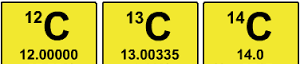
What do these isotopes of carbon all have in common?
a)
neutrons & mass number
b)
atomic number and neutrons
c)
atomic number and electrons
d)
protons, atomic number, and mass number
28.
How many neutrons does the isotope of lithium have?
a)
8
b)
3
c)
4
d)
5
29.
If the number of electrons in an atom changes you make a(n) __________________.
a)
ion
b)
isotope
c)
new element
d)
isomer
30.
What is an isotope? 
a)
A charged atom
b)
An atom with different amounts of neutrons
c)
An atom with different amounts of protons
d)
A neutral atom
31.
What type of bond forms when 2 or more electrons are SHARED?
a)
Covalent bond
b)
Incomplete bond
c)
Ionic bond
d)
Metallic bond
32.
What type of bond forms between two or more atoms that are charged (+/-)?
a)
Covalent bond
b)
Incomplete bond
c)
Ionic bond
d)
Metallic bond
33.
The color of a mineral in powder form is called the mineral's 
a)
hardness
b)
specific gravity
c)
luster
d)
streak
34.
How light reflects off of a mineral is called the mineral's 
a)
luster
b)
streak
c)
cleavage
d)
fracture
35.
Why is coal not a mineral?
a)
It's not a solid
b)
It is man-made
c)
It is not inorganic
d)
It is made of carbon
36.
By definition, a mineral has which of the following characteristic(s)?
a)
definite chemical composition
b)
crystal structure
c)
naturally occuring
d)
all of the above
37.
How do you test the hardness of a mineral? 
a)
Throw it against a wall
b)
Step on it
c)
Scratch Test
d)
Kick it until it breaks
38.
The mineral in the picture has a ____________ luster.
a)
Nonmetallic
b)
Metallic
c)
Pearly
d)
Earthy
39.
A mineral breaks into pieces like are shown in the picture. How would you describe its breakage?
a)
Fracture
b)
Cleavage
c)
Glassy
d)
Waxy
40.
Which mineral property is being shown here?
a)
luster
b)
hardness
c)
cleavage
d)
streak
41.
Scientists test for the hardness of a mineral by doing which of the following?
a)
Measuring the mass of the mineral, and comparing it against other minerals
b)
Observing how light reflects off the mineral and how the mineral looks as a result
c)
Observing the color of a mineral and comparing it against other minerals
d)
Scratching the mineral against other substances of known hardness
42.

___ are pure substances that cannot be broken down into simpler substances by ordinary chemical means.

a)

Minerals

b)

Compounds

c)

Crystals

d)

Elements

43.
This rock was another type of rock that was heated and compressed over time. What type of rock is this?
a)
Sedimentary
b)
Igneous
c)
Metamorphic
44.
A rock formed from fragments of other rocks is a(n)
a)
Metamorphic Rock
b)
Sedimentary Rock
c)
Extrusive Rock
d)
Igneous Rock
45.
This rock started as molten magma. What type of rock is this?
a)
Sedimentary
b)
Igneous
c)
Metamorphic
46.
This rock was formed by smaller pieces of rock that settled at the bottom of a lake millions of years ago. What type of rock is this?
a)
Sedimentary
b)
Igneous
c)
Metamorphic
47.
The process when rocks break into smaller pieces due to exposure to natural elements is called
a)
erosion
b)
weathering
c)
sediments
48.
What are the 3 major types of rocks?
a)
Igneous, Metamorphic, Sedimentary
b)
Metamorphic, Igneous, Cementation
c)
magma, lava, crystals
49.

Which rock is formed form the cooling of volcanic ash on Earth's surface?

a)

intrusive igneous

b)

foliated metamorphic

c)

extrusive igneous

d)

organic sedimentary

50.

Rocks that form from colling magma inside Earth?

a)

Igneous intrusive

b)

Igneous extrusive

c)

Metamorphic foliated

d)

Metamorphic nonfoliated

51.
True/False: Igneous rocks can only turn into metamorphic rocks.
a)
True
b)
False
52.

This is a natural solid that is made of one or more minerals.

a)

Mineral

b)

Fossil

c)

Rock

d)

Sediment

53.

This is the continuous process of rock changing from one type to another.

a)

Igneous rocks

b)

Sedimentary rocks

c)

Metamorphic rocks

d)

Rock Cycle

54.

Which of the following lists the steps an igneous rock undergoes in order to become a sedimentary rock, in the correct order?

a)

Deposition, erosion, melting, cooling

b)

Erosion, weathering, eruption, cooling

c)

Dissolving, deposition, cooling, fracture

d)

Weathering, erosion, deposition, cementation

55.
This rock formed when bits of other rocks became pressed into a solid. What type of rock is it?
a)
Sedimentary Rock
b)
Metamorphic Rock
c)
Igneous Rock
56.
This rock formed when lava cooled very quickly on Earth's surface. What specific type of rock is it?
a)
Extrusive Igneous Rock
b)
Intrusive Igneous Rock
c)
Non-Foliated Metamorphic Rock
d)
Biochemical Sedimentary Rock
57.
The individual particles that make up a rock are known as _____
a)
Grains
b)
Textures
c)
Metamorphs
d)
Lava
58.
When sediments are pressed together tightly, this is called ____________.
a)
Compaction
b)
Cementation
c)
Weathering
d)
Erosion
59.
The process in which sediment are fused or glued together.
a)
compaction
b)
deposition
c)
organic rock
d)
cementation
60.
What is deposition?
a)
Dropping off sediment
b)
Movement of sediment
c)
Breaking down of sediment 
61.
Sedimentary rock made from fossils are called...
a)
organic
b)
chemical
c)
stratified
62.
Is the following metamorphic rock foliated or non-foliated?
a)
Foliated
b)
Non-foliated
c)
Neither
63.
The process by which igneous rocks are formed...
a)
heat and pressure
b)
melting and cooling
c)
compaction and cementation
64.
Metamorphic rocks with a layered or banded look are called —
a)
foliated
b)
unfoliated
c)
striated
d)
evaporated
65.
Which layer of the soil profile would be affected the most by weathering and erosion?
a)
1
b)
2
c)
3
d)
4
66.
Which of the following processes will change a sedimentary rock into an igneous rock?
a)
Melting and crystallization
b)
Erosion and deposition
c)
Deformation and deposition
d)
Faulting and fracturing
67.
Trees, walls, and fence posts leaning downhill are a sign of ______. 
a)
Rockfalls
b)
Mud Flow
Mud Flows
c)
Creep
d)
Slump
68.
The movement that occurs during mass wasting is caused by what? 
a)
Wind
b)
Gravity 
c)
Ice 
d)
Water 
69.
Erosion tends to be more destructive when the mass wasting occurs on ______ slopes. 
a)
Small
b)
Flat
c)
Steep
d)
Bumpy 
70.
What factor causes a mudslide? 
a)
the amount of CO2 in the area
b)
the amount of pollution in an area
c)
the amount of wind in an area
d)
the amount of rain in an area 
71.

Man increases the chance of landslides in all of the follwing ways EXCEPT:

a)

building on unstable slopes

b)

undercutting the base of slopes to build roads

c)

removing vegetation from steep slopes

d)

planting trees on unstable slopes

72.

Which of the following will NOT increase the chance of landslides?

a)

when bedding planes are roughly parallel to the slope surface

b)

when there is an extended period of drought

c)

an earthquake

d)

where there are rocks like shale or clay

73.
What is the correct order of the processes?
a)
they all happen at the same time
b)
erosion, weathering, deposition
c)
weathering, erosion, deposition
d)
weathering, deposition, erosion
74.
This is a picture of a ____________________
a)
slump
b)
creep
c)
windstorm
d)
mudflow
75.

A _______________________is a result of freezing and thawing of water in the creases of rocks.

a)

slump

b)

creep

c)

mudflow

d)

landslides