wayground logo

Free Printable Worksheets

NEW

Font size

S
M
L
XL
Worksheets

1st semester

Total questions: 76

Worksheet time: 1hrs 24mins

Name
Class
Date
1.
all matter is made of what 
a)
energy 
b)
atoms 
c)
electrons 
d)
compounds 
2.
The positive particles of an atom are 
a)
electrons 
b)
positrons 
c)
neutrons 
d)
protons 
3.
the central region of an atom where its neutrons and protons are is its 
a)
nucleus 
b)
electron cloud
c)
core 
d)
center 
4.
an atom with atomic number 6 would have how many protons 
a)
6
b)
12
c)
3
d)
cannot be determined 
5.
Particles in an atom that are neutral and have no charge are 
a)
negatrons 
b)
electrons 
c)
neutrons 
d)
protons 
6.
A particle that moves around the nucleus is a(n)...
a)
Proton
b)
Neutron
c)
Electron
d)
Quark
7.

What does the 1.00794 stand for?

a)

mass number

b)

atomic number

c)

average atomic mass

d)

number of protons

8.
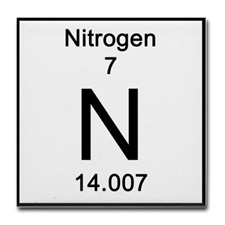
What is the number of protons that the element in this image contain?
a)
14
b)
7
c)
15
d)
18
9.

What is the atomic number of this atom shown in the Bohr model?

a)

11

b)

12

c)

13

d)

can't be determined

10.

If the mass number of this chlorine atom is 36, how many neutrons does it have?

a)

17

b)

18

c)

19

d)

can't be determined

11.
What should you do before you start lab?
a)
Read all the procedures
b)
Make sure your work area is neat
c)
Get teachers permission
d)
All of the above
12.
If you break glassware during a lab you should
a)
tell the teacher immediately
b)
Clear people out of the area and leave broken glass for a janitor
c)
Tell the teacher on the way out of class at the end of the period
d)
Try to clean it up yourself quickly so you won�t bother anyone
13.
During the lab it is okay to
a)
Have a snack
b)
Drink in lab
c)
Taste chemicals
d)
None of the above
14.
When should you wear safety goggles?
a)
When you look in the sun
b)
When working with chemicals, acids and bases and heating devices
c)
Anytime your in lab
d)
None of the above
15.
When you are smelling a chemical you should
a)
Smell it directly
b)
Waft the odor
c)
Never smell
d)
Take a big sniff
16.
You should know the location of
a)
Fire Extinguisher
b)
Fire Alarms
c)
Eye Wash
d)
All of the above
17.
Running in the lab is ok if you are not using chemicals
a)
TRUE
b)
FALSE
18.
Broken glassware should be thrown away in the trash can immediately
a)
TRUE
b)
FALSE
19.
Keep your work area free of all unnecessary books and papers
a)
TRUE
b)
FALSE
20.
Before you begin a lab, you must get teachers permission
a)
TRUE
b)
FALSE
21.
Which of the following is a sign that a chemical reaction has occurred?
a)
change in shape
b)
melting
c)
formation of a gas
d)
dissolving
22.
Is melting butter for popcorn a chemical or physical change?
a)
chemical
b)
physical
23.
Which of the following is NOT an example of a physical change?
a)
crumpled paper
b)
pencil sharpening
c)
shrunken clothing
d)
rust
24.
A change where one or more new substances are created.
a)
Physical Change 
b)
Chemical Change 
25.
Fizzing, foaming, and burning are all examples of
a)
Chemical change
b)
Physical change
26.
When you break a cracker into pieces it is a...
a)
Chemical change
b)
Physical change
27.
Which of these is a result of a chemical change?
a)
A mixture
b)
A solution
c)
A new substance
d)
Melting or freezing
28.
Ice melting
a)
Chemical Change
b)
Physical Change
29.
Boiling water
a)
Chemical Change
b)
Physical Change
30.

Which of the following is a sign that a physical change has occurred?

a)

Bubbles forming

b)

The object being broken into smaller pieces

c)

Heat being produced

d)

Light being produced

31.
Which of the following is NOT an example of a physical change?
a)
crumpled paper
b)
pencil sharpening
c)
shrunken clothing
d)
sour milk
32.

Which statement was NOT included in cell theory?

a)

All living things are composed of cells.

b)

Living cells come only from other living cells.

c)

Each cell contains a cell membrane, cytoplasm, nucleus, mitochondria, and endoplasmic reticulum.

d)

Cells are the smallest structure of living things that can perform the functions necessary for life.

33.

Which instrument is credited for helping scientists develop cell theory?

a)
b)
c)
d)
34.

This early cell theory scientist looked in a microscope and discovered "animalcules" in the gunk from his teeth and pond water.

a)

Schleiden

b)

Leeowenhoek

c)

Hooke

d)

Virchow

e)

Schwann

35.

Who discovered and named cells while looking at cork?

a)

Captain Hook

b)

Robert Hooke

c)

Matthais Schleiden

d)

Rudolf Virchow

36.

Who noted that all animals are made of cells and helped write the first two parts of cell theory?

a)

Rudolf Virchow

b)

Anton van Leeuwenhoek

c)

Theodor Schwann

d)

Robert Hooke

37.

All living things are made up of...

a)

cells

b)

tissues

c)

organ

d)

organ systems

38.

All cells -----

a)

come from other dead cells

b)

come from other living cells

c)

crystallize out of the air

39.

outermost structure that gives support and shape to plant cells

a)

cell wall

b)

cell membrane

c)

mitochrondria

d)

cytoplasm

40.

protective barrier that encloses all cells

controls the movement of materials into and out of the cell

a)

cell membrane

b)

cell wall

c)

endoplasmic reticulum

d)

golgi body

41.

contains DNA, which has the information on how to make the cell's proteins

control center for the cell

a)

nucleus

b)

lysosome

c)

mitochondria

d)

endoplasmic reticulum

42.

gel-like substance where all other organelles are found

it is constantly moving and some cellular reactions can occur here

a)

cytoplasm

b)

vacuole

c)

chloroplast

d)

golgi body

43.
This organelle takes food and turns it into ENERGY for plant and animal cells.
a)
Chloroplast
b)
Mitochondria
c)
Lysosome
d)
Ribosome
44.
I am only found in a plant cell. What am I?
a)
cell wall
b)
mitochondria
c)
cytoplasm
d)
chloroplast
45.
hold/store water, mainly found in plant cells
a)
nuclolus
b)
ribosomes
c)
golgi bodies
d)
vacuoles
46.
Which of the following is the correct order of organization in living things from most basic (simple) to most complex?
a)
a.  Organism, cell, tissue, organ, organ system
b)
a.  Organ system, organ, tissue, cell, organism
c)
a.  Cell, tissue, organ, organ system, organism
d)
a.  Cell, organ, tissue, organ, organism, organ system
47.
When a group of organs work together to perform a particular function they create a/an
a)
organ system
b)
organism
c)
tissue
d)
organ
48.
The smallest level of organization of life in an organism
a)
tissue
b)
cell
c)
organ
d)
organ system
49.
The heart contains different types of tissue. What level is the heart?
a)
cell
b)
organ system
c)
organ
d)
tissue
50.
How many parents are required for sexual reproduction? 
a)
one
b)
two
c)
four
d)
six
51.

What is an disadvantage of asexual reproduction?

a)

An organism can reproduce without a mate

b)

Some organisms can quickly produce a large number of offspring

c)

There is little genetic variation within a population

52.

Involves two parents and produces offspring different from parents

a)

external fertilization

b)

sexual reproduction

c)

internal fertilization

d)

asexual reproduction

53.
What is one disadvantage of sexual reproduction?
a)
Only one parent needed
b)
Off spring are exact copies of parents
c)
Happens very quickly
d)
Needs two parents
54.
How many parents does asexual reproduction involve?
a)
one 
b)
two
c)
three
d)
four
55.
The offspring from asexually reproduced organisms are?
a)
Different than their parents
b)
Identical to parents
c)
Like a combination from both parents
d)
A different species
56.

What is the most important function of the excretory system?

a)

break down food

b)

pump blood

c)

remove waste

d)

voluntary movement

57.

This is a complex system in our body that transports needed materials. It includes the heart and blood vessels.

a)

skeletal system

b)

respiratory system

c)

digestive system

d)

circulatory system

58.

What is the biggest function of the respiratory system?

a)

to pump blood

b)

to help us digest food

c)

to take in oxygen and release carbon dioxide

d)

to help us fight disease and infection

59.

What is the most important function of the digestive system?

a)

gas exchange

b)

break down food into usable nutrients

c)

voluntary movement

d)

fight bacteria and disease

60.

Which two systems work together to break down and transport nutrients?

a)

muscular and respiratory

b)

circulatory and skeletal

c)

digestive and circulatory

d)

endocrine and digestive

61.

What is the biggest function of the muscular system?

a)

to help digest food

b)

to help us move

c)

to help us breathe

d)

to help us remove waste

62.

This is a system in the body that includes the brain, spinal cord, and nerves. It coordinates and controls the body's actions.

a)

digestive system

b)

nervous system

c)

circulatory system

d)

muscular system

63.
The main purpose of the ________ system is to produce hormones for the body.
a)
excretory
b)
digestive
c)
reproductive
d)
endocrine
64.
What body system is for support, protection, and creates new blood cells?
a)
skeletal system
b)
muscular system
c)
circulatory system
d)
integumentary system
65.
The circulatory system uses _________ to deliver oxygen to the rest of the body.
a)
blood cells
b)
lungs and nose
c)
blood vessels
d)
brain and spinal cord
66.
What body system removes the waste from your body? 
a)
Circulatory
b)
Excretory
c)
Digestive
d)
Respiratory
67.
What is the main function of the respiratory system?
a)
to provide oxygen and remove carbon dioxide from the body
b)
to bring oxygen to the body
c)
to break down food and absorb nutrients
d)
to remove oxygen from the body and deliver carbon dioxide
68.
Your skin and hair are parts of your ___________
a)
endocrine system
b)
excretory system
c)
lymphatic system
d)
integumentary system
69.
Most bacteria that cause sickness in humans grow best at 98.6oF. Sometimes a fever is the body's response to the bacteria. What is the reason for developing a fever?
a)
To lower the temperature of the body to kill the bacteria
b)
The increase the temperature of the body to kill the bacteria
c)
To allow the bacteria to take over
d)
To make you feel miserable
70.

You are growing a tomato plant in your house. Which of the following would the plant probably do to help maintain homeostasis?

a)

Grow away from the light coming from the window

b)

Grow toward the light coming from the window

c)

Growth is not affected by the light coming from the window

71.
What describes a lack of water in the blood?
a)
Dehydration
b)
Rehydration
c)
Hydration
d)
Concentrated
72.
What is involuntary contractions of voluntary muscles to warm up?
a)
Shivering
b)
Sweating
c)
Vasodilation
d)
Vasoconstriction
73.

Which of the following describes homeostasis?

a)

keeps variables exactly at the set point

b)

organism's ability to maintain steady(stable) internal conditions

c)

acts to keep values outside of a desired range

d)

operates through positive feedback

74.

Which of the following is an example of a response to an internal stimulus?

a)

you are tired

b)

you are hot

c)

you eat food

d)

you are scared

75.
If the environment gets cold, we will often shiver in order to:
a)
keep body temperature the same as the external temperature
b)
decrease body temperature
c)
increase body temperature
d)
regulate blood pressure
76.
The "cause" for something to happen is the
a)
response
b)
effect
c)
stimulus
d)
homeostasis