Wayground logo

Free Printable Worksheets

Font size

S
M
L
XL
Worksheets

Cells and Body Systems Review

Total questions: 64

Worksheet time: 41mins

Name
Class
Date
1.

Which of these organelles would NOT be a part of an animal cell?

a)

nucleus

b)

chloroplast

c)

cell membrane

d)

mitochondria

2.

Which organelle controls the cell?

a)

mitochondria

b)

membrane

c)

nucleus

d)

chloroplast

3.

If the cell were a castle, this would be like gates in the wall only letting in some items.

a)

chloroplast

b)

nucleus

c)

mitochondria

d)

membrane

4.

If the cell were a castle, the ___ would be hardworking servants turning raw materials into food.

a)

mitochondria

b)

nucleus

c)

membrane

d)

cell wall

5.

Animal cells need _____ to make food. (Choose two.)

a)

carbon dioxide

b)

chloroplasts

c)

mitochondria

d)

oxygen

6.

If the cell were a castle, the _______ would be the queen commanding everyone around.

a)

nucleus

b)

mitochondria

c)

membrane

d)

chloroplast

7.

This organ includes the cerebellum, medulla, and cerebrum.

a)

stomach

b)

spinal cord

c)

brain

d)

cell

8.
Which characteristic do single-celled organisms and multicellular organisms have in common?
a)
Both have cells with specialized functions for each life process.
b)
Both perform all life processes within one cell.
c)
Both have a way to get rid of waste materials.
d)
Both are able to make food from sunlight.
9.
Which body system sends electrical signals to all other body systems?
a)
circulatory system
b)
nervous system
c)
digestive system
d)
skeletal system
10.
Which statement best describes a bacterial cell?
a)
It contains more than one cell.
b)
It is a complete organism.
c)
It is part of a larger organism.
d)
It contains different kinds of cells.
11.
Bone cells need nutrients. Which two systems get nutrients to bone cells?
a)
the digestive system and the circulatory system
b)
the circulatory system and the respiratory system
c)
the respiratory system and the skeletal system
d)
the skeletal system and the digestive system
12.
Which two human body systems are most responsible for getting oxygen to cells?
a)
digestive and skeletal
b)
skeletal and circulatory
c)
circulatory and respiratory
d)
respiratory and digestive
13.
Which is responsible for providing oxygen to cells?
a)
skeletal
b)
nervous
c)
digestive
d)
cardiovascular
14.
How does the circulatory system work with the digestive system?
a)
Blood is used to build muscle strength.
b)
Food is broken down in the bloodstream
c)
Blood carries nutrients throughout the body.
d)
Food waste is filtered by the heart and blood vessels.
15.
Which example best shows structures that make up the digestive system in the human body?
a)
heart, blood, vessels
b)
nose, trachea, lungs
c)
brain, spinal cord, nerves
d)
esophagus, stomach, intestines
16.

The system bringing blood to the kidneys for filtering is the

a)

digestive

b)

excretory

c)

circulatory

d)

nervous

17.

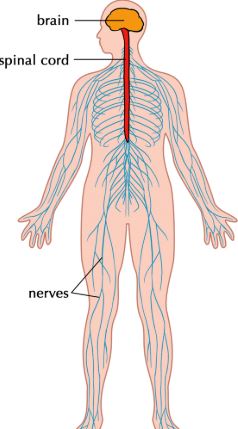
What system is pictured?

a)

Skeletal

b)

Circulatory

c)

Nervous

d)

Muscular

18.

What system eliminates non solid waste from the body?

a)

Integumentary

b)

Digestive

c)

Excretory

d)

Respiratory

19.

Which system includes the nose, trachea and the lungs?

a)

Excretory

b)

Respiratory

c)

Circulatory

d)

Muscular

20.

Which system includes the kidneys, ureters, urinary bladder, urethra?

a)

Digestive

b)

Muscular

c)

Excretory

d)

Nervous

21.

The muscular organ that pumps blood through out your body is your

a)

Arteries

b)

Diaphragm

c)

Heart

d)

Larynx

22.
Which of the following is the SMALLEST?
a)
Tissues
b)
Organs
c)
Cells
d)
Organ Systems
23.
What is a neuron?
a)
Part of the brain
b)
A nerve cell
c)
A sweat gland
d)
A blood cell
24.

Which of the following is NOT a difference between plant and animal cells?

a)

Chloroplasts

b)

Cell Wall

c)

Cell Membrane

d)

Large Central Vacuole

25.

What is the correct hierarchal order (smallest to largest)?

a)

Cells, organs, tissues organ systems

b)

tissues, cells, organ, organ system

c)

organelles, tissues, cells, organs

d)

cells, tissues, organs, organ systems

26.

What process is seen in the image below?

a)

Differentiation

b)

Protein Synthesis

c)

Photosynthesis

d)

DNA Replication

27.

What type of cell is shown below?

a)

Plant Cell

b)

Stem Cell

c)

Prokaryotic Cell

d)

Animal Cell

28.

What type of cell is shown in the image?

a)

Animal Cell

b)

Stem Cell

c)

Plant Cell

d)

Prokaryotic Cell

29.

What is the function (job) of the cell wall?

a)

provide support and strength

b)

capture light to make sugar

c)

store water

d)

make energy

30.
The basic unit of life is called a (n)
a)
atom
b)
compound
c)
cell
d)
energy
31.
Which of the following characteristics of living things best explain a cat having a litter of kittens?
a)
living things respond to their environment
b)
living things maintain homeostasis
c)
living things reproduce
d)
living things are based on a genetic code
32.
Before a soccer game Charlie always eats a big dinner. Which characteristic of life does this face best describe? 
a)
living things use energy
b)
living things reproduce
c)
living things grow and develop
d)
living things are based on a universal genetic code
33.

Plants need sunlight, humans need food both are examples of?

a)

Reproduction

b)

Levels of Organization

c)

Obtaining Energry

d)

Made of cells

34.

Lenses used to change the magnification of the specimen

a)

Body Tube

b)

Eyepiece

c)

Objective lenses

d)

Diaphragm

35.

Connects eyepiece to other lenses

a)

Body tube

b)

Arm

c)

Base

d)

Diaphragm

36.

Changes the amount of light shinning through a specimen

a)

Light source

b)

Diaphragm

c)

Arm

d)

Fine adjustment

37.

Top lens you look through to see the specimen

a)

Body tube

b)

Stage

c)

Light source

d)

Eyepiece

38.

Flat platform where you place the slide

a)

Base

b)

Stage

c)

Arm

d)

Light source

39.

Moves stage up and down to focus specimen

a)

Stage

b)

Stage clips

c)

Diaphragm

d)

Coarse adjustment

40.

Bottom of microscope, used for support

a)

Arm

b)

Stage

c)

Light source

d)

Base

41.

What parts should you use to carry the microscope?

a)

Body tube

b)

Base

c)

Arm

d)

Eyepiece

42.

What power lens should you always start on?

a)

Low

b)

Medium

c)

High

d)

Oil Immersion

43.

What is the total magnification of low power?

a)

4

b)

40

c)

100

d)

400

44.

What is the total magnification on medium power?

a)

4

b)

40

c)

100

d)

400

45.

What is the total magnification on high power?

a)

4

b)

100

c)

40

d)

400

46.

How many hands do you use to carry a microscope?

a)

1

b)

2

c)

3

d)

4

47.
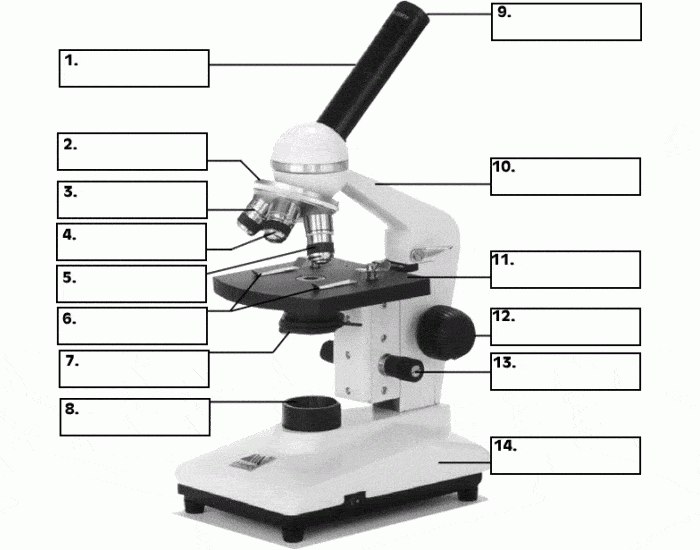
Part 9
a)
Body tube
b)
Eyepiece
c)
Objective
d)
Light Source
48.
Part 10
a)
Stage
b)
Arm
c)
Base
d)
Diaphragm
49.
Part 11
a)
Stage Clips
b)
Stage
c)
Diaphragm
d)
Illuminator
50.
Part 12
a)
Fine Adjustment Knob
b)
Coarse Adjustment Knob
c)
Diaphragm
d)
Objective
51.
Part 13
a)
Fine Adjustment Knob
b)
Course Adjustment Knob
c)
Stage
d)
Diaphragm
52.
Part 7
a)
Stage
b)
Stage Clips
c)
Light Source
d)
Diaphragm
53.

What is the total magnification of a microscope with an eyepiece of 15X and a high power objective of 40X?

a)

55

b)

400

c)

600

d)

415

54.
What is diffusion?
a)
when molecules move 
b)
when molecules move from a high concentration to a low.
c)
no movement 
d)
molecules move everywhere
55.
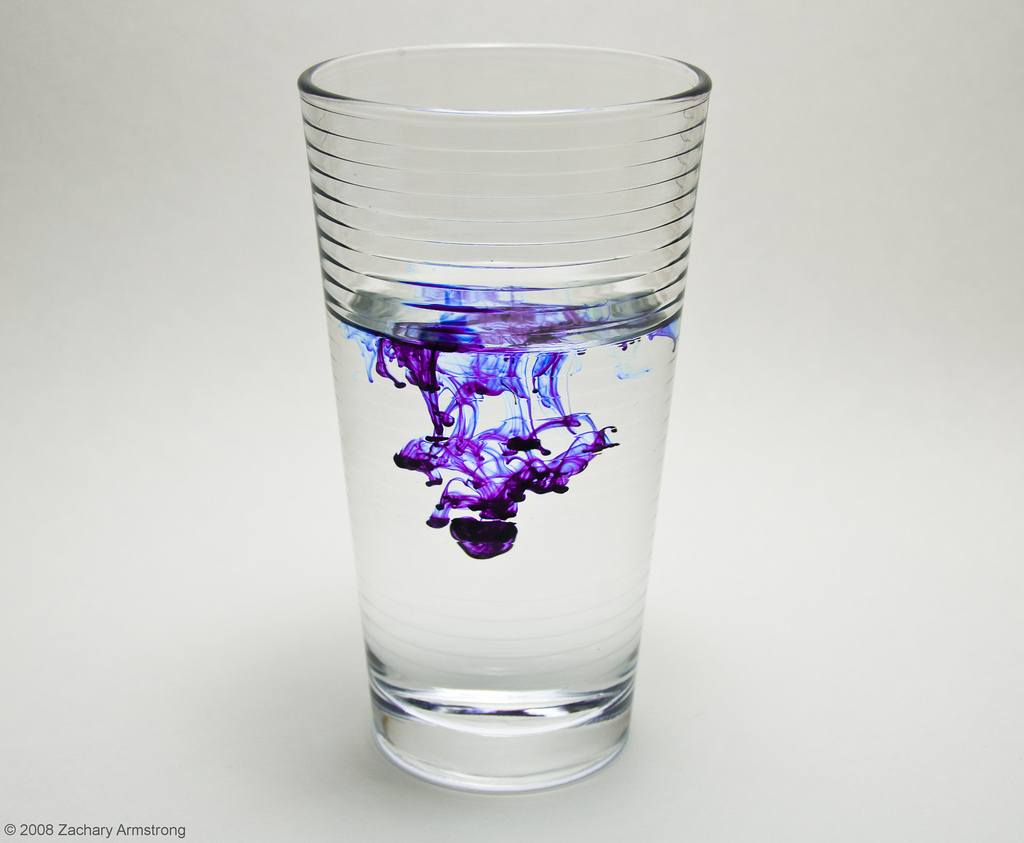
Where is there a low concentration of dye?
a)
at the bottom of cup
b)
in the color
c)
at the top of cup 
d)
no concenteraion gradient
56.
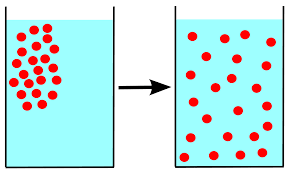
The picture below is an example of _________________.
a)
osmosis
b)
isotonic
c)
diffusion
d)
active transport
57.
Osmosis is the movement of _____ across a membrane.
a)
food
b)
energy
c)
oxygen
d)
water
58.
During osmosis
a)
water moves from high to low concentration
b)
large or oddly shaped molecules move across a cell membrane
c)
water moves when energy is used
d)
proteins are built
59.
Permeable means
a)
things can pass through
b)
the concentration levels are different
c)
it is permanent
d)
things are stuck
60.
The diffusion of water through a semi-permeable membrane is called?
a)
Osmosis
b)
Cell wall
c)
Diffusion
d)
Respiration
61.
What is the definition of  Selective Permeability?
a)
The movement of materials across the cell membrane that requires NO ENERGY from the cell.
b)
The movement of materials through (or across) the cell membrane
c)
The ability of the cell membrane to allow some things to pass through while preventing other things from passing through.
d)
The movement of molecules from an area of high concentration to a area of low concentration 
62.
A person should never drink salty water because their cells would
a)
shrink
b)
expand
63.
Which way will the water molecules move during osmosis?
a)
Out of the cell, so the cell shrinks.
b)
Out of the cell, so the cell swells.
c)
Into the cell, so the cell shrinks.
d)
Into the cell, so the cell swells.
64.

What is DIFFUSION?

a)
b)
c)
d)