wayground logo

Free Printable Worksheets

NEW

Font size

S
M
L
XL
Worksheets

Universe & Stars Review

Total questions: 63

Worksheet time: 2hrs 56mins

Name
Class
Date
1.

You are an astronaut exploring the universe. You realize you are in our galaxy. What is the name of our galaxy?

a)

Mily Galaxy

b)

Milky Way Galaxy

c)

Andromeda Galaxy

d)

Pinwheel Galaxy

2.
A galaxy is a large collection of stars, gas and dust. What is responsible for holding the stars, gas, and dust together in a galaxy?
a)
heat
b)
light
c)
gravity
d)
friction
3.
what is a large celestial body that is composed of gas and emits light 
a)
star
b)
universe
c)
galaxy
d)
asteroid
4.
what is a large collection of stars, gas, and dust that is held together by gravity
a)
star
b)
universe
c)
galaxy
d)
asteroid
5.
A force of attraction between any two objects is called _____________.
a)
static electricity 
b)
rotation
c)
gravity
d)
orbit
6.
Which star has the lowest luminosity?
a)
A
b)
B
c)
C
d)
D
7.
Which star has the lowest temperature?
a)
A
b)
B
c)
C
d)
D
8.
Which star is considered a Main Sequence Star?
a)
A
b)
B
c)
C
d)
D
9.
What type of galaxy is this?
a)
Spiral
b)
Elliptical
c)
Irregular 
d)
Irrational
10.
The color of the star tells us its 
a)
composition
b)
Temperature
c)
Luminosity 
d)
Mass
11.
The hottest color star is 
a)
Blue
b)
White
c)
Yellow
d)
Red
12.

Which best describes a nebula?

a)

A group of billions of stars, plus dust and gas

b)

A giant ball of burning gas

c)

A collection of dust and gas, where stars are born

d)

The massive, explosive death of a high mass star

13.
Which of the following is the largest?
a)
star
b)
universe
c)
cluster
d)
galaxy
14.
What process takes place inside a star to generate energy?
a)
Nuclear fission
b)
Hydrogen Creation
c)
Nuclear fusion
d)
Helium forming
15.
Which statement below most accurately describes our universe?     
a)
Thousands of stars around a black hole
b)
A system of planets and moons
c)
All of the billions of stars and galaxies
d)
All of the known galaxies
16.
The distance that light travels in one year...
a)
Light year
b)
Quantumyear
c)
Stellar-year
d)
1 million kilometers
17.
In the diagram given, what happens as we move to the left?
a)
Stars Get Larger
b)
Stars get Colder
c)
Stars get hotter
18.
Which star is the coldest?
a)
Yellow Star
b)
Red Star
c)
Orange Star
d)
Blue Star
19.
Which category is our Sun located in?
a)
White Dwarfs
b)
Supergiants
c)
Main Sequence
d)
Giants
20.
All stars the main sequence are middle aged. That is, they are fusing ________ into ________ in their cores.
a)
hydrogen into helium
b)
helium into carbon
c)
oxygen into iron
d)
helium into hydrogen
21.

The explosion that sent the universe flying out is called _____.

a)

The Big Bang

b)

The Milky Way

c)

The Solar System

d)

The Sun

22.

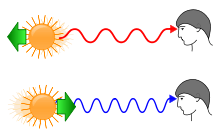
As galaxies move away from our galaxy

a shift on the electromagnetic spectrum

(EMS) is noticed. This phenomena is

called _____________.

a)

redshift

b)

blueshift

c)

unshift

d)

blackshift

23.
True or false: as you move along the spectrum, left to right, the wavelengths decrease in size (get smaller)
a)
true
b)
false
24.
A wave with a large wavelength will have a ______ frequency and _____ energy
a)
high, low
b)
high, high
c)
low, high
d)
low, low
25.
Which has the LONGEST wavelength and, therefore, the lowest frequency/energy
a)
Gamma Rays
b)
Radio Waves
c)
Visible Light
d)
Infrared rays
26.
Which has the SHORTEST wavelength and, therefore, the highest frequency/most energy
a)
Radio waves
b)
Ultraviolet Rays
c)
Gamma Rays
d)
X-rays
27.
Which section of the spectrum is the ONLY one we can see?
a)
X-rays
b)
Visible Light
c)
Gamma Rays
d)
Ultraviolet Rays
28.
Which of the following electromagnetic waves is given off as heat? 
a)
Radio Waves
b)
Infrared Rays
c)
Visible Light
d)
Gamma Rays
29.
a halo of that is formed by the expelled layers of a star's atmosphere
a)
super giant
b)
nebula
c)
white dwarf
d)
planetary nebula
30.
a large cloud of gas in space
a)
super giant
b)
nebula
c)
white dwarf
d)
planetary nebula
31.
a group of stars that appear to form a pattern in the sky
a)
our sun
b)
protostars
c)
constellations
d)
super nova
32.
the distance that light travels in one year, about 9.5 trillion kilometers
a)
constellations
b)
light year
c)
main sequence
d)
giant stars
33.
a distant neutron star that emits rapid pulses of light and radiowaves instead of steady radiation
a)
super nova
b)
neutron stars
c)
pulsar
d)
blackhole
34.
the brilliant burst of light that follows the collapse of the iron core of a massive star
a)
super nova
b)
neutron stars
c)
pulsar
d)
blackhole
35.
According to our present theories of stellar evolution, our sun will change next into
a)
a white dwarf
b)
a black hold
c)
a supernova
d)
a red giant
36.
What are the two most abundant elements in a main sequence star?
a)
carbon and heavy metals
b)
helium and carbon
c)
carbon and hydrogen
d)
hydrogen and helium
37.
How do stars like the sun create energy that is later radiated away into space?
a)
burning of carbon fuels
b)
changes in state such as melting and evaporation
c)
absorbing electromagnetic radiation form space
d)
nuclear fusion changing hydrogen into helium
38.
What is the single most important factor controlling the evolution of a star?
a)
mass
b)
rotation rate
c)
element composition
d)
temperature
39.
What is the distance that light can travel in one year? 
a)
Light year
b)
Irregular Galaxy
c)
Supernova
d)
Quasar 
40.
What is a small, hot, dim star that is the leftover center of an old star?
a)
Spiral Galaxy
b)
Supernova
c)
White Dwarf
d)
Black Hole
41.
What is an object that is so massive and dense that even light can not escape its gravity?
a)
Main-sequence
b)
black hole
c)
Apparent Magnitude
d)
Comet
42.
What is a large grouping of stars, dust, and gas bound together by gravity?
a)
Nebula
b)
Galaxy
c)
Cosmology
d)
Gravity
43.
What is a large cloud of dust and gas where new stars are formed or stars explode?
a)
quasar
b)
black hold
c)
supernova
d)
nebula
44.
The Milky Way Galaxy is most likely 
a)
an irregular galaxy
b)
a spiral galaxy
c)
an elliptical galaxy
d)
a nebula
45.
Which is the hottest?
a)
a red giant
b)
small, white dwarf
c)
main-sequence yellow star
d)
main-sequence blue star
46.
A student notices that the moon looks larger than the stars.  Why?
a)
The moon is reflecting light from the sun
b)
The moon is closer to Earth then the stars
c)
The moon is much larger than the stars
d)
The moon is much larger than Earth
47.
The color of a star depends on its
a)
size
b)
temperature
c)
shape
d)
magnitude
48.
Which of the following is not a type of galaxy?
a)
Irregular
b)
Triangular
c)
Spiral
d)
Elliptical 
49.
What color are the hottest stars?
a)
red
b)
yellow
c)
orange
d)
blue
50.
The majority of stars are in their longest phase, which is called...
a)
white dwarf
b)
H-R Diagram
c)
Red giant
d)
Main-sequence
51.
What is the theory that states the universe began with a huge explosion?
a)
Apparent Magnitude
b)
Light year
c)
Big Bang Theory
d)
Galaxy
52.
What is a spinning neutron star that emits rapid pulses of radio and optical energy?
a)
Elliptical Galaxy
b)
Neutron Star
c)
Globular Cluster
d)
Pulsar
53.
Which shows the correct sequence of a star's life cycle?
a)
main sequence, red giant, white dwarf
b)
main sequence, white dwarf, red giant
54.
Venus appears bright in the night sky because...
a)
it has a gravitational field
b)
is the largest planet
c)
is the closest planet to Earth
d)
has a high surface temperature
55.
The sun appears brighter than other stars because
a)
it is the largest star in the universe
b)
it is the hottest star in the universe
c)
able to radiate more energy than other stars
d)
is closer to Earth than other stars
56.
Where is the best place to put a telescope to get the clearest images of deep space?
a)
Near a city
b)
In space
c)
Top of a mountain
d)
In a desert
57.
Where is our Solar System located in the Milky Way galaxy?
a)
Near the center
b)
Near the outside on one of the arms
58.
How long does it take light from our Sun to reach Earth?
a)
3 seconds
b)
8 minutes
c)
57 hours
d)
1 year
59.
In ____shift, the galaxies appear _____ in color b/c they are moving away from us.
a)
blue; red
b)
red; red
c)
red; blue
d)
blue; blue
60.
If a star is being observed from Earth and it's light has shifted towards the blue side of the electromagnetic spectrum it would be...
a)
Moving towards the Earth
b)
Moving away from the Earth
c)
This is a trick question that cannot be answered
d)
It isn't a star, it is a very large blueberry.
61.

What instrument has allowed us to look deep into space to observe things far away that give us hints to the past?

a)

The Hubble telescope

b)

The Eiffel Tower

c)

Binkley's barometer

d)

The Smith Space Balloon

62.

Is Galaxy A moving

a)

Away

b)

Towards

c)

Stationary

63.

If number 2 shows spectra from a stationary object, what type of shift is number 3?

a)

Blue Shift

b)

Green Shift

c)

Yellow Shift

d)

Red Shift