wayground logo

Free Printable Worksheets

Font size

S
M
L
XL
Worksheets

Final Exam Review Part 2

Total questions: 98

Worksheet time: 5hrs 40mins

Name
Class
Date
1.

Why are ions formed?

a)

To make our lives difficult

b)

Because atoms want to be stable

c)

Because atoms have the same number of protons and electrons

d)

Because atoms gained neutrons

2.

Which particles change the charge in atoms when ions are formed?

a)

Protons

b)

Electrons

c)

Neutrons

3.

Cations are...

a)

Positive

b)

Negative

c)

Neutral

4.

Anions are...

a)

Positive

b)

Negative

c)

Neutral

5.

An atom becomes _________ when it gains electrons.

a)

Positive

b)

Negative

c)

Neutral

6.

An atom becomes _______ when it loses electrons.

a)

Positive

b)

Negative

c)

Neutral

7.
Cations are _______ that form ____________ ions and __________ electrons.
a)
nonmetals, positive, lose
b)
nonmetals, negative, gain
c)
metals, positive, gain
d)
metals, positive, lose
8.
Anions are _______ that form ____________ ions and __________ electrons.
a)
nonmetals, positive, lose
b)
nonmetals, negative, gain
c)
metals, positive, gain
d)
metals, positive, lose
9.

When an atom loses a valence electron, it becomes a(n) _____________ ion.

a)

positive

b)

negative

c)

neutral

10.

When an atom gains a valence electron, it becomes a(n) _____________ ion.

a)

positive

b)

negative

c)

neutral

11.
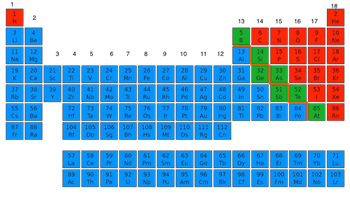
Where are metals located on the periodic table?
a)
Blue
b)
Green
c)
Red
12.
Where are the nonmetals located on the periodic table? 
a)
Blue
b)
Red
c)
Green
13.
What is the charge of an atom that has lost one electron?
a)
-1
b)
-2
c)
+1
d)
+2
14.
What is the charge of an atom that has gained one electron?
a)
-1
b)
-2
c)
+1
d)
+2
15.

Cations are

a)

negative ions

b)

neutral electrons

c)

positive ions

16.

Anions are

a)

Negative ions

b)

Neutral ions

c)

Positive ions

17.

Nonmetals are

a)

usually cations

b)

usually anions

18.

Metals are:

a)

Usually cations

b)

Usually anions

19.

Cations are _________________ and anions are _______________

a)

metals, nonmetals

b)

nonmetals, metals

20.

Na ionizes to a charge of _______

a)

+1

b)

+2

c)

-1

d)

-2

21.

Li ionizes to a charge of _________

a)

+2

b)

+1

c)

-1

d)

-2

22.

K ionizes to a charge of _________.

a)

+1

b)

+2

c)

-1

d)

-2

23.

Rb ionizes to a charge of _________.

a)

+2

b)

+1

c)

-1

d)

-2

24.

Be ionizes to a charge of ________.

a)

+1

b)

+2

c)

-1

d)

-2

25.

Mg ionizes to a charge of ______.

a)

+1

b)

+2

c)

-1

d)

-2

26.

Ca ionizes to a charge of _______.

a)

+1

b)

+2

c)

-1

d)

-2

27.

Sr ionizes to a charge of _________.

a)

+1

b)

+2

c)

-1

d)

-2

28.

Al ionizes to a charge of _______.

a)

+3

b)

-3

c)

+2

d)

-2

29.

N ionizes to a charge of _______.

a)

+3

b)

-3

c)

+2

d)

-2

30.

P ionizes to a charge of _______.

a)

+3

b)

-3

c)

+2

d)

-2

31.

As ionizes to a charge of _______.

a)

-3

b)

+3

c)

-2

d)

+2

32.

O ionizes to a charge of ________.

a)

+1

b)

+2

c)

-1

d)

-2

33.

S ionizes to a charge of _______.

a)

-2

b)

-1

c)

+1

d)

+2

34.

Se ionizes to a charge of _____.

a)

-2

b)

-1

c)

+1

d)

+2

35.

Te ionizes to a charge of ________.

a)

-2

b)

-1

c)

+2

d)

+1

36.

F ionizes to a charge of ________.

a)

-2

b)

-1

c)

+1

d)

+2

37.

Cl ionizes to a charge of _________.

a)

-2

b)

-1

c)

+1

d)

+2

38.

Br ionizes to a charge of ________

a)

-1

b)

-2

c)

+1

d)

+2

39.

I ionizes to a charge of _______.

a)

-1

b)

-2

c)

+1

d)

+2

40.
What is an ion?
a)
A Charged Atom
b)
A Large Atom
c)
A Small Atom
d)
A Cute Atom
41.
Barium atoms want to form...
a)
an anion
b)
a cation
c)
an onion
d)
a cuddly kitten friend
42.
Why are ions formed?
a)
To make our lives difficult
b)
Because atoms want 8 valence electrons
c)
Because atoms have the same number of protons and electrons
d)
Because atoms gained neutrons
43.
Cations are...
a)
Positive
b)
Negative
c)
Neutral
d)
Purring
44.
Anions are...
a)
Positive
b)
Negative
c)
Neutral
d)
Crying
45.
What is the ionic symbol for a phosphorus atom?
a)
P-3
b)
P+3
c)
P-2
d)
P+2
46.
What is a valence electron?
a)
The sum of neutrons and protons.
b)
The # of electrons in the last shell.
c)
A type of bond.
d)
A popular compound.
47.

Which of these is not a real bond in chemistry?

a)

James

b)

Ionic

c)

Covalent

d)

Metallic

48.
Ionic bonds are between...
a)
nonmetals and nonmetals
b)
carbon and oxygen
c)
metals and nonmentals
d)
hydrogen and chlorine
49.
Covalent bonds are between...
a)
two or more nonmetals
b)
sodium and chlorine
c)
metals and metals
d)
metals and nonmetals
50.
What is the name for an ion with a positive charge?
a)
cation
b)
anion
c)
onion
d)
union
51.
What kind of bond forms when atoms exchange electrons?
a)
ionic
b)
covalent
c)
artificial
d)
univalent
52.
If an atom loses two electrons what charge will it have?
a)
-2
b)
-1
c)
+1
d)
+2
53.
If an atom gains two electrons what charge will it have?
a)
-2
b)
-1
c)
+1
d)
+2
54.

Which of the following describes covalent bonds?

a)

Bonds form because of opposite charges

b)

electrons are shared to fill outer electron shells

c)

Electrons are transferred between atoms

d)

Covalent bonds are magical

55.
Predict the bond that will form between Be and F.
a)
Ionic
b)
Covalent
56.
Predict the bond that will form between Se and Cl.
a)
Ionic
b)
Covalent
57.

How many valence electrons does Oxygen (O) have?

a)

6

b)

8

c)

15

d)

16

58.
Where are the nonmetals located on the periodic table? 
a)
Blue
b)
Red
c)
Green
59.
This could be the dot diagram of 
a)
Ne
b)
Si
c)
Al
d)
Be
60.

This could be the dot diagram of

a)

Mg

b)

Cl

c)

C

d)

O

61.

Which of the following is the correct electron dot structure for nitrogen?

a)
b)
c)
d)
62.

Which of these is correct?

a)
b)
c)
63.

How many valence electrons should Magnesium have in its Lewis dot model?

a)

1

b)

2

c)

3

d)

4

64.
This is the correct dot diagram for sodium (Na)
a)
true
b)
false
65.

What is the correct Lewis Dot Structure for ammonia NH3

a)
b)
c)
d)
66.

Which is the correct molecular structure for carbon dioxide?

a)
b)
c)
d)
67.
Which of the following is the correct Lewis dot structure for the molecule fluorine (F2)?
a)
A
b)
B
c)
C
d)
D
68.
This is a correct dot diagram for oxygen (O)
a)
true
b)
false
69.
How many electrons should Helium have around its Lewis dot model?
a)
1
b)
2
c)
7
d)
8
70.
Mg2+ and Cl- create...
a)
Mg2Cl
b)
MgCl2
c)
Mg2Cl2
d)
MgCl
71.
Li+ and P3- create...
a)
Li3P
b)
LiP3
c)
LiP
d)
Li2P
72.
What is the NAME of....
Na2S
a)
sodium (II) sulfide
b)
sodium sulfide
c)
disodium sulfide
d)
sodium sulfur
73.

What is the correct name for the following compound?


LiOH

a)

Lithium hydroxide

b)

Lithium oxygen hydride

c)

Lithium oxide

d)

Lithium hydride

74.

Which of the following is the correct formula for Aluminum Hydroxide?

a)

AlOH

b)

AlOH3

c)

Al3OH

d)

Al(OH)3

75.

Which of the following is the correct formula for Sodium Hydroxide?

a)

NaOH2

b)

NaOH

c)

NaO

d)

NaH

76.

Name this compound: KF

a)

Potassium fluoride

b)

Potassium fluorite

c)

Fluorine potasside

d)

Potassium fluorate

77.
How do the following two elements bond together?
Al3+  O2-         
a)
AlO
b)
Al2O3
c)
Al3O6
d)
Al3O2
78.
H+ and S2- create...
a)
H2S
b)
HS2
c)
H2S2
d)
HS
79.

Na+ and Cl- create...

a)

Na2Cl

b)

NaCl2

c)

Na2Cl2

d)

NaCl

80.

H+ and N3- create...

a)

H3N

b)

HN2

c)

H2N2

d)

HN

81.
Name the following ionic compound: BeCl2
a)
beryllium chlorine
b)
beryllium II chloride
c)
beryllium chloride
d)
beryllium dichloride
82.

Name the following ionic compound: MgSO4

a)

magnesium sulfoxide

b)

magnesium sulfide

c)

magnesium sulfate

d)

magnesium oxide

83.
What is the name of Al(NO3)3?
a)
Aluminum trinitrate
b)
Monoaluminum nitrate
c)
Aluminum (III) nitrate
d)
Aluminum Nitrate
84.
What is the correct name for C4H6?
a)
Carbon Hexahydride
b)
Pentacarbon Pentahydride
c)
Hexacarbon Tetrahydride
d)
Tetracarbon Hexahydride
85.
Phosphorous trichloride
a)
PCl3
b)
P3Cl
c)
P3Cl3
d)
PCL
86.
Disulfur trioxide
a)
S3O2
b)
SO
c)
S2O3
d)
S2O
87.
Name HF
a)
hydrofluoric acid
b)
Hypofluoric acid
c)
hydrogen fluorine acid
d)
fluoric acid
88.
Name the acid: H3PO3
a)
hydrophosphoric acid
b)
phosphorous acid
c)
phosphoric acid
d)
phosphoric hydroxide
89.
What is the formula for nitric acid?
a)
HNO2
b)
HNO3
c)
HNO4
d)
H2NO3
90.
carbonic acid
a)
H2CO3
b)
H2CrO4
c)
H2C2O4
d)
HCO3
91.
Balance this equation...
HgO --> Hg + O2
a)
It is balanced 
b)
2HgO --> Hg + O2
c)
2HgO --> 2Hg + O2
92.
Balance this equation...
H2 + Cl2 --> HCl
a)
It is balanced 
b)
3H2 + Cl2 --> 6H2Cl
c)
H2 + Cl2 --> 2HCl
93.

Which of the following is NOT an indication of a chemical reaction?

a)

new gas formed

b)

temperature change

c)

new smell detected

d)

two liquids form a mixture

94.

 C2H6 + 5O2  2CO2 + 3H2O2C_2H_6\ +\ 5O_2\ \rightarrow\ 2CO_2\ +\ 3H_2O_2  
Given this chemical equation, what are the REACTANTS?

a)

 C2H6 and 5O2C_2H_{6\ }and\ 5O_2  

b)

 2CO2 and 3H2O22CO_2\ and\ 3H_2O_2  

95.

 C2H6 + 5O2  2CO2 + 3H2O2C_2H_6\ +\ 5O_2\ \rightarrow\ 2CO_2\ +\ 3H_2O_2  
Given this chemical equation, what are the REACTANTS?

a)

 C2H6 and 5O2C_2H_{6\ }and\ 5O_2  

b)

 2CO2 and 3H2O22CO_2\ and\ 3H_2O_2  

96.

 C2H6 + 5O2  2CO2 + 3H2O2C_2H_6\ +\ 5O_2\ \rightarrow\ 2CO_2\ +\ 3H_2O_2  
Given this chemical equation, what are the PRODUCTS?

a)

 C2H6 and 5O2C_2H_{6\ }and\ 5O_2  

b)

 2CO2 and 3H2O22CO_2\ and\ 3H_2O_2  

97.

Which type of reaction is:

2 NH3 + H2SO4 → (NH4)2SO4

a)
Synthesis
b)
Decomposition
c)
Single Displacement
d)
Double Displacement
98.

Which type of reaction is:

2 H3AsO4 → As2O5 + 3 H2O

a)
Synthesis
b)
Decomposition
c)
Single Displacement
d)
Combustion