
 Worksheets
MUSCULAR SYSTEM CHAPTER TEST
Total questions: 101
Worksheet time: 51mins


What muscle is highlighted in the picture?
Triceps
Biceps
Quads
Deltoids

What muscle is highlighted in the picture?
Triceps
Biceps
Quads
Deltoids

What muscle is highlighted?
Triceps
Biceps
Quads
Deltoids

What muscles is highlighted?
Deltoid
Trapezius
Tricep
Pectoralis

What muscle is highlighted?
Trapezius
Lats
Pectoralis
Deltoids

What muscle is highlighted?
Lats
Abdominals
Pectoralis
Quads

What muscle is highlighted?
Latissimus dorsi
Trapezius
Hamstrings
Calves

What muscle is highlighted?
Hamstrings
Quads
Gastrocnemius
Gluteus

What muscle is highlighted?
Abdominals
Quads
Gluteus Maximus
Hamstring

What muscle is highlighted?
Hamstrings
Quads
Calves
Gluteus

What muscle is highlighted?
Hamstrings
Quadriceps
Calves
Gluteus

Sartorius
Sternocleidomastoid
Obliques
Hamstrings

Obliques
Glueteus
Quads
Abdominals

Longest muscle in the body
Sternomastoid
Obliques
Biceps
Sartorius
The point at which the nerve cell reaches the sarcolemma of the muscle fiber is the _____.
Neurotransmitter
Acetylcholine
Synaptic cleft
Neuromuscular Junction
One neuron and all the skeletal muscle cells it stimulates is the ____ ___.
Neurotransmitter
Neuromuscular junction
Motor unit
Synaptic cleft
The gap between the nerve cell and sarcolemma is the ____ ___.
Synaptic cleft
Neurotransmitter
Motor unit
Neuromuscular junction
What is the specific neurotransmitter that stimulates the movement of skeletal muscles?
GABA
Acetylcholine
Serotonin
Dopamine
Once the action potential reaches the end of the axon terminal what takes place?
ACh is released into the synaptic cleft.
Calcium is pumped into the sarcolemma.
Calcium is pumped into the AT.
The muscle contracts.
Once calcium is pumped into the axon terminal what happens?
The muscle contracts
ACh is released into the synaptic cleft.
Sodium pumps into the sarcolemma.
The muscle contracts.
What is the name of the component that houses the neurotransmitters?
Synaptic cleft
Acetylcholine
Receptors
Synaptic vesicles
Once ACh binds to receptor cells on the sarcolemma, what takes place?
Sarcolemma becomes temporarily permeable to sodium.
The muscle contracts.
Calcium is pumped into the axon terminal.
Synaptic vesicles move to the end of the terminal.
The neuromuscular junction is created when the nerve cell reaches the ___.
Sarcomere
Sarcoplasmic reticulum
Sarcolemma
Myofibril
Once sodium is pumped into the sarcolemma, what happens?
Action potential is transferred to the sarcolemma to cause contraction.
The process ends and ACh breaks down.
Calcium is pumped into the axon terminal.
ACh is released into the synaptic cleft.

13.What is structure labeled F in the picture?
Nucleus
Schwann Cell
Node of Ranvier
Myelin Sheath
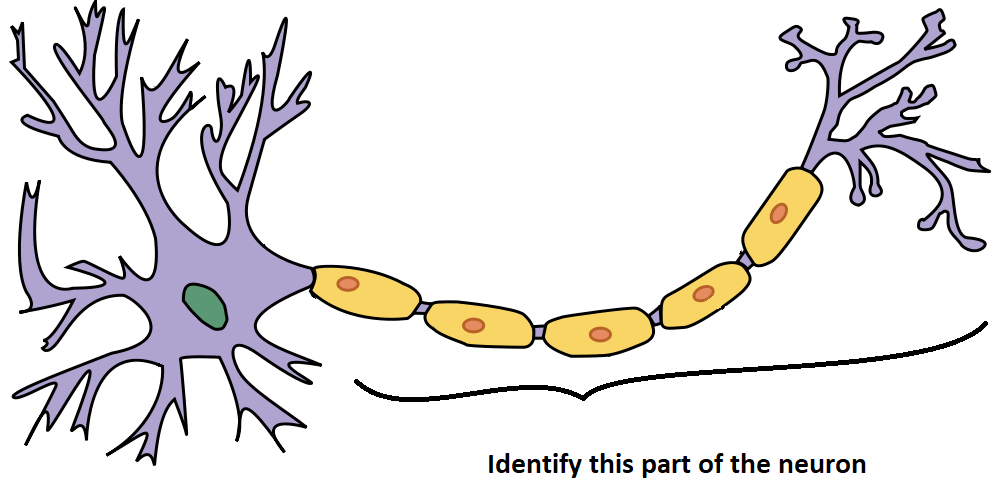
Nucleus
Cell Body
Axon
Node of Ranvier
The gap between the nerve cell and sarcolemma is the ____ ___.
Synaptic cleft
Neurotransmitter
Motor unit
Neuromuscular junction
What is the name of the component that houses the neurotransmitters?
Synaptic cleft
Acetylcholine
Receptors
Synaptic vesicles
What is the unstoppable electrical current that travels down the length of the entire surface of a sarcolemma?
neurotransmitter
graded response
acetylcholine
action potential
What enzyme breaks down acetylcholine into acetic acid and choline to prevent continued contraction of the muscle fiber?
potassium ions
calcium ions
cross bridges
acetylcholinesterase
Which of these events must occur first to trigger the skeletal muscle to generate an action potential and contract?
Potassium ions diffuse out of the muscle cell.
Acetylcholine (ACh) binds to receptors on the sarcolemma and allows passage of sodium ions into the cell.
The sodium-potassium pump restores sodium and potassium back to their initial positions.
Acetylcholinesterase (AchE) breaks down acetylcholine (ACh).

Which number is pointing to the integral protein or ACh receptor?
#1
#2
#3
#4
What is number 5 pointing to?
a muscle cell
a sarcomere
a synapse
a neuron
What type of chemical is number 7 pointing to?
neurotransmitter
an ACh receptor
a neuron
a cell wall
Which structures contain neurotransmitters?
neurotransmitter
an ACh receptor
a synapse
a synaptic vesicle
What is the function of this entire diagram?
controlling a nerve
controlling a skeletal muscle contraction
endocytosis
inserting a musle on a bone

Where a nerve and muscle fiber come together is called a...
Synaptic Cleft
Neurotransmitter
Neuromuscular Junction
Action Potential
The neurotransmitter stored in the axon terminal identified as ...
Acetylcholine
Serotonin
Adrenaline
Dopamine
Where is calcium stored in the muscle cell?
T Tubules
Sarcoplasmic Reticulum (SR)
Sarcolemma
Sarcomere
Tetanus is...?
A rare condition caused by the toxins of the Clostridium botulinum bacteria
A crippling, and potentially deadly, infectious disease caused by the poliovirus.
An autoimmune disorder that causes weakness of the voluntary muscles.
A bacterial disease that affects the muscles and nerves.
Regular stretching and strengthening exercises for your sport, fitness or work activity, as part of an overall physical conditioning program, can help to minimize your risk of _________ and _________.
hernia and sprains
muscle cramps and shin splints
sprain and strain
strains and TMJ
The disorder characterized by, pain, numbness, and tingling in the hand and arm. The condition occurs when one of the major nerves to the hand is squeezed or compressed as it travels through the wrist
TMJ
shin splint
carpal tunnel
muscular dystrophy
Take breaks, watch your form when performing repetitive exercises with the wrist, do stretching exercises to help strengthen the muscles in your wrists and hand, and wearing a brace are all preventative measures for,
carpal tunnel
TMJ
hernia
shin splints
A hernia
can cause pain in your jaw joint and in the muscles that control jaw movement.
is a widespread musculo-skeletal pain accompanied by fatigue, sleep, memory and mood issues
is an inflammation of a thick band of tissue that runs across the bottom of your foot and connects your heel bone to your toes, that is the most common cause of heel pain
is when an organ pushes through an opening in the muscle or tissue that holds it in place
is an inflammation of the muscles, tendons, and bone tissue around your tibia
Fibromyalgia
can cause pain in your jaw joint and in the muscles that control jaw movement.
is a widespread musculo-skeletal pain accompanied by fatigue, sleep, memory and mood issues
is an inflammation of a thick band of tissue that runs across the bottom of your foot and connects your heel bone to your toes, that is the most common cause of heel pain
is when an organ pushes through an opening in the muscle or tissue that holds it in place
is an inflammation of the muscles, tendons, and bone tissue around your tibia
This disorder is caused by a combination of muscle weakness and strain from a congenital condition, chronic coughing, or damage from surgery. Depending on its cause, it can develop quickly or over a long period of time
shin splints
sprain
hernia
strain
A group of diseases that cause progressive weakness and loss of muscle mass. In muscular dystrophy, abnormal genes (mutations) interfere with the production of proteins needed to form healthy muscle.
carpal tunnel
muscular dystrophy
sprain
shin splints
One way to stop_________________ is to stretch or massage your muscles and to eat enough of these key nutrients: potassium, sodium, calcium, and magnesium.
TMJ
shin splints
fibromyalgia
muscle cramp
A strong, painful contraction or tightening of a muscle that comes on suddenly and lasts from a few seconds to several minutes. It often occurs in the legs. It is also called a charley horse.
sprain
strain
muscle cramp
muscular dystrophy
Which disorder is not preventable and has no cure?
Shin Splint
Hernia
Sprain
Muscular Dystrophy
Carpal Tunnel
muscle will enlarge due to over exercise
strength
hypertrophy
muscle fatigue
muscle tone
What is Myasthenia Gravis?
Disease that causes brain deterioration
Autoimmune disease that causes severe muscular weakness
Autoimmune disease that attacks joints
Disease that causes damage to the intestines
What causes Myasthenia Gravis
Extreme lack of protein consumption
Transmitted through mosquito bites
Antibodies that interfere with the transmission of acetylcholine
High levels of uric acid in the blood stream
Some first signs of Myasthenia Gravis are all EXCEPT....
Eye weakness
Slurred speech
Difficulty breathing
Fever
Is Myasthenia Gravis hereditary?
Yes
No
Is Myasthenia Gravis contagious?
Yes
No

