wayground logo

Free Printable Worksheets

NEW

Font size

S
M
L
XL
Worksheets

Static Electricity and Magnetism

Total questions: 52

Worksheet time: 33mins

Name
Class
Date
1.

Rubbing your head on a balloon does what?

a)

nothing, makes your look dumb

b)

friction

c)

static electricity

d)

induction

2.

Atoms that have a positive charge will be ATTRACTED to atoms with a ___________ charge.

a)

positive

b)

negative

c)

neutral

3.

This force occurs when there is an attractive and repulsive force between two poles.

a)

Magnetic

b)

Electric

c)

Electromagnetism

4.

In a magnet the opposite poles will ___________.

a)

attract

b)

repel

5.

The magnetic field of a magnet is ____________ further away from the magnet.

a)

stronger

b)

weaker

6.

Electric charges that DO NOT move through a current are known as

a)

Magnetic

b)

Electric

c)

Electromagnetism

d)

Static Electricity

7.

two type of charges in electric and magnetic forces are

a)

north and south

b)

east and west

c)

positive and negative

d)

beyonce

8.

this force is the attractive and repulsive force between two poles.

a)

electric

b)

magnetic

c)

electromagnetic

9.

electrons have this type of charge

a)

positive

b)

negative

c)

neutral

10.

protons have this type of charge

a)

positive

b)

negative

c)

neutral

11.

when the number of electrons matches the number of protons, the atom's charge is...

a)

positive

b)

negative

c)

neutral

12.

When your hair stands on end, each strand repelling the other, you are experiencing

a)

magnetism

b)

ghosts

c)

static electricity

13.
Static electricity is:
a)
electricity flowing in a wire
b)
the buildup of electric charges on an object
c)
when protons move between objects
14.
Two objects with LIKE static charges will
a)
attract each other
b)
even out in the end
c)
repel each other
d)
cause a spark
15.
Which is an example of static dischage?
a)
a motor
b)
lightning
c)
thunder
d)
insulators
16.
Static charges build up when
a)
protons move within an object
b)
electrons move within an object
c)
neutrons move within an object
d)
the nucleus moves within an object
17.
Which subatomic particle has a POSITIVE charge?
a)
Proton
b)
Neutron
c)
Electron
d)
Nucleus
18.
Which subatomic particle has a NEGATIVE charge?
a)
Proton
b)
Neutron
c)
Electron
d)
Nucleus
19.
Which of these is NOT a way to create a static charge?
a)
Friction
b)
Induction
c)
Electroaction
d)
Conduction
20.
If two objects with static charge are attracted, what do you know about them?
a)
They are both positively charged.
b)
They are both negatively charged.
c)
One is positively charged and one is negatively charged, but you won't be able to tell which is which.
d)
One is positively charged and one is negatively charged, and you can tell which is which by looking at them.
21.
Is it possible to CREATE electrons?
a)
Yes, that's what static electricity is.
b)
No, you can move them, but they are never created or distroyed.
c)
Sometimes, it depends on the voltage.
d)
Sometimes, it depends on the element.
22.
Rubbing a balloon on hair is an example of static charge build up created by....
a)
conduction
b)
friction
c)
induction
d)
hairduction
23.
True or False:
In static electricity, charges build up on an object, but they do not flow continuously.
a)
True
b)
False
c)
11
d)
Tuesday
24.
"Static" comes from the Greek word meaning:
a)
stay
b)
discharge
c)
electricity
d)
noise
25.

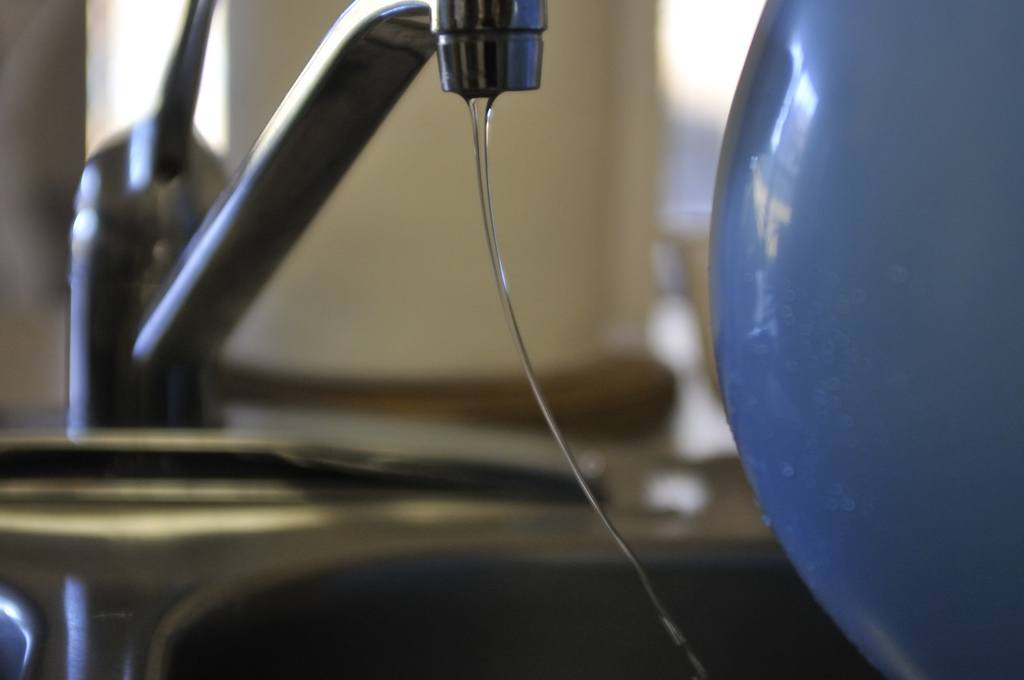
Bending water with a charged balloon is an example of what type of charging (charging an object without touching)

a)

friction

b)

induction

c)

conduction

26.

The difference between attraction and repulsion is that to attract is to pull something closer and repel is to push something away.

a)

True

b)

False

27.
If a substance has a higher number of electrons than protons on its surface, what type of charge does it have?
a)
A positive charge.
b)
A negative charge.
c)
A neutral charge
d)
No charge at all
28.
Electrical charge built up on the surface of an object is called _________________.
a)
static electricity
b)
current electricity
c)
lightning
d)
electrons
29.

During a lab a balloon was rubbed with a wooly fabric. This is an example of which type of charging?

a)

conduction

b)

friction

c)

induction

30.

What happens when you touch a metal doorknob after rubbing your shoes on the carpet?

a)

The doorknob sends a burst of electric current into your body

b)

Millions of electrons go from your finger into the doorknob

c)

The doorknob sends millions of electrons into your finger

d)

Your finger becomes negatively charged

31.
Which of the following is caused by static electricity?
a)
a stove getting hot when it is turned on
b)
a magnet being attracted to a refrigerator
c)
a lightning strike during a storm
d)
a light bulb coming on when a switch is turned on
32.

An object that is neutral contains the same number of electrons and protons.

a)

True

b)

False

33.

the charging of an object by the contact of a charged object to a neutral object (like touching a door knob)

a)

induction

b)

conduction

c)

friction

34.

Lightning occurs because ___.

a)

the negative charges at the bottom of clouds are attracted to the positive charges on the ground.

b)

the positive charges at the bottom of clouds are attracted to the negative charges on the ground.

c)

the positive and negative charges inside clouds are attracted to each other

d)

All of these reasons are correct.

35.
Which of the following is not a good insulator?
a)
Copper
b)
Glass
c)
rubber
d)
wool
36.
What is the name of the particle that is being transferred?
a)
Proton
b)
Neutron
c)
Electron
d)
Positron
37.
What is the overall charge on this balloon? (They are the same so look at either one!)
a)
+3
b)
-6
c)
+6
d)
-3
38.
When is the electrostatic force between two charges the strongest?
a)
When charges are very close to each other
b)
When charges are very far apart from each other
c)
When the electric field is constant
39.
If a negatively charged rod touches a conductor, the conductor will be charged by what method? 
a)
Friction
b)
Conduction
c)
Induction
d)
Convection
40.
The electrons in a certain material are closely bound to their atoms and cannot move around very much.  This material would be an electric _____.
a)
Conductor
b)
Diode
c)
Insulator
d)
Polarizer
41.
Two storm clouds rub against each other giving one cloud a positive charge and one a negative charge.  This is an example of charging by
a)
Conduction
b)
Convection
c)
Friction
d)
Induction
42.
A charged balloon is brought near an electroscope but DOES NOT touch the electroscope.  This is an example of charging by
a)
Conduction
b)
Convection
c)
Friction
d)
Induction
43.
Transferring a charge without touching is ___
a)
conduction
b)
induction
c)
grounding 
d)
Newtons 3rd law
44.
Charge is not permanent in ___
a)
conduction
b)
induction
45.
A charged balloon is brought near an electroscope but DOES NOT touch the electroscope.  This is an example of charging by
a)
Conduction
b)
Convection
c)
Friction
d)
Induction
46.
Your arm hair raising as you approach a television is an example of charging by induction
a)
true
b)
false
47.
If a negatively charged rod touches a conductor, the conductor will be charged by what method? 
a)
Friction
b)
Conduction
c)
Induction
d)
Convection
48.
The electrons in a certain material are closely bound to their atoms and cannot move around very much.  This material would be an electric _____.
a)
Conductor
b)
Diode
c)
Insulator
d)
Polarizer
49.
Two storm clouds rub against each other giving one cloud a positive charge and one a negative charge.  This is an example of charging by
a)
Conduction
b)
Convection
c)
Friction
d)
Induction
50.

If the balloon has a negative charge, the hair must have what charge?

a)

negative

b)

positive

c)

neutral

51.

When someone's hair is charged by the person holding onto the Van de Graaf generator, you are observing ___.

a)

friction

b)

conduction

c)

induction

52.

Walking across a carpet is an example of charge being transferred by

a)

friction.

b)

induction.

c)

contact.