
 Worksheets
Review: Histology & Integumentary System
Total questions: 50
Worksheet time: 25mins
The function of the integumentary system includes all of these except what?
Homeostasis
Cooling system
Synthesis of Vitamin A
Excretion of wastes
What layer of the skin contains sweat glands?
Dermis
Epidermis
Hypodermis
Subcutaneous
What part of a hair can be seen?
Follicle
Matrix
Root
Shaft
Which layer of the skin contains no nerves and blood vessels?
subcutaneous fascia
epidermis
dermis
hypodermis
Special cells that produce your skin's color.
melanocytes
erythrocytes
leukocytes
hormones
The hypodermis contains this type of tissue which is another name for fat.
epithelial
connective
sebum
adipose

Number 4 on the diagram
arrector muscle
hair shaft
sebaceous gland
nerve
Function of the adipose tissue in the inner layer of skin functions to...
insulate the body
provide pigment to the skin
help to make collagen and elastin
produce sebum
Sebum produced by the sebaceous gland functions to
insulate the body
produce hormones
Keep hair and skin from becoming too dry and brittle
act as a shock absorber
Epithelial cells present in the small intestine are tall and thin. They are called
squamous
cuboidal
columnar
rectangular
______________ tissue provides cushioning to our organs.
Areolar
Adipose
Cartilage
Lymph
Which of the following is not a type of connective tissue?
Blood
Bone
Skin
Adipose
Which type of muscle tissue would line the intestines?
Smooth
Skeletal
Cardiac
Transitional

Name this tissue
Bone
Adipose
Cartilage
Blood
The four types of tissue are
Cardiac, transitional, epithelial, connective
Muscle, Nervous, Epithelial, Connective
Connective, Epithelial, Transitional, Muscle
Epithelial, Connective, Muscle, Squamous
Cardiac muscle is found around the
Liver
Heart
Lungs
Stomach
This name means that there are multiple layers of cells
Simple
Stratified
Columnar
Pseudostratified
These cells are small and flat
Cuboidal
Columnar
Squamous
Pseudostratified

Name the tissue
Pseudostratified
Simple columnar
Transitional
Stratified Squamous
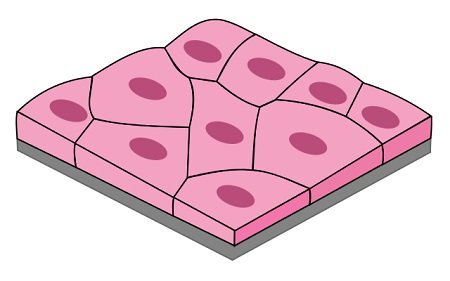
Name the type of epithelium
simple cuboidal
simple squamous
simple columnar
stratified squamous
Which tissue assists in support and protection of organs and limbs?
epithelial
connective
muscle
nerve
Which tissue enables various forms of movement, both voluntary and involuntary?
Muscle
nerve
connective
epithelial
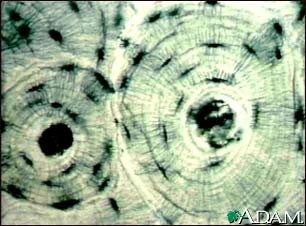
smooth muscle
bone
nerve
blood


What tissue is this?
Muscle
Epithelial
Nervous
Connective

What tissue is this?
Epithelial
Nervous
Connective
Muscular
How do we classify epithelial tissue?
Shape
Shape and number of layers
Counting the number of individual cells
Squamous

Identify the type of epithelial tissue from the picture above.
Simple squamous
Simple cuboidal
Stratified columnar
Stratified cuboidal
What is histology?
Study of organs
Study of different types of tissue
Study of histamines
Study of skin
What does pseudostratified mean?
Many layers of cells
Single layer that looks like many layers of cells
Single layer of cells
No layer of cells
What is the most abundant type of tissue in the human body?
Nervous
Muscle
Connective
Epithelial
Which one of the following is NOT a type of loose connective tissue?
Elastic
Areolar
Adipose
Reticular
Which of the following is NOT a type of cartilage found in the human body?
Hyaline
Elastic
Regular
Fibrocartilage
In which tissue type do we find "intercalated discs?"
Adipose tissue
Cardiac muscle
Nervous tissue
Connective tissue
What are the two main cells that make up nervous tissue?
neurons
myelin
axon
neuroglia
Nervous tissue is found in the brain, spinal cord, and nerves and is responsible for communication.
true
false



