wayground logo

Free Printable Worksheets

NEW

Font size

S
M
L
XL
Worksheets

Forces that Shape the Earth

Total questions: 77

Worksheet time: 54mins

Name
Class
Date
1.

Plate boundary where plates are separating apart.

a)

divergent

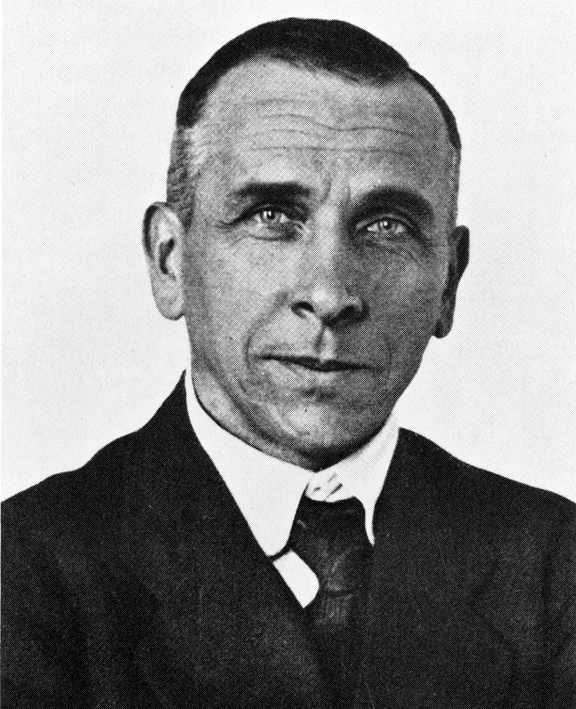
b)

convergent

c)

transform

d)

opening

2.

At this boundary, plates are moving toward each other.

a)

divergent

b)

convergent

c)

transform

d)

closing

3.

At this boundary, plates move past each other from side to side.

a)

divergent

b)

convergent

c)

transform

d)

sideline

4.

Tension is a stress that.....

a)

pulls apart.

b)

squeezes together.

c)

breaks in half.

5.

Compression is a stress that....

a)

pulls apart.

b)

squeezes together.

6.

Compression will be found at a __________________ boundary.

a)

divergent

b)

convergent

c)

transform

7.

Tension is a stress found at a ______________ boundary.

a)

divergent

b)

convergent

c)

transform

8.

An enormous moving piece of the earth's lithosphere is a

a)

earthquake

b)

tsunami

c)

volcano

d)

tectonic plate

9.

As plates push together, one plate is forces under the other. As the bottom plate starts to melt, magma rises and forms volcanoes at the surface.

a)

Divergent

b)

Subduction

c)

Collision

d)

Transform

10.

Where are most volcanoes found?

a)

Asia

b)

Australia

c)

near the center of tectonic plates

d)

near plate boundaries

11.

The Ring of Fire is

a)

a zone around the Pacific Ocean.

b)

a zone around the Atlantic Ocean.

c)

caused by tsunamis.

d)

part of the Richter scale.

12.

What is the shaking of the Earth’s crust caused by a release of energy?

a)

Earthquake

b)

Epicenter

c)

Fault

d)

Plate

13.

Where are most volcanoes found?

a)

Southern Hemisphere

b)

Ring of Fire

c)

Mid-Atlantic Ridge

d)

Hot Spots

14.

According to Wegener's hypothesis of continental drift,

a)

Earth's surface is made up of seven major landmasses

b)

the continents DO NOT move

c)

Earth is slowly cooling and shrinking

d)

the continents were once joined together in a single landmass

15.
_______ are formed when two continental plates collide.
a)
Mountain ranges
b)
Transform faults
c)
Rift valleys
d)
Volcanoes
16.

Plate movement is caused by ______________.

a)

the rotation of the Earth

b)

ocean tides

c)

convection currents in the mantle

d)

the moon's gravity

17.

What are large pieces of Earth's crust called?

a)

plates

b)

folds

c)

mountains

d)

faults

18.

What is it called when on plate is pushed under another plate as they collide?

a)

earthquakes

b)

subduction

19.
Who first proposed the theory of continental drift'?
a)
Galileo
b)
Wegener
c)
Hess
20.
What is an underwater mountain range where new ocean floor is made?
a)
subduction
b)
mid-ocean ridge
c)
deep-sea trench
21.
Who is the person credited with developing the theory of continental drift?
a)
Harry Hess
b)
Galileo
c)
Alfred Wegener
d)
Newton
22.
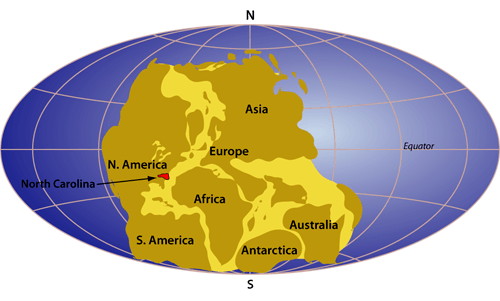
What is this a picture of?
a)
plate tectonics
b)
continental drift
c)
pangea
d)
glacier scaring
23.
What does the theory of continental drift state?
a)
The continents were once joined in a super-continent and have moved over time
b)
Continents are stationary and do not move
c)
The Earth is broken into lithospheric plates that move due to convection currents
d)
none of the above
24.
What evidence did Wegener use in his theory?
a)
Continents and fossils fitting together/matching-up like puzzle pieces 
b)
glacier scars and evidence from temperature
c)
mountain ranges and coal deposits line up across continents
d)
all of the above
25.
Why did no one believe Wegener's thoery?
a)
He could not explain HOW the continents moved
b)
He didn't have evidence
c)
His data was wrong
d)
He didn't use the right technology to gather data
26.
What two specific continents fit together most noticeably?
a)
Africa and North America
b)
South America and Europe
c)
South America and Africa
d)
Antartica and Africa
27.
What does the word Pangea mean?
a)
big land mass
b)
old land
c)
all land
28.
What are the two types of crust?
a)
continental and oceanic
b)
ocean and basin
c)
lower and upper
d)
thick and thin
29.
What is Pangaea?
a)
the name of a German scientist
b)
the name of the super-continent that existed millions of years ago
c)
another name for continental drift
d)
the name of an ancient fossil
30.
What type of evidence was NOT used by Alfred Wegener to support his continental drift hypothesis?
a)
evidence from landforms
b)
evidence from fossils
c)
evidence from human remains
d)
evidence from climate
31.
Where did Wegener find plant fossils that today would not be able to survive on that type of land?
a)
North America
b)
Antarctica
c)
China 
d)
India
32.
In which direction is Mill River flowing?
a)
Southeast
b)
Southwest
c)
Northeast
d)
Northwest
33.
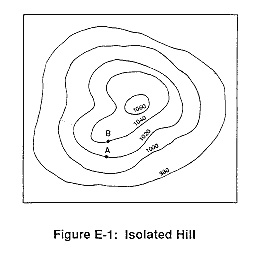
What feature is formed at B?
a)
river
b)
rift valley
c)
sink hole
d)
mountain
34.
Which side of Holland Hill is the steepest?
a)
North
b)
South
c)
East 
d)
West
35.
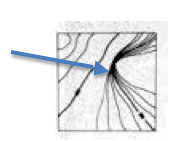
What feature is at the arrow?
a)
volcano
b)
mountain
c)
cliff
d)
river
36.
If contour lines are close together, then the slope is
a)
gentle
b)
steep
c)
flat
d)
going up and down
37.
On a topographic map of a mountain, you walk a longer distance to get to the top when the contour lines are
a)
spread out
b)
close together
c)
going down
d)
going up
38.
The height above sea level is called
a)
topographic
b)
contour
c)
elevation
d)
depth
39.
When you move from one contour line to another, the elevation
a)
stays the same
b)
goes up or down
c)
disappears
d)
is below sea level
40.
What are the curved lines on a topographic map called?
a)
contour lines
b)
contour intervals
c)
slope
d)
elevation
41.
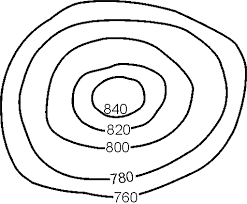
What is the contour interval on this map?
a)
100
b)
10
c)
15
d)
20
42.
Determine the contour interval:
a)
5 m
b)
10 m
c)
15 m
d)
20 m
43.
What are the darker lines called?
a)
roads
b)
index contour
c)
contour interval
d)
waves
44.
If we were in a plane, Path B --> C is about the same distance as path E --> N. But, which path is the easier walk? 
a)
B --> C is the easier walk
b)
E --> N is the easier walk
c)
B --> C and E --> N are the same walking distance
45.

When two continental plates collide and begin to create mountains like the Himalayan Mountains, what type of boundary are you observing?

a)

transform

b)

subduction

c)

divergent

d)

convergent

46.

The Earth is broken up into many sections known as plates. Which feature is most likely to form where the dark lines are located on the map?

a)

peninsula

b)

delta

c)

volcano

d)

plateau

47.

When an oceanic and continental plate collide, the oceanic plate is pushed under the continental plate. Which of the following best explains why this happens?

a)

The convection currents in the mantle

b)

The continental plate is wider than the oceanic plate

c)

Water applies a downward force on the oceanic plate

d)

The oceanic plate is more dense than the continental plate

48.

As the Eurasian Plate and the Indian Plate continue to collide, what geologic feature will be formed?

a)

lots of little rocks (gravel)

b)

a tall chain of mountains (mountain)

c)

many large lakes connected with rivers (lakes)

49.

The San Andreas Fault is a transform boundary. Does the image accurately display what occurs at a transform boundary?

a)

Yes

b)

No

50.

The San Andreas Fault is a transform boundary. Does the image accurately display what occurs at a transform boundary?

a)

Yes

b)

No

51.

The San Andreas Fault is a transform boundary. Does the image accurately display what occurs at a transform boundary?

a)

Yes

b)

No

52.

What troubled Wegener about glaciers being found in unexpected locations?

a)

Glacier evidence was found in places that were too hot for ice.

b)

Glacier evidence was found in places that were too cold for glaciers.

c)

Glaciers leave behind rock deposits as they move.

d)

Glaciers leave deep scratches in the rocks.

53.

Did Wegener live to see his theory of continental drift accepted?

a)

no

b)

yes

54.

The movement of rock and sediment to new places is -

a)

Erosion

b)

Weathering

c)

Deposition

55.

Waves erode and change the shape of -

a)

Coastlines

b)

Canyon walls

c)

Crater rims

d)

Deltas

56.

What does arid mean?

a)

Dry

b)

Moist

c)

Humid

d)

Cold

57.

What is the most likely way that this small canyon will change over time?

a)

It will continue to grow deeper every year due to the lava at the bottom repeatedly melting the lower material.

b)

Erosion of the outer edge will cause it to become less deep

58.

How can you tell a map shows a steep slope?

a)

The lines are far apart from each other

b)

The lines are close to each other

59.

A fan shaped area where a river enters a larger body of water such as an ocean or lake is called a -

a)

Delta

b)

Canyon

c)

Coastline

d)

Dune

60.

Which point would best be described as the coastline?

a)

A

b)

B

c)

C

d)

D

61.

Which area would experience the most erosion from waves?

a)

A

b)

B

c)

C

d)

D

62.

Which area would experience the most erosion from waves?

a)

Shipping channel

b)

Coastline

63.

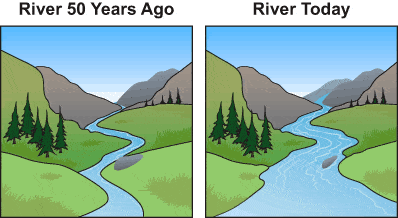
How is the river changing the valley over time?

a)

The river is drying up, exposing rocks

b)

The river becomes more narrow

c)

The river freezes

d)

The river is widening, covering more land and rocks.

64.
How does fossil evidence support Wegener's hypothesis of continental drift?
a)
Similar fossils are found along continental margins that appear to join together.
b)
Fossils are found in areas where the present-day climate could not have supported the organisms that made the fossils.
c)
Similar fossils of giant, land-dwelling dinosaurs are found on continents separated by oceans.
d)
all of the above
65.
The Theory of Continental Drift states that Pangaea broke apart and the continents "drifted" away from each other
a)
True
b)
False
66.

Most geologist think that the movement of Earth's tectonic plates is caused by

a)

the rotation of the Earth.

b)

the Earth's magnetic field.

c)

subduction.

d)

convection currents.

67.

Most tectonic plates have both oceanic and continental crust. How are they different?

a)

Oceanic is thinner and less dense than continental.

b)

Continental is thinner than more dense than oceanic.

c)

Continental is thicker and less dense than oceanic.

d)

Oceanic is thicker and more dense than continental.

68.
Created by a divergent boundary.
a)
Rocky Mountains
b)
Mariana Trench
c)
Mid Atlantic ridge
69.
Mountains form from ...
a)
plates sliding past one another
b)
collision of plates
c)
plates moving away from each other
70.
During sea floor spreading, molten material rises up from the mantle...
a)
along the continents
b)
at the mid ocean ridges
c)
deep ocean trenches
d)
at north and south poles
71.
Which of the following is where one plate slides under another plate?
a)
submarine zone
b)
divergence zone
c)
subduction zone
d)
lower zone
72.
Associated with transform boundaries.
a)
Volcanoes
b)
mountains
c)
trenches
d)
earthquakes
73.
This land formation occurs at a divergent continental/ continental boundary.
a)
mid ocean ridge
b)
deep ocean trench
c)
pacific hot spot
d)
rift valley
74.
Name the boundary
a)
convergent boundary
b)
divergent boundary
c)
transform boundary
d)
sergent boundary
75.
Name the boundary
a)
convergent boundary
b)
divergent boundary
c)
transform boundary
d)
sergent boundary
76.
Name the boundary
a)
convergent boundary
b)
divergent boundary
c)
transform boundary
d)
sergent boundary
77.
Which type of crust is more dense and thinner?
a)
Continental
b)
Asthenosphere
c)
Oceanic
d)
Byers