wayground logo

Free Printable Worksheets

NEW

Font size

S
M
L
XL
Worksheets

IPC Unit 5

Total questions: 33

Worksheet time: 55mins

Name
Class
Date
1.
a)
2
b)
8
c)
3
d)
13
2.

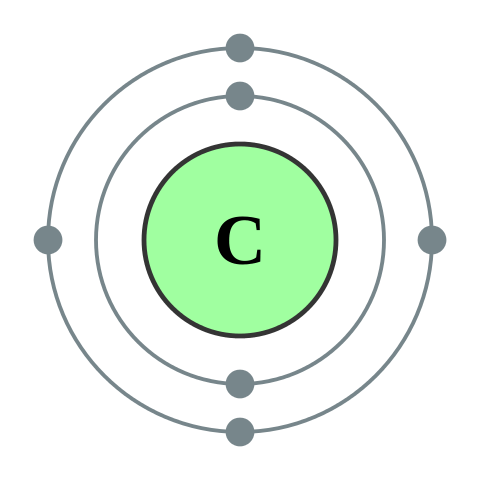
How many valence electrons does carbon have?

a)

4

b)

5

c)

6

d)

7

3.
How many valence electrons are found in atoms of group 14?
a)
4
b)
3
c)
14
d)
16
4.
Valence electrons are: 
a)
Electrons farthest away from the nucleus
b)
Electrons closest to the nucleus
c)
Electrons that just come and go - they don't stay with the atom
d)
Electrons in the second shell
5.

What is the Law of Conservation of Mass?

a)

It states that matter cannot be created or destroyed.

b)

It states that energy cannot be created or destroyed.

c)

It states that matter can be created or destroyed.

d)

It states that sound can be created or destroyed.

6.
What is the part of the chemical equation in green called? 
Fe + S --> FeS
a)
products
b)
reactants
c)
yield
d)
chemical formula
7.
What coefficient should be used to make the following equation balanced?
N2+O2--> _NO 
a)
1
b)
2
c)
3
d)
4
8.
Which problem is balanced?
(Check ALL answers)
a)
PbO2 + 2H2
b)
SO2 + H20 --> H2SO4
c)
2Na + 2H2O --> 2NaOH + H2
9.
How many HCl molecules do you need to balance this equation? 
Mg +  __HCl --->  MgCl2 + H2
a)
1
b)
2
c)
3
d)
4
10.
What is the right part of a chemical equation called...
2H2 + O2 --> 2H2O
a)
Reactants
b)
Products 
c)
Yields 
d)
Chemical Equation 
11.
Is the following equation balanced?
4Fe + 3O2 --> 2Fe2O3
a)
yes
b)
no
12.
Is the following reaction balanced?
NaHCO3 --> Na2CO3 + H2O + CO2
a)
yes
b)
no
13.

Chemical Equation

a)

A representation of a chemical reaction

b)

the starting materials in a chemical reaction

c)

the new substances that are formed in a chemical reaction

d)

tells how many atoms, molecules, or formula units take part in a reaction

14.
How many Hydrogen are in 4H2O?
a)
6
b)
8
c)
2
d)
4
15.

Balance the following equation:

___ Mg+ ___ O2→___ MgO

a)

1, 1, 3

b)

2, 1, 2

c)

1, 2, 1

d)

2, 2, 2

16.
The following is what type of reaction:
NH3 + HCl  → NH4Cl
a)
Synthesis
b)
Decomposition
c)
Single Replacement Replacement
d)
Double Replacement Replacement
17.
What type of chemical reaction is this?
Al(OH)3 → Al2O3  + H2O
a)
Decomposition
b)
Combustion
c)
Synthesis
d)
Single Replacement 
18.
Ions in two compounds switch. 
a)
Synthesis
b)
Combustion
c)
Single Replacement
d)
Double Replacement
19.
One element replaces another in a compound.
a)
Synthesis
b)
Combustion
c)
Single Replacement
d)
Double Replacement
20.
Always starts with a Hydrocarbon that reacts with oxygen and produces carbon dioxide and water. 
a)
Decomposition
b)
Synthesis
c)
Combustion
d)
Single Replacement
21.

In an endothermic reaction, energy is _________.

a)

absorbed

b)

released

22.

_____ reactions usually feel hot!

a)

endothermic

b)

exothermic

23.

____ reactions usually feel cold.

a)

endothermic

b)

exothermic

24.

A school bus burns gasoline while delivering students to school.

a)

exothermic

b)

endothermic

25.
What is a cation
a)
a metal with a negative (-) charge
b)
a non-metal with a negative (-) charge 
c)
a metal with a positive (+) charge 
d)
a non-metal with a positive (+) charge
26.
What is a anion
a)
a metal with a negative (-) charge
b)
a non-metal with a negative (-) charge 
c)
a metal with a positive (+) charge 
d)
a non-metal with a positive (+) charge
27.
Why does K become positive when it bonds to Cl to form KCl?
a)
Because it loses an electron to have a full valence shell 
b)
Because it gains an electron to have 2 valence electrons
c)
Because it loses an electron to become negatively charged
d)
Because Cl gives away its 7 electrons to Na to form an equal charge 
28.
NaCl
a)
Ionic
b)
Covalent
c)
Metallic
d)
Polyatomic Ion 
29.
CO2
a)
Ionic
b)
Covalent
c)
Polyatomic Ion 
d)
Metallic 
30.
The octet rule means that all valence shells want to have the number...... 
a)
1
b)
9
c)
8
d)
16
31.
All atoms/elements bond in order to ....
a)
Have a full valence shell
b)
Give away electrons or take electrons
c)
Only share electrons
d)
To create electrical currents for human use 
32.
Why does NaCl have different charges? 
a)
The metal gives away an electron to the nonmetal
b)
The metal takes the electron from the nonmetal
c)
The metal and the nonmetal equally share electrons
d)
The nonmetal gives away its electrons to the metal 
33.
Why does CO2 not have a charge? 
a)
The metal gives away an electron to the non-metal
b)
The metal takes the electron from the non-metal
c)
The non-metals equally share electrons
d)
The metal and the non-metal equally share electrons