
NEW
Font size
 Worksheets
IPC Semester Review Game
Total questions: 69
Worksheet time: 1hrs 1mins
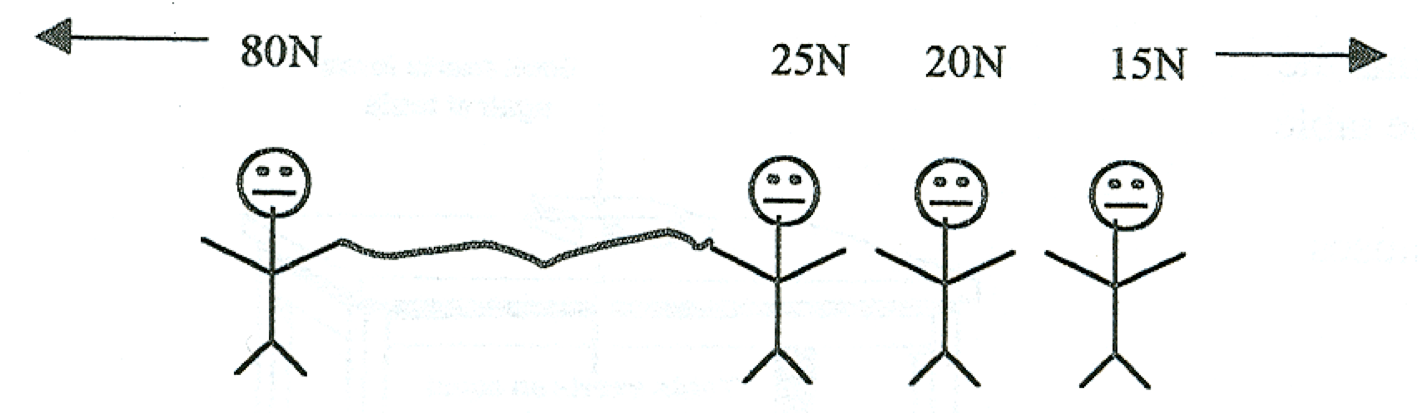


What is the unit to MEASURE force?
Kilogram
Meter
Pounds
Newton


What will be the effect on the boy in the picture if the driver stops quickly?
Because of inertia he will remain in the same position.
He will be pushed back into the car seat.
He will move from one side of the car seat to the other.
He will move forward pressing against the seatbelt.
Which of Newton’s Laws explains a rocket’s movement during launch?
Newton's First Law of Motion
Newton's Second Law of Motion
Newton's Third Law of Motion
Newton's Fourth Law of Motion

An object at rest stays at rest or an object in motion stays in motion unless acted upon by an unbalanced force.
Newton's First Law of Motion
Newton's Second Law of Motion
Newton's Third Law of Motion
Which on does NOT describe inertia
a property of matter
tendency of an object to resist any change
the less mass the greater the inertia
the more mass the greater the inertia
The greater the force applied to the object, the more the object will accelerate
F=ma
Newton's First Law
Newton's Second Law
Newton's Third Law
For every action force, there is an equal and opposite reaction force
Newton's First Law
Newton's Second Law
Newton's Third Law
Weight and mass are the same thing
True
False
unit for mass
N
kg
m/s
m/s2
unit for acceleration
N
kg
m/s
m/s2
Acceleration due to gravity on Earth
9.8 m/s2
98 m/s2
.98 m/s2
9.8 N
F=ma
If mass is reduced (decreases), what happens to acceleration in order to maintain the same force
decrease
increases
nothing
How much does a 2000 kg truck weigh? W=m * a
204 N
19600 N
19600 pounds
this can't be solved
Given a mass on 100kg at 3m/s2. What is the force?
F = m * a
3.33
3000N
300 N
An object can be accelerated at 5m/s2 with a for of 20 N. What is the mass of the object?
F =m*a or [a=F/m ] or m=F/a
3 kg
100 kg
5 kg
4 kg
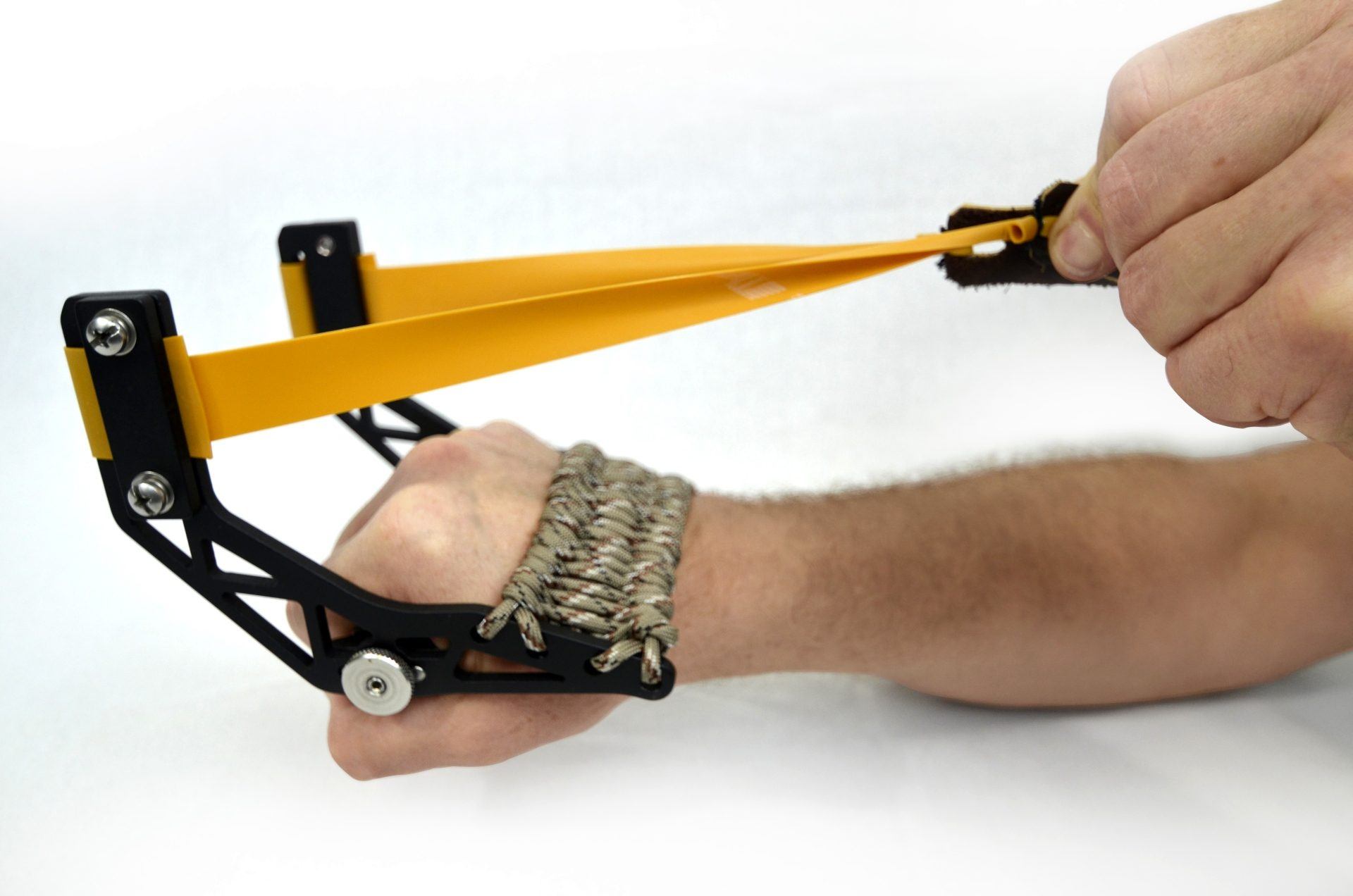




_____________ occurs when an object changes its position relative to a reference point.
Momentum
Motion
Speed
Velocity
How far something has moved is called _____________.
Acceleration
Miles
Velocity
Distance
The distance and direction something is from a reference point is called
Displacement
Distance
Velocity
Reference length
Speed is equal to the change in distance divided by the change in _____.
velocity
momentum
time
m/s
Speed has a ______
Direction
Magnitude (number)
both
Velocity is
Scalar
Vector
seconds (s)
is the unit for
distance
speed
accerleration
time
velocity
m/s North
is the unit for
distance
speed
acceleration
time
velocity
m/s
is the unit for
distance
speed
acceleration
time
velocity
meters (m)
is the unit for
distance
speed
acceleration
time
velocity

What is a unit of speed?
Meters per second
Seconds
Meters per second squared
Meters
Which of these is a unit of distance?
kilometer
second
liter
kilogram
Kinetic Energy is the energy of _________
thermal
movement
potential
atoms
Temperature is the __________ _________ energy of moving particles
average potential
average kinetic
total potential
total kinetic
Hot things have ____________ thermal energy than cold things
more
less
same
potato
Objects with MORE MASS have______________
lower potential energy
lower number of atoms
higher thermal energy
higher temperature
Temperature is a way we ____________ energy
eat
measure
gain
lose
Potential energy is the _________
energy of movement
same as kinetic energy
stored energy inside of something
potato
Law of Conservation of Mass says...
Energy is always created and destroyed
Energy is only in hot things
Energy can be destroyed easily
Energy cannot be created or destroyed

In heat transfer, heat always flows from the _______________ substance to the _______________ substance.
hotter to colder
colder to hotter
hotter to hotter
colder to colder

The handle of a metal spoon warms up when it is placed in a hot bowl of soup because of ________.
convection
conduction
radiation

You get sunburned due to __________ from the sun.
conduction
convection
radiation

Near the ceiling of a room the air is warmer. The warm air rises because of ________.
conduction
convection
radiation
Hot coffee is stirred with a spoon; the spoon gets hot due to ________.
conduction
convection
radiation

The type of heat transfer that creates currents in water is called ________.
conduction
convection
radiation

The heat transferred from the Sun to the Earth by waves is called ________.
conduction
radiation
convection

