wayground logo

Free Printable Worksheets

Font size

S
M
L
XL
Worksheets

Unit 4 Review 2023

Total questions: 61

Worksheet time: 35mins
Name
Class
Date
1.
The UN is an example of what?
a)
Alliance
b)
Multinational state
c)
Confederation
d)
Supranational organization
2.
A state with only one nation within its borders
a)
Stateless-Nation
b)
Nation-State
c)
Ethnocentric Nation
d)
Statehood
3.
a state that contains more than one ethnicity.
a)
United States
b)
Multi-Cultural State
c)
Multi-Ethnic State
d)
Nation-State
4.
a sovereign state that comprises a town and the surrounding countryside.
a)
Nation-State
b)
City-State
c)
Stateless Nation
d)
National State
5.
A region where boundaries are very thinly or weakly developed, zones where territoriality is unclear and not well established.
a)
Frontier
b)
Shatterbelt
c)
Buffer State
d)
Satellite State
6.
Boundaries established by rivers, oceans, deserts, mountains, etc. 
a)
Political boundaries
b)
Physical boundaries
c)
Cultural boundaries
d)
Geographic boundaries
7.
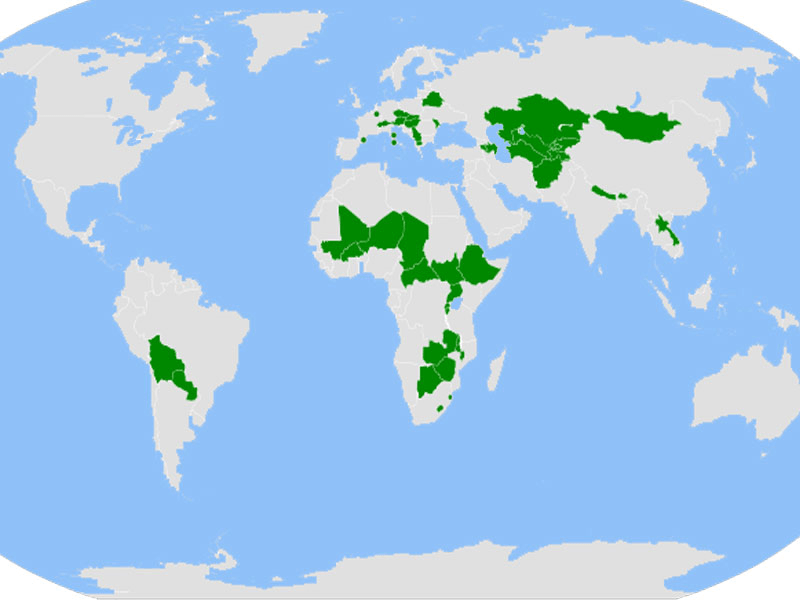
Which characteristic do all the nations seen here share?
a)
All are compact
b)
All are landlocked
c)
All are federal states
d)
All are members of OPEC
8.
Which type of boundary would use lines of latitude and longitude?
a)
Antecedent
b)
Subsequent
c)
Geometric
d)
Relic
9.
Which of the following is not a strong centripetal force in the United States?
a)
network television
b)
the flag
c)
the many ethnic groups living in the United States
d)
"The Star Spangled Banner"
10.
How many states must be involved to make an organization Supranational?
a)
1
b)
2
c)
3
d)
0
11.
A theocratic government is often characterized by—
a)
the existence of multiple political parties
b)
censorship, religious laws, and repression
c)
a written constitution
d)
direct elections for governmental decisions
12.
Which of the following is NOT a factor that determines the political power of a country?
a)
the strength of the economy
b)
the size of its army
c)
the stability of the government
d)
the official language of the country
13.
A state or group of states that exists within a sphere of competition between larger states and is often culturally, economically, and politically fragmented and splintered.
a)
Frontier
b)
Satellite States
c)
Shatterbelt
d)
Buffer State
14.
The concept that ethnicities have the right to govern themselves.
a)
Self-determination
b)
Nationalism
c)
Predestination
d)
Nation-State
15.
State that has freedom over its own affairs has 
a)
centrifugal forces
b)
nationalism
c)
sovereignty
d)
pluralism
16.
A boundary between countries is a ....
a)
line on the ground only
b)
point of separation on and below the surface of the land
c)
vertical plan that cuts through the rocks below and the air above the land
d)
line shown only on maps
17.
Antecendent boundaries occurred BEFORE the present landscape was established. 
a)
true
b)
false
18.
Boundaries using ethnicity like Serbia and Croatia.
a)
Geometric Boundary
b)
Physical Boundary
c)
Cultural Boundary
d)
Linear Boundary
19.
Which of the following is considered a State? 
a)
France
b)
Virginia
c)
Hong Kong
d)
Scotland
20.
Fragmented states can help create which type of forces within a state? 
a)
Centripetal
b)
Centrifugal
c)
Backwash effects
d)
Irredentism
21.
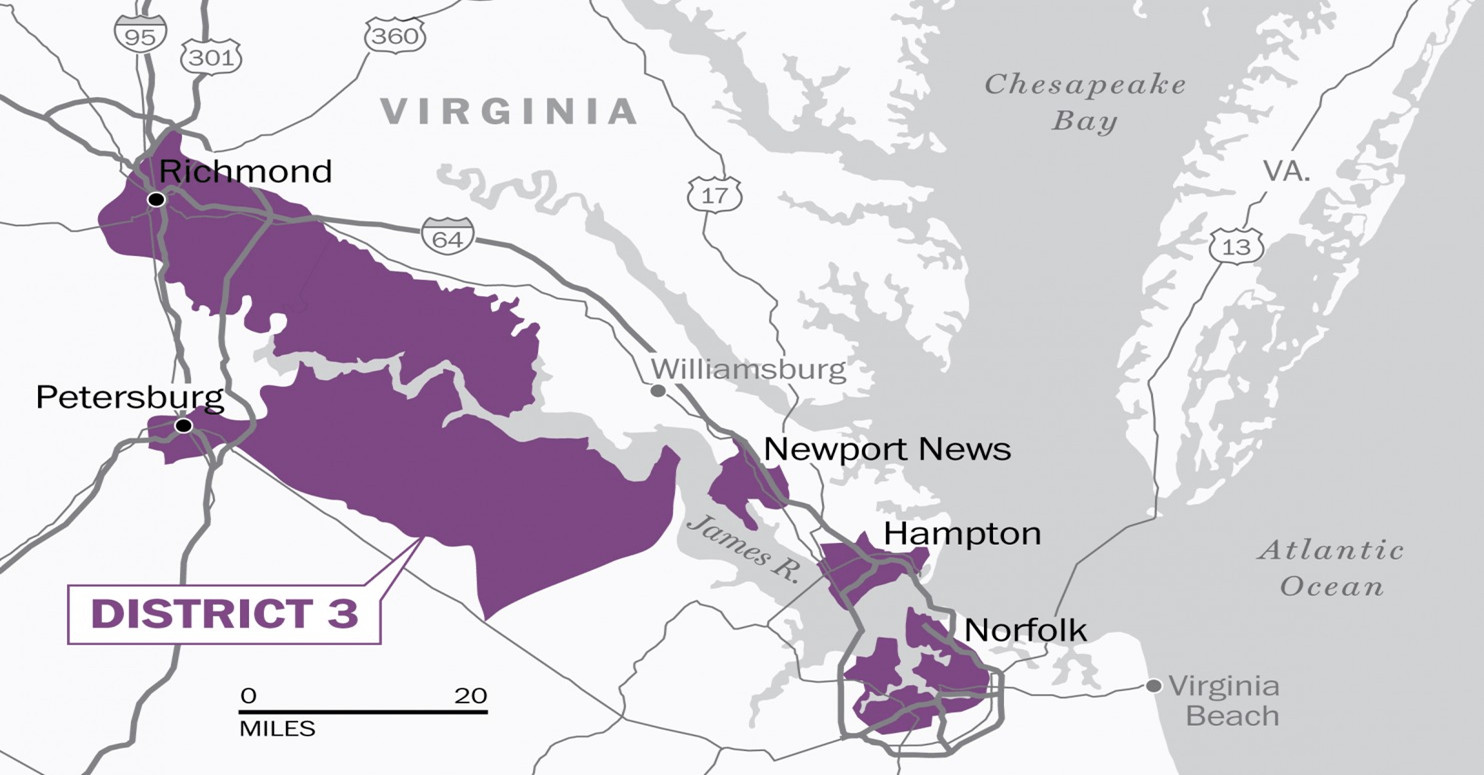
The map above illustrates what concept designed to give political advantage to a particular group?
a)
devolution
b)
political enclave
c)
gerrymandering
d)
cultural landscape
22.
Which are of ethnic conflict gave rise to the term “balkanization”?
a)
Soviet Union
b)
Sudan
c)
Serbia
d)
Yugoslavia
23.
The Berlin Wall is an example of a ____________ boundary
a)
religious
b)
antecedent
c)
relic
d)
geometric
24.
What is the best example of a nation state?
a)
Japan
b)
USA
c)
Russia
d)
China
25.
A country that contains more than one ethnicity with traditions of self-determination.
a)
Multi-Ethnic State
b)
Multi-National State
c)
Stateless Nation
d)
Nationalism
26.
What type of State government is most associated with checks and balances?
a)
unitary
b)
republican
c)
federal
d)
communist
27.
How can a state demonstrate irredentism?
a)
Reclaim a lost homeland
b)
Take over land in Antarctica
c)
Increase size of their Navies
d)
Attend UNCLOS meetings
28.
______ gives power to local entities
a)
downsizing
b)
devolution
c)
supranationalism
d)
supreme court
29.
How do large States use devolution to obtain resources?
a)
go in and confiscate resources
b)
allow local areas to become exclaves
c)
allow for local self-government in exchange for resource sharing
d)
colonialism
30.
Which of the following is an example of a centripetal force?
a)
building a wall around a capital
b)
creating an inner-state highway
c)
offering language lessons to all culture groups in a school district
d)
relocating immigrants to underdeveloped regions
31.
When something helps bond the people within a country, it is called a:
a)
Nation-State
b)
Centripetal Force
c)
Centrifugal Force
d)
Stateless Nation
32.
With its system of regional provinces, Canada is an example of a 
a)
Electoral State
b)
Reapportioned state
c)
Federal State
d)
Nation-state
33.
Why did the Europeans colonize other places in the world?
a)
To gain wealth and resources
b)
For personal wealth and recognition
c)
To promote Christianity
d)
All of the above
34.
Redrawing districts to gain an advantage for one group is
a)
Redistricting
b)
Gerrymandering
c)
Electoral college
d)
Caucusing
35.
Which system of government gives the national government all the real power?
a)
Unitary
b)
Federal
c)
Confederate
d)
Democracy
36.
Which of the following play a role in devolution?
a)
All of these
b)
Political decisions
c)
Cultural and economic forces
d)
Physical Geography/location
37.

The reasons why European states wanted to have colonies can be summarized as all BUT which of the following?

a)

god

b)

glory

c)

guilt

d)

gold

38.

An act of terrorism is different that an act of war because

a)

Act of war targets governments and political organization

b)

terrorism targets civilians and non combatants

c)

neither is provoked.

39.

(of a country or region) having the freedom to govern itself or control its own affairs

a)

free state

b)

autonomous region

c)

Neocolonialism

d)

Irredentism

40.

A narrow, strategically significant area where trade could be easily blocked or controlled

a)

pivot point

b)

Shatter point

c)

narrow point

d)

choke point

41.

a boundary line placed over and ignoring an existing cultural pattern

a)

subsequent boundary,

b)

superimposed boundary

c)

geometric boundary

d)

antecedent boundary

42.

A boundary demarcated (marked) by some visible means on the ground. Ex. wall posts, fences, etc.

a)

geometric boundary

b)

demarcated boundary

c)

superimposed boundary

d)

Devolution

43.

a line drawn on a map to show the limits of a space

a)

defined boundary

b)

consequent boundary

c)

delimited boundary

d)

Demarcated Boundary

44.

area extending up to 12 nautical miles from coast in which a state has sovereignty (including exclusive fishing rights.)

a)

demarcated boundary

b)

shatterbelt

c)

exclusive economic zone

d)

Territorial seas

45.

nation that stretches across borders and across states

a)

Enclave

b)

multinational state

c)

multistate nation

d)

country

46.

The border between the US and Canada along the 49th parallel is an example of what type of boundary?

a)

Subsequent

b)

Geometric

c)

Superimposed

d)

Relic

47.

Which of the following is an example of a centrifugal force within a nation-state?

a)

Strong sense of nationalism

b)

Strong national economy

c)

Separatist movement demanding independence

d)

Economic equality among regions

48.

"Shatter belts" are geographic zones where tensions explode based on

a)

Economic boundaries

b)

Cultural boundaries

c)

Physical boundaries

d)

Functional boundaries

49.

A conflict that was between the US and the Soviet Union. The nations never directly confronted each other on the battlefield but deadly threats went on for years.

a)

European Union

b)

nationalism

c)

Rimland Theory

d)

Cold War

50.

A state in which the distance from the center to any boundary does not vary significantly

a)

compact state

b)

elongated state

c)

fragmented state

d)

prorupted or protruded state

51.

the boundaries between states are set by ethical differences, especially those based on language and/or religion. Also called Cultural Boundaries.

a)

ethnic force

b)

physical boundaries

c)

consequent boundaries

d)

democratization

52.

An international organization of European countries formed after World War II to reduce trade barriers and increase cooperation among its members

a)

European Union

b)

colonies

c)

imperialism

d)

World Systems Theory

53.

government systems that divide the powers between the national government and state or provincial governments

a)

unitary system

b)

federal system

c)

devolution

d)

balkanization

54.
What is the military alliance set up by West Europe and the US to align against communism?
a)
NATO
b)
COMECON
c)
Warsaw Pact
d)
NAFTA
55.
The policy of a state wanting to add territory from another State inhabited by people who have cultural links to their own State is
a)
the interaction model.
b)
the gravity model. 
c)
irredentism.
d)
ethnocentrism.
56.

Which of the following is NOT part of the definition of a state?

a)

A common language

b)

An organized economy and circulation system

c)

Political sovereignty

d)

A permanent resident population

e)

Defined boundaries

57.

Match the following

a)

relic

1.

the Berlin Wall

b)

antecedent

2.

the Andes mountains separating Chile & Argentina

c)

geometric

3.

the 49th parallel acting as the border between the USA & Canada

d)

consequent

4.

the borders in Eastern Europe that settled along ethnic boundaries after Yugoslavia fell

e)

superimposed

5.

borders in Africa that came from colonialism

58.

The Berlin Conference in the 1885 divided up Africa among the major European colonial powers with no regard for the exiting cultures throughout the continent.

a)

subsequent

b)

superimposed

c)

consequent

d)

relic

e)

geometric

59.

Which of the following terms refers to an area of instability located between regions with opposing political and cultural values?

a)

Rimland

b)

Heartland

c)

Shatter belt

d)

Enclave

e)

Chokepoint

60.

Cultural differences within a country’s population, such as different religions, languages, and ethnicities, have political impacts and can best be described as

a)

centripetal forces within a state

b)

centrifugal forces within a state

c)

the effects of diffusion on the state

d)

the effects of imperialism on the state

e)

globalizing forces within a state

61.

Which of the following describes a federal form of governance?

a)

A centralized government creates a barrier to local participation in the political process

b)

Autonomous regions act outside the authority of a central government.

c)

Federal states encourage devolutionary movements and break apart quickly.

d)

Laws are enacted in a single language to promote cultural unity.

e)

Multiple substates have local control and are unified to pursue common goals at the national level.