
 Worksheets
Biology Fall Final Exam
Total questions: 200
Worksheet time: 4hrs 28mins
The following features are found only in the plant cell
Lysosome
Cell wall
Chloroplast
Central vacuole
The following is found inside the nucleus
Cytoplasm
DNA
Mitochondria
Nucleolus
The nucleus is the
Power house of the cell
Waste collector in the cell
Control center of the cell
protein factory in the cell
The main function of rough ER is
Fat production
Protein production
Breaking down alcohol and drugs
Delivering proteins to Golgi Body
It is mainly membrane-enclosed spaces stacked on top of each other
Rough ER
Mitochondria
Smooth ER
Golgi Apparatus
It provides the cell with energy
Vesicle
Nucleus
mitochondria
Vacuole
It is the waste collector and recycler in the animal cell
Ribosome
Vesicle
Central vacuole
Lysosome


What is the role of a ribosome?
Link amino acids together
Bind messenger RNA
Synthesize polypeptides and proteins
Make other ribosomes
After a cell goes through cytokinesis, it starts mitosis all over again.
Mitosis is a continuous process.


Mitosis is made up of 5 phases.
How long is the whole cell cycle for most animal cells?
The reactants of photosynthesis
CO2
CO2, H2O
CO2, H2O, Sunlight
none of the above
The products of cellular respiration
CO2
CO2, H2O
CO2, H2O, glucose
CO2, H2O, ATP
Occurs in plants
photosynthesis only
cellular respiration only
photosynthesis and cell respiration
all of the above
Occurs in animals
photosynthesis only
cellular respiration only
cellular respiration and photosynthesis
all of the above
The reactants of cellular respiration
CO2, H2O, sunlight
O2, glucose
CO2, glucose
H2O, sunlight
The products of photosynthesis
CO2, H2O, sunlight
CO2, H2O, ATP
O2, Glucose
CO2, Glucose
Location for aerobic respiration
mitochondria
chloroplasts
cytoplasm
vesicle
Location for anaerobic respiration
mitochondria
chloroplasts
cytoplasm
vesicle
Location for photosynthesis
mitochondria
chloroplasts
cytoplasm
vesicle
What macromolecule is the enzyme ATP synthase?
protein
carbohydrate
lipid
nucleic acid
What kind of cellular transport involves the enzyme ATP synthase?
diffusion
osmosis
facilitated diffusion
active transport


The element _______is found in all of the organic compounds.
Iron
Nitrogen
Carbon
Oxygen

Which macromolecule is shown?
lipid
protein
nucleic acid
carbohydrate


Diffusion of water molecules
Active Transport
Exocytosis
Osmosis
Water still enters/exits the cell but at the same rate; Cell retains their normal shape
Hypertonic Solution
Hypotonic Solution
Isotonic Solution
Water still enters the cell; Cell will swell
Hypertonic Solution
Hypotonic Solution
Isotonic Solution
Water exits the cell; Cell will shrink
Hypertonic Solution
Hypotonic Solution
Isotonic Solution
Movement of particles from an area of high concentration to low concentration
Diffusion
Active transport
Pumps
What is the name of the semipermeable structure of the cell that determines which substances enter or exit the cell?
Cell membrane/plasma membrane
ribosomes
cytoskeleton
What property of the plasma membrane allows it to determine what goes into or out of the cell?
Diffusion
Selective permeability
Endocytosis
At what point in the process of diffusion is equilibrium reached?
When the movement of particles is constantly going outside the cell
When the movement of particles is constantly going inside the cell
When particles cease to move in either direction
When there is continuous movement but no change in overall concentration because the amount of particles is the same on both sides of the membrane
A plant cell is placed in a hypertonic solution. What will happen to the plant cell?
Stay the same
Shrink
Swell
Algal cells are placed in an hypotonic solution. What will happen to the cell?
It will shrink
It will swell
It will stay the same
Red blood cells have a salt content of 0.91%. When a microbiologist places red blood cells in a salt water solution that is 10% salt and osmosis occurs. What net movement that occurs in this type osmosis?
Water moves into the cell because there is more water inside the cell than in the solution
Water moves out of the cell because there is more water inside the cell than in the solution
The amount of water is equal on both sides of the cell membrane so the net movement is zero
Which of the following statements about an isotonic solution and a cell are true?
I. The solution has the same solute concentration that the cytoplasm does.
II. The solution has a higher solute concentration than the cytoplasm does.
III. A cell in the solution will gain water.
IV. A cell in the solution will remain the same.
I
II
III
IV
How could a large, polar molecule, like glucose, get across the cell membrane?
osmosis
diffusion
facilitated diffusion
channel/integral protein
A protein in the cell membrane is using ATP to move material across the membrane against the concentration gradient (from low to high concentration). Which of the following best describes the transport method?
active transport
passive transport
not enough information to answer
A ______________ is composed of a phosphate head and 2 fatty acid chain tails.
phospholipid
Carbohydrate
Cholesterol
Protein
Which of the following is NOT true of osmosis?
requires energy
does not require energy
movement of water
movement from high to low concentration
Your friend, Sally, just bought a new goldfish. She intends to put the fish into her saltwater fish tank. You know that goldfish are freshwater fish. Which of the following should you tell Sally?
The goldfish will be fine in the saltwater tank because the water will be isotonic to the fish’s cells.
The goldfish will not survive in the saltwater tank because the water will be hypertonic to the fish’s cells.
The goldfish will not survive in the saltwater tank because the water will be hypotonic to the fish’s cells.
Inside one permeable bag, A, is a 50% glucose solution and inside bag B is a 20% glucose solution. Both bags are put into beakers containing 100% water.
Both bags will gain weight.
Both bags will lose weight.
Bag A will gain weight.
Bag B will gain weight.
____________ is the ability of an organism to maintain a constant internal environment in response to environmental changes.
autolysis
homeostasis
osmosis


Living things are made up of units called
DNA
Cells
Homeostasis
Seeds
If an organism is made entirely of one cell it is called...
Multicellular
Prokaryotic
Unicellular
Eukaryotic
Reproduction that only involves one parent and all offspring are identical; for example, binary fission of bacteria or amoebas.
Asexual
Sexual
Division
Addition
Reproduction that involves two cells from different parents unite to produce the first cell of a new organism.
Asexual
Sexual
Budding
Division
Living things are based on a universal genetic
code. What molecule is responsible for that code?
RNA
Lipid
Protein
DNA
For single-celled organisms, _____ is
mostly an increase in size.
Multicellular organisms go through a
process called __________, where cells
divide and differentiate into different
kinds of cells.
Evolve, respond to stimulus
Expansion, progress
Growth, development
Production, evolution
The combination of chemical reactions through
which an organism builds up or breaks down
materials as it carries out its life processes is called ...
absorption
metabolism
digestion
consumption
Maintaining a stable internal
environment is called
homeostasis
equilibrium
balance
evenness


When one allele is not dominant over another, resulting in a blended phenotype for heterozygous offspring is considered....
Incomplete Dominance
Codominance
When one allele is not dominant over the other, resulting in both traits expressed in a heterozygous individual.....
Incomplete Dominance
Codominance


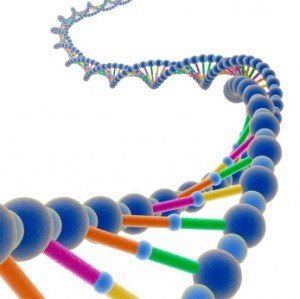
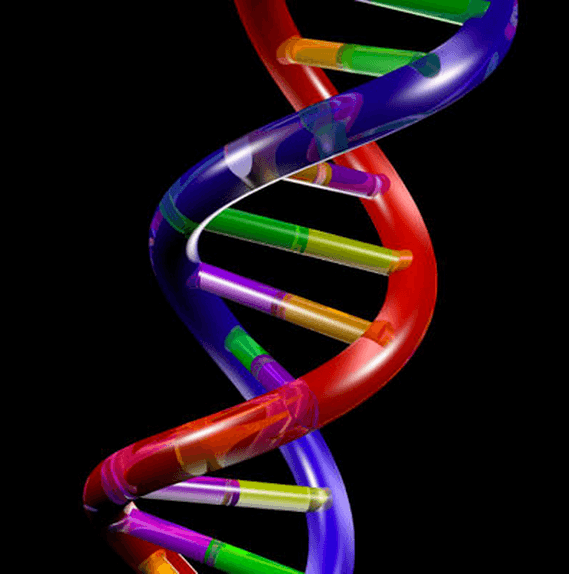
ATG TGA CAG


Which biomolecule provides quickly available energy?
Carbohydrates
Lipids
Proteins
Nucleic Acids
Which biomolecule builds muscle?
Carbohydrates
Lipids
Proteins
Nucleic Acids
Why does active transport require energy?
Molecules move with the concentration gradient; high to low
Molecules move against the concentration gradient; low to high
And hypotonic?
Choose all that apply!!!

Variation in the cells/organisms produced...
Mitosis
Meiosis

An exact copy of a cell/organism is produced...
Mitosis
Meiosis

Some bacteria reproduce asexually, so they have...
offspring identical to the parents.
offspring unlike the parents.

Brown Bears reproduce sexually, so all the baby bears are...
different.
the same.

Asexual Reproduction requires...
One Parent only.
Two Parents.

Sexual Reproduction requires...
One Parent only.
Two Parents.


___________________ is a type of asexual reproduction in which a piece of a parent organism breaks off to form an new organism (ex. starfish).
fission
budding
fragmentation
fertiliztion

When a single-celled organism splits into 2 new organisms it is called _________________.
fragmentation
fission
budding
sporulation
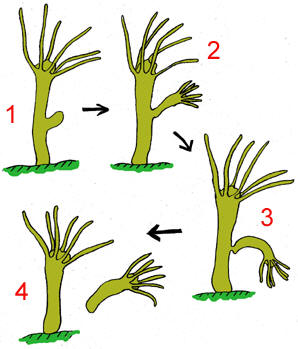
When an offspring grows off from the body of a parent organism it is called __________________.
budding
fission
fragmentation
sporulation
Some advantages of sexual reproduction include: (select all that apply)
genetic variation
improves chances of adapting to the environment
helps species survive catastrophes
it doesn't take as much energy as asexual reproduction
What are some disadvantages to sexual reproduction? (select all that apply)
it takes a lot of energy to find a mate
you don't need another mate
it requires a male and a female
more genetic errors can occur
What are some advantages of asexual reproduction are: (select all that apply)
it only requires one organism
it takes less energy than sexual reproduction
offspring are already well-adapted for the environment
there is a lot of genetic variety
Male and female reproductive cells are collectively known as:
spores
pollen
gametes
offspring
____________________ occurs when a male gamete (sperm) combines with a female gamete (egg).
sporulation
fertilization
fission
regeneration
In fission, how does the DNA of the daughter cells compare to the DNA of the parent cell?
it is exactly the same
it is different due to meiosis
it is mostly the same with slight changes
it is better than the parent DNA
How many parents are required for sexual reproduction?
0
1
2
3
If a sex cell has 10 chromosomes, how many chromosomes will there be after fertilization?
5
10
15
20

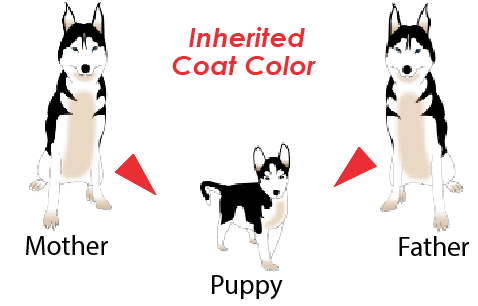
Passing on traits from parents to offspring
Chromosome
Genotype
Heredity
Allele
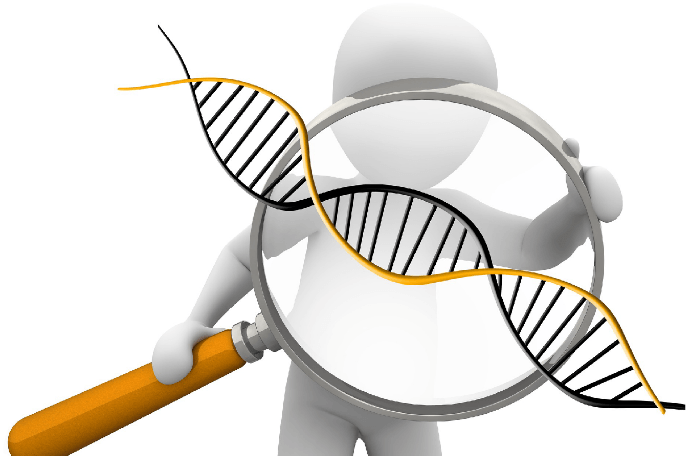
The study of heredity
Genetics
Genome
Allele
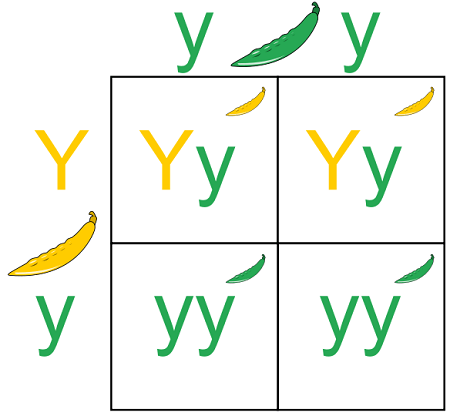
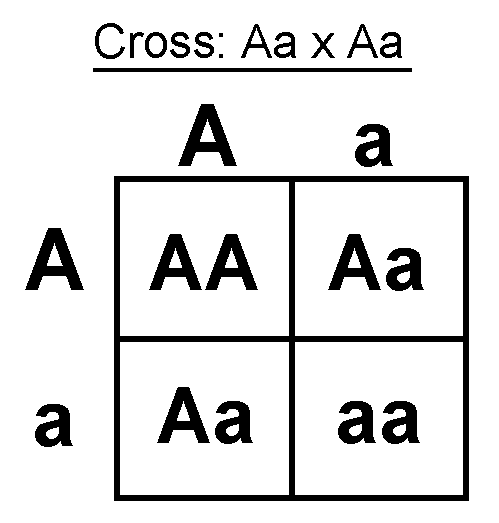
Punnett Square
In a plant called jimsonweed, flowers can be white or purple. A jimsonweed plant with white flowers is crossed with a jimsonweed plant with purple flowers. All of the offspring have purple flowers.
Based on the results of the cross, which of the following statements most likely describes the alleles for flower color in jimsonweed?
The allele for purple flowers is recessive to the allele for white flowers.
The allele for purple flowers is dominant to the allele for white flowers.
The allele for purple flowers has mutated more times than the allele for white flowers.
The allele for purple flowers is on a different chromosome than the allele for white flowers.

