wayground logo

Free Printable Worksheets

NEW

Font size

S
M
L
XL
Worksheets

AP Chem Semester 1 Final

Total questions: 75

Worksheet time: 1hrs 9mins

Name
Class
Date
1.

Which gas would behave more ideally?

a)

N2

b)

H2

c)

CH4

d)

Cl2

2.

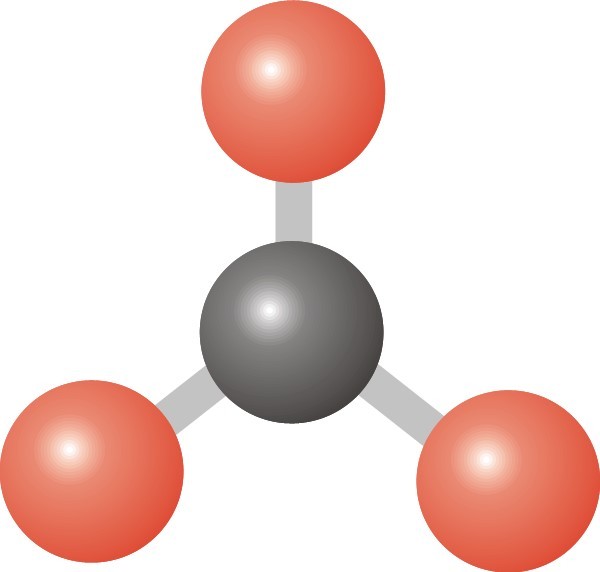
Choose the correct shape for this molecule:

a)

Trigonal planar

b)

Trigonal pyramidal

c)

Bent

d)

Linear

e)

Tetrahedral

3.

Will this molecule be polar or nonpolar?

a)

polar

b)

nonpolar

4.

Which of the following bonds has the greatest polarity?

a)

H-N

b)

H-O

c)

H-F

d)

F-I

5.
What molecule could this be? 
a)
BF3
b)
CH4
c)
H2O
d)
CO2
6.
Which of the following molecular shapes would have a bond angle of 180 Degrees?
a)
Bent
b)
Trigonal Planar
c)
Tetrahedral
d)
Linear
7.
Ionic bonds are between _______ and ________. 
a)
nonmetals and nonmetals 
b)
metals and metals 
c)
metals and nonmetals
d)
none
8.

Which element has the electron configuration 1s22s22p63s23p5?

a)

chlorine

b)

fluorine

c)

sulfur

d)

phosphorus

9.

Which element is represented by this PES graph?

a)

argon

b)

potassium

c)

calcium

d)

scandium

10.

What do the peaks on the mass spectrum represent?

a)

anions

b)

mass of positively charged fragments

c)

mass of negatively charged fragments

d)

numbers of electrons

11.
The Electric Force is strongest when charges are...
a)
close together
b)
far apart
c)
the electric force is constant everywhere
12.
What variable do Coulombs represent?
a)
Electrostatic Charge
b)
Force
c)
Distance
d)
Mass
13.
PV=nRT
a)
Charles Law
b)
Boyle's Law
c)
Combined Gas Law
d)
Ideal Gas Law
14.

What does R stand for

a)

Ideal gas constant

b)

Real gas constant

c)

Temperature constant

d)

Ideal gas law

15.
Group 18 elements are known as the _____ _____ and have full valence shells.
a)
royal gases.
b)
supreme solids.
c)
noble gases.
d)
legit liquids.
16.
 Why does group number 18 have the least reactive elements?
a)
They all have an odd number of protons.
b)
They all have an even number of protons. 
c)
They have the largest masses.
d)
Their electron shells are the most filled and do not need to be very reactive.
17.
How many Valance electrons does Iodine Have?
a)
6
b)
16
c)
7
d)
17
18.

What is the molar mass of Ca(NO3)2?

[need your periodic table and calculator]

a)

148.096 g

b)

164.086 g

c)

102.055 g

d)

70.084 g

19.
What is the empirical formula of the following molecular formula:  C3H6
a)
C3H6
b)
CH2
c)
C2H4
d)
CH3
20.
Which of the following is the correct Lewis dot structure for the molecule fluorine (F2)?
a)
A
b)
B
c)
C
d)
D
21.
The nucleus is made up of protons and what other particle?
a)
Electrons
b)
Nothing else
c)
Neutrons
d)
Atomic Number
22.

A sample of a compound contains 24.0 g C, 5.0 g H, and 8.0 g O. Which of the following is the empirical formula of the compound?

a)

C2H5O

b)

C4H10O

c)

C6H15O2

d)

C8H20O2

23.

Determine the number of moles in 5.2 x 10²² atoms of gold.

[need your periodic table and calculator]

a)

0.086 mole

b)

0.52 mole

c)

8.63 x 1044 moles

d)

3.1 x 1046 moles

24.

Look at the following choices. Which has the largest atomic radius?

a)

S

b)

F

c)

O

d)

Ne

25.
Which element is pictured?
a)
neon
b)
fluorine
c)
magnesium
d)
argon
26.

What element is represented by this configuration?

1s22s22p63s23p64s23d104p65s24d105p5

a)

Fluorine

b)

Iodine

c)

Potassium

d)

Tin

e)

Krypton

27.
How would you write 564,000,000 in scientific notation?
a)
5.64 x 10⁻⁷
b)
5.64 x 10⁶
c)
5.64 x 10⁸
d)
56.4 x 10⁷
28.
How do you write
1001
in scientific notation?
a)
1.0001 x 10⁴
b)
1.01 x 10⁵
c)
1.001 x 10³
d)
10.1 x 10³
29.
Express the following in scientific notation:
.000457
a)
457 x 106
b)
457 x 10-6
c)
4.57 x10⁴
d)
4.57 x 10⁻⁴
30.
ANY number raised to a power of 0 will be....
a)
10
b)
itself
c)
1
d)
0
31.

A molecule that has a partial positive end and a partial negative end because of unequal sharing of electrons is a _______________.

a)

nonpolar molecule

b)

polar molecule

c)

ionic compound

d)

metalic compound

32.

Why is it difficult to wash oil from your hands with plain water?

a)

Both substances are polar. Like polarities repel.

b)

Both substances are nonpolar. Like polarities repel.

c)

Water is nonpolar, and oil is polar, so they will not combine.

d)

Water is polar, and oil is nonpolar, so they will not combine.
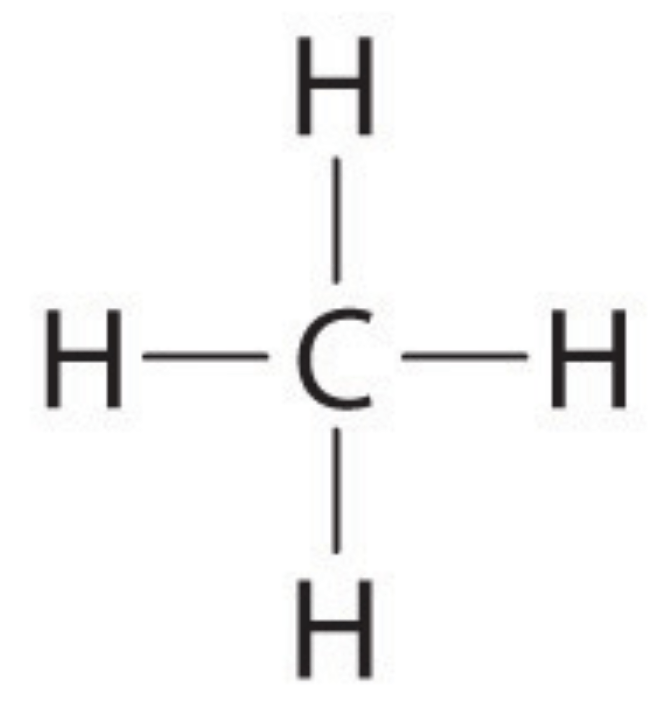
33.

Classify the following molecule.

a)

polar

b)

nonpolar

34.

Classify the following molecule.

a)

polar

b)

nonpolar

35.

Is the following molecule polar or nonpolar?

a)

polar

b)

nonpolar

36.

Classify the following molecule.

a)

polar

b)

nonpolar

37.

In solid methane, the forces between neighboring CH4 molecules are best characterized as

a)

ionic bonds

b)

covalent bonds

c)

hydrogen bonds

d)

ion-dipole forces

e)

London (dispersion) forces

38.
This type of solid will have the lowest boiling point.
a)
ionic
b)
molecular
c)
network
d)
metallic
39.
This type of solid will contain metals
a)
ionic
b)
metallic
c)
both are correct
40.
Gas Laws involve what three terms?
a)
Solid Liquid Gas 
b)
Speed Velocity Acceleration 
c)
Elements Compounds Mixtures 
d)
Pressure Temperature Volume 
41.
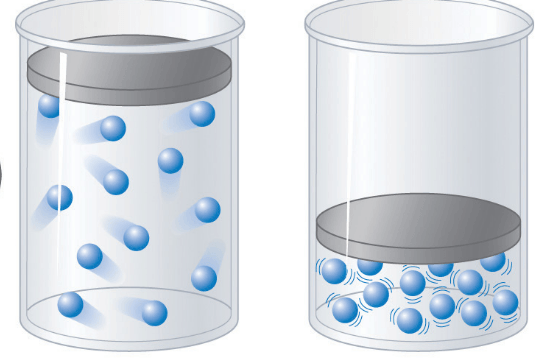
Which container will have a lower pressure?
a)
left
b)
right
c)
they both have the same pressure
d)
I don't know
42.

A balloon is filled with 1.9 moles of He at 45C. WHat would happen to the pressure in the balloon if 0.20moles of He are removed at the same pressure?

a)

increase

b)

decrease

c)

remain the same

43.
What is the pressure in a container that has 3atm H2, 2atm of N2 and 5 atm of F2?
a)
2 atm
b)
3 atm
c)
5 atm
d)
10 atm
44.
What atom matches this electron configuration?
1s22s22p63s23p64s23d10
a)
Zinc
b)
Copper
c)
Nickel
d)
Germanium
45.
What electron configuration matches an oxygen atom?
a)
1s22s22p63s2, 3p64s23d104p5
b)
1s22s22p4
c)
1s22s22p6
d)
1s22s22p63s23p64s23d1
46.
How many electrons can the first energy level hold?
a)
1
b)
2
c)
8
d)
0
47.
Anions are _______ that form ____________ ions and __________ electrons.
a)
nonmetals, positive, lose
b)
nonmetals, negative, gain
c)
metals, positive, gain
d)
metals, positive, lose
48.
Metals tend to 
a)
gain electrons
b)
lose electrons
49.
How do the following two elements bond together?
Cr3+  O2-         
a)
CrO
b)
Cr3O2
c)
Cr2O3
d)
CrO3
50.
PbS2
a)
lead sulfide
b)
lead sulfur
c)
lead II sulfide
d)
lead IV sulfide
51.
The proper formula for magnesium hydroxide:
a)
MgOH
b)
Mg2OH
c)
Mg(OH)2
d)
Mg2OH2
52.
Which of the following is NOT an ionic compound:
a)
CaO
b)
NaOH
c)
BaCl2
d)
Br2
53.
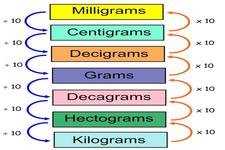
The prefix "kilo" means: ____________________
a)
1 x 10⁻¹
b)
1 x 10³
c)
1 x 10⁻³
d)
1 x 10²
54.
The prefix "milli" means: ____________________
a)
1 x 10⁻³
b)
1 x 10³
c)
1 x 10⁶
d)
1 x 10⁻⁶
55.
Which unit is the largest? 
a)
b)
km
c)
cm
d)
dm
56.
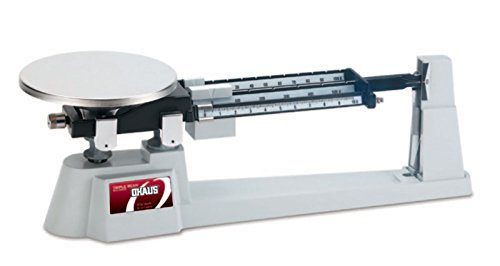
The base unit for mass is the
a)
Meter
b)
Gram
c)
Metric
d)
Liter
57.
What is the percent by mass of chlorine in NaCl?
a)
39%
b)
61%
c)
35%
d)
65%
58.

What is a positive ion called?

a)

anion

b)

cation

c)

isotope

d)

covalent

59.

How many electrons would a Nitrogen ion gain/lose?

a)

lose 5

b)

gain 5

c)

lose 3

d)

gain 3

60.

What is the ion formed from Sulfur?

a)

S+2

b)

S-2

c)

S+6

d)

S-6

61.
Ionization energy is the...
a)
energy needed to remove the outermost electron.
b)
ability of an atom to attract electrons from another atom.
62.
Electronegativity is the...
a)
energy needed to remove the outermost electron.
b)
ability of an atom to attract electrons from another atom.
63.
As the Coulombic attraction increases the atomic radius: increases or decreases?
a)
increases
b)
decreases
64.
Which element has the smaller atomic radius: potassium (K) or bromine (Br)?
a)
potassium (K)
b)
bromine (Br)
65.
As the Coulombic attraction in an atom increases, the energy needed to remove an electron: increases or decreases?
a)
increases
b)
decreases
66.
Which element has the greatest electronegativity: Nitrogen (N) or Arsenic (As)?
a)
Nitrogen (N)
b)
Arsenic (As)
67.

Which of the following forces are found between two NONPOLAR molecules?

a)

London Dispersion Force

b)

Dipole-dipole

c)

Hydrogen bond

68.

What intermolecular force is present between two molecules of HCl?

a)

Dipole-Dipole

b)

London Dispersion Force

c)

Hydrogen bonds

d)

Ionic

69.
Will this molecule be polar or nonpolar? CCl4
a)
polar
b)
nonpolar
70.

Rank these in order of strength (from strongest to weakest):

London Dispersion Force

hydrogen bond

dipole-dipole attraction

a)

dipole-dipole>hydrogen bond>London

b)

London>dipole-dipole>hydrogen bond

c)

hydrogen bond>dipole-dipole>London

d)

London>hydrogen bond>dipole-dipole

71.

Intermolecular forces are attractions between ______.

a)

Cations and anions

b)

Atoms within a molecule

c)

Neighboring molecules

d)

Protons and electrons

72.

Intermolecular forces are responsible for which of the following properties?

a)

State of matter

b)

Color

c)

Odor

d)

Conductivity

73.

H2S has what kind of intermolecular force?

a)

dipole dipole

b)

dispersion

c)

H-bond

d)

ionic

74.

What is the molecular geometry of CO2?

a)

Bent

b)

Trigonal planar

c)

Trigonal pyramidal

d)

Linear

75.

Which of the following would experience dipole-dipole forces of attraction between molecules?

a)
b)
c)
d)