
 Worksheets
Modifying Factors for Chemical Rates of Reaction
Total questions: 73
Worksheet time: 52mins
When we investigate the rate of reaction we are looking at the...
amount of product formed
speed of reaction
concentration of reacting particles
combining reactants with products

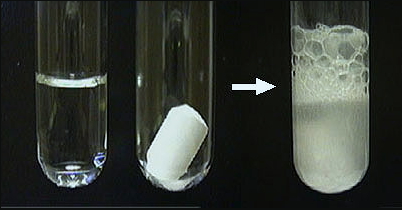
How could we make this reaction happen more quickly?
Decrease the concentration of the acid
crush the chalk to increase the surface area
Put the test tube in an ice bath
Creating fossils is a very _____ chemical reaction
Fast
Slow
It is not a chemical reaction
What does the M after a concentration value stand for?
meters
music
Molarity
moles
Which is the highest concentration?
10m
2M
25 mmol
0.5M
The major theory of reaction rate is called
Collision theory
Crash theory
Newton's laws
Thermodynamics
When surface area is decreased the rate of reaction...
Decreases, because there are LESS possible sites for correct collisions
Increases, because there are LESS possible sites for correct collisions
Decreases, because there are MORE possible sites for correct collisions
Increases, because there are MORE possible sites for correct collisions
You know that a chemical reaction is occurring here because you see __________________ . (Pick 3)
purple color
smoke
ice formation
fire
a yellow precipitate
In this chemical reaction, what was the first evidence that you saw?
Production of fire
Production of light
Production of purple smoke
Production of white powder
The result of the experiment between Iodine and Aluminum was the production of __________________.
clear liquid.
a white powder.
yellow precipitate.
bubbles.
When zinc reacted with hydrochloric acid, what was the result of this reaction?
a white powder
a blue liquid
a brown precipitate
a gas
We know that there was a chemical reaction occurring when 2 clear liquids were mixed together. That is because we show the production of a _____________.
solid.
precipitate.
gas.

A precipitate is a ___________ that forms when 2 liquids react together.
solid
liquid
gas
plasma

Reactants are the chemicals that are present at the beginning of an experiment. Reactants react together to make the product.
We can know that a chemical reaction is occurring when we see ______.
that the product looks just like the reactants.
nothing new.
that the product looks different from the reactants.
Which of the following is evidence of a chemical reaction?
Tearing paper.
Change in color.
Production of a gas.
Change in temperature.
Production of a precipitate.
List four factors that affects the rate of a reaction
temperature
concentration
surface area
volume
catalysts
A temperature increase causes the particles ......
to slow down
move faster
collide higher
in the right order
How does a catalyst work in speeding up a reaction?
By lowering the activation energy or reaction
by giving them more energy
by making them more available

Why does a higher concentration increase the rate of reaction?
it increases the amount of reactants
it lowers the activation energy
it increases the energy of particle collisions
it increases the frequency of particle collisions
Why does a higher temperature increase the rate of a reaction?
it increases both the frequency and energy of particle collisions
it only increases the frequency of particle collisions
it only increases the energy of particle collisions
it reduces the activation energy of the reaction
The ______________is required to break the bonds of the reactants.
Carbonic energy
Activation energy
Plutonic energy
Energi Gaib
The minimum amount of energy needed for colliding particles to react is called
Chemical Energy
Kinetic Energy
Activation Energy
Potential Energy
A temperature increase causes the particles ......
to slow down
move faster
collide higher
in the right order
Adding a catalyst ___________ the activation energy.
Raises
Lowers
Doesn't affect
Inreases
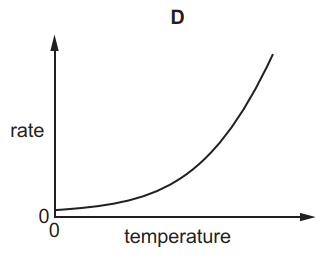
Which graph shows the effect of increasing temperature on the rate of reaction of calcium carbonate with dilute hydrochloric acid?
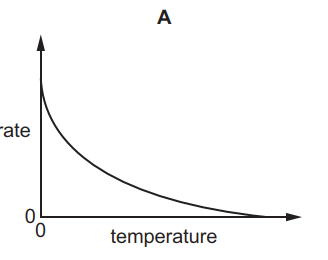
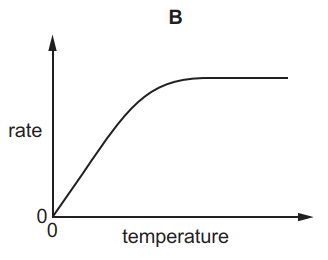
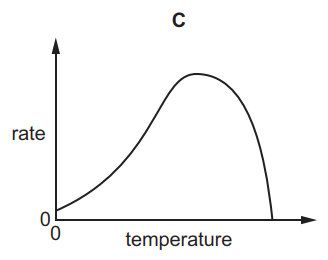
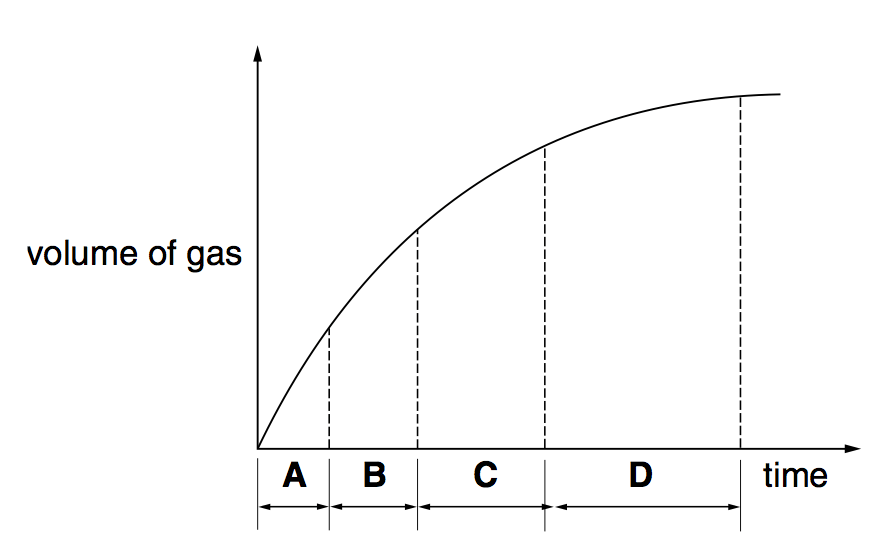
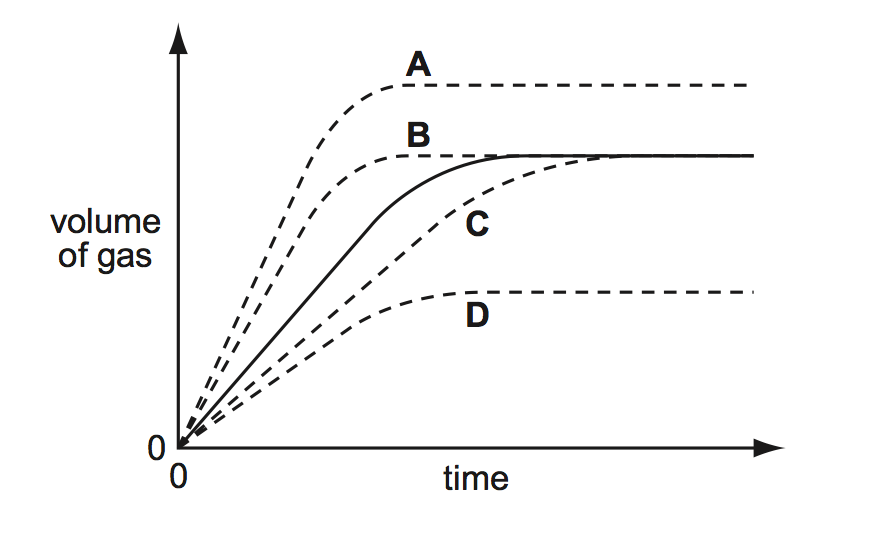
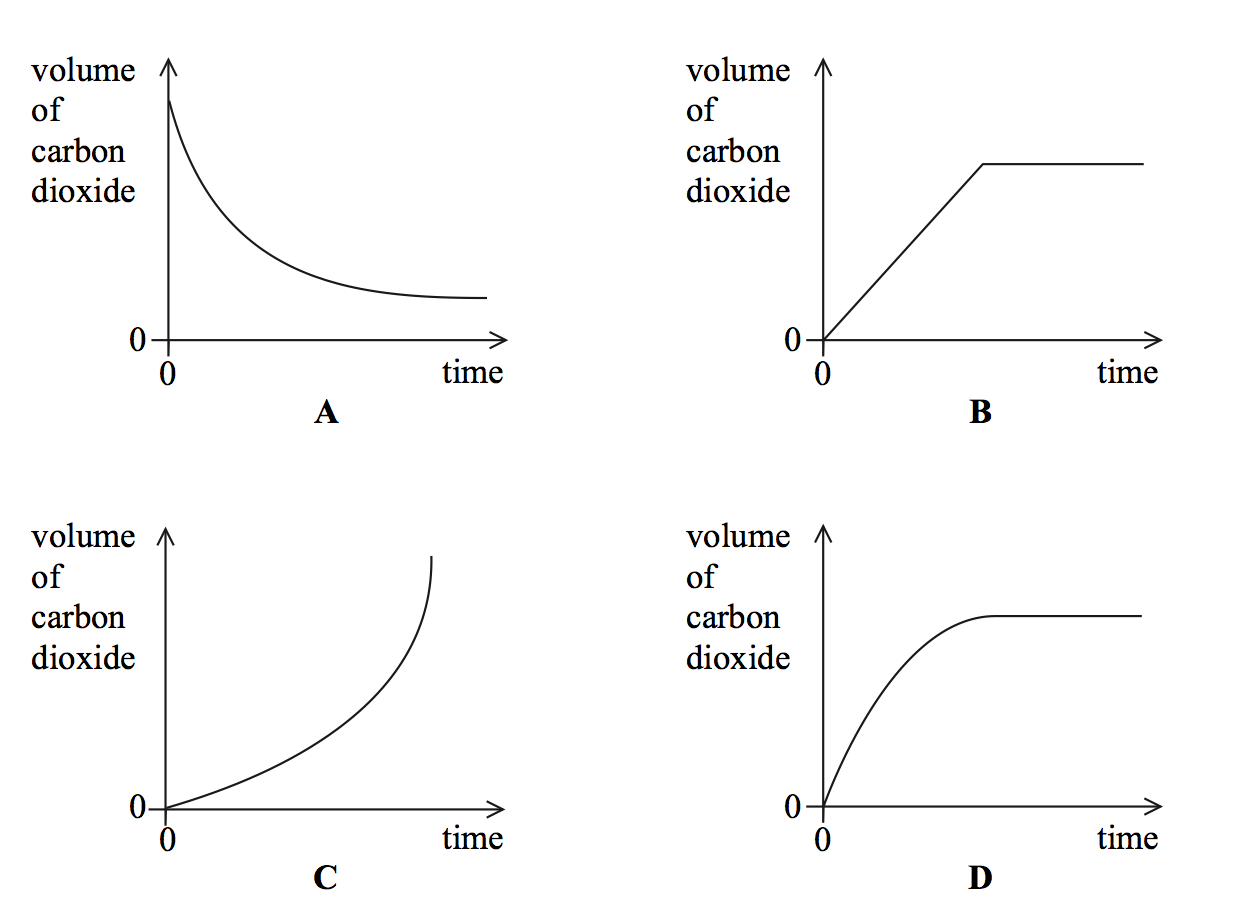
Which graph shows the correct results?


Which factors affect the rate of a reaction?
temperature
concentration
surface area
pressure
catalyst
How does a catalyst work in speeding up a reaction?
By lowering the activation energy or reaction
by giving them more energy
by making them more available
The minimum amount of energy needed for colliding particles to react is called the
Chemical Energy
Kinetic Energy
Activation Energy
Potential Energy
A substance that increases the rate of a reaction without being used up during the reaction is called a
catalyst
product
reactant
solute
What is the name given to a catalyst in the human body?
Biology
Catalyst
Chemical
Enzyme

Which of the reaction pathway shows the catalysed reaction?
1
2
When a catalyst is added to a reaction the rate of reaction,,,
Increases
Decreases
Does not change
How does a catalyst work in speeding up a reaction?
By lowering the activation energy or reaction
by making them more available
by giving them more energy
A catalyst
is used up
is nevr used up
A catalyst be regenerated or used again and again
False
True
A catalyst changes the mechanism of the reaction
True
False
Catalysts may be in the state of ___________.
Solid and liquid only
Liquid and gases only
Solid and gases only
Solid, liquid or gases

The following graph shows two different reaction pathways for the same overall reaction at the same temperature. Which pathway is slower and why?
Red, because the activation energy is larger
Blue, because the activation energy is lower
both reaction progress at the same rate
Enzymes in your body probably work best at which of the following temperatures>
25oC
37oC
98oC
100oC
What is activation energy?
energy to get up in the morning
energy to boil a kettle
minimum energy required for a reaction to occur
maximum energy needed for a reaction to occur
the number of particles in a reaction
What does increasing the temperature do?
breaks the reactants up in to smaller pieces
increase amount of product
increase energy of particles
increase the number of particles
slower the particles down
What does increasing the surface area do?
breaks the reactants up in to smaller pieces
increase amount of product
increase energy of particles
increase the number of particles
slower the particles down
What does increasing the concentration do?
breaks the reactants up in to smaller pieces
increase amount of product
increase energy of particles
increase the number of particles
slower the particles down
Enzymes are found in
our cells
animals
plants
all of the options are correct
There are many different types of enzymes.
True
False
If the temperature of the environment is not correct the enzyme may not work.
True
False

