wayground logo

Free Printable Worksheets

Font size

S
M
L
XL
Worksheets

20-21_PhySci_Semester 1 Final Exam

Total questions: 101

Worksheet time: 1hrs 20mins

Name
Class
Date
1.

Science can be used to answer spiritual and religious questions like, "Are ghosts real?" and "Does God exist?"

a)

No

b)

Yes

2.
In order for an explanation to be considered scientific, it must be based on ____________.
a)
an inference
b)
a conclusion
c)
past experience
d)
evidence
3.

Ingredients


1 egg

1 1/4 cup all purpose flour

1 1/4 cup milk

1/2 teaspoon salt

3 tablespoons baking powder

3 tablespoons butter, melted

1 tablespoon sugar

1 teaspoon real vanilla extract


Steps


Use a large bowl and mix together the baking powder, flour, salt and sugar Add egg, milk, butter and vanilla extract to the bowl and whisk well with the dry ingredients. until become nice smooth batter Heat skillet over medium heat. Once hot, add batter at about 1/4 cup at a time. Once bubbles appear in the pancake and the sides are golden brown, flip over with a large spatula for another minute or so until golden brown. Your Pancake is ready to be served


What recipe is this ?

a)

Crepes

b)

Cookies

c)

Pancake

d)

Quiche

4.

You read a report on the internet that states, "vaccines cause autism and nobody should use them". What should you do?

a)

Believe it without questioning and TELL EVERYONE YOU KNOW THE TRUTH

b)

Ignore it. Who cares?

c)

Think to yourself: Is the source legitimate or is this some crackpot? I should probably do some research to see if this is actually true according to the medical and scientific community.

d)

If the report uses numbers, big words, and graphs it's probably totally true and you should believe it.

5.
A scientist is performing an experiment to determine the melting point of a new substance. Which action could increase the likelihood of obtaining accurate results? 
a)
repeating the experiment three times
b)
experimenting with multiple substances
c)
writing out the procedure after the experiment
d)
using three types of thermometers
6.
Which of the following is not an observation?
a)
Desirie used a thermometer to observe the temperature of the water.
b)
Jose believes that he remembers having seen a chupacabra (legendary creature) when he was a little boy.
c)
Pedro was looking at the bread and saw there was moisture in the bag.
d)
Michael could feel that the unknown substance was very rough. 
7.

What is mass?

a)

anything that takes up space

b)

the amount of matter an object has

c)

the amount of space an object takes up

d)

the measure of how warm something is

8.
What is the definition of "weight"?
a)
measure of the force of gravity on your body
b)
the time it takes to get on a ride 
c)
the amount of matter in an object
d)
the size of an object
9.
On which celestial object would you weigh the most?
a)
Earth
b)
Jupiter
c)
Sun
d)
You would weigh the same on all celestial objects
10.

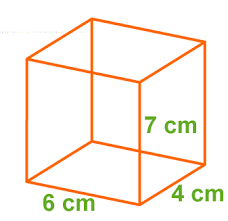
What is the volume of this cube?

a)

168 cm2

b)

168 cm3

c)

17 cm3

d)

168 mm3

11.

What is the volume of the ring?

a)

64 mL

b)

68 mL

c)

8 mL

d)

4 mL

12.
The water often curves down in a graduated cylinder. What is the scientific term for that curve?
a)
polarity
b)
water curve
c)
hypothesis
d)
meniscus
13.

From the volume and density simulation lab, what is the density of Iron?

a)

7.87 g/ml

b)

19.3 g/ml

c)

11.3 g/ml

d)

0.23 g/ml

14.
Jack has a rock. The rock has a mass of 14g and a volume of 2cm3. What is the density of the rock?
a)
7 mL
b)
7 g/cm3
c)
28 g/cm3
d)
1/7 g/cm3
15.
Why do the liquids form different layers?
a)
They have different densities.  
b)
They have different masses.  
c)
They have different volumes.  
d)
They are different temperatures.  
16.
An object should float in a liquid if it is 
a)
Denser than the liquid 
b)
Less dense than the liquid
c)
Lighter than metal
d)
 Shaped like a ball 
17.

A teacher spilled a bottle of small steel beads into a container of glass beads. What is the most useful physical property to separate the two materials?

a)

Mass

b)

Shape

c)

Magnetism

d)

Color

18.

This diagram represents...

a)

An element

b)

A molecule

c)

A compound

d)

A mixture of elements and compounds

19.
a)
element
b)
compound
c)
mixture of elements and compounds
d)
mixture of compounds
20.
What type of mixture is this?
a)
heterogeneous 
b)
homogeneous
21.
A solution that is considered dilute would be....
a)
Dark in color
b)
Have a strong scent
c)
Have a large amount of solute
d)
Have a small amount of solute
22.

Which statement below does NOT describe a colloid?

a)

A colloid is a type of heterogeneous mixture

b)

A colloid is a type of solution.

c)

The particles in a colloid do not settle like they do in a suspension.

d)

The particles in a colloid do not dissolve – they are just too small to be seen.

23.

In a solution the substance that dissolves in the solvent.

a)

Solute

b)

Suspension

c)

Colloid

d)

Solvent

24.
The scattering of light by colloids is called ____. 
a)
homogeneous
b)
suspension
c)
air pollution
d)
The Tyndall effect
25.

Which statement is true about compounds?

a)

a pure substance where two or more elements are chemically combined

b)

a homogenous mixture of 2 or more elements

c)

a pure substance containing only one type of atom

d)

a heterogeneous mixture of 2 or more elements chemically combined

26.

Yum! Burritos are great examples of...

a)

A pure substance

b)

A homogeneous mixture

c)

A heterogeneous mixture

d)

Two or more elements chemically combined

27.

Choose which one is a physical property

a)

Flammability

b)

Solubility

c)

Water Reaction

d)

Magic

28.

Choose the one that is a chemical property

a)

Magnetism

b)

Size

c)

Color

d)

Reactivity with water

29.

If you describe a substance as being corrosive, you have given a __________ property of that substance

a)

Chemical

b)

Large

c)

Physical

d)

Thermal

30.

What is the outcome of observing a chemical property?

a)

Nothing

b)

A new substance is formed with different properties

c)

NaCl

d)

A rise in thermal conductivity

31.

Choose whether the following is a physical or chemical property: Malleability

a)

Physical

b)

Chemical

32.

A green powder is heated & a gas is given off while it turns to a black solid. This describes

a)

Physical Change

b)

Chemical Change

c)

Change in State

d)

Change in Temperature

33.

The difference between a Physical change and a Chemical change is…

a)

Physical change is only a change to the outside appearance.

b)

Chemical change is when matter is changed into something new.

c)

Atoms are rearranged in chemical changes & not in physical.

d)

All are correct.

34.

Identify what type of change happening in the picture below...

a)

Chemical Change

b)

Physical Change

c)

Endothermic Reaction

d)

Exothermic Reaction

35.

Identify what type of change happening in the picture below...

a)

Chemical Change

b)

Physical Change

c)

Endothermic Reaction

d)

Exothermic Reaction

36.

Which of the following is an example of a physical change?

a)

A glass falling and shattering on the floor.

b)

Baking a birthday cake.

c)

Burning a piece of paper.

d)

Baking soda and vinegar mixing together.

37.

During Chemical Reactions, the new substances created are called?

a)

Precipitate

b)

Corrosion

c)

Reactants

d)

Products

38.

____ reactions usually feel cold.

a)

endothermic

b)

exothermic

39.
The Best Friend's Club uses "invisible ink" to write notes to each other. The invisible ink is actually lemon juice that is clear when it dries on paper, but turns brown when a club member holds a burning candle under the paper. Once it is heated, it is never invisible again.
 What type of change is occurring when the paper is heated?
a)
chemical change
b)
elemental change
c)
physical change
d)
temperature change
40.

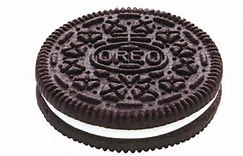
An oreo cookie has a mass of 20 grams. It gets crushed into crumbs for a recipe. What is the mass of the crumbs?

a)

15 grams

b)

25 grams

c)

20 grams

41.

If reaction starts with 20g of reactants, it will produce ---

a)

a total of 40g of product

b)

a total of 10g of product

c)

a total of 80 g of product

d)

a total of 20g of product

42.

In a reaction A + B ----> C.

Reactant A has 5g and product C has 9g.

How many grams does reactant B should have?

a)

4g

b)

5g

c)

9g

d)

14g

43.
The rate of a reaction increases as temperature__________________.
a)
Decreases
b)
Increases
c)
Stays the Same
44.
Grinding a seltzer tablet into powder increases the rate of reaction due to increased
a)
concentration
b)
surface area
c)
temperature
d)
reactants
45.
Solids are described as having a 
a)
definite shape and indefinite volume
b)
indefinite shape and indefinite volume
c)
definite shape and definite volume
d)
indefinite shape and definite volume
46.
Liquids are described as having a 
a)
definite shape and indefinite volume
b)
indefinite shape and indefinite volume
c)
definite shape and definite volume
d)
indefinite shape and definite volume
47.
Gases are described as having a 
a)
definite shape and indefinite volume
b)
indefinite shape and indefinite volume
c)
definite shape and definite volume
d)
indefinite shape and definite volume
48.
What does this picture represent? 
a)
solid
b)
liquid 
c)
gas
d)
plasma
49.
When the temperature of matter increases the particles...
a)
speed up and move closer
b)
speed up and move farther apart
c)
slow down and move closer together
d)
slow down and move farther apart
50.
My glass of ice water is sitting in the sun and has droplets of water on the outside of the glass. What is happening?
a)
condensation
b)
evaporation
c)
melting
d)
freezing
51.
All changes in the state of matter of a substance requires
a)
vibration
b)
water
c)
permission
d)
energy
52.

What is the term for the changing of a solid directly into a gas?

a)

condensation

b)

sublimation

c)

vaporization

d)

evaporation

53.

What is commonly known as the 4th State of Matter?

a)

antimatter

b)

plasma

c)

dark matter

d)

condensates

54.
Freezing
a)
Solid to gas
b)
Liquid to solid
c)
Gas to solid
d)
Liquid to gas
55.
Boiling
a)
liquid to gas
b)
gas to solid
c)
gas to liquid
d)
solid to liquid
56.
What is happening when my ice cream changes from a solid to a liquid?
a)
freezing
b)
melting
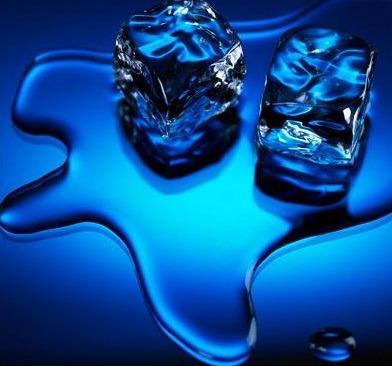
c)
burning
d)
evaporation
57.
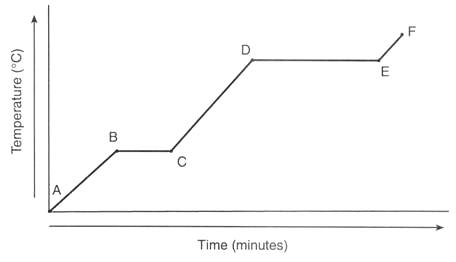
Between which points is the substance changing its state of matter?
a)
A-B only. 
b)
A-B, C-D, E-F
c)
B-C only. 
d)
B-C, D-E
58.

The most common state of matter in the universe is...

a)

solid

b)

liquid

c)

gas

d)

plasma

59.

He proposed the atomic theory.

a)

Bohr

b)

Chadwick

c)

Dalton

d)

Rutherford

60.

The positive particle in an atom.

a)

proton

b)

neutron

c)

electron

d)

electron cloud

61.

How many protons does Nitrogen have?

a)

7

b)

8

c)

14

d)

14.01

62.

He believed that matter is made of small solid objects that cannot be divided, created, or destroyed called atomos.

a)

Aristotle

b)

Democritus

c)

Dalton

d)

Bohr

63.

The negative particle in an atom.

a)

proton

b)

neutron

c)

electron

64.

Scientist that proposed that electrons move in energy levels around the nucleus.

a)

Dalton

b)

Rutherford

c)

Thomson

d)

Bohr

65.

If an element has an atomic number of 11 and a mass number of 23, how many neutrons does it have?

a)

11

b)

12

c)

23

d)

34

66.

Which of the following particles is NOT found in an atom's nucleus?

a)

proton

b)

neutron

c)

electron

67.

The neutral particle in an atom.

a)

proton

b)

neutron

c)

electron

68.

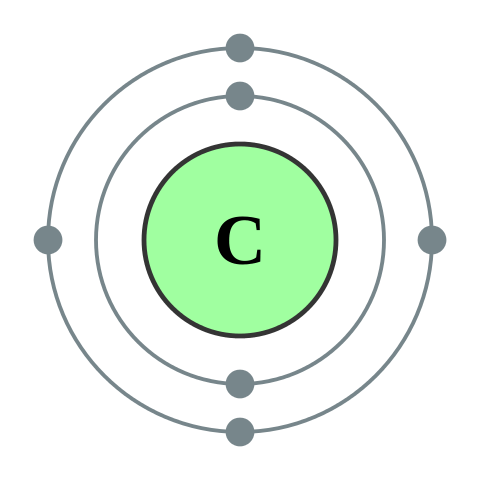
This could be the dot diagram of

a)

Mg

b)

Cl

c)

C

d)

O

69.

How many electrons should sodium, atomic number 11, have around its Lewis dot model?

a)

1

b)

2

c)

3

d)

4

70.
How many electrons can the first energy level hold?
a)
1
b)
2
c)
8
d)
0
71.

How many valence electrons does carbon have?

a)

4

b)

5

c)

6

d)

7

72.
Rows on the period table are called _____ while columns are called _____.
a)
groups, families
b)
groups, periods
c)
periods, groups
d)
families, groups
73.

The period that an element is in, tells you what?

a)

Number of protons

b)

Number of electrons

c)

Number of valence electrons

d)

Number of shells

74.

who discovered the first scientific and systematic periodic table

a)

Henry Mosley

b)

Dmitri Mendeleev

c)

John Dalton

d)

sir Isaac Newton

75.

Number of valence electrons in halogens is ..........

a)

1

b)

4

c)

3

d)

7

76.
The atomic number tells you what?
a)
number of electrons
b)
number of protons
c)
number of neutrons
d)
both electrons and protons in an atom.
77.
Which group of the periodic table is composed of inert (not reactive)  gases?
a)
alkali metals
b)
alkaline earth metals
c)
halogens
d)
noble gases
78.
Elements which are shiny, conduct electricity and heat are called
a)
metal
b)
nonmetal
c)
metalloid
d)
nonexistent
79.
The atoms along the staircase are called 
a)
metals
b)
nonmetals
c)
metalloids
d)
noble gases
80.
Which is an alkali metal?
a)
Magnesium
b)
Iron
c)
Sodium
d)
Europium
81.
An element's identity is determined by the number of
a)
electrons.
b)
protons.
c)
neutrons.
d)
valence.
82.
All matter is made of .....
a)
energy 
b)
atoms 
c)
air
d)
chemistry
83.
Most of the mass of an atom is found it its _____.
a)
electron cloud
b)
nucleus
c)
atomic number
d)
empty space
84.
Which of the following has a full valence shell?
a)
Oxygen
b)
Neon
c)
Barium
d)
Carbon
85.
All chemical bonds involve two atoms sharing electrons.
a)
True
b)
False
86.
Chemical bonds form when atoms
a)
combined nuclei
b)
give up neutrons
c)
gain protons
d)
share or transfer electrons
87.
If an atom loses two electrons what charge will it have?
a)
+ 2
b)
 - 2
c)
+1
d)
-1
88.
Covalent compounds
a)
Share electrons
b)
transfer electrons
c)
contain a sea of electrons
d)
conduct electricity
89.
What elements generally make an ionic bond?
a)
metal and nonmetal
b)
2 nonmetals
c)
metal
d)
none of the above
90.
Atoms are most stable when their outer shell is complete.
a)
true
b)
false
91.
When an atom loses an electron, it is called a..
a)
crystal
b)
formula
c)
ion
92.
If an atom has 7 protons and 7 electrons what charge will it have?
a)
-2
b)
-1
c)
0
d)
+2
93.

The atom pictured (chlorine) wants to...

a)

gain 1 electron

b)

lose 1 electron

c)

lose 7 electrons

d)

become radioactive

94.

H2o : This compound is...

a)

Ionic

b)

Covalent

c)

dangerous

d)

made of metalloids

95.

NaCl : This compound is...

a)

Ionic

b)

Covalent

c)

dangerous

d)

made of metalloids

96.
The pH scale is a range from:
a)
1-7
b)
0-14
c)
1-5
d)
1-20
97.
What is the only substance with a neutral pH of 7?
a)
Milk
b)
Orange Juice
c)
Water
d)
Blood
98.
Complete the sentence.
A substance that is more basic has a _____ pH than a substance that is acidic.

a)
lower
b)
higher
c)
the same
d)
none of the above
99.
How many atoms of carbon (C) are in C6H12O6?
a)
3
b)
6
c)
12
d)
24
100.
How many Hydrogen are in 4H2O?
a)
6
b)
8
c)
2
d)
4
101.
Which of the following reactions is balanced?
a)
2CH4 + O2 -> CO2 + H2O
b)
CH4 + 2O2 -> CO2 + H2O
c)
CH4 + 2O2 -> CO2 + 2H2O
d)
None of the chemical equations are balanced.