wayground logo

Free Printable Worksheets

NEW

Font size

S
M
L
XL
Worksheets

cells chapter review

Total questions: 45

Worksheet time: 15mins

Name
Class
Date
1.
Every living organism is made up of one or more cells
a)
True
b)
False
2.
Which of the following are NOT found in animal cells
a)
chloroplasts and cytoplasm
b)
chloroplasts and cell wall
c)
cell wall and cell membrane
d)
mitochondria and nucleus
3.
The nucleus is like the ____________ of the cell.
a)
foot
b)
hand
c)
stomach
d)
brain
4.

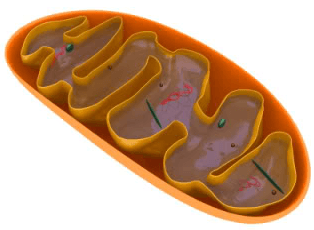
Which of the following converts food into energy for the cell?

a)

vacuole

b)

mitochondria

c)

cytoplasm

d)

cell membrane

5.
What do vacuoles do? 
a)
They actually do not have an important role
b)
They protect the cell
c)
They are the brain of the cell
d)
storage area for cells; water storage in plants 
6.
Which of the following, found ONLY in plant cells, provides structure?
a)
cell wall
b)
chloroplast
c)
mitochondria
d)
vacuole
7.
Which structures are found in every living cell?
a)
cell membrane and cytoplasm
b)
chloroplasts and mitochondria
c)
a cell wall and nucleus
d)
chloroplasts and cell wall
8.
What is the function of the cell nucleus found in both plant and animal cells?
a)
to produce energy
b)
to control cell activity
c)
to remove waste products
d)
to allow molecules to enter the cell
9.
Cell organelles that are responsible for digesting food, worn out organelles and other cellular wastes are called ___________________.
a)
Mitochondria
b)
Vacuoles
c)
Lysosomes
d)
Chlororplasts
10.
All cells need energy to function.  Which cell organelle is responsible for producing energy in the cell?
a)
chloroplasts
b)
mitochondria
c)
nucleus
d)
vacuoles
11.
What is the function of a cell wall?
a)
to protect and support the cell
b)
to perform different functions in each cell
c)
to prevent water from passing through it
d)
to prevent oxygen from entering the cell
12.
In what part of the plant cell does the process of photosynthesis take place?
a)
nucleus
b)
mitochondria
c)
chloroplasts
d)
vacuoles
13.
Cells with a nucleus and membrane-bound organelles are called ____________________.
a)
prokaryotes
b)
eukaryotes
c)
bacteria
d)
protists
14.
Which of the following is not part of the cell theory?
a)
cells must contain DNA 
b)
all living things are made from cells
c)
cells can only come from other cells
d)
cells are the basic unit of life
15.
Who was the first  person to see cells under the microscope and give them their name?
a)
Mattias Schleiden
b)
Robert Hooke
c)
Theordor Schwann
d)
Anton van Leeuwenhoek
16.
The basic unit of structure and function in a living things.
a)
chloroplast
b)
nucleus
c)
cell
d)
cell membrane
17.

What type of cell lacks a nucleus?

a)

eukaryotic

b)

prokaryotic

c)

human

d)

animal

18.

Many celled organisms are called

a)

unicellular

b)

multicellular

c)

bicellular

d)

tricellular

19.

Single celled organisms are called

a)

unicellular

b)

multicellular

c)

bicellular

d)

tricellular

20.

Which of the following statements is part of the cell theory?

a)

All living things are made up of one or more cells.

b)

Cells are the basic units of living things.

c)

All cells come from pre-existing cells.

d)

All of these

21.

Ian is looking at a cell using a microscope. He sees a nucleus and a large vacuole in the center of a cell. What type of cell is he most likely looking at?

a)

animal cell

b)

plant cell

c)

blood cell

d)

human cell

22.

Select the group of organelles that is common to both plant cells and animal cells.

a)

cytoplasm, mitochondria, cell wall, nucleus

b)

ribosomes, cell membrane, mitochondria, cytoplasm

c)

nucleus, cytoplasm, ribosomes, chloroplasts

23.

These are

a)

plant cells

b)

animal cells

c)

bacteria cells

24.

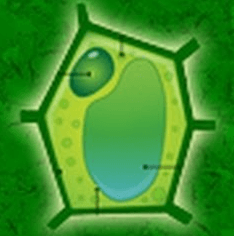
This is a

a)

animal cell

b)

plant cell

c)

tissue

d)

flower

25.

Which type of cell?

a)

animal cell

b)

plant cell

c)

both

26.

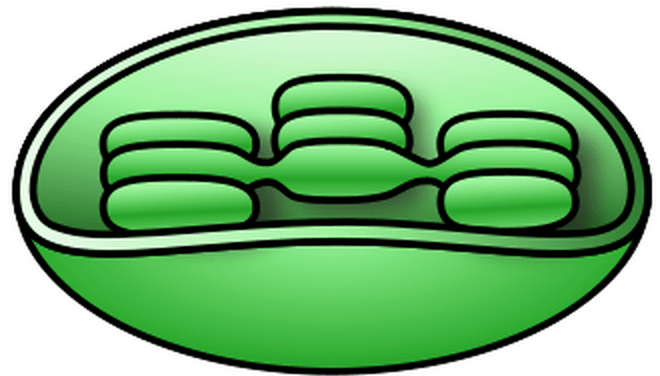
This part of the plant cell has chlorophyll and make food for the plant cell

a)

cell wall

b)

chloroplast

c)

cytoplasm

d)

nucleus

27.

"Small organs" of the cell that carry out specific functions

a)

Organelles

b)

Organs

c)

Cell Wall

d)

Cell

28.

supports and protects the cell; only in plant cells

a)

Cell Window

b)

Cell Wall

c)

Cell Membrane

d)

Cover

29.

builds proteins, each cell contains thousands, found on ER and floating throughout cell

a)

Ribosomes

b)

Nucleus

c)

Vacuole

d)

Golgi Body

30.

gel-like material, where organelles are located

a)

Cytoplasm

b)

Nucleus

c)

Vacuole

d)

Mitochondria

31.

moves materials around in the cell, two types: smooth and rough

a)

Cytoplasm

b)

Nucleus

c)

Vacuole

d)

Endoplasmic Reticulum

32.

packages proteins and moves them throughout the cell

a)

Cell Theory

b)

Golgi Body

c)

Vacuole

d)

Endoplasmic Reticulum

33.
I am only found in a plant cell. What am I?
a)
cell wall
b)
mitochondria
c)
cytoplasm
d)
chloroplast
34.

Provides extra support for the plant cell and gives it shape

a)

chlorophyll

b)

chloroplast

c)

cell wall

d)

vacuole

35.
Which organism is made up of cells that have both a cell membrane and a cell wall?
a)
desert mouse
b)
human 
c)
maple tree
d)
zebra
36.

This organelle controls what goes in and out of plant and animal cells.

a)

Cell Wall

b)

Cell Membrane

c)

Chloroplasts

d)

Cytoplasm

37.
Which of the following is an example of a prokaryotic cell? 
a)
Virus 
b)
Plant Cell 
c)
Bacteria 
d)
Animal Cell 
38.
Which of the following is a Eukaryotic cell?
a)
Bacteria 
b)
Virus 
c)
Animal/Plant Cell 
d)
All of the above. 
39.
Directs all cell activities through the DNA located there.
a)
Lysosomes
b)
Nucleus
c)
ribosomes
d)
Mitochondria
40.
Where are proteins made?
a)
Golgi body
b)
Mitoichondria
c)
Chromosomes
d)
Ribosomes
41.
I am the outer most layer of an animal cell. What am I?
a)
cell wall
b)
nucleus
c)
cell membrane 
d)
cell skin
42.
What are tiny organelles that convert glucose into ATP?
a)
Ribosomes
b)
Vesicles
c)
Cytoskeleton
d)
Mitochondria
43.
A rigid layer that lies outside the cell's  membrane is...
a)
Cytoskeleton
b)
Cilia
c)
Cell Wall
d)
Flagella
44.
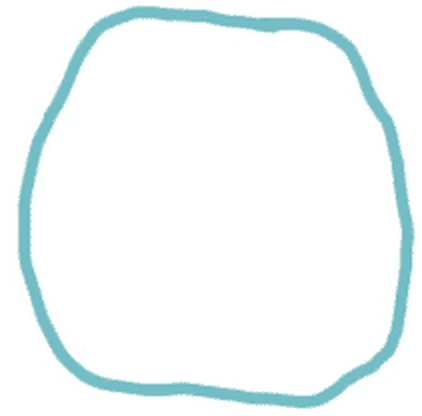
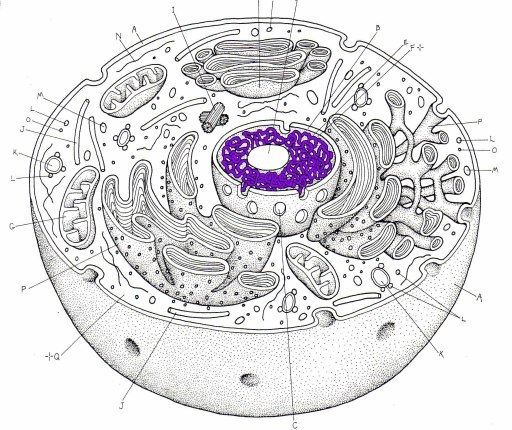
What kind of cell is this?
a)
Eukaryotic
b)
Prokaryotic
45.
Which of the following would be found in both eukaryotic AND prokaryotic cells?
a)
chloroplast
b)
DNA
c)
nucleus
d)
endoplasmic reticulum