
 Worksheets
History of the Atom Project Test (2025)
Total questions: 45
Worksheet time: 2hrs 37mins

Which scientist was the first person responsible for proposing the idea of atoms?
Democritus
John Dalton
Ernest Rutherford
J.J. Thomson
Niels Bohr

Which scientist was the first person responsible for proposing the discovery of the electron?
Democritus
John Dalton
Ernest Rutherford
J.J. Thomson
Niels Bohr

Which scientist was the first person responsible for proposing the discovery of the nucleus?
Democritus
John Dalton
Ernest Rutherford
J.J. Thomson
Niels Bohr

Which scientist claimed that the atom was a small, dense, solid sphere?
Democritus
John Dalton
Ernest Rutherford
J.J. Thomson
Niels Bohr

Which scientist's model is referred to as the Plum Pudding Model?
Democritus
John Dalton
Ernest Rutherford
J.J. Thomson
Niels Bohr

Which scientist's model is referred to as the Planetary model?
Democritus
John Dalton
Ernest Rutherford
J.J. Thomson
Niels Bohr

Which scientist proposed the idea that the electrons orbited the nucleus on fixed paths with designated energies?
Democritus
John Dalton
Ernest Rutherford
J.J. Thomson
Niels Bohr
Who discovered the alpha particle?
Democritus
John Dalton
Ernest Rutherford
J.J. Thomson
Niels Bohr

Which model of the atom is the most up to date model?
The Solid Sphere Model
The Plum Pudding Model
The Planetary Model
The Wave Mechanical Model
The Nuclear Model

Which model of the atom describes the location of electrons as probable within a dense "cloud" surrounding the nucleus of an atom?
The Solid Sphere Model
The Plum Pudding Model
The Planetary Model
The Wave Mechanical Model
The Nuclear Model
Who was the first contributor to the atomic theory?
John Dalton
Ernest Rutherford
JJ Thompson
Democritus
Neils Bohr

What were J. J. Thomson's three contributions to the atomic theory?
Discovered the electron
Discovered the nucleus -did the gold foil experiment
Used the cathode ray tube in his discovery
Created a model of the atom with electrons moving around the nucleus in fixed orbits
Created the "plum pudding" model of the atom

What are two facts about Democritus's?
Greek philosopher
Created the atomic theory
Used the cathode ray tube in his discovery
Believed that the universe was made of tiny "uncuttable" particles
Discovered that the atom is mostly empty space

What is Neils Bohr's contribution to the atomic theory?
Created the atomic theory
Created a model of the atom with electrons moving around the nucleus in a fixed orbits
Discovered that the proton had a positive charge
Believed that atoms of a given element are identical
Discovered the electron

What were Ernest Rutherford's three contributions to atomic theory?
Discovered that the atom is mostly empty space
Discovered the nucleus- did the gold foil experiment
Used the cathode ray tube in his discovery
Discovered the electron
Discovered that the proton had a positive charge


From the results of the Gold Foil Experiment, Rutherford drew what 2 conclusions about the atom?
atoms are composed of electron clouds
the atom is composed of mostly empty space.
the electrons are embedded within a positively charge substance
electrons are found in the nucleus
atoms contain a small dense positively charged center
Mass is neither created nor destroyed during chemical reactions or physical changes.
Law of multiple proportions
law of definite proportions
law of scientific theory
law of conservation of mass
Joseph Proust stated that, regardless of the amount, a compound is always composed of the same elements in the same proportion by mass. This is better known as....
law of definite proportions
law of conservation of mass
law of multiple proportions
periodic table

Who discovered the natural radioactivity of uranium?
Joseph Proust
Henri Bequerel
James Marsden
J. J. Thomson

Discovered Radium and Polonium?
Erwin Schrodinger
Henri Becquerel
Marie Curie
Ernest Rutherford
Who is considered the "father of modern chemistry" ?
Democritus
Joseph Proust
Antoine Lavoisier

Developed the “chocolate chip cookie” model of the atom, a modern version of the model type since Americans have no clue what his pudding dessert is!
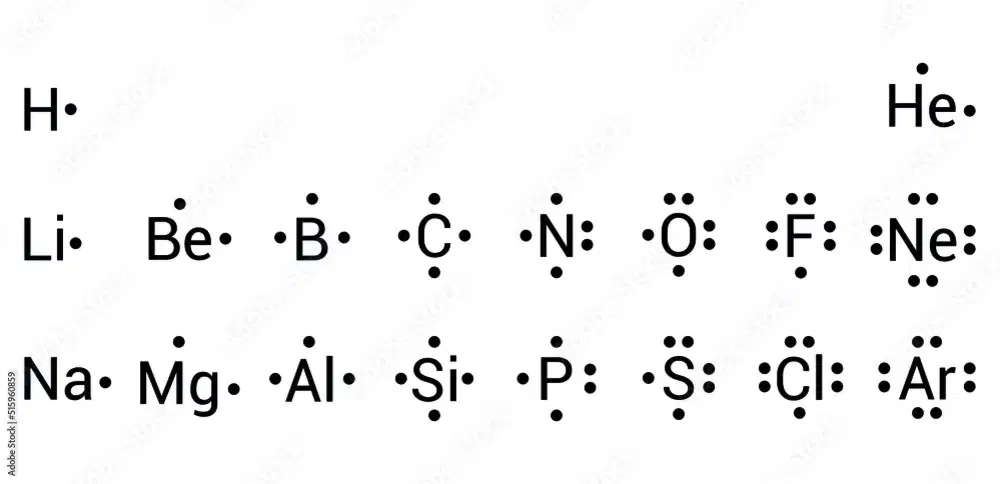
Proposed the concept that electrons pairing, and created a structure to explain chemical bonding.
G. N. Lewis

Developed the model of the atom that stated that electrons are found orbiting around the nucleus, but had no idea about why they didn't collapse into the positively charged nucleus.

His work established spectroscopy, and linked spectral lines to elements.
Gustav Kirchhoff
Max Planck
Louis de Broglie

Developed the “wave mechanical” model of the atom
His 5 part atomic theory suggested that atoms were rearranged during chemical reactions to form new substances.
Who discovered that the atom had an small, dense, positively charged center?
Ernest Rutherford
J.J Thomson
Robert Millikan
John Dalton
Place the following atomic models in order, from earliest to latest:
A) Rutherford B) Thomson C) Dalton D) Heisenberg & Schrodinger E) Bohr
B, C, A, E, D
D, C, E, A, B
D, E, A, B, C
C, B, A, E, D
Who invented a device to detect radioactive particle?
Geiger
Planck
Mosley
Rutherford
Which scientists believed an atom was indivisible? (Choose all correct responses.)
Democritus
Dalton
Thomson
Rutherford
Which scientist discovered that the atom has parts - which means it can be divided?
Democritus
Dalton
Thomson
Rutherford
His work rearranged the periodic table by putting the elements in order by atomic number rather than by atomic mass.
Rutherford
Mosely
Chadwick
Mendeleev

Developed an equation to describe the behavior of an electron.
Rutherford
Planck
Schrodinger
Marsden
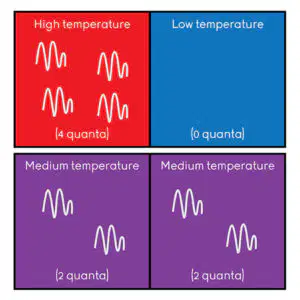
Considered the "father of quantum mechanics", creating an entire new branch of physics based upon energy is quantized into packets of energy called quanta.
Shrodinger
Planck
Rutherford
Heisenberg

