Wayground logo

Free Printable Worksheets

Font size

S
M
L
XL
Worksheets

Life Science Mid-term Review

Total questions: 47

Worksheet time: 55mins

Name
Class
Date
1.
This scientist was the first to identify cells and name them:
a)
Hooke
b)
Leeunwenhoek
c)
Schleiden
d)
Virchow
2.
This scientist observed live cells and observed greater detail:
a)
Hooke
b)
Leeunwenhoek
c)
Virchow
d)
Schwann
3.
All organisms are made of:
a)
organelles
b)
cytoplasm
c)
DNA
d)
cells
4.
All existing cells are produced by other
a)
living cells
b)
dead cells
c)
atom cells
d)
animal cells
5.
Who looked at cork and named the cell?
a)
Robert Hooke
b)
Van Leeuwenhoek
c)
Robert Brown
d)
Francesco Redi
6.
The Cell Theory states...
a)
atoms create all matter
b)
living things evolve
c)
the cell is the backbone of all matter
d)
cells are the basic unit of structure and organization of organisms
7.
In what organelle is the genetic material found inside?
 
a)
Endoplasmic Reticulum
b)
Golgi Complex
c)
Ribosomes
d)
Nucleus
8.
What organelle is called the "powerhouse" of a cell?

a)
Endoplasmic Reticulum
b)
Nucleus
c)
Mitochondria
d)
Nucleolus
9.
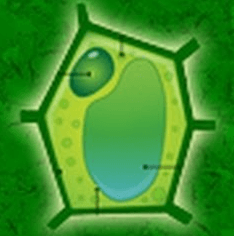
Using this image, what organelle is C?
a)
Cell Wall
b)
Mitochondria
c)
Large Cell Vacuole
d)
Chloroplast
10.
What is the function of the vacuole?
a)
Sac that stores water, nutrients, and waste products
b)
Sac filled with digestive chemicals
c)
Jelly-like substance within the plasma membrane
d)
stack of membranes that packages chemicals
11.
What is the function of nucleus?
a)
Structure that organizes motion of chromosomes. 
b)
Structure that contains DNA and directs the cell 
c)
Membrane that surrounds and protects the cell 
d)
Stack of membranes that packages chemicals
12.
I make proteins for the cell. What am I?
a)
ribosome
b)
mitochondria
c)
chloroplast
d)
lysosome
13.
A rigid layer that lies outside the cell's  membrane is...
a)
Cytoskeleton
b)
Cilia
c)
Cell Wall
d)
Flagella
14.
How are scientific theories different from scientific laws?
a)
Scientific theories are well-supported ideas that can be modified, but are rarely discarded.
b)
Scientific theories are laws that have not been proven yet.
c)
Scientific theories are claims that a few scientists believe.
d)
Scientific theories are educated guesses.
15.
Sarah conducted an experiment to determine whether salt added to a cup of water affects its boiling point. Water samples were prepared containing equal quantities of water at the same temperature. Each sample received a different amount of salt and was placed onto a heat source. The temperature of the water once it reached a rapid boil was recorded. Which conclusion correctly interprets the information from Sarah's table?
a)
Doubling the amount of salt doubled the boiling point.
b)
Increasing the amount of salt lowered the boiling point.
c)
Doubling the amount of salt decreased the boiling point.
d)
Increasing the amount of salt increased the boiling point.
16.
Two students are going to run a mile and measure their heart rate before and after their run. Student A is very athletic and is a part of the school's undefeated track team. Student B enjoys going home after school to play video games all night and is not physically fit. According to the data from the chart, how does a person's physical fitness change the way the circulatory system responds to exercise?
a)
After running, the heart rate will increase by about 60 beats per minute.
b)
After running the heart rate will increase by about 80 beats per minute.
c)
The more physically fit a person is, the less the heart rate will increase after exercise.
d)
The more physically fit a person is, the more the heart rate will increase after exercise.
17.
A student places three identical plants in the same type of containers, uses the same type of soil and the same amount of water for each plant. This student places the three plants in three different locations. Plant A is placed in a sunny area, Plant B is placed in a shaded location, and Plant C is placed in the dark room. Each day this student records the growth of each plant. What is the INDEPENDENT variable in this investigation?
a)
the soil
b)
the amount of light
c)
the amount of water
d)
the growth of each plant
18.
A student places three identical plants in the same type of containers, uses the same type of soil and the same amount of water for each plant. This student places the three plants in three different locations. Plant A is placed in a sunny area, Plant B is placed in a shaded location, and Plant C is placed in the dark room. Each day this student records the growth of each plant. What is the DEPENDENT variable in this investigation?
a)
the soil
b)
the amount of light
c)
the amount of water
d)
the growth of each plant
19.
What do plant cells and animal cells have in common?
a)
they both take in energy from the sun
b)
they both are able to make their own food
c)
they both are green and shaped like rectangles
d)
they both take in energy and release waste products to live
20.
Cells need to maintain a stable internal environment to stay alive. Which of the following is an example of maintaining a stable internal environment?
a)
breaking down food
b)
using water and drying up
c)
building and repairing structures
d)
taking in energy and removing waste products
21.
What is the name of the process that allows cells of organisms to maintain a constant internal environment, even when external conditions change?
a)
digestion
b)
excretion
c)
homeostasis
d)
photosynthesis
22.

Which of the following is a step in photosynthesis?

a)

Oxygen is stored by the plant for food

b)

Chlorophyll in the plant leaves captures the energy from the sun

c)

Carbon Dioxide is taken from the soil

d)

Sugar is used to make water

23.
Which system enables the body to move, moves food through the digestive system, and keeps the heart beating?
a)
skeletal 
b)
muscular
c)
digestive
d)
nervous
24.
Which system provides shape and support, enables you to move, protects your internal organs, and stores minerals?
a)
skeletal
b)
muscular
c)
digestive
d)
nervous
25.
Which system takes oxygen into the body and eliminates carbon dioxide?
a)
immune
b)
nervous
c)
respiratory
d)
circulatory
26.
Which system takes food into the body, breaks down food, and absorbs the digested materials?
a)
respiratory
b)
circulatory
c)
digestive
d)
excretory
27.
Which system carries needed materials to the body cells and carries wastes away from the body cells?
a)
Circulatory
b)
Digestive
c)
Nervous
d)
Excretory
28.
Which system includes the kidneys, ureters, urinary bladder, urethra, lungs and skin?
a)
digestive
b)
excretory
c)
circulatory
d)
muscular
29.
What is a group of cells that are alike and work together?
a)
a cell team
b)
a tissue
c)
a cell family
d)
a system
30.
These two systems interact to allow our bodies respond to the environment and to maintain homeostasis.  (Hint - they both send messages and one is fast, one is slow)
a)
nervous and endocrine
b)
nervous and digestive
c)
endocrine and excretory
d)
respiratory and digestive
31.

These 2 systems work together to make the body move

a)

skeletal and muscular

b)

digestive and excretory

c)

nervous and endocrine

d)

circulatory and respiratory

32.

this system stores minerals, makes blood cells, and supports the body.

a)

skeletal

b)

digestive

c)

excretory

d)

circulatory

33.

the part of the plant cell that makes it's own food

a)

cell membrane

b)

nucleus

c)

mitochondria

d)

chloroplast

34.

This part of the cell keeps all the organelles inside the cell and allows things into and out of the cell.

a)

cytoplasm

b)

liver

c)

cell membrane

d)

nucleus

35.

What does the large intestines do?

a)

It brings in bile to digest fat from the food.

b)

It mechanically digests food.

c)

It absorbs food for the cells.

d)

Absorbs the water then makes the waste from the remaining food.

36.

This is the largest organ in the human body.

a)

heart

b)

large intestines

c)

skin

d)

liver

37.
Which organ belongs to the digestive system?
a)
heart
b)
stomach
c)
femur
d)
brain
38.
Which organ belongs to the muscular system?
a)
femur
b)
humerus
c)
biceps brachii
d)
cranium
39.

Which type of tissue contracts to cause movement?

a)

epithelial

b)

connective

c)

muscular

d)

nervous

40.

What is the term for tissues grouped together to perform a specific function?

a)

cell

b)

tissue

c)

organ

d)

organ system

41.

What is the term for the control center for the entire body that sends signals from throughout the body to the brain?

a)

circulatory system

b)

respiratory system

c)

excretory system

d)

muscular system

e)

nervous system

42.

What is the term for the organ system that provides oxygen to the blood and removes carbon dioxide from the blood?

a)

circulatory system

b)

respiratory system

c)

nervous system

d)

muscular system

e)

digestive system

43.

What is the term for the organ system that moves blood, gases, and nutrients throughout the body?

a)

circulatory system

b)

respiratory system

c)

nervous system

d)

excretory system

e)

digestive system

44.

What organ system are lungs part of?

a)

digestive system

b)

respiratory system

c)

muscular system

d)

nervous system

e)

excretory system

45.

Which box depicts the ORGAN level of organization?

a)

S

b)

R

c)

Q

d)

P

46.

The illustration shows a small section of skin cells. Propose which level or biological organization is shown here?

a)

organ

b)

organ system

c)

organism

d)

tissue

47.

The picture shows the liver, stomach, small intestine, and large intestine. Determine which level of organization is NOT visible in the picture.

a)

cells

b)

organs

c)

bone

d)

organ system