

wayground logo

Free Printable Worksheets

Font size

S
M
L
XL
Worksheets

POLS 110 Final Exam Review

Total questions: 110

Worksheet time: 2hrs 31mins

Name
Class
Date
1.
Democracy means government by the people. 
a)
True 
b)
False
2.

Type of government where citizens elect leaders to represent them in government

a)

Direct Democracy

b)

Representative Democracy

c)

Monarchy

d)

Autocracy

3.

Type of government where citizens where citizens vote on ALL major decisions

a)

Autocracy

b)

Theocracy

c)

Representative Democracy

d)

Direct Democracy

4.

An alliance of independent states

a)

Presidential

b)

Unitary

c)

Presidential

d)

Confederation

5.
What Constitutional Principle says "We the People"?
a)
Popular Sovereignty
b)
Judicial Review
c)
Limited Government
d)
Separation of Powers
6.
What is federalism?
a)
The people vote for their leaders who then represent them. 
b)
The people have individual rights. 
c)
There are three branches of government. 
d)
The state and national government share power. 
7.
What is "checks and balances?"
a)
Each branch of power has the ability to limit the power of the other branches. 
b)
The people elect their leaders. 
c)
The people are in charge. 
d)
The people have rights. (Bill of Rights) 
8.
Which proves that the USA uses separation of powers?
a)
The people vote for their leaders. 
b)
The people are in charge. 
c)
There are three branches of government. 
d)
The people have individual rights. (bill of rights) 
9.
What does the Legislative Branch do?
a)
Congress- it makes the laws
b)
The President- carries out the laws
c)
Supreme Court it interprets the laws
10.
What does the Judicial Branch do?
a)
Congress- it makes the laws
b)
The President- carries out the laws
c)
Supreme Court it interprets the laws
11.
What does the Executive Branch do?
a)
Congress- it makes the laws
b)
The President- carries out the laws
c)
Supreme Court it interprets the laws
12.

The power of the Supreme Court to decide what the Constitution means is.......

a)

Appellate Jurisdiction

b)

Summary Judgement

c)

Judicial Review

d)

Writ of Certiorari

13.
What document was written in 1787?
a)
Articles of Confederation
b)
Declaration of Independence 
c)
Common Sense
d)
U.S. Constitution 
14.
Describes the directions for the Judicial Branch
a)
Article 1
b)
Article 2
c)
Article 3
15.
Describes the directions for the Legislative Branch
a)
Article 1
b)
Article 2
c)
Article 3
16.
Describes the directions for the Executive Branch
a)
Article 1
b)
Article 2
c)
Article 3
17.
Signature of those who agree to the Constitution and the date it took effect.
a)
Article 5
b)
Article 6
c)
Article 7
18.
Describes the Amendment Process to add/alter the Constitution
a)
Amendment 4
b)
Amendment 5
c)
Amendment 6
19.
Describes the powers of the states 
a)
Article 4
b)
Article 5
c)
Article 6
20.
The Federal Constitution is the Supreme Law of the land
a)
Article 4
b)
Article 5
c)
Article 6
21.
If government officials break the law, they can be arrested like anyone else.  This reflects:
a)
Federalism
b)
Republicanism
c)
Popular Sovereignty
d)
Limited Government
22.

Which constitutional principle is identified with the concept of consent of the governed?

a)

rule of law

b)

checks and balances

c)

separation of powers

d)

popular sovereignty

23.

Before the U.S. Constitution was ratified, Federalists and Anti-Federalists argued over the role of the central government. The statement below reflects those arguments.


Which group held the position in the quote below:


"A strong national government with power over the states is needed to protect the states from excessive competition and fighting with one another. Let the thirteen states, bound together in a permanent Union, agree in erecting one great American system, superior to the control of all foreign influence."

a)

Anti-Federalists

b)

Federalists

24.

Before the U.S. Constitution was ratified, Federalists and Anti-Federalists argued over the role of the central government. The statement below reflects those arguments.


Which group held the position in the quote below:


"It is the opinion of great writers, that a very extensive country cannot be governed on democratic principles , on any other plan than a confederation of small republics, possessing all the powers of government, but united in the management of their foreign and general concerns."

a)

Anti-Federalists

b)

Federalists

25.
The supreme Court has voided nearly 1,000 state laws as unconstitutional. 
a)
Judicial Review 
b)
Checks and Balances 
c)
Federalism 
d)
Separation Of Powers 
26.
The Constitution places all governmental power in the hands of national government 
a)
True 
b)
False
27.
Powers not specifically given to the federal government by the Constitution are retained by the states. 
a)
Federalism 
b)
Judicial Review 
c)
Checks and Balances 
d)
Limited Government 
28.

Which two things did the Great Compromise create?

a)

Two Houses in Congress, one equal and one based on population

b)

One house system, equal representation

c)

Two House system all proportional represenation

d)

Two House system, all equal representation

29.
What proportion of slaves were counted for determining population?
a)
1/4
b)
2/5
c)
3/5
d)
4/5
30.
Our president is elected by which of the following?
a)
Congress
b)
The People
c)
The Senate
d)
The Electoral College
31.
How many electoral votes do you need to win an election?
a)
280
b)
290
c)
285
d)
270
32.
How do you know how many electoral votes a state has?
a)
You just look at population
b)
It is the number of representatives in Congress
c)
Number of Senators
d)
Number of people in the House of Representatives
33.
True or False: You can win the popular vote but lose the election?
a)
True
b)
False
34.
Who would support a STRONG central government?
a)
Federalists
b)
Anti-Federalists
35.
Who demanded that a Bill of Rights be added to the Constitution?
a)
Federalists
b)
Anti-Federalists
36.
Before the U.S. Constitution was ratified, the United States was governed by which document?
a)
Magna Carta
b)
Articles of Confederation
c)
Mayflower Compact
d)
Declaration of Independence
37.
Which compromise combined aspects of the Virginia and New Jersey plans to make small and large states satisfied?
a)
the Commerce Compromise
b)
the Three-Fifths Compromise
c)
the Just Compromise
d)
the Great Compromise
38.

Why does the U.S. government count population every ten years?

a)

to decide which states are best

b)

to determine representation in Congress

c)

to draft people for militias

d)

to make changes to the Constitution

39.
A major weakness under the Articles of Confederation was-
a)
Congress could not negotiate treaties
b)
Congress could print money
c)
Congress did not have the power to raise money or enforce laws
d)
Congress established the Northwest Ordinance
40.
Under the Articles of Confederation, each state got __________ vote. 
a)
b)
2
c)
1
d)
5
41.
After a bill is introduced in either the House or Senate, what is the next step?
a)
It goes to the President to be signed into law.
b)
It goes to the Standing Committee.
c)
It goes to the Conference Committee.
d)
It goes to the other chamber of Congress for a vote.
42.

Where can a bill be filibustered?

a)

The White House

b)

The House of Representatives

c)

The Senate

d)

The Wild West

43.
How long can a senator serve? A representative?
a)
6 years; 2 years
b)
4 years each
c)
6 years; 4 years
d)
2 years; 6 years
44.
Reapportionment of house seats is based on what?
a)
State Size
b)
State Population
c)
Number of Political Districts
d)
The number of chairs in the room
45.
Gerrymandering changes political districts to favor who?
a)
Political Parties
b)
Senators
c)
Citizens
d)
Gerry
46.
Who creates the boundaries of US Congressional districts?
a)
State Representatives
b)
State Legislature using Census info.
c)
State Governors
d)
The President
47.

What happens after the President vetoes a bill?

a)

The Supreme Court can vote the bill into law

b)

The bill becomes law

c)

The bill is dead

d)

Congress can override it with a 1/3 vote

48.
Why must the Senate approve the President's Supreme Court Justice nominations?
a)
It allows part of the Legislative branch to check the power of the Executive branch
b)
So the Senate can filibuster the President's nomination
c)
It is required that all Executive decisions go through the Senate
d)
The Senate wants to feel involved in the government
49.

What is the purpose of the Conference Committee?

a)

House and Senate members conference over whether killed bills should return to floor action

b)

It sets the parameters for floor debate on a bill in the House

c)

Members of the House and Senate come together to determine a compromise between the House and Senate versions of a bill

d)

Members determine whether or not a bill is worthy of floor action

50.

What is the primary purpose of the Legislative Branch?

a)

To keep the Executive Branch in check.

b)

To write laws.

c)

To declare war.

d)

To take your money.

51.

Every state has at least ___________ Representative

a)

0 - States with low population are not guaranteed their own Representative

b)

1

c)

2

d)

7

52.

Legislators want to win federal money for their states or districts because these funds

a)

can boost the economy of a district or state

b)

cannot be used for public works projects

c)

will be wasted if spent at the national level

d)

will pass to the executive branch if not used by the states

53.

In impeachment proceedings, the House may_____, but the Senate must____.

a)

accuse/impeach

b)

convict/impeach

c)

impeach/accuse

d)

impeach/convict

54.

The elastic clause allows Congress to

a)

make temporary treaties with foreign countries

b)

regulate trade between states

c)

stretch its powers to meet new needs

d)

tax US citizens in times of economic crisis

55.

What qualification do both houses of congress have in common?

a)

Members must be born in the United States

b)

Members must be at least 30 years old

c)

Members must graduate from college

d)

Members must live in the state they represent.

56.
The Electoral College
a)
functions largely independently of the major political parties
b)
provide for a winner-take-all system of election in all 50 states
c)
requires that the candidate who receives a plurality of the votes (the most) will be elected to the office of president
d)
requires that a candidate receive a majority (270 electoral votes) to be elected president.
57.
This role shows the president as the representative of the people.
a)
Chief legislator 
b)
Chief diplomat
c)
Chief administrator
d)
Chief citizen
58.
This role shows the president as the ceremonial head of the government.
a)
Chief of state
b)
Chief of party
c)
Chief executive
d)
Chief legislator 
59.
The one formal duty assigned to the Vice President by the Constitution is to...
a)
call cabinet meetings.
b)
choose the Secretary of State.
c)
preside over the Senate.
d)
preside over the House
60.
According to the Constitution the president must...
a)
be a man who owns property
b)
be at least 35 years of age
c)
have held one major public office
d)
have lived in the U.S. for at least 20 years
61.
To be president you must be 
a)
a citizen for 7 years
b)
a citizen for 9 years
c)
a natural born citizen
d)
a citizen for 14 years
62.

Which of these is NOT a check the executive branch has on the other two branches?

a)

vetoing bills passed by congress

b)

nominating federal judges

c)

declaring laws unconstitutional

d)

issuing an executive order

63.
What role is in charge of the Executive Branch, including the civilians employed?
a)
Chief of State
b)
Chief Diplomat
c)
Chief Administrator 
d)
Economic Planner
64.
When the President vetoes a bill, which branch is checking which branch?
a)
Executive checks Judicial
b)
Legislative checks Executive
c)
Executive checks Legislative
d)
Judicial checks Executive
65.

Supreme Court justices are nominated by the _______.

a)

President

b)

Senate

c)

Vice President

d)

Congress

66.

True or False, an appeal claim is not possible if the judge misinterprets the law?

a)

True

b)

False

67.
Which of the following Courts does NOT have Original Jurisdiction?
a)
U.S. Federal Court of Appeals
b)
U.S. Supreme Court
c)
U.S. Federal District Court
d)
Local County Courts
68.

How many Supreme Court Justices does it take to approve an appeal to the Supreme Court?

a)

6

b)

7

c)

4

d)

5

69.

Supreme Court nominees are confirmed by...

a)

Congress

b)

President

c)

Senate

d)

Chief Justice

70.

Why did the Constitution provide for two separate court systems?

a)

to keep the federal court system from being overwhelmed

b)

to establish the federal court system as having more power than State courts

c)

to maintain a balance of power between the Federal Government and the States

d)

to strengthen the balance of power between the three branches of Federal Government

71.
What is the difference between original jurisdiction and appellate jurisdiction?
a)
Original jurisdiction refers to a case being heard in a federal court; appellate jurisdiction refers to a case being heard in a State court.
b)
Original jurisdiction refers to criminal or civil cases; appellate jurisdiction refers to only to civil cases.
c)
Original jurisdiction refers to a case that could be heard in a federal or a State court; appellate jurisdiction refers to a case that must be heard in a federal court.
d)
Original jurisdiction refers to a court where a case is first heard; appellate jurisdiction refers to a case being heard after it was tried in a lower court.
72.
Fill in the blank on how a case gets to the Supreme Court:
1. Case is filed in a federal district court.
2. ???
3. Case is appealed to the US Supreme Court, which does one of the following:
a. Allows the lower court ruling to stand.
b. Sends the case back to the lower court for reconsideration.
c. Decides to try the case.
a)
Someone sues another person or group.
b)
The Supreme Court declares the law unconstitutional.
c)
The case is filed in a state court.
d)
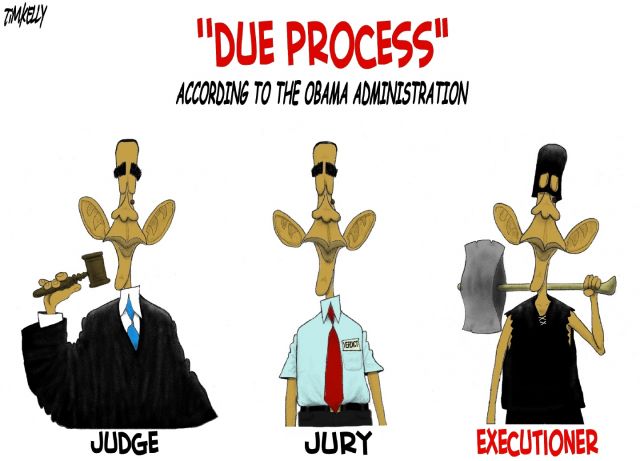
The case is appealed to a federal court of appeals.
73.

What is "due process of law?"

a)

Government must not enact too many laws or regulations.

b)

Office holders and officials must be bound by the laws.

c)

The process of citizens following the law.

d)

Government must act fairly and in accordance with established rules.
74.

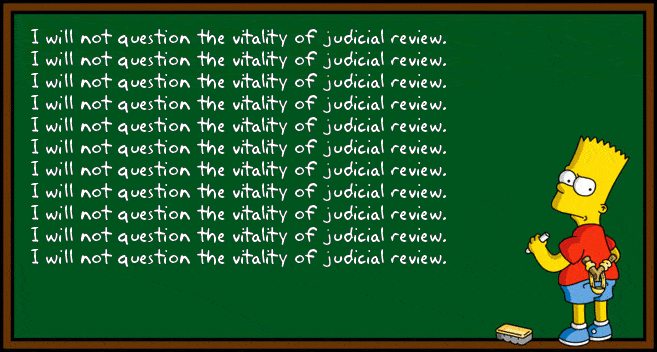
Choose the answer(s) that are true of Judicial Review.

a)

Allows the US Supreme Court the authority to choose which cases they will hear.

b)

Is the result of Marbury v Madison

c)

The actions of the executive and legislative branches of government are subject to review.

d)

Gives the US Supreme Court authority to rule actions unconstitutional.

75.

Political Parties nominate candidates to run in the general election primarily through which method?

a)

Bed Sheet Ballot

b)

Runoff

c)

Direct Primary

d)

Caucus

76.

Who is in charge of creating most election laws?

a)

Local Government

b)

The Federal Government

c)

The State

d)

None of the Above

77.

Hard money is money that is given directly to the candidates. (T) (F)

a)

T

b)

F

78.
Which series shows the correct sequence of steps to becoming President of the United States?
a)
Convention, Primary, General Election, Inauguration
b)
Primary, Convention, General Election, Electoral College Vote
c)
Primary, Electoral College Vote, General Election, Convention
d)
Primary, General Election, Inauguration, Electoral College Vote
79.
Which of these is an accurate difference between Primaries and Caucuses
a)
Primaries are to elect party candidates while caucuses are during the general election
b)
Caucuses are to elect party candidates while Primaries are during the general election
c)
Caucuses are a public voting system where candidates are discussed and Primaries are formal voting
d)
Primaries and Caucuses are both used during the general election
80.

Soft money is money that is donated to political party for the purpose of directly financing a specific candidate's campaign and is essentially unregulated.

a)

True

b)

False

81.

Most campaign financing for elections comes in the form of

a)

small contributions from individuals

b)

large contributions from individuals

c)

political action commitees

d)

self financing

82.
Even though Washington, D.C. is not a state, it has three electoral votes.
a)
True
b)
False
83.
In order to vote in U.S. elections, you must be 18 years old, a resident of the state you’re voting in, a citizen of the U.S., and what?
a)
A citizen in good standing
b)
Current on your taxes
c)
Registered to vote
d)
A registered member of a political party
84.
Selecting people to run for office represents which job of political parties?
a)
Nominating
b)
Watchdog
c)
Spoiler
d)
Informing the public
85.

Consider the following statements on parties :

A. Political parties do not enjoy much trust among the people.

B. Parties are often rocked by scandals involving top party leaders.

C. Parties are not necessary to run governments.

Which of the statements given above are correct?

a)

A, B and C

b)

A and B

c)

B and C

d)

A and C

86.

Which one of the following is not a function of political parties?

a)

Parties play a decisive role in making laws for the country

b)

Parties do not shape public opinion

c)

Parties contest elections

d)

Parties put forward different policies and programs

87.
People who join together to pursue a common interest in influencing legislation are known as what?
a)
Political Action Committees (PAC's)
b)
Public Opinion
c)
Mass Media
d)
Interest Groups
88.
The media typically is _______ when reporting the news.
a)
Liberal
b)
Biased
c)
Conservative
d)
Unbiased
89.

Mark the benefits to social media FOR the public during elections.

a)

Allows voters to understand a candidate's stances (positions)

b)

Can take away attention from an issue

c)

Makes news

d)

Provides additional resources and information about an election and candidate

90.

Most Americans get their news from ___________________.

a)

Newspapers

b)

Magazines

c)

Twitter

d)

Television

91.

The purpose of polls is to_______________________.

a)

elect candidates

b)

campaign for candidates

c)

know how voters feel about an issues or candidate

92.

To draw districts so that one political party will maintain power is called _______________________.

a)

overpopulation

b)

gerrymandering

c)

election day

d)

redistricting

93.
Which example represents the media acting as watchdog?
a)
a.  A journalist discovers that an office holder held a hearing.
b)
A journalist discovers that an office holder accepted a bribe
c)
a.  A journalist discovers that an office holder decided to retire.
d)
a.  A journalist discovers that an office holder voted against a bill.
94.
Which source would give the most accurate information about the views held by an incumbent running for Congress?
a)
Special interest group ratings of that Congress member
b)
A television commercial sponsored by a political party
c)
The voting record of the candidate while in Congress
d)
Flyers sent through the mail by the Candidate
95.
An individual has the right to freedom until
a)
they use their rights to promote patriotism
b)
their freedom effects someone else
c)
they gain too much power
d)
the government intervenes
96.

As a result of States violating citizens rights, which amendment and clause did the US Government pass?

a)

1st / Establishment Clause

b)

1st / Clear & Present Danger Clause

c)

6th / Necessary & Proper Clause

d)

14th / Due Process Clause

97.

"Unreasonable Search and Seizure" is protected by which amendment?

a)

3

b)

4

c)

5

d)

8

98.
A group of people holding picket signs and protesting are exercising their right to:
a)
Civil Disobedience
b)
Assembly and Free Speech
c)
Sedition
d)
Freedom of Religion
99.

Which answer contains the correct amendments protecting rights of the accused?

a)

3rd, 5th, 8th, 9th

b)

1st, 4th, 5th 6th

c)

4th, 5th, 6th, 7th

d)

4th, 5th, 6th, 8th

100.

When does “due process” begin?

a)

At the start of the trial

b)

After the accused is arrested

c)

From the moment a person comes into contact with law enforcement

d)

As soon as the accused says "I didn't do it."

101.

Civil Liberties are?

a)

unwritten but widely agreed upon

b)

rights to vote and participate in American democracy

c)

laws that provide and set limits on ones freedoms

d)

individual legal and constitutional protections against the government

102.

The incorporation doctrine involves?

a)

the application of the Bill of Rights to the states

b)

the governments power to regulate corporations

c)

the extension of judicial review to the state courts

d)

the interpretation of the commerce clause

103.
The fundamental laws each State are
a)
established by the governor
b)
determined by the State courts
c)
never subject to change
d)
the State Constitution 
104.
As State governments have increased funding to public schools, they have also
a)
shifted the responsibility for maintaining high quality in schools to local governments
b)
increased their involvement in education
c)
reduced property taxes
d)
reduced the number of public schools
105.
In the federal system, counties are major units of local government that
a)
comprise the third level of government
b)
are on the same level of government as the States
c)
share some powers with the National Government and the States
d)
are subordinate to State government
106.
The main purpose of a city's charter is to
a)
establish the city as a legal body
b)
set out the city's basic laws
c)
provide a forum for public debate
d)
provided for the election of city officers
107.
Property taxes are largely local taxes in part because
a)
States have already imposed income and sales taxes
b)
otherwise, they would be regressive taxes
c)
it is easiest for local governments to assess property
d)
why not
108.

All local governments receive their powers from the state governments.

a)

True

b)

False

109.
What are powers that are left for the states called?
a)
Enumerated Powers
b)
Reserved Powers
c)
Concurrent Powers
d)
Expressed Powers
110.
What is the head of the executive branch titled at the local level?
a)
President
b)
Governor
c)
Mayor
