
 Worksheets
3rd 6 Weeks Science Review
Total questions: 43
Worksheet time: 43mins
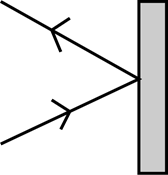
In the illustration, the light ray striking the object is-


A student uses a spring scale to pull a 50-gram block horizontally across a wood desk. Then the student pulls the block the same distance across surfaces of carpet, sandpaper, and glass. Which question is this investigation most likely designed to answer? (5.6D)
How do block of different sizes react to force?
How do different surfaces affect the amount of force needed to move a block?
How do blocks affect spring scales?
How does the mass of a block change when it is pulled across a desk?


A spring scale is a tool used in science experiments. What does it measure?
the amount of force needed to move an object
the amount of mass to move an object
how much gravity pushes on an object
to measure the temperature of an area
water, ice, wind or gravity
moves fragments of rock
and soil.
water, ice, wind or gravity
deposit rock sediments
and soil in a new place.
Earth’s crust into smaller
and smaller pieces.
water, ice, wind or gravity
moves fragments of rock
and soil.
water, ice, wind or gravity
deposit rock sediments
and soil in a new place.
Earth’s crust into smaller
and smaller pieces.
The condition in the atmosphere over a short period of time is called
climate
weather
global warming
atmospheric pressure


New Hampshire recorded 12 inches of snow yesterday.
Florida had its hottest day so far this year at 97 degrees Fahrenheit.
It is usually mild during the winter in the southern states of the United States.
Oklahoma saw 2 tornadoes, 57 lightning strikes, 9 inches of rain, and high winds every day this week.
In the U.S. northern states, each winter brings cold temperatures and snowy conditions.
The average temperature in Hawaii during the winter is between 72 and 82 degrees. This doesn’t change from year to year.
In Georgia, the summer months are characterized by hot temperatures, low rainfall, and high humidity.
There was a light drizzle this morning as I left for school, but it cleared to sunny skies by lunchtime.
Many areas like the Sahara Desert and Death Valley, California remain very dry for most of the year.

A force is a
Push
Pull
Both Push or Pull
Neither Push or Pull
A push or pull that causes an object to move, stop, or change direction.
Force
Movement
Direction
Position
Where an object is located in space.
Force
Movement
Direction
Position

A student placed a pencil in a cup of water. The pencil appears broken because light
always travels in a straight line.
bends when it passes through water.
makes the water in the glass evaporate.
reflects the pencil on the water's surface.
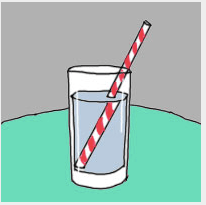
Why does the straw appear to be bent?
light is reflected
light is absorbed
light is turned
light is refracted
How are fossil fuels formed?
They are made in factories
Dead plants and animals died millions of years ago and were buried under heat and pressure
Dead plants were buried under heat and pressure
Dead animals were buried under heat and pressure

The pictures show layers deposited on dead plants and animals. If millions of years past, what will most likely happen to the dead plants and animals?
They were eaten by scavengers
They become fossil fuels
They are washed away by water
They dissolve into the water

This part of the rock forming process is from the weight of new sediment layers being deposited on top of older layers.
erosion
compaction
pressure
weathering
When sediments are under pressure from other sediments above them, this is called . . .
cementation
compaction
weathering
heat and pressure
Which diagram models the process of compaction leading to the formation of sedimentary rock? (5.7A)


The Grand Canyon is a steep-sided cut in Earth's surface that is 277 miles long and up to a mile deep. It was formed by the force of
water
ice
wind
all of these
What is a narrow opening in the Earth created by the movement of wind and water?
a volcano
an earthquake
a canyon
a delta

The photograph shows a valley. Which agent of erosion most likely produced this valley's shape?
blowing wind
ocean waves
moving ice
running water

Which of the words below correctly names the landform?
canyon
plain
valley

