wayground logo

Free Printable Worksheets

Font size

S
M
L
XL
Worksheets

water

Total questions: 73

Worksheet time: 46mins

Name
Class
Date
1.

Of the 15 water scarce countries, 12 are in...

a)

United Kingdom and Canada

b)

America and Canada

c)

Southwest Asia and North Africa

d)

Russia and Germany

2.

Water pollution and waste plays a big factor in water shortage.

a)

True

b)

False

3.

Which answers are below are the reasons for unequal distribution?

a)

Being rich or poor

b)

There is no modern plumbing access to water

c)

fresh water access due to contaminated water and walking many miles to water source

d)

Water is often wasted for building projects and irrigation

e)

All the above

4.

What is the process that brings water to the farm areas where farmers do not have access to water?

a)

An extra long soaker hose

b)

hydroelectric power

c)

irrigation

d)

desalination

5.

What is the process that electricity is produced from energy of running water?

a)

desalination

b)

hydroelectric power

c)

irrigation

d)

windmills

6.

A process that removes salt from the ocean water.

a)

desalination

b)

hydroelectricity

c)

irrigation

d)

fossil water

7.
The chemical compound of water is
a)
HO
b)
H2O
c)
H3O
d)
HO2
8.
Water is a universal solvent
a)
True
b)
False
9.
A Compound that is being dissolved is called a
a)
Solution
b)
Solute
c)
Solvent
d)
Suspension
10.
A solvent is...
a)
substance into which the solute dissolves
b)
a compound being dissolved
c)
a substance that does not dissolve
d)
None of the above
11.
Water is a universal solvent because it...
a)
It can be found anywhere
b)
It freezes when it gets cold
c)
floats when frozen
d)
Dissolves most substances
12.
True or false, water is a polar molecule? 
a)
True 
b)
False 
13.
Approximately what percentage of the water on Earth is freshwater?
a)
0.1%
b)
2.6%
c)
50%
d)
97%
14.
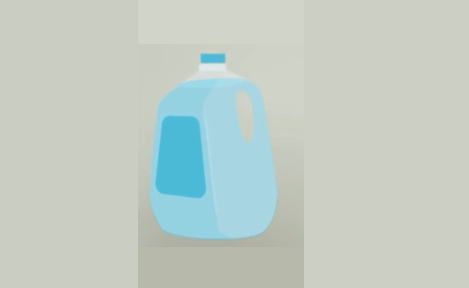
If all of the Earth's water were placed into a gallon jug, the freshwater would equal _____
a)
a single teaspoon
b)
a single tablespoon
c)
half a cup
d)
a single cup
15.
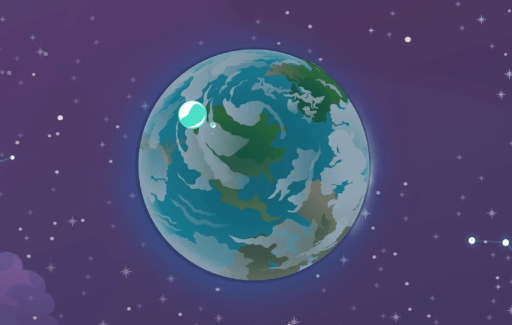
Of the three blue dots in the image, the biggest one represents _____
a)
all of the water on our planet
b)
all of the salt water on our planet
c)
all of the liquid fresh water on our planet
d)
all of the surface freshwater that is accessible
16.
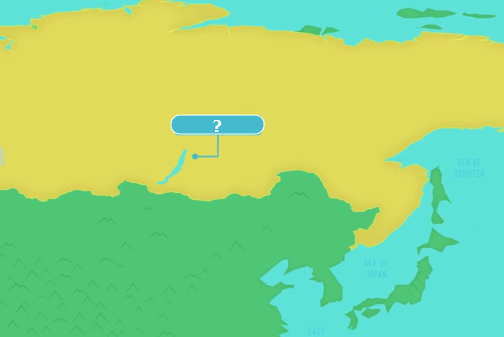
Holding about one-fifth of the world's freshwater, what is the deepest lake in the world?
a)
North America's Lake Superior
b)
Africa's Lake Chad
c)
Russia's Lake Baikal
d)
Africa's Lake Tanganyika
17.
Living things can survive with limited freshwater, but only if they can _____
a)
store large amounts of water
b)
adapt to their surroundings
c)
reflect sunlight
d)
change the color of their hair
18.
Letter A is?
a)
evaporation
b)
transpiration
c)
condensation
d)
accumulation 
19.
Letter B is?
a)
evaporation
b)
transpiration
c)
condensation
d)
accumulation
20.
Letter C is?
a)
precipitation
b)
transpiration
c)
condensation
d)
accumulation
21.
Letter D is?
a)
precipitation
b)
transpiration
c)
condensation
d)
run off
22.
Letter D is?
a)
precipitation
b)
transpiration
c)
condensation
d)
run off
23.
Letter E is?
a)
precipitation
b)
accumulation
c)
condensation
d)
run off
24.
Letter F is?
a)
precipitation
b)
accumulation
c)
condensation
d)
run off
25.
A water molecule looks like _____.
a)
smiley face
b)
mickey mouse
c)
a long chain of atoms
d)
grumpy cat
26.
How many hydrogen atoms are in one molecule of water?
a)
1
b)
2
c)
3
d)
4
27.
Which letter represents hydrogen?
a)
A
b)
B
c)
C
d)
D
28.
Which letter represents oxygen?
a)
A
b)
B
c)
C
d)
D
29.
Because water has a positive and a negative end, and is attracted to other molecules it is called a ______ molecule.
a)
mickey mouse
b)
polar (tiny magnet)
c)
special
d)
miracle
30.
The property where water molecules are attracted to other water molecules.
a)
adhesion
b)
capillary action
c)
cohesion
d)
universal solvent
31.
The property where water molecules are attracted to other types of molecules (surfaces).
a)
adhesion
b)
capillary action
c)
cohesion
d)
universal solvent
32.

Water is a what type of resource?

a)

renewable resource

b)

non-renewable resource

c)

continuous resource

33.
Where most freshwater is stored is in _________.
a)
Groundwater
b)
pH
c)
Glaciers
d)
Sea water
34.
Where 97% of Earth's water is stored?
a)
Glaciers
b)
pH
c)
Groundwater
d)
Sea water
35.

What is it called when creeks and smaller rivers join together to make a larger river?

a)

River Systems

b)

Topography

c)

Watershed

d)

Groundwater

36.

What is the relationship between groundwater and surface water?

a)

Surface water is found in lakes directly above underground water sources.

b)

Groundwater filters through the soil to form surface water.

c)

There is no relationship between surface and groundwater; they form independently.

d)

Surface water percolates through the soil to form groundwater.

37.

What is an inexpensive solution to providing everyone with more fresh water to use?

a)

desalination

b)

water conservation

c)

drilling more wells into aquifers

d)

building more dams

38.
Snow, sleet, hail, and rain are all examples of  ________________. 
a)
evaporation
b)
condensation
c)
accumulation
d)
precipitation
39.
The water cycle has...
a)
a beginning and an end. 
b)
no beginning and no end. 
c)
only a beginning. 
d)
only an end. 
40.
What is condensation?
a)
the change of water from a gas to a liquid. 
b)
the change of water from a liquid to a gas. 
c)
the change of water from a solid to a gas. 
d)
the change of water from gas to a solid. 
41.
What are the three states of water found on Earth?
a)
solid, liquid & gas
b)
oceans, lakes & streams
c)
evaporation, transpiration
d)
rain, sleet & hail
42.
When water _________, dew and clouds can form.
a)
Melts
b)
Evaporates
c)
Condenses
d)
Precipitates
43.
Evaporation occurs when water changes into ________.
a)
transpiration
b)
snow
c)
solid
d)
vapor
44.
Which of the following is the reason why ice can float?
a)
The air bubbles in the frozen water make it rise.
b)
The water molecules in ice are closer together and more dense than liquid water.
c)
When water molecules expand, they take up more space and are less dense.
d)
All frozen things will float in liquid water.
45.
Water is made up of these two colorless, odorless gases.
a)
Helium and Oxygen
b)
Oxygen and Carbon Dioxide
c)
Hydrogen and Helium
d)
Hydrogen and Oxygen
46.
The smallest amount of water is called a(n) ________.
a)
atom
b)
molecule
c)
pair
d)
drop
47.
Which of these is a method for conserving fresh water?
a)
Taking long showers and baths
b)
Taking short showers and baths
c)
Leaving the water running while brushing your teeth
d)
Washing your car with a running hose
48.
If you dissolve blue paint powder into water, the paint powder is the...
a)
ion
b)
solute
c)
solution
d)
solvent
49.

Hardness in water is caused by the presence of:

a)

Sodium chloride

b)

Sodium carbonate

c)

Calcium chloride

d)

Potassium nitrate

50.

Permanent hardness in water is caused by the presence of:

a)

Calcium bicarbonate

b)

Magnesium sulfate

c)

Both of them

d)

None of them

51.

Water is hard when it contains:

a)

Acid solution

b)

Precipitate in suspension

c)

Dissolved sodium salts

d)

Dissolved Ca and Mg salts

52.

Swimming for a long time in salt water makes the skin of ones fingertips wrinkled. Which one of the following properties is responsible for this observation?

a)

Osmosis

b)

Dialysis

c)

Electrodialysis

d)

Coagulation

53.

The process of removing extra common salt from water is called:

a)

Ionization

b)

Softening

c)

Disinfections

d)

Desalination

54.
Soft water is water that;
a)
Does not lather
b)
Lathers with difficulty
c)
Lathers easily
d)
Does not form bubbles
55.
Water that runs over limestone rock forms.....
a)
temporarily permanently soft water
b)
Soft water
c)
Permanently hard water
d)
Temporary hard water
56.
If water contains calcium and hydrogen carbonate ions, it is described as....
a)
temporarily permanently soft water
b)
Soft water
c)
Permanently hard water
d)
Temporary hard water
57.
If water contains calcium and sulphate ions, it is described as....
a)
temporarily permanently soft water
b)
Soft water
c)
Permanently hard water
d)
Temporary hard water
58.
Boiling can be used to make which type (s) of water soft.
a)
Temporary and  permanent hard water
b)
Soft water
c)
Permanently hard water
d)
Temporary hard water
59.
Washing Soda is called..
a)
Sodium carbonate
b)
Sodium hydrogen carbonate 
c)
Sodium chloride
d)
Washing powder
60.
"Turbidity" is the measure of a body of water's ____________________________.
a)
cloudiness
b)
eutrophication
c)
temperature change
d)
flocculation
61.

Which of the following does not cause the permanent hardness in water?

a)

Nitrates

b)

Sulphates

c)

Chlorides

d)

Bicarbonates

62.

In _____________ when the water is heated then the soluble salts turns into insoluble ones and removed by filtration.

a)

Temporary hardness

b)

Permanent hardness

c)

Non-carbonate

d)

Non-alkaline

63.

Hardness in water is caused by the presence of:

a)
  1. chlorides and sulphates of calcium and magnesium
b)
  1. carbonates and bicarbonates of zinc and iron
c)
  1. chlorides and sulphates of aluminium
d)
  1. carbonates and chlorides of sodium
64.

What is water hardness?

a)

It refers to the level of minerals in the water

b)

It refers to how frozen water is

c)

It refers to how deep in the ground the water source is

d)

It refers to how healthy water is

65.

What unwanted material can hard water produce in heating appliances, e.g. kettles and irons?

a)

Scum

b)

Scale

c)

Scurry

d)

Soap

66.

Soft water does not contain the dissolved substances that hard water does. It is possible to soften hard water by removing the offending ions. Pick the two methods for softening water.

a)

Using baking soda and using an ion-exchange column

b)

Using water soda and using an element-exchange column

c)

Using washing soda and using an ion-exchange column

d)

Using washing powder and using an ion-exchange column

e)

Both 3 and 4

67.

There is a possible health advantage to drinking hard water. What is it?

a)

It could reduce the incidence of obesity

b)

It could reduce the incidence of strokes

c)

It could reduce the incidence of diabetes

d)

It could reduce the incidence of heart disease

68.

The advantage of detergents over soap is:

a)

detergents are soluble in water

b)

detergents could not give much lather

c)

detergents give lather even inn hard water

d)

soap gives lather only with soft water.

69.

Scale formation in boiler causes:

a)

no loss of heat

b)

wastage of heat

c)

increase in efficiency

d)

none of the above

70.

This is formed when calcium ions react with soap

a)

lather

b)

scum

c)

bubbles

71.

Flask A contains hard water.

Some of this water was poured into the tube containing ion-exchange resin.

The water that passed through the resin was collected in flask B.

Which one of the following would you use to compare the hardness of water samples in flasks A and B?

a)

Copper sulfate solution

b)

Universal indicator solution

c)

Limewater

d)

Soap solution

72.

Which one of the following compounds does NOT cause hardness in water?

a)

Sodium chloride

b)

Magnesium sulfate

c)

Magnesium chloride

d)

Calcium chloride

73.

Which one of the following is NOT a property of hard water?

a)

It lathers easily with soap solution

b)

It is good for the brewing industry

c)

It causes limescale in kettles

d)

It has a nice taste