wayground logo

Free Printable Worksheets

NEW

Font size

S
M
L
XL
Worksheets

PRE-Heat Transfer

Total questions: 61

Worksheet time: 31mins

Name
Class
Date
1.
 Why do we wear sweaters in cold weather?
a)
To keep cold out.
b)
To generate heat.
c)
To reduce heat loss.
d)
All of the above.
2.
As water in a freezer turns into ice,
a)
the water absorbs energy from the air in the freezer.
b)
the water absorbs the coldness from the air in the freezer.
c)
the freezer air absorbs heat from the water.
d)
the water neither absorbs nor releases energy
3.
On a warm sunny day, you will feel cooler wearing light colored clothes because they...
a)
reflect more radiated heat energy.
b)
prevent sweating.
c)
are not as heavy as dark clothes.
d)
let more air in.
4.
On a warm sunny day, you will feel cooler wearing light colored clothes because they...
a)
reflect more radiated heat energy.
b)
prevent sweating.
c)
are not as heavy as dark clothes.
d)
let more air in.
5.

On a hot day, the upstairs rooms in a house are usually hotter than the downstairs rooms. Why?

a)

Cool air is less dense than hot air.

b)

Warm air rises and cool air sinks.

c)

The roof insulation warms the air.

d)

Heat rises.

6.
1.  You have a can of soda in your lunchbox that you want to keep cold. Which material will work best to keep it cold?
a)
Aluminum foil wrapped around the soda because metals transfer heat energy easily.
b)
A paper towel wrapped around the soda because paper soaks up the moisture.
c)
Wax paper wrapped around the soda because wax paper traps the moisture.
d)
Your wool sweater wrapped around the soda because wool traps air.
7.
When you hold a metal coat hanger in a camp fire to roast a marshmallow, the coat hanger might become too hot to hold. Why might the coat hanger get too hot?
a)
The heat radiates along the coat hanger.
b)
The heat builds up near the flame until it can’t hold it anymore and then moves     along the coat hanger.
c)
Metal atoms vibrate with more energy when they get hot, and they collide with   atoms near them, which causes the neighboring atoms to vibrate.
d)
Since metals melt in fire, they react strongly to fire and get hot easily.
8.
An aluminum plate and a plastic plate have been in the freezer all night long. When you remove them the next morning,
a)
The plates are the same temperature.
b)
The plastic plate has a higher temperature.
c)
The plastic plate has a lower temperature.
d)
The aluminum plate has a lower temperature.
9.
When placed in direct sunlight, which object will absorb the most radiated heat energy?
a)
A white sweater
b)
A snowball
c)
Aluminum foil
d)
A black sweater
10.
  You take a cold can of soda off of a counter top. The counter top underneath the can feels colder than the rest of the counter. Which of the following explains this occurrence?
a)
a.  The cold has been transferred from the soda to the counter.
b)
b.  There is no heat energy left in the counter beneath the can.
c)
c.  Some heat has been transferred from the counter to the soda.
d)
d.  The heat beneath the can moves away into other parts of the countertop.
11.
 After cooking an egg in boiling water, you cool the egg by putting it into a bowl of cold water. Which of the following explains the egg’s cooling process?
a)
a.  Temperature is transferred from the egg to the water.
b)
  b.  Cold moves from the water into the egg.
c)
c.  Energy is transferred from the water to the egg. 
d)
d.  Energy is transferred from the egg to the water.
12.
Heat is a measure of…
a)
Cold
b)
Kinetic Energy
c)
Light Energy
d)
Nothing
13.
What is the only method of heat transfer that DOESN’T require matter?
a)
Conduction
b)
Convection
c)
Radiation
14.
What method of heat transfer uses direct contact? 
a)
Conduction
b)
Convection
c)
Radiation
15.
What method of heat transfer uses fluids?
a)
Radiation
b)
Conduction
c)
Convection
16.
The three types of heat transfer are...
a)
spilling hot soup in your lap
b)
hot, hotter, and hottest
c)
conduction, convection and radiation
d)
conduction, convection and tickling
17.
When you hold your hands by a fire what type of heat transfer is warming your hands?
a)
convection
b)
conduction
c)
radiation
d)
dance magic
18.
In class we put some candles on a medal spoon. We help one end of the spoon over a flame and watched the heat travel through the spoon and melt the candles on the other side. What kind of heat transfer was this?
a)
conduction
b)
radiation
c)
convection
d)
Harry Potter
19.
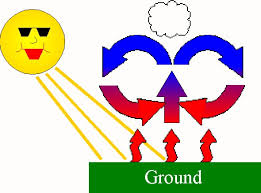
Everyday the earth is warmed by the sun. What kind of heat transfer is taking place in this process?
a)
radiation
b)
conduction
c)
convection
d)
what is a 'sun'? 
20.

_____________ occurs when warm air rises and is replaced by cooler air

a)

convection

b)

conduction

c)

radiation

21.
Which example involves heat transfer through radiation
a)
sitting next to a fire
b)
adding ice to coffee
c)
heating a frying pan on a stove
d)
warm air rising
22.
Warm air rises and the cool air sinks demonstrates this type of heat transfer. 
a)
conduction
b)
convection
c)
radiation
d)
Insolation 
23.
Ironing a shirt is an example of...
a)
condensation
b)
conduction
c)
convection
d)
radiation
24.
Hot coffee is stirred with a spoon; the spoon gets hot due to
a)
conduction
b)
convection
c)
radiation
25.
"Lava lamps" contain colored liquids. These liquids form globs that rise to the top due to
a)
conduction
b)
convection
c)
radiation
26.
Near the ceiling of a room the air is warmer; the warm air rises because of
a)
conduction
b)
convection
c)
radiation
27.
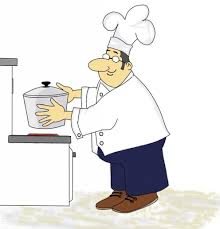
The man goes to take the hot pot off the stove with his bare hands.
a)
conduction
b)
convection
c)
radiation
28.
What happens when ice cubes melt in a glass?
a)
Heat travels from the ice to the warmer water.
b)
No energy is transferred.
c)
Heat is transferred from the warmer water to the ice cubes.
d)
The water warms up due to the humidity
29.
Johnny accidentally grabbed the handle of the hot pot.
a)
conduction
b)
convection
c)
radiation
30.
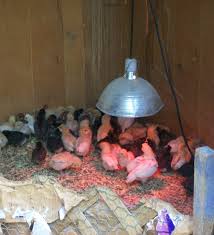
The baby chickens are kept warm from the heat lamps demonstrates this type of heat transfer. 
a)
conduction
b)
convection
c)
radiation
31.
Is iron a conductor or insulator?
a)
Conductor
b)
Insulator
32.
Which of the following is NOT an insulator?
a)
Wool
b)
Plastic
c)
Copper
d)
Styrofoam
33.
Is wood a conductor or insulator?
a)
Conductor
b)
Insulator
34.
A great conductor of energy is:
a)
wood
b)
plastic
c)
metal
d)
cloth
35.
Conductors are materials that...
a)
Allow heat to pass through
b)
Stop heat from passing through
c)
Allow cold to pass through
d)
Stop cold from passing through
36.
An object that doesn't conduct heat well is known as:
a)
a conductor
b)
an insulator
37.

What happens when a cold drink sits in a hot room?

a)

It remains cold

b)

It gets warmer

c)

It starts boiling

d)

It starts to freeze

38.

Which of the following best describes temperature?

a)

Number of molecules

b)

Motion of molecules

c)

Size of molecules

d)

Type of molecules

39.

When two things are the same temperature:

a)

They have the same number of molecules

b)

Their molecules stop moving

c)

Their molecules move at the same average speed

d)

Heat transfer between the two things stops

40.

When you heat a pot on a stove, the handle gets warm. Which type of heat transfer is responsible?

a)

Conduction

b)

Radiation

c)

Convection

d)

All of the above

41.

Heat from the Sun reaches Earth through which type of heat transfer?

a)

Conduction

b)

Radiation

c)

Convection

d)

All of the above

42.

Convection currents occur:

a)

Only in liquids

b)

When a dense substance is warmer than a less dense substance

c)

In both liquids and gases

d)

Weakly in solids

43.

Hot water rises and cold water sinks. Is this:

a)

Convection

b)

Conduction

c)

Radiation

44.

Stir frying vegetables is an example of

a)

Convection

b)

Conduction

c)

Radiation

45.

A spoon in a cup of hot soup becomes warmer

a)

Convection

b)

Conduction

c)

Radiation

46.

Grilling Hamburgers OVER a charcoal flame.

a)

Convection

b)

Conduction

c)

Radiation

47.

A hot air balloon rises because of

a)

Convection

b)

Conduction

c)

Radiation

48.

You feel the heat from a campfire

a)

Convection

b)

Conduction

c)

Radiation

49.

A raw egg begins to fry as it hits a heated frying pan

a)

Convection

b)

Conduction

c)

Radiation

50.
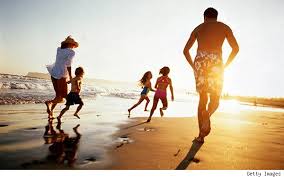
The sun shines down on this family as the play on the beach.
a)
conduction
b)
convection
c)
radiation
51.
A group of friends gather around a fire to stay warm.
a)
conduction
b)
convection
c)
radiation
52.
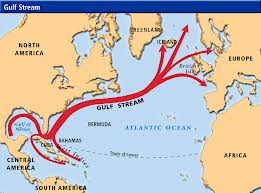
The Gulf Stream is a current that brings warm ocean water from the south to the north.
a)
conduction
b)
convection
c)
radiation
53.

How does heat move?

a)

from a warmer to a cooler object

b)

from a cooler to a warmer object

c)

toward a hot object

d)

away from a cold object

54.

How is energy from the Sun transferred?

a)

by radiation

b)

by conduction

c)

by convection

d)

by the force of gravity

55.

Heat from which of these causes convection currents inside the Earth?

a)

crust

b)

crust and mantle

c)

crust and core

d)

mantle and core

56.

Cold water has ______________ density than warm water.

a)

less

b)

more

c)

the same

57.

When you touch hot sand, heat is transferred by _________ to your skin.

a)

conduction

b)

convection

c)

radiation

58.

_____________, convection, and conduction are the three types of heat transfer.

a)

Conveyance

b)

Radiation

c)

Translocation

59.
Conduction= 
a)
physical contact
b)
warm air rising
c)
heat moving through empty space
d)
say what?
60.
Radiation= 
a)
physical contact
b)
warm air rising
c)
heat moving through empty space
d)
say what?
61.
Convection= 
a)
physical contact
b)
warm air rising
c)
heat moving through empty space
d)
say what?