Worksheets
Life Science 5th Grade
Total questions: 56
Worksheet time: 49mins
A dog and a hamster can both be classified as (a) because they have a backbone.
Which of the following pets are vertebrates? Check all that apply.
hamster
dog
lizard
hermit crab
snake
A student went outside to classify common plants found in her backyard. The student came across a tree and looked down. Near the bottom of the tree, there was a low growing plant. She picked up the damp plant and it peeled off from the tree and noticed there was just fuzz underneath the plant.
Which plant could the low-growing plant be classified with?
The low growing plant can be classified with the pine tree because this low growing plant can be found near the bottom of this tree.
The low growing plant can be classified with an apple tree because they both produce seeds from flowers.
The low growing plant can be classified with fern because they both do not produce seeds.
The low growing plant can be classified with algae because they both do not produce seeds nor do they have roots, leaves, and stems.

On a recent field trip to the zoo, Mr. Lee asked his students to take pictures of different animals. He asked his students to sort the animals into further groups.
How could the students below develop a model to classify their animals?
Student B has a reptile because it has dry scaly skin and breathes with lungs. Student C has a fish because it has scales and breathes with gills. Students A and D have an amphibian since it starts with gills and develops lungs.
Students A and B have reptiles because they have dry scaly skin and breathe with lungs. Student C has a fish because it has scales and breathes with gills. Student D has an amphibian since it starts with gills and develops lungs.
An animal's qualities are listed below:
ANIMAL'S QUALITIES
● Moist skin
● Has four legs
● Lays eggs
● Breathes with lungs and gills
● Cold blooded
What type of animal is described in the box?
amphibian
fish
mammal
reptile
bird
A biologist observes that a plant specimen has
no true roots, stems, or leaves. What term would
she use to describe this plant?
vascular
flowering
wilted
non-vascular
A vascular plant that produces seeds on the scales of female cones
Angiosperm
Gymnosperm
Monocot
Dicot
A flower-producing vascular plant in which the seed is enclosed in a fruit.
Angiosperm
Gymnosperm
Conifer
Fern

A flower-producing vascular plant in which the seed is enclosed in a fruit.
Angiosperm
Gymnosperm
Conifer
Fern
Which structure houses a plant's pollen prior to pollination?


How does the pollination of most trees and grasses differ from the pollination of flowers?
Trees and grasses self-pollinate; flowers must get pollen from other flowers
Trees and grasses pollinate in the springtime; flowers pollinate in the fall
Trees and grasses are often pollinated by wind; flowers are often pollinated by insects
Trees and grasses have large, heavy grains of pollen; flowers have small, fine grains of pollen
What part of a plant produces pollen?
Style
Ovule
Anther
Filament
Is the pistil the male or female part of the plant?
Female
Male
What part of the plant makes seeds?
Filament
Ovule
Anther
Style
Why is pollen so important?
Its used to make food
It leads to fruit and seeds to make more plants
Its not important
Its used to make honey
Germination is _________________________________.
when a seed starts to grow
when an egg and pollen join together
when pollen moves stamen to stigma
when a plant makes its own food.
When an animals transforms it's body during it's life cycle...
Nymph
Metamorphosis
Larva
Heredity
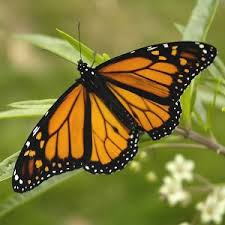

What is the first stage of a frog's life cycle?

How many stages does a complete metamorphosis have?
1
2
3
4
the stage in which the young animal looks just like the adult.
Nymph
Metamorphosis
Larva
Heredity

How many stages are in an incomplete life cycle?
1
2
3
4
Which correctly lists the stages of incomplete metamorphosis in order?
egg, nymph, adult
egg, adult, nymph
nymph, adult, egg
adult, nymph, egg

Complete or Incomplete Metamorphosis?
Complete because it has 3 stages
Complete because it has 4 stages
Incomplete because it has 3 stages
Incomplete because it has 4 stages

Which type of metamorphosis is shown?
complete metamorphosis
incomplete metamorphosis

Which stage does this represent?
egg
larva
nymph
pupa
Most microorganisms cannot be seen without a
telescope
periscope
microscope
Why should cooked and uncooked food be stored separately?
Because bacteria only like cooked food
Because bacteria only like uncooked food
To stop bacteria from spreading to one another
Which two of these are not caused by a microorganism?
Salmonella
Flu
Sprained Ankle
Tooth Decay
What does an antibiotic do?
It kills viruses
It kills all microorganisms
It causes diseases such as malaria
It kills bacteria

What is monster # 1 ?
Alienus quadlegicus
Alienus haircus
Alienus Tritoothicus
Alienus Blobicus
What is monster # 3 ?
Alienus Fuzzicus
Alienus Stripicus
Alienus Tritoothicus
Alienus Blobicus
What is monster # 4 ?
Alienus Fuzzicus
Alienus Stripicus
Alienus Quadlegicus
Alienus Blobicus
What is monster # 2 ?
Alienus Fuzzicus
Alienus Stripicus
Alienus Tritoothicus
Alienus Blobicus
What is monster # 5 ?
Alienus Fuzzicus
Alienus Tritoothicus
Alienus Hairicus
Alienus Blobicus