
Font size
 Worksheets
Introduction to Cells
Total questions: 83
Worksheet time: 1hrs 13mins
Which statement was NOT included in cell theory?
All living things are composed of cells.
Living cells come only from other living cells.
Each cell contains a cell membrane, cytoplasm, nucleus, mitochondria, and endoplasmic reticulum.
Cells are the smallest structure of living things that can perform the functions necessary for life.
Which instrument is credited for helping scientists develop cell theory?


This early cell theory scientist looked in a microscope and discovered "animalcules" in the gunk from his teeth and pond water.
Schleiden
Leeowenhoek
Hooke
Virchow
Schwann
Who discovered and named cells while looking at cork?
Captain Hook
Robert Hooke
Matthais Schleiden
Rudolf Virchow
What was Schleiden convinced of?
All plants are made of cells
All animals are made of cells
All cells are prokaryotic
None of the above
Who noted that all animals are made of cells and helped write the first two parts of cell theory?
Rudolf Virchow
Anton van Leeuwenhoek
Theodor Schwann
Robert Hooke
Who discovered that all cells come from other living cells and had research that lead to the last major principle of cell theory?
Matthias Schleiden
Theodore Schwann
Robert Hooke
Rudolf Virchow
These three scientists together helped come up with the second part of the cell theory (all living things are made of one or more cells). CHOOSE 3 ANSWERS
Schleiden
Leeowenhoek
Hooke
Virchow
Schwann

Robert Hooke, Anton van Leeuwenhoek, Theodor Schwann, Rudolf Virchow, and Matthias Schliden were all responsible for what theory?
The Theory of Gravity
The Theory of Relativity
The Cell Theory
The Theory of Continental Drift
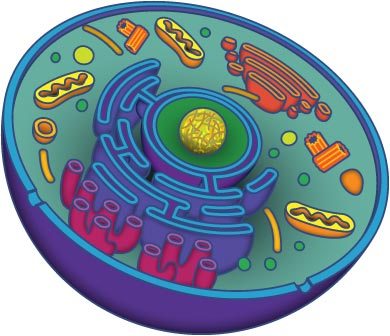
All living things are made up of...
cells
tissues
organ
organ systems
What is the basic structural and functional unit of all living things?
atom
cell
bacteria
animalcules
All cells -----
come from other dead cells
come from other living cells
crystallize out of the air

Who Invented the Microscope
Galloleo
Crazy Scientist
Zacharias Janssen
Hans Lippershey

Plants need water, sunlight, air and the right temperature to live.
True
False
What is the special tool that makes small things look larger?
ruler
microscope
microphone
speaker
What is another name for "changing with age"?
growing
responding
reproducing
painting
A plant ___ by bending toward sunlight.
grows
responds
reproduces
sleeps
All living things are ___.
happy
green
big
organisms
Which of these are living things?
animals
robots
bacteria
water
The building blocks of life are called ___.
Lego pieces
wood
books
cells
Birds reproduce by laying ___.
seeds
eggs
Organisms that are made of one cell are called ___.
bacteria
animals
plants
monsters
A Tiny ant is made of one cell.
True
False

Which characteristic is shown in the image?
Organisms grow and develop
Organisms react to stimuli
Organisms can adapt
Organisms use and obtain energy
Organisms are made up of cells

Which characteristic is shown in the image?
Organisms reproduce
Organisms react to stimuli
Organisms can adapt
Organisms use and obtain energy
Organisms are made up of cells

Which characteristic is shown in the image?
Organisms reproduce
Organisms react to stimuli
Organisms can adapt
Organisms use and obtain energy
Organisms are made up of cells

Which characteristic is shown in the image?
Organisms reproduce
Organisms react to stimuli
Organisms can adapt
Organisms use and obtain energy
Organisms are made up of cells

Which characteristic is shown in the image?
Organisms reproduce
Organisms react to stimuli
Organisms can adapt
Organisms use and obtain energy
Organisms are made up of cells

Which characteristic is shown in the image?
Organisms reproduce
Organisms react to stimuli
Organisms can adapt
Organisms use and obtain energy
Organisms are made up of cells

In the image shown, what is the response?
the plant bending towards the light
the light source
In the image shown, what is the stimulus?
the plant bending towards the light
the light source

In the image shown, what is the response?
burning hot pan
taking hand away
In the image shown, what is the stimulus?
burning hot pan
taking hand away
Choose the statement(s) TRUE for ALL organisms
have cells
can move
grow or develop
use sunlight to make food
have features that help them adapt
Any living thing is called a _____________.
organism
cell
matter
atom
The basic unit of living things are known as ____________.
cells
matter
atom
organism
Identify all of the following that are living.
Volcano
Tree
Sun
Fungus
Identify all of the following that are nonliving.
Rock
Oxygen
Bacteria
Battery

Which characteristic of living things is represented in the picture?
Maintains homeostasis
Shares similar chemicals
Responds to stimuli
Made of cells

Which characteristic of living things is represented in the picture?
Respond to stimuli
Grow and develop
Evolution
Made of cells
Identify the characteristic: A cactus grows toward the sunlight coming through the window.
Responds to stimuli
Grow and develop
Evolution
Take in and use energy
many cells
unicellular
multicellular
neither
both
dog
unicellular
multicellular
neither


4. What does multicellular means?
1. one cell
2. no cell
3. many cell
How does the DNA of the offspring formed from asexual reproduction compare to the parent?
none of the DNA is transferred to the offspring
half of the DNA is transferred to the offspring
the DNA of the offspring is identical to the DNA of the parent
none of these are correct
During asexual reproduction in a certain organism, a new organism begins to form on the adult's body. Eventually, when the new organism is large enough, it breaks off from the adult and lives separately. This type of reproduction is known as
parthenogenesis.
binary fission.
budding.
regeneration/fragmentation.


HOW MANY KINGDOMS ARE THERE?
4
5
6
7

A cell with nucleus is
Autotrophic
Prokaryotic
Eukaryotic
Heterotrophic


Select all options you would find in the plant kingdom


Select all options you would find in the animal kingdom


select all options you would find in the fungi kingdom


True or False: Bacteria are single-celled organisms that pretty much live everywhere
True
False

True or False: Bacteria is ALWAYS bad.
True: Bacteria will only make you sick.
False: Bacteria can be both good and bad. Bacteria can help us digest our food. Some bacteria can make us sick.

True or False: Archaea are similar to bacteria but have a different chemical makeup
True
False

Archaea is usually found...
on moldy bread or when food goes bad
in extreme environments with extreme temperatures or ones with little to no oxygen

