Wayground logo

Free Printable Worksheets

Font size

S
M
L
XL
Worksheets

Theme Park Quiz Year 8

Total questions: 51

Worksheet time: 1hrs 2mins

Name
Class
Date
1.
What will cause an object to move?
a)
Applied forces
b)
Balanced forces
c)
Unbalanced forces
2.

What is the unit to MEASURE force?

a)

Kilogram

b)

Meter

c)

Pounds

d)

Newton

3.
When forces are _________ the object DOES NOT move.
a)
unbalanced
b)
balanced
c)
heavy
d)
light
4.
What is a Force?
a)
The distance
b)
Mass
c)
A push or pull
d)
Give me a  failing grade 
5.
Name the missing force....
a)
weight force
b)
normal force
c)
frictional force
d)
tension force
6.

The downward force exerted on an object due to its mass is:

a)

Force of gravity

b)

Applied force

c)

Normal force

d)

Air resistance

7.

The upward force acting on the parachute is called ______________.

a)

Force of friction

b)

Force of gravity

c)

Normal force

d)

Air resistance

8.
Which unit of measurement is the largest?
a)
Grams
b)
Kilograms
9.

What is mass?

a)

The amount of matter in a body

b)

The amount of water in a body

c)

The amount of fat in a body

d)

The amount of jellybeans in a body

10.

What is weight?

a)

The magnetic force acting on the body

b)

The electric force acting on the body

c)

The gravity acting on the body

d)

The gravitational force acting on the body

11.

The amount of matter in an object

a)

Weight

b)

Mass

c)

Volume

d)

Circumference

12.

The one that is affected by gravity.

a)

Volume

b)

Mass

c)

Weight

d)

Ego

13.
What is the formula to calculate speed?
a)
S = t/d
b)
S = d/t
c)
S = d x t
d)
S = t x d
14.

A runner races in the 100 meter dash. It takes her 10 seconds to finish. What is her average speed?

a)

10 m/s

b)

1000 m/s

c)

100 seconds

d)

10 seconds

15.
Which of the following is a unit of time?
a)
sec
b)
mi
c)
m/s
d)
km
16.

What is the speed of a bus that travels 250 km in 2 hours?

Formula ?

Answer ?

a)

S= D/T

125km/hr

b)

S= T/D

521km/meters

c)

S=D/T Km/hr

d)

All fo the above

17.
What is speed?
a)
how far you go
b)
how much distance is covered over a period of time
c)
how fast you accelerate
d)
the change in the location of a object
18.
What is the moment acting on the seesaw?
a)
1.6Nm
b)
15Nm
c)
16N
d)
4Nm
19.
Moment is bigger if the force acts further  from turning point
a)
TRUE
b)
FALSE
20.

Moment (Nm) =

a)

Force (N) x distance (m)

b)

Angular Force (N°) x distance (m)

c)

Work done (J)

d)

Force (N) x distance (s)

21.
What subject is attracted to a magnet?
a)
Silver
b)
Water
c)
Metal
d)
Iron
22.
What happens when two north poles of a magnet are placed together?
a)
they repel
b)
they attract
c)
they cancel each other out
d)
the strength of the magnet is doubled
23.
A north pole and a south pole will attract.
a)
True
b)
False
24.
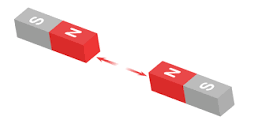
What will happen when these magnets are brought close together?
a)
They will attract each other.
b)
They will repel each other.
c)
Both magnets will turn to the left
d)
Both magnets will turn to the right
25.
True or False: All metals stick to magnets.
a)
True
b)
False
26.
Where is the force of attraction the strongest on a magnet?
a)
at the poles
b)
in the middle
c)
above the magnet
d)
below the magnet
27.
The AREA around a magnet where you feel a pulling force.
a)
Gravity
b)
Magnetic Field
c)
Magnetism
28.
A disturbance that travels through a medium as a longitudinal wave
a)
sound
b)
wavelength
c)
pitch
d)
frequency
29.
The number of wavelengths that pass a point each second
a)
frequency
b)
wavelength
c)
pitch
d)
amplitude
30.
When a sound is louder what measurement gets bigger?
a)
Frequency 
b)
Amplitude 
c)
Wavelength 
d)
Crest
31.
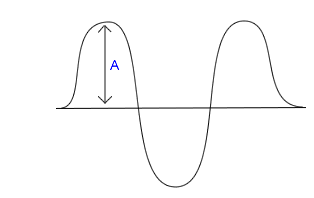
If the distance represented by the letter A (the amplitude) were increased, how would it change the sound?
a)
The sound would be higher. 
b)
The sound would be lower. 
c)
The sound would be softer. 
d)
The sound would be louder. 
32.
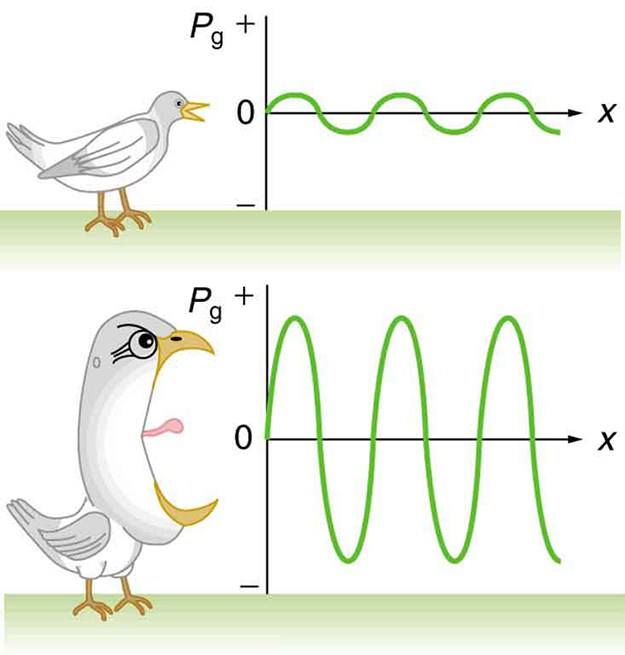
What is changed in the second picture?
a)
Someone is talking louder in picture 2
b)
Someone is talking softer in picture 2
c)
Someone is talking lower pitch in picture 2
d)
Someone is talking higher pitch in picture 2
33.
What is changed in the second picture?
a)
Someone is talking louder in picture 2
b)
Someone is talking softer in picture 2
c)
Someone is talking lower pitch in picture 2
d)
Someone is talking higher pitch in picture 2
34.
What is changed in the second picture?
a)
Someone is talking louder in picture 2
b)
Someone is talking softer in picture 2
c)
Someone is talking lower pitch in picture 2
d)
Someone is talking higher pitch in picture 2
35.

Waves can transfer...

a)

energy

b)

matter

c)

information

36.

The vibrations in a longitudinal wave are (a)   to the direction of energy transfer.

37.

In a transverse wave, the vibrations are (a)   to the direction of the wave.

38.

Sound waves can travel through a vacuum because they don't require particles.

a)

True

b)

False

39.

Sound travels in which kind of wave?

a)

Longitudinal waves

b)

Transverse waves

40.

As the frequency increases, the waves become ____.

a)

closer together

b)

farther apart

c)

the wavelength stays the same

d)

none of the choices given

41.

As the frequency decreases, the pitch ____.

a)

becomes higher

b)

stays the same

c)

becomes lower

d)

none of the choices given

42.

Which wavelength has a higher frequency?

a)

Top

b)

Middle

c)

Bottom

43.

Which wavelength has a lower pitch?

a)

Top

b)

MIddle

c)

Bottom

44.

What does the Auditory canal do?

a)

Makes ear wax

b)

Pulls sound waves into the ear

c)

End the journey of the sound waves

45.

What happens in the eardrum?

a)

Sound waves vibrate the skin and delivers vibrations

b)

Sound waves make the tiny hairs in your ear move

c)

Carries the message to the brain

46.

What does the Auditory nerve do?

a)

Carries the message to the brain

b)

Carries the message to the Semi-Circular canal

c)

Send the message to the Eustachian tube

47.

What is in the Semi-Circular canals?

a)

Cilia (Tiny Hairs)

b)

Liquid filled tubes

c)

Thin Skin

48.

Name the 3 bones in your ear

a)

Hammer, Stirrup, Anvil

b)

Hammer, Anvil, Stirrup

c)

Rods, Cones, Anvil

49.

Where is the Eardrum located?

a)

The Outer ear

b)

The Inner Ear

c)

The Middle Ear

50.

Where is the Cochlea located

a)

The Inner Ear

b)

The Middle Ear

c)

The Outer Ear

51.

Where is the Auditory Canal located?

a)

The Inner Ear

b)

The Middle Ear

c)

The Outer Ear