Worksheets
Atoms & Chemistry Review
Total questions: 48
Worksheet time: 23mins

In this chemical equation, the elements in red are the_______.
Products
Reactants
Subscripts
Coefficients
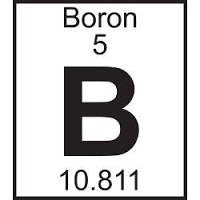
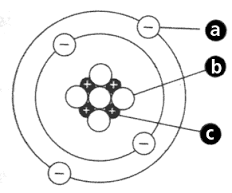
Using the information provided, determine how many electrons the a Boron atom contains.
2.5
5
6
10.81

Which of the following is NOT true about the periodic table?
Atomic mass is equal to the number of neutrons.
Elements listed by their (increasing) atomic mass.
Groups are the elements listed in columns.
Periods are the elements listed in rows of 8 (for most rows).

Chemical properties are
an element’s ability to react with other elements.
an element's ability to change into a gas.
an elements attraction to water.
any property which can be observed or measured.

A physical reaction is a chemical reaction which
changes the physical properties of the elements.
changes the chemical properties of an element.
separates atoms in a mixture.
combines atoms in a mixture.

Which of the following are true about gas molecules? Choose two.
the particles move about quickly
the particles are far apart
the particles move slowly and vibrate in place
the particles are close together

Which of the following are true about the molecules in liquids? Choose two.
The particles slip easily over and around each other
Will take the shape of its container
The particles move slowly and vibrate in place
The particles have a definite shape

Which of the following are true about solids? Choose two.
The particles vibrate in place
Have a definite shape
The particles move quickly and freely
The particles take the shape of their container

Which of the following is a compound containing more than one element?
NaCl
Be
S
Ne

Which of the following chemical formulas has a subscript?
1. H2O
2. 2HCl
3. NaCl
1 only
2 only
3 only
1 and 2

How many oxygen atoms are in an atom of hydrogen peroxide (H2O2) ?
2
4
1
8

How many atoms are in the following chemical formula?
C6H12O6
24
3
18
12
2Mg + O2 ------> 2MgO


Suppose a neutral atom were to lose an electron. What would happen to the atom?
It would become negatively charged.
It would become positively charged.
It would remain neutral.
It would also lose a proton.
A molecule is:
two or more substances that are mixed together.
two or more atoms that are chemically bonded.
a particle found in the nucleus of an atom.
the smallest part of an element that still has the properties of that element.
Two substances are combined together in a beaker. Which of the following observations would most likely indicate that a chemical reaction has taken place?
Gas bubbles are produced.
One substance sinks to the bottom of the beaker.
The two substances remain mixed together.
One substance dissolves in the other.
Before a chemical reaction, the total mass of two reactants is measured to be 40 grams. After the reaction, what should be the total mass of the products?
0 grams
20 grams
40 grams
80 grams
Which of the following is a chemical reaction?
Water freezes.
Sugar dissolves in water.
Salt and pepper are mixed in a dish.
Iron rusts.
The law of conservation of matter states that:
matter is neither created nor destroyed.
the mass of the products is always greater than the mass of the reactants.
the mass of the products is always less than the mass of the reactants.
matter is always converted into an equal amount of energy.