wayground logo

Free Printable Worksheets

Font size

S
M
L
XL
Worksheets

YL Bio Midterm Review Pt.1

Total questions: 70

Worksheet time: 1hrs 8mins

Name
Class
Date
1.

Which of the following are examples of qualitative data? (pick all that apply)

a)

The tree is 3 meters tall.

b)

The flower is red.

c)

The water is colder in the cooler than in the jar.

d)

The toad is 7 years old.

2.

Which of the following is NOT a testable question?

a)

How do rockets work?

b)

Does fertilizer help plants grow bigger?

c)

Does heart rate increase with exercise?

d)

Does the freezing point of water change at different elevations?

3.

What is a hypothesis?

a)

An educated prediction or answer to a testable question

b)

A random guess

c)

An observation based on feelings or emotions

d)
4.

After the data is analyzed the hypothesis is stated as correct or incorrect in the __________

a)

conclusion

b)

experiment

c)

hypothesis

d)

table of contents

5.
A scientist performs an experiment to see if acids have an effect on the health of a particular type of plant. Three sets of plants were treated with acidic solutions of known pH while the control set was treated with a solution of neutral pH 7.Which is the best conclusion for this experiment?
a)
Acid has no effect on the health of this type of plant.
b)
B. High acidity is helpful to this type of plant.
c)
C. Low acidity is harmful to this type of plant.
d)
High acidity is harmful to this type of plant.
6.
The graph below shows atmospheric carbon dioxide levels since the year 1880.Which of the following conclusions can be drawn from this graph
a)
 Atmospheric carbon dioxide levels are responsible for global temperature change.
b)
 Atmospheric carbon dioxide levels have been rising at about the same rate for the past century.
c)
Atmospheric carbon dioxide levels have remained the same over the past century.
d)
 Atmospheric carbon dioxide levels have been rising at an increasingly higher rate as the past century has progressed.
7.
Carmen conducted an experiment to determine if listening to different types of music would affect a person’s pulse. Her hypothesis was that pulse rate would change with different types of music. Each person listened to seven different selections of music for 30 seconds each. Each person’s pulse was taken before the music and then after each 30-second interval of music. The pulses were taken again after the music selections were completed. Based on her experiment, Carmen concluded that a person’s pulse rate changed when the person listened to different types of music.  Which component is missing from Carmen’s experiment?
a)
a question
b)
a hypothesis
c)
a control group
d)
a description of the experiment
8.
In an appropriately designed experiment, a scientist is able to test the effect of
a)
 a single variable
b)
 multiple variables
c)
 the hypothesis
d)
 scientific observations
9.

Matter has

a)

mass

b)

volume

c)

atoms

d)

all of the above

10.

A ____ is the smallest particle of an element.

a)

molecule

b)

compound

c)

atom

d)

element

11.

An element

a)

is made up of 2 or more different atoms

b)

is made up of only one type of atom

c)

cannot be chemically combined with other elements

d)

cannot be physically combined with other elements

12.
An experiment is performed on plants to see how different liquids affect plant growth. Each plant in the experiment is given a different liquid; water, apple juice, or milk. Each plant has the same amount of soil, sunlight, and listens to the same music. In this investigation, what is the dependent variable?
a)
Type of plant
b)
Water, apple juice, milk
c)
Plant growth
d)
Color of the plant's leaves
13.

An experiment is performed on plants to see how different liquids affect plant growth. Each plant in the experiment is given a different liquid; water, apple juice, or milk. Each plant has the same amount of soil, sunlight, and listens to the same music. In this investigation, what is the independent variable?

a)

Type of plant

b)

Water, apple juice, milk

c)

Plant growth

d)

Color of the plant's leaves

14.

An experiment is performed on plants to see how different liquids affect plant growth. Each plant in the experiment is given a different liquid; water, apple juice, or milk. Each plant has the same amount of soil, sunlight, and listens to the same music. In this investigation, what is the control group?

a)

The music

b)

The amount of sunlight

c)

The plants that get milk

d)

The plants that get water

15.

An experiment is performed on plants to see how different liquids affect plant growth. Each plant in the experiment is given a different liquid; water, apple juice, or milk. Each plant has the same amount of soil, sunlight, and listens to the same music. In this investigation, which of the following are controlled variables?

a)

The music

b)

The amount of sunlight

c)

The plants that get milk

d)

The plants that get water

16.
What two elements make up water?
a)
Helium and oxygen
b)
Hydrogen and oxygen
c)
helium and carbon
d)
oxygen and carbon
17.
What word describes when water is attracted to other substances?
a)
cohesion
b)
adhesion
c)
capillary action
d)
surface tension
18.
Attractions between the negative Oxygen atom of one water molecule and the positive Hydrogen atom of another water molecule are called
a)
Covalent bonds
b)
Ionic bonds
c)
Polar bonds
d)
Hydrogen bonds
19.
Why does ice float?
a)
As water freezes, it expands and its density decreases.
b)
As water freezes, it takes up more hydrogen from the atmosphere, causing it to have a greater buoyancy.
c)
As water freezes, air becomes trapped between the hydrogen bonds of water molecules.
d)
As water freezes, it takes up more oxygen from the atmosphere, causing it to have a greater buoyancy.
20.
Which end of the water molecule has a slightly positive charge?
a)
the oxygen end
b)
the hydrogen end
c)
both ends are slightly positive
d)
neither end is positive
21.
Water is a universal solvent because it...
a)
It can be found anywhere
b)
It freezes when it gets cold
c)
floats when frozen
d)
Dissolves most substances
22.
Large bodies of water, such as lakes and oceans, do not quickly fluctuate in temperature. What is the reason for this phenomenon?
a)
Water is an acid.
b)
Water is a versatile solvent.
c)
Water has a high heat capacity.
d)
 Water acts as a buffer.
23.
 Small insects can walk across the surface of calm water. Their feet push the surface of the water down slightly, somewhat like a person walking across a trampoline, but they do not break the surface. What is the best explanation for why this happens?
a)
The insects are light enough so that they do not break the hydrogen bonds holding the water molecules together
b)
The insects actually use their wings to hover slightly above the water's surface and they only skim it with their feet
c)
The insects' feet are non-polar, so they are repelled by the polar water molecules and are pushed away from the water's surface
d)
The insects are small enough to see the individual water molecules, so they are able to step carefully from one molecule to the next
24.
When a molecule has an opposite electrical charge on each end, it is known as what?
a)
cohesion
b)
polar molecule
c)
hydrogen bond
d)
solution
25.

The substance that binds to an enzyme is called a?

a)

Polypeptide

b)

Co-enzyme

c)

Vitamin

d)

Substrate

26.

Which of the following best explains why enzymes are necessary for reactions in our cells?

a)

The reactions are too slow to meet the needs of the cell if enzymes are missing.

b)

Enzymes supply the oxygen necessary for the reactions.

c)

Enzymes change reactants from solid to liquid during the reactions.

d)

The reactions take up too much space in the cell if enzymes are missing.

27.

Changes in pH and temperature can ___________________ an enzyme which causes it to lose its shape and affects its function.

a)

puncture

b)

denature

c)

double

d)

delete

28.

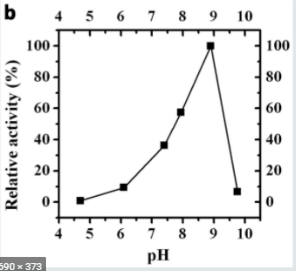
What is the optimal pH for this enzyme?

a)

6

b)

10

c)

9

d)

7

29.

The ____________________ mechanism describes how each substrate must fit into the enzyme.

a)

lock and key

b)

hammer and nail

c)

jigsaw puzzle

d)

seesaw

30.

What is the purpose of an enzyme?

a)

control how many reactions occur

b)

raise activation energy

c)

give permission for the reaction

d)

speed up chemical reactions

31.

Where do substrates bind to an enzyme?

a)

calcium channels

b)

active site

c)

receptor molecules

d)

voltage-gated channels

32.

All of the following affect the functioning of an enzyme EXCEPT:

a)

pH

b)

temperature

c)

metabolism

d)

enzyme concentration, substrate concentration, inhibitor molecules

33.

After the enzyme and substrate bind together and perform the reaction, what does the substrate become?

a)

a substrate

b)

an active site

c)

an enzyme

d)

a product

34.

A baby is locked in the car on a hot day. What is most likely to happen to the child?

a)

The child's body will adjust and cause it to maintain homeostasis

b)

The child's enzymes will denature causing chemical reactions to speed up in the body, which will lead to death.

c)

The child's enzymes will denature causing chemical reactions to slow down in the body, which will lead to death.

d)

The activation energy for chemical reactions will remain unchanged and therefore the child will live.

35.

During a chemical reaction, what is it that changes?

a)

The types of atoms

b)

The total mass

c)

The chemical bonds

d)

The number of protons

36.

What is the general term for a substance that speeds up chemical reactions?

a)

catalyst

b)

metabolic

c)

anabolic

d)

homeostasis

37.
What are the four biological molecules?
a)
proteins, carbohydrates, lipids, nucleic acids
b)
A, T, C, G
c)
water, air, earth, and fire
d)
Joe, Nick, and Kevin Jonas
38.

An enzyme is which type of biomolecule?

a)

Carbohydrate

b)

Lipid

c)

Nucleic Acid

d)

Protein

39.
Which biomolecule has sugars and starches?
a)
Lipids
b)
Proteins
c)
Carbohydrates
d)
Nucleic Acid
40.
Which biomolecule functions include enzymes­ which speeds the rate of chemical reactions, structural components in cells, mechanical functions in muscles and cytoskeleton, cell signaling, and immune response; provides structure and helps with chemical reactions 
a)
Protein
b)
Lipids
c)
Carbohydrate
d)
Nucleic Acid
41.
Which biomolecule is important source of energy for humans; glucose for human cells, tissues, and organs; provides fiber, sugar, and starches; provides structural support, cell wall, and cell membrane maker?
a)
Nucleic Acid
b)
Lipid
c)
Carbohydrate
d)
Protein
42.
Which biomolecule includes fats, such as triglycerides, oils, waxes, and steroids (cholesterol); insoluble in water; provides energy storage, insulation, part of cell membrane, and hormones 
a)
Nucleic Acid
b)
Lipids
c)
Carbohydrate
d)
Protein
43.
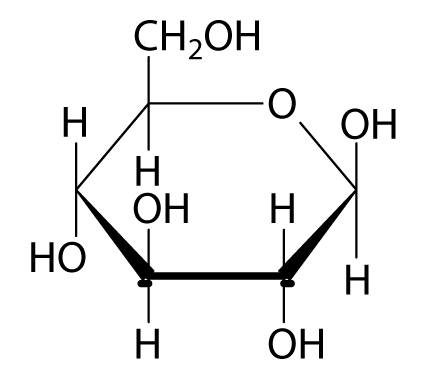
Identify the biomolecule
a)
Carbohydrate
b)
Lipid
c)
Protein
d)
Nucleic Acid
44.
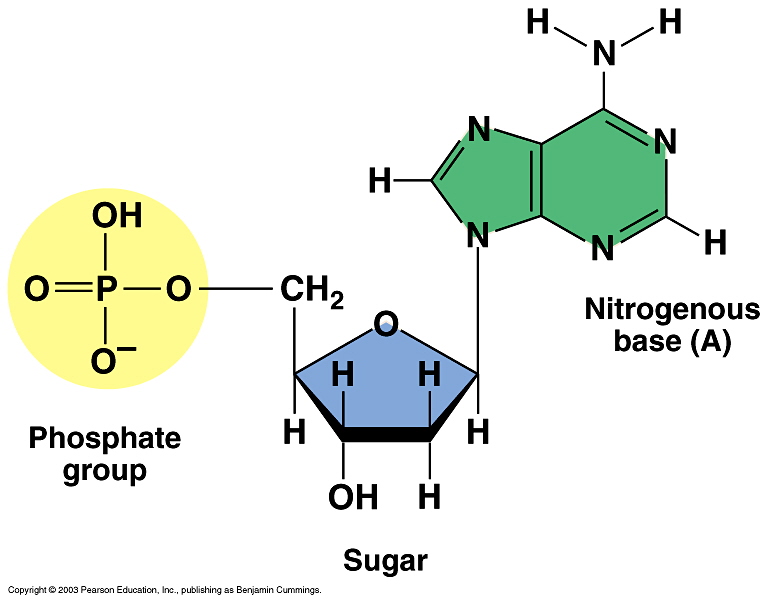
Identify the biomolecule
a)
Lipid
b)
Protein
c)
Carbohydrate
d)
Nucleic Acid
45.
What is the monomer for a protein?
a)
Monosaccharide
b)
Triglyceride
c)
Amino Acid
d)
Nucleotide
46.
Lipids are made up of which of the following?
a)
glycerol and fatty acids tails
b)
glycerol and monolipids
c)
fatty acids and phosolipids
d)
amino acids and nucleotides
47.
What is the monomer of nucleic acids?
a)
Glycerol
b)
Monosaccharides
c)
Amino Acids
d)
Nucleotides
48.

Which atoms are in all 4 types of biomolecules?

a)

Hydrogen

b)

Oxygen

c)

Nitrogen

d)

Carbon

49.

All proteins contain C, H, O and what other type(s) of atoms? (choose all that apply)

a)

sulfur

b)

phosphorous

c)

nitrogen

d)

None of the above - they contain only CHO

50.

Fats contain C, H, O and what other type(s) of atoms? (choose all that apply)

a)

sulfur

b)

phosphorous

c)

nitrogen

d)

None of the above - they contain only CHO

51.

Nucleic acids contain C, H, O and what other type(s) of atoms? (choose all that apply)

a)

sulfur

b)

phosphorous

c)

nitrogen

d)

None of the above - they contain only CHO

52.

Carbohydrates contain C, H, O and what other type(s) of atoms? (choose all that apply)

a)

sulfur

b)

phosphorous

c)

nitrogen

d)

None of the above - they contain only CHO
53.
All living things are made up of _____. 
a)
Cells 
b)
Bacteria 
c)
Virus 
d)
ATP
54.
Prokaryotic cells do NOT have a nucleus. 
a)
True 
b)
False 
55.
Which of the following is an example of a prokaryotic cell? 
a)
Virus 
b)
Plant Cell 
c)
Bacteria 
d)
Animal Cell 
56.
Eukaryotic cells do NOT have a nucleus. 
a)
True 
b)
False 
57.
Which of the following is a Eukaryotic cell?
a)
Bacteria 
b)
Virus 
c)
Animal/Plant Cell 
d)
All of the above. 
58.
Directs all cell activities through the DNA located there.
a)
Lysosomes
b)
Nucleus
c)
ribosomes
d)
Mitochondria
59.
Where are proteins made?
a)
Golgi body
b)
Mitoichondria
c)
Chromosomes
d)
Ribosomes
60.
I am the outer most layer of an animal cell. What am I?
a)
cell wall
b)
nucleus
c)
cell membrane 
d)
cell skin
61.
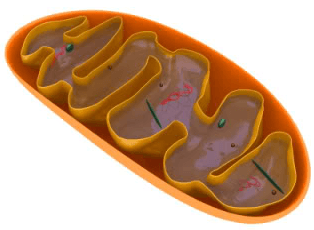
What are tiny organelles that convert glucose into ATP?
a)
Ribosomes
b)
Vesicles
c)
Cytoskeleton
d)
Mitochondria
62.
A rigid layer that lies outside the cell's  membrane is...
a)
Cytoskeleton
b)
Cilia
c)
Cell Wall
d)
Flagella
63.
The site of photosynthesis
a)
ribosome
b)
mitochondria
c)
chloroplast
d)
nucleus
64.
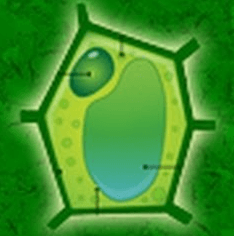
What kind of cell is this?
a)
Eukaryotic
b)
Prokaryotic
65.

ALL cells have... (check all that apply)

a)

ribosomes

b)

cell wall

c)

cell membrane

d)

cytoplasm

e)

mitochondria

66.
Cell organelles that are responsible for digesting food, worn out organelles and other cellular wastes are called ___________________.
a)
Mitochondria
b)
Vacuoles
c)
Lysosomes
d)
Chlororplasts
67.
Chloroplasts in plant cells allow the plant to perform a function that animal cells cannot do.  What is the main function of the chloroplasts found in plant cells?
a)
to absorb light energy and manufacture food
b)
to remove waste materials by active transport
c)
to manufacture chemical energy from food
d)
to control the shape of the cell
68.
All cells need energy to function.  Which cell organelle is responsible for producing energy in the cell?
a)
chloroplasts
b)
mitochondria
c)
nucleus
d)
vacuoles
69.
 Starch and water molecules in potato cells are stored in what organelle?
a)
mitochondria
b)
nucleus
c)
cell wall
d)
vacuole
70.
Which of the following is not part of the cell theory?
a)
cells must contain DNA 
b)
all living things are made from cells
c)
cells can only come from other cells
d)
cells are the basic unit of life