Wayground logo

Free Printable Worksheets

Font size

S
M
L
XL
Worksheets

The Periodic Table Introduction

Total questions: 33

Worksheet time: 2hrs 4mins

Name
Class
Date
1.
The atomic number tells you what?
a)
number of electrons
b)
number of protons
c)
number of neutrons
d)
both electrons and protons in an atom.
2.
The blue elements are called 
a)
metals
b)
nonmetals
c)
metalloids
d)
noble gases
3.
The word "periodic" in periodic table refers to...
a)
a regular, repeating pattern
b)
organization of elements
c)
columns of elements
d)
increasing numbers of protons
4.
Each column in the periodic table is called a ...
a)
period
b)
group
c)
cluster
d)
unit
5.
How did Mendeleev arrange the elements?
a)
alphabetical 
b)
density
c)
melting point
d)
atomic mass
6.

How did Dmitri predict elements?

a)

Time traveled

b)

Predicted the properties by the atomic numbers left

c)

Guess and checked

d)

Calculated the atomic mass and properties

7.

How are the elements arranged on the periodic table today?

a)

By atomic mass

b)

By number of electrons

c)

By atomic number

d)

By alphabetic order

8.
The Modern Periodic Table of Elements is arranged by
a)
atomic mass
b)
atomic number
c)
valence electrons
d)
number of isotopes
9.

Who predicted new elements for the gaps in the periodic table?

a)

Henry Moseley

b)

Lothar Meyer

c)

Dmitri Mendeleev

d)

Antione Laviosier

10.

Who proposed the Law of Octaves?

a)

Lothar Meyer

b)

Henry Moseley

c)

John Newlands

d)

Dmitri Mendeleev

11.

The smallest particle into which an element can be divided and still be the same substance is a (n)...

a)

electron

b)

proton

c)

atom

d)

molecule

12.

All group 2 elements have

a)

two electrons on their valence shell

b)

have two electron shells

c)

have two protons in the nucleus

d)

have two neutrons in the nucleus

13.
What was Dmitri Mendeleev's greatest contribution to the history of the periodic table?
a)
He arranged all of the known elements by their atomic number
b)
He realised that there was a pattern of reactivity which repeated every 8 elements
c)
He predicted the existence (and properties) of new elements
d)
He identified the "law of triads" which became the groups
14.
Why were there blank spaces left in Mendeleev's periodic table?                                              
a)
He didn't know what to put there.
b)
 Undiscovered elements not yet known.
c)
Multiple elements could have fit
d)
He forgot to add the elements in.
15.
Moseley discovered that the ________ was the most fundamental property needed for organization.                                                 
a)
atomic mass
b)
mass number
c)
atomic number
d)
number of protons
16.
Which of these was not proposed by John Dalton in 1805?
a)
All matter is made of atoms
b)
Atoms are made of protons, neutrons and electrons
c)
During chemical reactions, atoms rearrange themselves
d)
The atoms of a particular element are all identical
17.

True/ False: Metals are not on the Periodic Table

a)

True

b)

False

18.

Which of the following groups of elements could NOT be a triad?

a)

Cl, Br, I

b)

C, N, O

c)

Li, Na, K

d)

Ca, Ba, Sr

19.

The "Law of Octaves" was the brainchild of

a)

Glenn Seaborg

b)

Lothar Meyer

c)

Johann Dobereiner

d)

John Newlands

20.

The idea of "triads" of elements with similar properties was due to

a)

John Newlands

b)

Johann Dobereiner

c)

Dmitri Mendeleev

d)

Henry Moseley

21.

The "Law of Octaves" stated that

a)

The properties of the elements repeated every eighth element when arranged by their atomic mass

b)

Elements could be classified in groups of three based on their mass and properties

c)

The properties of the elements repeated of a regular basis when arranged by their atomic number

d)

doubling the frequency of a tone raises its pitch by an octave

22.

He stated that everything is made up of four eternal and unchanging kinds of matter, fire, air (all gases), water (all liquids and metals) and earth (all solids).

a)

Anaxagoras

b)

Democritus

c)

Empedocles

23.

"atom" means, in Greek_________________.

a)

imperfection

b)

inseparable

c)

world

d)

soul

24.

The theory of Democritus held that everything is composed of _________.

a)

atoms

b)

numbers

c)

shapes

25.

Which scientist was the first person responsible for proposing the idea of atoms?

a)

Democritus

b)

John Dalton

c)

Ernest Rutherford

d)

J.J. Thomson

e)

Niels Bohr

26.
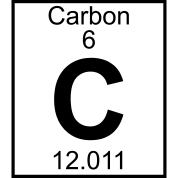
What does the 6 represent?
a)
atomic mass
b)
atomic number
c)
element name
d)
chemical symbol 
27.
What does the C represent?
a)
atomic mass
b)
atomic number
c)
element name
d)
chemical symbol 
28.

What are the rows in the periodic table called?

a)

Families

b)

Groups

c)

Periods

d)

Orbitals

29.

What are the columns in the periodic table called?

a)

Periods

b)

Groups

c)

Orbitals

d)

Energy Levels

30.

Using the information given, how many electrons does carbon have? How do you know?

a)

6, protons must = electrons in a neutral atom

b)

12, protons + neutrons = mass number

c)

18, add the protons to the atomic mass

d)

13, this is an ion

31.

What is the Atomic Mass for Carbon? (This will ALWAYS be the larger number reported on the periodic table)

a)

6

b)

12

c)

18

d)

13

32.
What does the 1.00794 stand for?
a)
Hydrogen
b)
atomic number
c)
atomic mass
d)
atomic explosion
33.
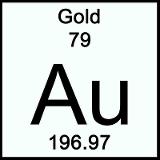
Which number is the atomic mass?
a)
79
b)
196.97