
 Worksheets
Universe, Space Exploration, and Tides
Total questions: 50
Worksheet time: 56mins
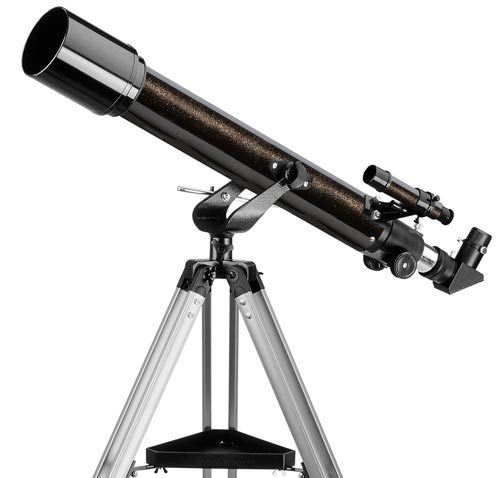
A refracting telescope uses _______ to focus light.
Lenses
Mirrors
Lasers
Water
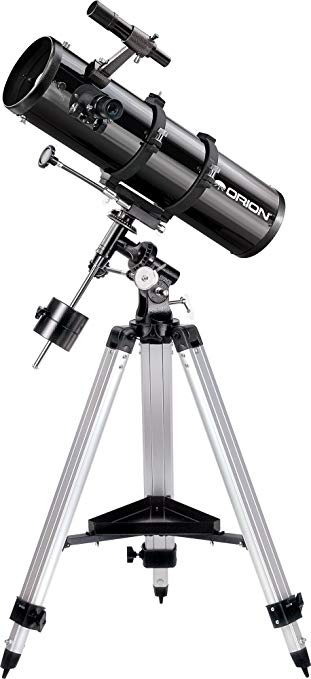
Reflecting telescopes use _______ to focus light.
Lenses
Flat mirrors
Curved Mirrors
A lens and lasers
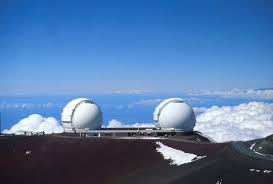
Why are many large optical telescopes located on mountains?
to be closer to the stars
to be above some of the atmosphere and further from city lights
because it is easier to build telescopes on mountains
to be closer to city lights
An object that revolves around another object in space
revolving
Meteoroid
satellite
vacuum
A spacecraft that can bring a group into space and bring them back to earth and be used for the same purpose all over again
Space probe
Spectroscope
Rover
Space shuttle
A large artificial satellite on which people can live and work for long periods
space station
space probe
rover
rocket
A spacecraft that can carry lots of scientific instruments that can collect data, including visual images, but does not hold any space crews on it.
space shuttle
space probe
rover
space station
A small robotic probe that can move about the surface of a planet or moon
Rover
Space station
Space probe
Spectrograph
Galaxies are composed of (choose the BEST answer)
stars
stars and gas
stars, dust, and gas
stars, dust, and gas held together by gravity
The Milky Way is a _______________ galaxy.
spiral
lenticular
elliptical
irregular

Uses mirrors or lenses to focus visible light rays to make enlarged images of far away objects.
optical telescopes (reflecting or refracting)
space probes
radio telescopes
spectroscopes

Receives the lowest frequency EM waves emitted from objects in space to produce images
reflector telescope
refractor telescope
radio telescope
spectroscope

Collects data from places outside of Earth's orbit that would be too dangerous for humans
satellies
space probes
space shuttle
spectroscope

Collects light from distant stars and separates that light into a spectrum.
reflector telescope
refractor telescope
radio telescope
spectroscope
The tendency of a moving object to continue moving in a straight line or a stationary object to remain in place is called
orbital speed.
mass.
inertia.
gravity.
The force that pulls matter together in stars is called
gravity.
nuclear fusion.
dark energy.
dark matter.
How can the information from a spectroscope help an astronomer to learn about the universe?
It can be used to calibrate a telescope for clearer images.
It can show the composition of stars, and the motion of galaxies toward or away from our galaxy.
It can be used to determine how many planets are in a distant solar system.
It can show if a black hole has eclipsed a supernova in distant galaxies.
What is the advantage of using a telescope with a large aperture?
Its images are brighter and clearer than other telescopes.
It can magnify things further away than other telescopes can.
It can magnify smaller objects than other telescopes.
It's eyepiece is larger than other telescopes.
A telescope that can enlarge images from very far away has a high
aperture.
resolution.
magnification.
definition.
Which of the following is a function of a simple telescope's eyepiece?
Magnification.
Collecting light.
Reflection.
Absorption.
What are reasons that astronomers use filters in telescopes? (Choose TWO answers)
To block out light that might make an image harder to see.
To make an image larger.
To gather more light and make an image brighter.
To block out forms of radiation that would harm the eyes.
Which is NOT true of the International Space Station?
It is the largest man-made satellite ever built
Several countries competed against each other to see which one could complete it first.
It has a permanent crew
It allows scientists to do experiments in a space environment
Scientists use the light-year to describe the relationships between objects in space. What does a light-year measure?
the distance that light can travel in one year
the brightness of light that travels through space
the distance from the sun to the Earth
the time it takes light to travel 1 million km
The solar system formed from
a large cloud of gas & dust.
all of the matter in the Milky Way galaxy.
a large volcanic eruption.
a large cloud of water vapor
What is mass?
How much matter makes up an object.
How much gravity is pulling an object.
How much space an object takes up.
How close together the particles are in a substance
The two factors that are balanced to keep Earth and the moon in their orbits are
mass and inertia.
orbital speed and mass.
gravity and magnetism.
gravity and orbital speed.
The Sun produces energy by
attracting it with the force of gravity.
nuclear fusion.
nuclear fission.
burning fuels such as oil.
Which part of the telescope does the magnification?
The aperture
The objective lens
The eyepiece
The filter
Which is NOT a type of telescope for detecting EM waves outside the visible range?
Longitudinal telescope
Radio telescope
X-ray telescope
Infrared telescope
What two factors determine the force of gravity?
the masses of the objects and their speeds
the distance between the objects and their masses
the shape of the objects and their inertia
the masses of the objects and their volumes
How does the gravity of the Sun and the Moon affect Earth's tides?
The Sun has a greater pulling effect on the Earth's tides because it is more massive than the Moon.
The highest tides on Earth occur when the Sun and the Moon are at right angles to each other.
The tidal range is very small when the Moon and the Sun are in a straight line with the Earth.
The differences in the high tides and low tides are caused by changes in the gravity from the Sun and Moon pulling on different parts of the Earth.
What is the relationship between the mass of objects and the amount of gravitational force between them?
Mass is inversely related to the amount of gravitational force.
Objects with smaller masses are more strongly attracted to each other because they are easier to move.
Mass only affects the amount of gravitational force between certain objects.
More massive objects exert a greater gravitational force on each other.
Why is the amount of gravitational force between the Sun and the next nearest star not very strong?
Stars are so large that gravity doesn't affect them.
Objects that are very far away don't exert much gravitational force on each other.
The heat inside stars is so great that it interferes with the amount of gravitational force.
Distance is directly proportional to the amount of gravitational force between two objects.
When do spring tides occur?
When the Moon is at a right angle to the Sun.
During the Moon's third-quarter phase.
When the Sun, Earth, and the Moon are nearly in a line.
During the spring.

The image shows four positions of the Moon around Earth labeled 1, 2, 3, and 4. Which positions of the moon can represent when neap tides occur?
Positions 1 and 2
Positions 1 and 3
Positions 2 and 3
Positions 2 and 4
Evidence gathered by studying the composition and movement of distant galaxies indicates that the early universe was much smaller, but expanded rapidly. The universe has continued to expand for over 13 billion years.
Which statement is in agreement with the current understanding of the expanding universe?
All matter and energy were contained inside the universe when it was much smaller, and energy was released as the universe expanded.
Matter and energy came from dark areas of the universe and were attracted to the small point.
Matter and energy fell into the small point the same way a black hole attracts matter and energy.
Matter was condensed into a single point until energy was attracted to the matter from dark areas of the universe.
Students are using balloons to describe the expanding universe model. The students blow up several balloons and put them on the floor. Each balloon represents a different galaxy.
How should the students move or change the balloons to demonstrate how the universe is expanding?
All of the balloons should be moved to the center of the floor.
Each balloon should be inflated more so that they are all increasing in size.
Each balloon should be deflated so that there is more distance between the surface of each balloon.
All of the balloons should be moved away from each other so there is more distance between them.
These data tables show the distance of various galaxies from Earth in millions of light-years (Mly) at different times. Which table supports the theory of expansion in the formation of the universe?


Campbell wants to test what humidity level is best for growing dogwood trees. She keeps three trees in greenhouses with different humidity levels and leaves one tree outside. She gives them all the same amount of fertilizer and water. She measures how much each one grew each week for three weeks.
What is the independent variable in this experiment?
amount of fertilizer
humidity level
amount of water
amount that each one grew
Campbell wants to test what humidity level is best for growing dogwood trees. She keeps three trees in greenhouses with different humidity levels and leaves one tree outside. She gives them all the same amount of fertilizer and water. She measures how much each one grew each week for three weeks.
What is the control group in this experiment?
the amount of fertilizer and water
the tree with the highest humidity level
the trees that had their humidity levels controlled
the tree that grew outside
Campbell wants to test what humidity level is best for growing dogwood trees. She keeps three trees in greenhouses with different humidity levels and leaves one tree outside. She gives them all the same amount of fertilizer and water. She measures how much each one grew each week for three weeks.
What is the dependent variable in this experiment?
amount of fertilizer
humidity level
amount of water
amount that each one grew
Which one of these shows refraction occurring?


How fast do electromagnetic waves travel in a vacuum?
The speed of light (300,000 km/s)
The speed of sound (343 m/s)
Planck's constant
It cannot be measured with current technologies
According to Hubble's Law, the farther away a galaxy is,
the faster it is moving toward us.
the slower it is moving toward us.
the slower it is moving away from us.
the faster it is moving away from us.
Cosmic background radiation is electromagnetic radiation left over from
the formation of our solar system
a supernova in a nearby galaxy
the rapid expansion and energy release in the early universe
the moon’s gravity
A researcher studies the light emitted by a distant star. The researcher finds that the light received from the star falls slightly closer to the red end of the electromagnetic spectrum when compared to a similar source closer to Earth. The researcher concludes that the star is moving away from Earth. Is the researcher correct?
No. All stars emit red-colored light.
Yes. All moving stars emit red-colored light.
No. The red-colored emission is due to the composition of the star.
Yes. Light from a star moving away from Earth shifts to red-colored light.
What is “dark energy”?
Energy that cancels out light waves.
A force that seems to be causing galaxies to accelerate away from each other.
A force that pulls all matter together in the universe.
Energy that can only be detected when a cathode ray tube television is tuned in between stations.
Tidal range is
the area near the coast where the effects of tides are noticeable.
the height difference between high tide and low tide.
the differences in wavelengths between waves hitting the coastline in a specific location.
the differences in amplitude of waves that hit the coastline in a specific location.
When is the tidal range the highest?
When the moon is at a right angle to the sun.
During the moon's third-quarter phase.
When the sun, Earth, and the moon are nearly in a line.
During the moon's first-quarter phase.

