Worksheets
Kingdom Animalia Part 2
Total questions: 70
Worksheet time: 35mins

Name of D (opening at top)
Osculum
Ostia
Choanocytes
Incurrent Pore

Water exits the sponge here
A
B
C
D
The sponge has no organs, tissues, and no nervous system.
True
False


Name this body type.
Medusa
Polyp

Name this body type.
Medusa
Polyp
All jellyfish belong to phylum ____________.
Cnidaria
Hydrozoa
Anthozoa
Scyphozoa
All animals in phylum Cnidaria demonstrate _____________.
radial symmetry
asymmetry
bilateral symmetry
pretty symmetry
Cnidarians have three body types
True
False
Cnidarians can reproduce...
Sexually
By strobilation
By regeneration
By budding
All of the above
Sessile, tube shaped body form of cnidarians such as corals and hydra.
Polyp
Medusa
Free swimming, umbrella shaped body with tentacles that hang down.
Polyp
Medusa

What type of cnidarian is pictured?
Jellyfish
hydra
sea anemone
coral

What phylum are the flat worms under?
Annelid
Platyhelminthes
Rotifers
Sipuncula

How do flatworms reproduce?
Sexually and asexually
asexually
sexually

What is an animal called, that can produce both sperm and eggs?
Flatworms
Hermaphroditic
Cnidarians
Cephalization
What kind of worm is a platyhelminthes?
Flat worm
Round worm
Special ed worm
School worm
What type of symmetry do Platyhelminthes have?
Bilateral
Asymmetrical
Round
Small
Do Platyhelminthes depend on host or not?
Depend on Host
Don’t Depend on Host
Do Platyhelminthes Have Flat Bodies Or Cylindrical Bodies?
Flat Body
Cylindrical Body
True or False: Platyhelminthes are acoelomate
True
False
Nematodes are acoelomates.
True
False
What is the common name of Phylum Nematoda?
Earthworm
Roundworm
Flatworm
What type of body cavity nematodes have?
Acoelomate
Pseudocoelomate
Acoelomate
What type of body symmetry does nematodes have?
Bilateral
Asymmetry
Radial
Nematodes posses one way digestive system consist of
mouth only
anus only
mouth and anus
Most annelids are ____________.
terrestrial
marine
What is one of the evolutionary milestones for the phylum Annelida? 2 CORRECT ANSWERS
Specialized, closed circulatory system
excretory organs called nephridia
filter feeding
having five organ systems

Phylum Annelida Symmetry
bilateral symmetry
unilateral symmetry
asymmetry
N/A
There is asexual reproduction in Annelida
True
False
All worms belong to Phylum Annelida
False
True


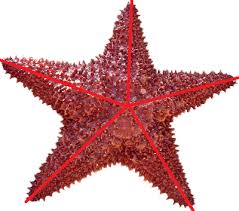
What type of body symmetry do all adult echinoderms have?
Bilateral
Asymmetrical
Radial
All the above
Do sea stars have a brain?
yes
no

What animal is this?
sea worm
sea urchin
sea cucumber
buffer fish

What animal is this?
sea cucumber
sea urchin
sea worm
angler fish
What is the exoskeleton of arthropods made of
Cellulose
Peptidoglycan
Chitin
Cartilage

What type of circulatory system do arthropods exhibit?
Closed circulatory system
partially closed circulatory system
partially open circulatory system
open circulatory system
This structure is present in all embryos and may or may not be present in adults.
Notochord
Vertebrates
Metamorphosis
Gnatho
What do we call the groups in which we classify organisms?
Categories
Classes
Sets
Taxons
Why is the most specific taxonomy category?
Kingdom
Domain
Species
Order
Which taxon comes next? Domain... Kingdom... Phylum
Order
Genus
Class
Family
What kingdom would a human belong to?
Plant
Animalia
Protist
Fungi
What would the scientific name of this organism be?
Kingdom: Animalia
Phylum: Chordata
Class: Reptilia
Order: Crocodila
Family: Alligatoridae
Genus: Alligator
species: mississippiensis
alligator Mississippiensis
Crocodila chordata
Alligator mississippiensis
Reptilia crocodila
What would the scientific name of this organism be?
Kingdom: Animalia
Phylum: Chordata
Class: Mammalia
Order: Carnivora
Family:Canidae
Genus: Canis
species: mesomelas
Mammalia carnivora
Canidae mesomelas
Canis mesomelas
Animalia chordata
What would the scientific name of this organism be?
Kingdom: Animalia
Phylum: Chordata
Class: Aves
Order: Charadriiformes
Family: Laridae
Genus: Thalasseus
species: maximus
thalassues maximus
Anamalia maximus
Aves chordata
Thalassues maximus
Kingdom:Animalia
Phylum: Chordata
Class: Mammalia
Order: Rodentia
Family: Sciuridae
Genus: Ratufa
species: indica
Indica ratufa
Ratufa indica
Chordata Amimalia
Sciuridea rodenta
Who created the system of Taxonomy?
Albert Einstein
Carolus Linnaeus
Aristotle
Copernicus
Binomial Nomenclature takes which two taxons to name a species?
Genus and Kingdom
Phylum and Class
Family and class
Genus and species