Wayground logo

Free Printable Worksheets

Font size

S
M
L
XL
Worksheets

Yr 9 Revision- Waves/Sound/Light

Total questions: 66

Worksheet time: 1hrs 6mins

Name
Class
Date
1.
An example of a longitudinal wave is a ____
a)
water wave
b)
stadium wave
c)
sound wave
d)
rope wave
2.
As frequency _____, pitch _____.
a)
rises, falls
b)
decreases, increases
c)
increases, decreases
d)
increases, increases
3.
Sound waves have the fastest speed when traveling through a ___.
a)
solid
b)
liquid
c)
gas
d)
tornado
4.
Sound waves move faster than light waves.
a)
True
b)
False
5.
What means number of waves per second?
a)
wavelength
b)
reflection
c)
diffraction
d)
frequency
6.
The bouncing back of a light ray after hitting a surface is known as...
a)
diffraction
b)
refraction
c)
rebounding
d)
reflection
7.
The bending of light is called refraction.
a)
True
b)
False
8.
Higher frequency sound waves result in a lower pitch while a lower frequency waves result in a higher pitch.
a)
True
b)
False
9.
What causes a yellow fire hydrant to appear yellow?
a)
It absorbs yellow light
b)
It reflects yellow light
c)
It transmits yellow light
d)
It reflects all colors except yellow
10.
The _________ of a wave is simply the length of one complete wave cycle.
a)
amplitude
b)
wavelength
c)
trough
d)
crest
11.
As the wavelength of a wave gets longer, the frequency...
a)
increases
b)
decreases
c)
is not related
d)
stays the same
12.
Which wave has a greater frequency?
a)
A
b)
B
13.
This is what you get when sound waves are reflected, or bounce back, off of a hard surface.
a)
amplitude
b)
pitch
c)
volume
d)
echo
14.
Waves transfer
a)
water. 
b)
wind. 
c)
energy. 
d)
particles. 
15.
How high or low a sound is, is that sound's
a)
wave. 
b)
pitch. 
c)
longitude. 
d)
amplitude. 
16.

What type of wave is this?

a)

Electromagnetic

b)

Mechanical

c)

Both Electromagnetic and Mechanical

17.

What type of wave is this?

a)

Electromagnetic

b)

Mechancial

c)

Both Electromagnetic and Mechanical

18.

What is an example of a vacuum?

a)

light

b)

an empty room

c)

air

d)

outer space

19.
How would you describe the movement of a longitudinal wave?
a)
Up and down
b)
Back and forth
c)
In zigzags
d)
Linear
20.
How would you describe the movement of a transverse wave?
a)
Up and down
b)
Back and forth
c)
In zigzags
d)
Linear
21.
Which wave travels perpendicular in relation to a medium?
a)
Transverse
b)
Longitudinal
c)
Both
d)
Neither
22.
How do you measure the wavelength of a transverse wave?
a)
Crest to crest
b)
Middle of compression to middle of next compression
c)
You cannot measure the wavelength.
d)
It does not have a wavelength.
23.
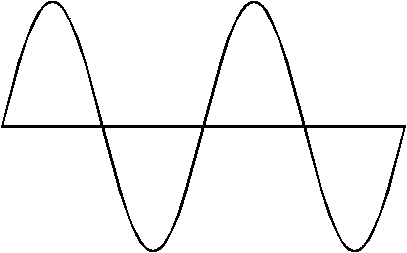
How many waves are in this picture?
a)
1
b)
2
c)
3.5
d)
4
24.

Which arrow shows how you would move your hand to create a transverse wave with the slinky?

a)

Red arrow

b)

Blue arrow

25.

Which arrow shows how you would move your hand to create a longitudinal wave with the slinky?

a)

Red arrow

b)

Blue arrow

26.
Which letter represents the wavelength of a wave?
a)
A
b)
B
c)
C
d)
D
27.
Which letter represents the amplitude of the wave?
a)
A
b)
B
c)
C
d)
D
28.
Which letter(s) represent the crest of the wave?
a)
A
b)
B & D
c)
B & F
d)
F
29.
Which letter(s) represent the trough of the wave?
a)
A
b)
B & D
c)
D
d)
C & G
30.
Which vocabulary term is used to identify the distance between points C & G?
a)
Amplitude
b)
Crest
c)
Frequency
d)
Wavelength
31.
Which vocabulary term is used to identify point A on the diagram?
a)
Amplitude
b)
Crest
c)
Frequency
d)
Trough
32.
Which wave in the diagram has the greatest frequency?
a)
1
b)
2
c)
3
d)
4
33.
Which wave in the diagram has the greatest wavelength?
a)
1
b)
2
c)
3
d)
4
34.

Which wave has highest frequency?

a)

A

b)

B

c)

C

d)

D

35.

The two waves are similar in...

a)

frequency

b)

amplitude

c)

wavelength

d)

energy

36.

Which wave is carrying more energy?

a)

The blue wave because it has a larger amplitude.

b)

The blue wave because it has higher frequency.

c)

The red wave because it has higher amplitude.

d)

The red wave because it has higher frequency.

37.
The heat from a lamp allows a lizard to remain warm. This is an example of which type of heat transfer?
a)
radiation
b)
conduction
c)
convection
d)
insulation
38.
Which describes what can happen as a result of radiation?
a)
 A piece of wood burns in a fire.
b)
A shirt is hot after having been  ironed.
c)
A can of soup is heated in a pot on a stove.
d)
A car’s inside temperature rises  to over 100 degrees on a sunny day.
39.
Which best describes the process of convection?
a)
Convection is the primary way  heat travels  through rays.
b)
Convection is the primary way heat travels  through metals.
c)
Convection is the primary way heat travels  through appliances.
d)
Convection is the primary way heat travels  through liquids and gasses.
40.
How is heat transferred when boiling a pot of water on the stove?
a)
conduction
b)
convection
c)
combustion
d)
radiation
41.
Which is an example of heat being transferred by conduction?
a)
a furnace heating the air in a school
b)
an ice cube melting in a person’s hand
c)
a pot of water on a stove boiling
d)
the sun heating water in a swimming pool
42.

A group of friends gather around a fire to stay warm. This is an example of ________.

a)

conduction

b)

convection

c)

radiation

43.

In heat transfer, heat always flows from the _______________ substance to the _______________ substance.

a)

hotter to colder

b)

colder to hotter

c)

hotter to hotter

d)

colder to colder

44.

The baby chickens kept warm by the heat lamps. This is an example of ________.

a)

conduction

b)

convection

c)

radiation

45.

The handle of a metal spoon warms up when it is placed in a hot bowl of soup because of ________.

a)

convection

b)

conduction

c)

radiation

46.

Near the ceiling of a room the air is warmer. The warm air rises because of ________.

a)

conduction

b)

convection

c)

radiation

47.
Which direction will the heat flow while this person holds a hot cup of tea?
a)
from the cup to her hand
b)
from her hand to the cup
c)
no heat is transferred
48.

An iron is placed on your clothes to smooth out the wrinkles. The iron transfers heat to your clothes through

a)

conduction

b)

convection

c)

radiation

49.

In which of the following state are the particles closest together?

a)

Fluid

b)

Gas

c)

Liquid

d)

Solid

50.

Which of the following is not a method for heat transfer

a)

Radiation

b)

Insulation

c)

Conduction

d)

Convection

51.

Which is the best surface for reflecting heat radiation?

a)

Shiny white

b)

Dull white

c)

Shiny black

d)

Dull black

52.

Which is the best surface for absorbing heat radiation?

a)

Shiny white

b)

Dull white

c)

Shiny black

d)

Dull black

53.
Which of the following is needed for convection to happen?
a)
Fluid/s
b)
Light in the form or rays
c)
Electromagnetic waves
d)
Fire
54.

How is white light able to separate through a prism?

a)

the light is being absorbed

b)

the light is being refracted

c)

the light is being reflected

55.

We are able to see a mirrored image of the mountains on the water through...

a)

refraction

b)

reflection

56.
a)

reflection

b)

refraction

57.
a)

reflection

b)

refraction

58.

What color is being reflected?

a)

green

b)

blue and yellow

c)

red, orange, yellow, blue, indigo, violet

59.

Which is true about white light?

a)

it reflects all color of light

b)

it absorbs all color of light

c)

it only reflects red, blue, and yellow light

60.

What color is an object that absorbs all the colors in the light spectrum?

a)

A rainbow

b)

White

c)

Black

d)

Invisible

61.

A leaf is green. What does this tell you about the light that is being absorbed?

a)

The light is a UV ray.

b)

The light is not a part of the light spectrum.

c)

All colors are reflected except green.

d)

All colors are absorbed except green

62.

What is the angle of reflection equal to?

a)

The angle of refraction

b)

The angle of incidence

c)

The angle of absorption

d)

The angle of light

63.

What is the angle of incidence?

a)

The angle at which light bends in water.

b)

The angle at which light hits a surface.

c)

The angle at which light is absorbed by an object.

d)

The angle at which light bounces off a surface.

64.

An opaque object taking in light is called...

a)

a rainbow

b)

dark colors

c)

refraction

d)

absorption

65.

When light bounces off light, this is called...

a)

refraction

b)

absorption

c)

reflection

d)

a prism

66.

The bending of light is called...

a)

a rainbow

b)

refraction

c)

reflection

d)

absorption