
 Worksheets
CLASS_IX_FORCE AND LAWS OF MOTION_2
Total questions: 64
Worksheet time: 3hrs 39mins
Distance traveled by a car in first 5 mins is the same as the distance it covers in next 5 mins which is same as the distance covered by it in next 5 mins. the car is executing
Non- uniform motion
Uniform Motion
Uniform Circular Motion
None of these
Acceleration is measured opposite to velocity then
acceleration is taken as positive
acceleration is taken as negative
Both options
None of these
The motion of an athlete moving in a circular path at constant speed is an example of
uniform motion
accelerated motion
uniform circular motion
straight line motion
Balanced forces do not change the state of motion of an object.
True
False
None of these
Don't Know
More massive objects have less inertia
True
False
None of these
Mass and inertia are not related
In cricket the fielder while making a catch gradually pulls his hands backwards with moving ball. This is an application of
Newton's First Law of Motion
Newton's Second Law of Motion
Newton's Third Law of Motion
None of these
When a sailor jumps in the forward direction from a small boat the boat moves backwards. Here reaction force is
In the same direction of applied force.
Opposite to the direction of applied force
Enough data not provided
None of these
Law of conservation of momentum states that the sum of momenta before collision is equal to the sum of momenta after collision provided________
there is no external unbalanced force acting on them
there is external unbalanced force acting on them
there maybe one external unbalanced force acting on them
there might be an external unbalanced force acting on them
Law of conservation of momentum states that the sum of momenta before collision is equal to the sum of momenta after collision provided________
there is no external unbalanced force acting on them
there is external unbalanced force acting on them
there maybe one external unbalanced force acting on them
there might be an external unbalanced force acting on them
Motion's first equation is.
v=u+at
u=v+at
a=ut+v
t=u+vt
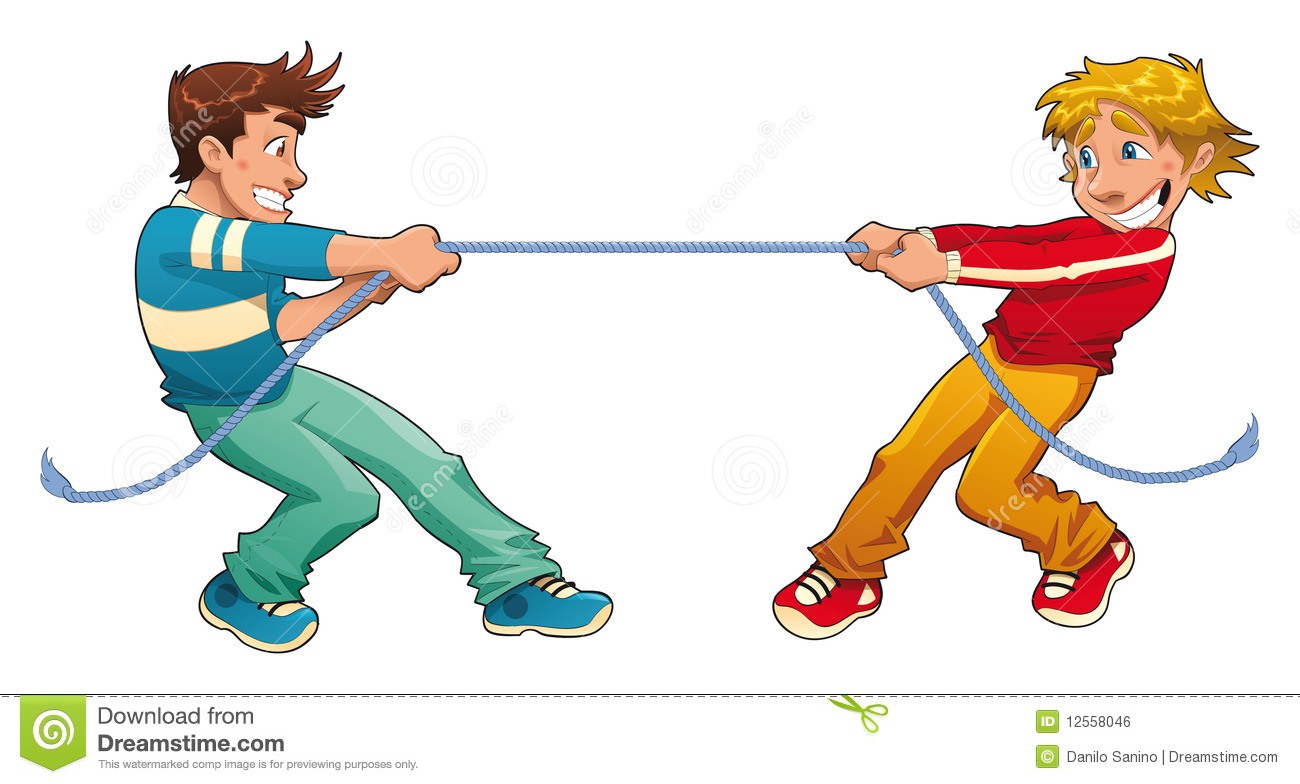
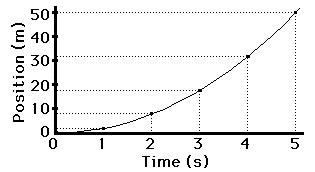
If a force of 26 N is exerted on two balls, one with a mass of 0.52 kg and the other with a mass of 0.78 kg, which ball will have the greater acceleration?
Same
0.78 kg
o.52 kg
None
In which direction and with how much force will an object move if you push to the left with 15N of force and your friend pushes to the right with 5N of force?
up with 10N of force
down with 5N of force
left with 10N of force
right with 10N of force


Inertia depends on __________.
Weight
Velocity
Mass
Acceleration
The force needed to accelerate 1 kg of an object at an acceleration of 1 m/s2 is
(a)
An object with a mass of 100 kg is observed to accelerate at the rate of 5 m/s2. Calculate the force required to produce this acceleration.
20 N
500 m/s
500 kg
500 N
A basketball with a mass of 0.60 kg is accelerated with a force of 10.8 N. If resisting forces are ignored, what is the acceleration of the basketball to the nearest m/s2?
0.06 N
6.48 m/s2
18 N
18 m/s2
A tow truck exerts a force of 3000 N on a car, accelerating it at 3 m/s2. What is the mass of the car?
1000 N
1000 kg
9000 N
9000 kg
10 000 kg


The diagram below shows two different forces acting on a cyclist riding a bicycle.
The total mass of the cyclist and the bicycle is 100.0 kg. Based on this information, what is the acceleration of the cyclist?
0.66 m/s2 backward, because the force of the air slows the cyclist down
0.66 m/s2 forward, because the applied force is greater than the force of the air
2.3 m/s2 backward, because the forces are opposite and not equal
2.3 m/s2 forward, because the cyclist's inertia is greater than the force of the air

Which diagram represents an object moving to the right at a constant velocity?
a
b
c
d
a or c

Name the force acting upwards on the book.
(a)

Which one of these boxes can be said to be moving at constant velocity?
box 1
box 2
box 3
box 4
none

Forces acting in the horizontal plane on a 5 kg object are shown in the diagram. (seeing from the top, birds-eye view). What is the acceleration of the object?
4 m/s2
3.4 m/s2
7 m/s2
0
Tick all the contact forces in the list below:
friction
normal force
weight
upthrust
air drag
Tick all the field forces in the list below:
weight
normal
electric force
magnetic force
friction

A graph of Frictional Forces (f) versus Applied Force (P) on an object on a horizontal surface is given in the diagram. The object has a mass of 3 kg. What is the acceleration of the object when 125 N of force is applied?
0
25 m/s2
41.7 m/s2
50 m/s2

Which of the following is the best expression for the Normal Force?
FN = mg cos(ϴ)
FN = mg sin(ϴ)
FN = mg sin(180-ϴ)
FN = mg cos(90-ϴ)

What is the tension in the string? Calculate using g=10 N/kg. State your answer only with three significant number together with its unit. (There is no friction anywhere in the system)
(a)

Distance-time graph of two objects A and B are shown below. Choose correct option.
Speed of object A is greater than object B
Speed of object A is smaller than object B
Both have same speed
Speed of Object A is double the speed of object B.
Which of the following figures represent uniform motion of a moving object correctly?


The figure above shows distance-time graphs of two objects X and Y. Which object is moving with greater speed?
Both objects are at rest
Both objects are moving with same speed
Object Y
Object X

The velocity time graph of two bodies A and B traveling along the +x direction are given in the figure. Which body is moving with greater acceleration A or B?
A
B


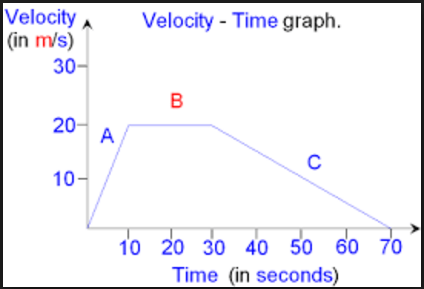
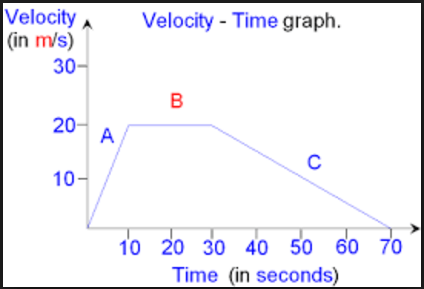

The velocity time graph of two bodies A and B traveling along the +x direction are given in the figure. Which body is moving with greater acceleration A or B?
A
B


A dog basks in the sun when he sees a squirrel and bolts after it. If the dog accelerates at +1.6 m/s2, how far does he run in 3 seconds?
4.8 meters
45 meters
1.6 meters
7.2 meters
An airplane accelerates down a runway at 4 m/s2 for 24 s until is finally lifts off the ground. Determine the distance traveled before takeoff?
1152m
2304m
48m
1000m

