wayground logo

Free Printable Worksheets

NEW

Font size

S
M
L
XL
Worksheets

AP Calculus AB 1st Semester Review

Total questions: 75

Worksheet time: 6hrs 15mins

Name
Class
Date
1.

what is the derivative of y= sin(2x)?

a)

y/=cos(2x)

b)

y/=2sin(2x)

c)

y/=2sin(x)+cos(2x)

d)

y/=2cos(2x)

2.

when is the function f(x)=x2+6x+9 increasing?

a)

(3,∞)

b)

(-∞,3)

c)

(-3,-∞)

d)

(-3,∞)

3.

Let f be the function defined by f(x)=4x3-10x+5. Find the equation of the tangent line to the graph of f at the point where x = 1

a)

y+1=2(x-1)

b)

y-1=2(x-1)

c)

y+1=2(x+1)

d)

y+1=-2(x-1)

4.

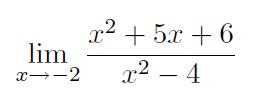
Find the Limit

a)

0

b)

-1/4

c)

-5/4

d)

1

e)

DNE

5.

Find the limit as x approaches 1

a)

1

b)

-1

c)

-3

d)

Infinity

e)

DNE

6.
Find the derivative.
a)
x4 cosx - 4x3sinx
b)
xcosx + 4x3sinx
c)
4x3cosx
d)
-4x3cosx
7.
If a function has a derivative that is negative, what does that tell you?
a)
The function is increasing
b)
The function is decreasing
c)
The concavity of the function is up
d)
The concavity of the function is down
8.
The acceleration function is the first derivative of...
a)
position
b)
velocity
c)
calculus
d)
particle motion
9.
 If (a,b) is a local minimum, then what will be true about f''(a)?
a)
It's postive
b)
It's negative
c)
It's zero
d)
Cannot be determined
10.
If f''(x)>0 over the interval (-7,1), then what will be true about f'(x)?
a)
It's constant
b)
It's increasing
c)
It's decreasing
d)
Cannot be determined
11.

Find dy/dx of

x3 +y3 = 36

a)

6 -x

b)

3x2 +3y2

c)

−x2/y2

d)

0

12.
a)
A
b)
B
c)
C
d)
D
13.
a)
A
b)
B
c)
C
d)
D
14.
a)

A

b)

B

c)

C

d)

D

e)

E

15.
a)

A

b)

B

c)

C

d)

D

e)

E

16.
a)

A

b)

B

c)

C

d)

D

e)

E

17.
a)

A

b)

B

c)

C

d)

D

e)

E

18.
a)

A

b)

B

c)

C

d)

D

e)

E

19.
a)

A

b)

B

c)

C

d)

D

e)

E

20.
a)

A

b)

B

c)

C

d)

D

e)

E

21.
a)

A

b)

B

c)

C

d)

D

e)

E

22.
a)

A

b)

B

c)

C

d)

D

e)

E

23.
a)

A

b)

B

c)

C

d)

D

e)

E

24.
a)

A

b)

B

c)

C

d)

D

e)

E

25.
a)

A

b)

B

c)

C

d)

D

e)

E

26.
Find h'(3)
a)
-2
b)
0
c)
1
d)
3
27.
The radius of a sphere is decreasing at a rate of 2 cm/sec.  At the instant when the radius of the sphere is 3 cm, what is the rate of change, in cm2/sec, of the surface area of the sphere?  (The surface area of a sphere is A = 4πr2.)
a)
-108π
b)
-72π
c)
-48π
d)
-24π
28.

Find the derivative of

 y=ln(4x1)y=\ln\left(4x-1\right)  

a)

 14x1\frac{1}{4x-1}  

b)

 1(4x1)ln4\frac{1}{\left(4x-1\right)\ln4}  

c)

 44x1\frac{4}{4x-1}  

d)

 4x1ln(4)\frac{4x-1}{\ln\left(4\right)}  

29.

Find the derivative of

 y=cos3(2x)y=\cos^3\left(2x\right)  

a)

 6cos2(2x)sin(2x)-6\cos^2\left(2x\right)\sin\left(2x\right)  

b)

 3cos2(2x)3\cos^2\left(2x\right)  

c)

 6cos2(2x)sin(2x)6\cos^2\left(2x\right)\sin\left(2x\right)  

d)

 6cos2(2x)sin(x)-6\cos^2\left(2x\right)\sin\left(x\right)  

30.

Find the derivative

 2x2xy+y2=02x^2-xy+y^2=0  

a)

 4x+yx2y\frac{4x+y}{x-2y}  

b)

 4xy2x+y\frac{4x-y}{2x+y}  

c)

 4xx2y\frac{4x}{-x-2y}  

d)

 x2y4x\frac{x-2y}{4x}  

31.

 y=x2e3xy=x^2e^{3x}  

Find the derivative of

a)

 3x2e3x+2xe3x3x^2e^{3x}+2xe^{3x}  

b)

 6xe3x6xe^{3x}  

c)

 2xe3x2xe^{3x}  

d)

 x2e3x+2xe3xx^2e^{3x}+2xe^{3x}  

32.
a)

A

b)

B

c)

C

d)

D

e)

E

33.
a)

A

b)

B

c)

C

d)

D

e)

E

34.
a)

A

b)

B

c)

C

d)

D

e)

E

35.
a)

A

b)

B

c)

C

d)

D

e)

E

36.

Find an equation of the tangent line to the graph of f at  x=2x=-2   f(x)=12x34x2+7xf\left(x\right)=\frac{1}{2}x^3-4x^2+7x  

a)

 y+34=83(x+2)y+34=\frac{8}{3}\left(x+2\right)  

b)

 y34=83(x2)y-34=\frac{8}{3}\left(x-2\right)  

c)

 y+34=29(x+2)y+34=29\left(x+2\right)  

d)

 y34=29(x2)y-34=29\left(x-2\right)  

37.

 g(x)=14x4+13x36x2g\left(x\right)=\frac{1}{4}x^4+\frac{1}{3}x^3-6x^2  Find the open intervals on which the function is increasing or decreasing.

a)

 increase=(,4)(0,3) and decrease=(4,0)(3,)increase=\left(-\infty,-4\right)\cup\left(0,3\right)\ and\ decrease=\left(-4,0\right)\cup\left(3,\infty\right)  

b)

 increase=(4,) and decrease=(,4)increase=\left(-4,\infty\right)\ and\ decrease=\left(-\infty,-4\right)  

c)

 increase=(4,0)(3,) and decrease=(,4)(0,3)increase=\left(-4,0\right)\cup\left(3,\infty\right)\ and\ decrease=\left(-\infty,-4\right)\cup\left(0,3\right)  

d)

 increase=(,4) and decrease=(4,)increase=\left(-\infty,-4\right)\ and\ decrease=\left(-4,\infty\right)  

38.
A bug begins to crawl up a vertical wire at time t = 0.  The velocity v of the bug at time t, 0 < t < 8, is given by the function whose graph is shown behind this text. At what value of t does the bug change direction
a)
2
b)
4
c)
6.5
d)
7
39.
The position function x(t)=t3+6t2+16t-18 is given on the interval of 0<x<9. What is the velocity at t=6?
a)
197
b)
190
c)
18
d)
196
40.
a)

A

b)

B

c)

C

d)

D

e)

E

41.

a)

E

b)

B

c)

A

d)

D

e)

C

42.

a)

A

b)

B

c)

C

d)

D

e)

E

43.

a)

D

b)

B

c)

E

d)

C

e)

A

44.

a)

E

b)

A

c)

B

d)

D

e)

C

45.

Suppose that h(x)h\left(x\right)  is continuous on the interval (2, 9) and that f(2) > 0 and f(9) < 0, then by the Intermediate Value Theorem

a)

 f(x) f\left(x\right)\   is decreasing on the interval (2, 9)

b)

 f(x) f\left(x\right)\   must have at least one x-intercept in the interval (2, 9)

c)

 f(x)f\left(x\right)  has a positive Average Rate of Change on the interval (2, 9)

d)

 f(x)f\left(x\right)  has at least one critical value in the interval (2, 9)

e)

 lim(x2)f(x)=9\lim_{\left(x\rightarrow2\right)}f\left(x\right)=9  

46.

If f(x)=(x1)(x2+2)3 ,  then f(x) isf\left(x\right)=\left(x-1\right)\left(x^2+2\right)^3\ ,\ \ then\ f'\left(x\right)\ is  

a)

 6x(x2+2)26x\left(x^2+2\right)^2  

b)

 6x(x1)(x2+2)26x\left(x-1\right)\left(x^2+2\right)^2  

c)

 (x2+2)2(x2+3x1)\left(x^2+2\right)^2\left(x^2+3x-1\right)  

d)

 3(x1)(x2+2)2-3\left(x-1\right)\left(x^2+2\right)^2  

e)

 (x2+2)2(7x26x+2)\left(x^2+2\right)^2\left(7x^2-6x+2\right)  

47.

What are all values of x for which the function f defined by f(x)=(x2 - 3)e-x is increasing?

a)

x < -1 and x > 3

b)

-3 < x < 1

c)

-1 < x < 3

d)

All values of x

48.
Let f be the function given by f(x) = x3.  What are all values of c that satisfy the conclusion of the Mean Value Theorem on the closed interval [-1, 2]?  (No calculator)
a)
0 only
b)
1 only
c)
√3 only
d)
-1 and 1
49.

Where is the point of inflection for the function  f(x) = x3 +6x2f\left(x\right)\ =\ x^{3\ }+6x^2  ?

a)

 x=0x=0  

b)

 x=4x=-4  

c)

 x=2x=-2  

d)

 x=4x=4  

50.

On what interval(s) is the function
 f(x) = x3 +6x2f\left(x\right)\ =\ x^{3\ }+6x^2  
concave up?

a)

 (,)\left(-\infty,\infty\right)  

b)

 (,2)\left(-\infty,-2\right)  

c)

 (2,)\left(-2,\infty\right)  

d)

 (0,)\left(0,\infty\right)  

51.

Find the derivative of  g(x)=3x2x2+2g(x)=\frac{3x-2}{x^2+2}  

a)

 9x2+29x^2+2  

b)

 3(x2+2)(x2+2)2\frac{3\left(x^2+2\right)}{\left(x^2+2\right)^2}  

c)

 3x2+4x+6(x2+2)2\frac{-3x^2+4x+6}{\left(x^2+2\right)^2}  

d)

 3x2+10(x2+2)2\frac{-3x^2+10}{\left(x^2+2\right)^2}  

52.
If f '(3) = 0 and f"(3) < 0, then which of the following must be true?
a)
There is a local max at x=3
b)
There is a local min at x = 3
c)
There is an inflection point at x = 3
d)
There is an x-intercept at x = 3
53.
a)
4
b)
1
c)
-4
d)
0
54.
a)

A

b)

B

c)

C

d)

D

e)

E

55.

a)

B

b)

C

c)

D

d)

E

e)

A

56.

a)

A

b)

C

c)

D

d)

E

e)

B

57.

a)

A

b)

B

c)

C

d)

D

e)

E

58.

a)

A

b)

B

c)

C

d)

D

e)

E

59.

a)

A

b)

C

c)

B

d)

E

e)

D

60.

a)

C

b)

A

c)

D

d)

E

e)

B

61.
The graph shown is the DERIVATIVE of f. From the derivative's graph, identify the interval graph where f (the original function) is concave up.
a)
(-1,1) & (3,4)
b)
(-3,-2)
c)
(-2,-1)
d)
(-3,-1) & (1,3)
62.
For a function g(x), g''(3)=-8 indicates that g(x) is ____________ at x=3.
a)
increasing
b)
decreasing
c)
concave up
d)
concave down
63.
For a function f(x), f'(-3) = 5 indicates f(x) is ___________ at x=-3.
a)
increasing
b)
decreasing
c)
concave up
d)
concave down
64.

What are the intervals of the graph increasing for f(x) = 2x4- 4x2 + 1

a)

(-1,0)

b)

(0,1)

c)

(-∞,-1) and (0,1)

d)

(1,∞) and (-1,0)

65.
What is the maximum value of f(x) = x3 - 3x2 - 1 on the interval [-3, 2]?
a)
0
b)
-1
c)
2
d)
5
66.

On what interval(s) is the function y=x3 + 6x2

concave down?

a)

(-∞,-4)

b)

(-∞,-2)

c)

(-2,∞)

d)

(0,∞)

67.

a)

(-6, -2) and (2, 4)

b)

(0,3)

c)

(-2,2)

d)

(-6,0) and (3,5)

68.
a)

-2

b)

2

c)

0

d)

3

69.
a)

(-3,-2)

b)

(-1,1) and (3,4)

c)

(-2,4)

d)

(-3,0) and (2,4)

70.
a)

(-6, -2) and (2, 5)

b)

(-6, 0) and (3,5)

c)

(0,3)

d)

(-2,2)

71.
a)

(-3,-2)

b)

(-1,1) and (3,4)

c)

(-2,4)

d)

(-3,0) and (2,4)

72.
a)

-2 and 1

b)

0

c)

-1

d)

1 only

73.
a)

(-4,-1)

b)

(-4,-2) and (0,1)

c)

(-2,0) and (1,3)

d)

(-1,3)

74.
Evaluate the limit
a)
a
b)
b
c)
c
d)
d
75.
a)

I only

b)

II only

c)

I, II, III

d)

None