
 Worksheets
Axial Skeleton Exam Review
Total questions: 77
Worksheet time: 29mins
Which two bones make up the zygomatic arch also called the cheek bone
Zygomatic bone
Temporal bone
Maxillary Bone
Parietal Bone
Volmer
Which cranial bone contains the foramen magnum
Occipital
Frontal
Parietal
Temporal
Ethmoid
Above the Foramen Magnum the nerve material is called the brain stem, below the Foramen Magnum, it is called the
Nerve Cord
Hind Brain
Vertebral Foramen
Axial Nerve
The eye socket is also called the
Orbit
Occular Disk
Occular
Orbital Fissure
The only movable facial bone is the
Mandible
Maxilla
Zygomatic
Volmer
One pair of ribs are connected to each of the ______________ vertebra
Thoracic
Cervical
Lumbar
Sacral
In all mammals there are ______ cervical vertebra
7
12
5
4
The C1 vertebrum has another name. It is called the _______
atlas
axis
dens
spinous process
The C2 vertebrum is different because it has a special projection that connects to C1. This projection is called the _______
dens
spinous process
styloid process
transverse process
The perpendicular plates of TWO bones make up the nasal septum. These bones are the ____________ and the ____________- bones
Ethmoid
Volmer
Nasal
Palatine
Sphenoid
The mental foramen is a landmark of the ________________ bone.
Mandible
Maxilla
Temporal
Frontal
The Mastoid Process is an important landmark of the ______________ bone.
Temporal
Mandibular
Sphenoid
Occipital
The skull bones are fused together by _____________ which are immovable joints.
sutures
joints
tendons
ligaments
The free-floating bone that the muscles of the tongue are attached to is the ___________ bone. It is the only free-floating bone in the human body.
Hyoid
Palatine
Maxillary
Occipital
The Parietal bones are connected by the ______________ suture
sagittal
parietal
coronal
lambdoid
squamous
The primary function of the intervertebral disks is to__________________________
provide a cushion to keep bones from rubbing together
allow the transmission of nerve impulses from one vertebra to the next
allow vertebra to rub together
move water through the body
The facial bone that has the tear duct and the location of the tear gland is the _________ bone
Lacrimal
Mandibular
Occipital
Sternal
Which of the facial bones below are NOT paired, but are single bones.
volmer
Mandible
Maxilla
Palatine
Nasal
The bone that folds over the eyebrow area and makes the roof of the orbit is the ___________ bone
Frontal
Nasal
Lacrimal
Sphenoid
The ________________ forms the upper jaw and holds the upper teeth.
Maxilla
Mandible
Palatines
Sphenoid
What are the only cranial bones below that come in pairs?
Temporal
Parietal
Frontal
Occipital
Sphenoid
The cranial bone that forms the sella turcica .... that holds the pituitary gland is the ____________ bone
Sphenoid
Ethmoid
Volmer
Occipital
The cranial bone that has a sharp point, the Christa Galli, that can cause death if it damages the vessels of the brain is the _______________ bone
Ethmoid
Sphenoid
Occipital
Volmer
There are _________ processes that project outward from the lumbar vertebrae,.
7
4
6
8
The ____________- suture connects the occipital bone with the parietal bones
Lambdoid
Sagittal
Coronal
Squamous
The only cranial bone that articulates with every other cranial bone as well as with the brain is the ____________ bone
Sphenoid
Ethmoid
Parietal
Occipital
The C2 vertebrum has another name. It is called the _______
atlas
axis
dens
spinous process
The optic nerve enters the head through the optic foramen in the ______________ bone.
sphenoid
ethmoid
temporal
volmer
The olfactory nerve fibers enters the head through the _________________ at the bae of the anterior part of the skull
cribriform plate
sella turcica
crista galli
olfactory foramen

This is an image of a(n) _____________ vertebrum,
atlas
axis
cervical
thoracic
lumbar
The ___________________ of the temporal bone is where the ossicles of the ear are. This is the thickest part of the base of the cranium.
petrous part
squamous part
mastoid process
styloid process
The ___________________ of the temporal bone is shaped like a sharp tooth and the location where various ligaments attach throat muscles
petrous part
squamous part
mastoid process
styloid process
Where will you find the alveolar margin?
maxilla bones
mandible bone
palatine bones
nasal bones
zygomatic bones

The arrow is pointing to the ________________ process
zygomatic
styloid
mastoid
pterygoid

The arrow is pointing to the ______________ suture
coronal
sagittal
lambdoid
squamous
parietal

The arrow is pointing to the ___________ process
zygomatic
mastoid
styloid
pterygoid
occipital

Ch 34: The adult human skeleton contains about (a) bones. It can be divided into two main parts. The (b) includes the skull, backone, and ribs. The (c) includes the bones of the arms and legs.
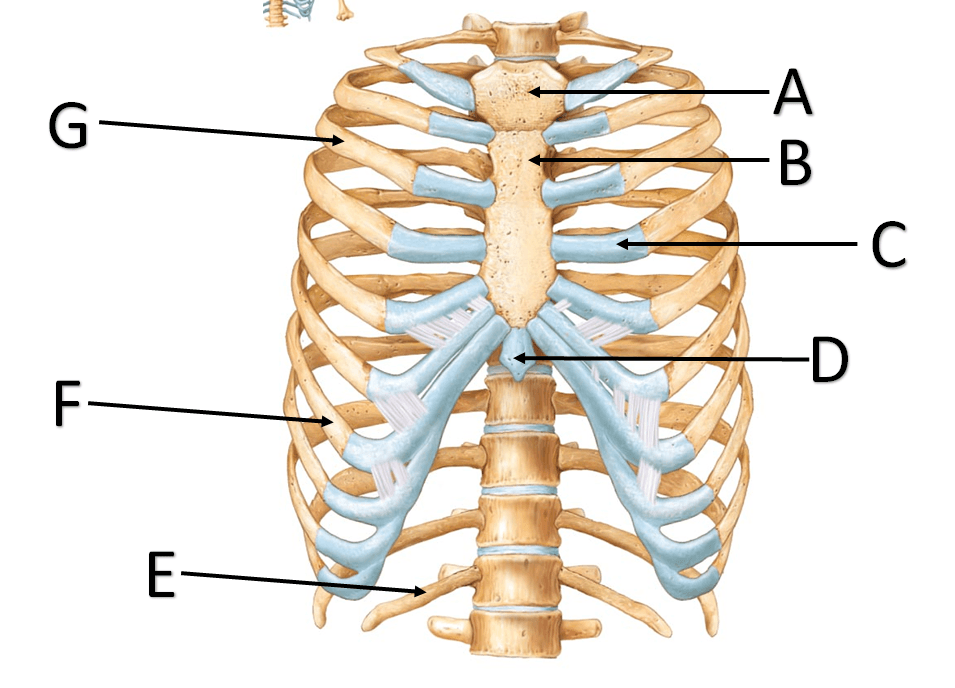
Identify floating ribs.
Identify true ribs.
Identify false ribs.
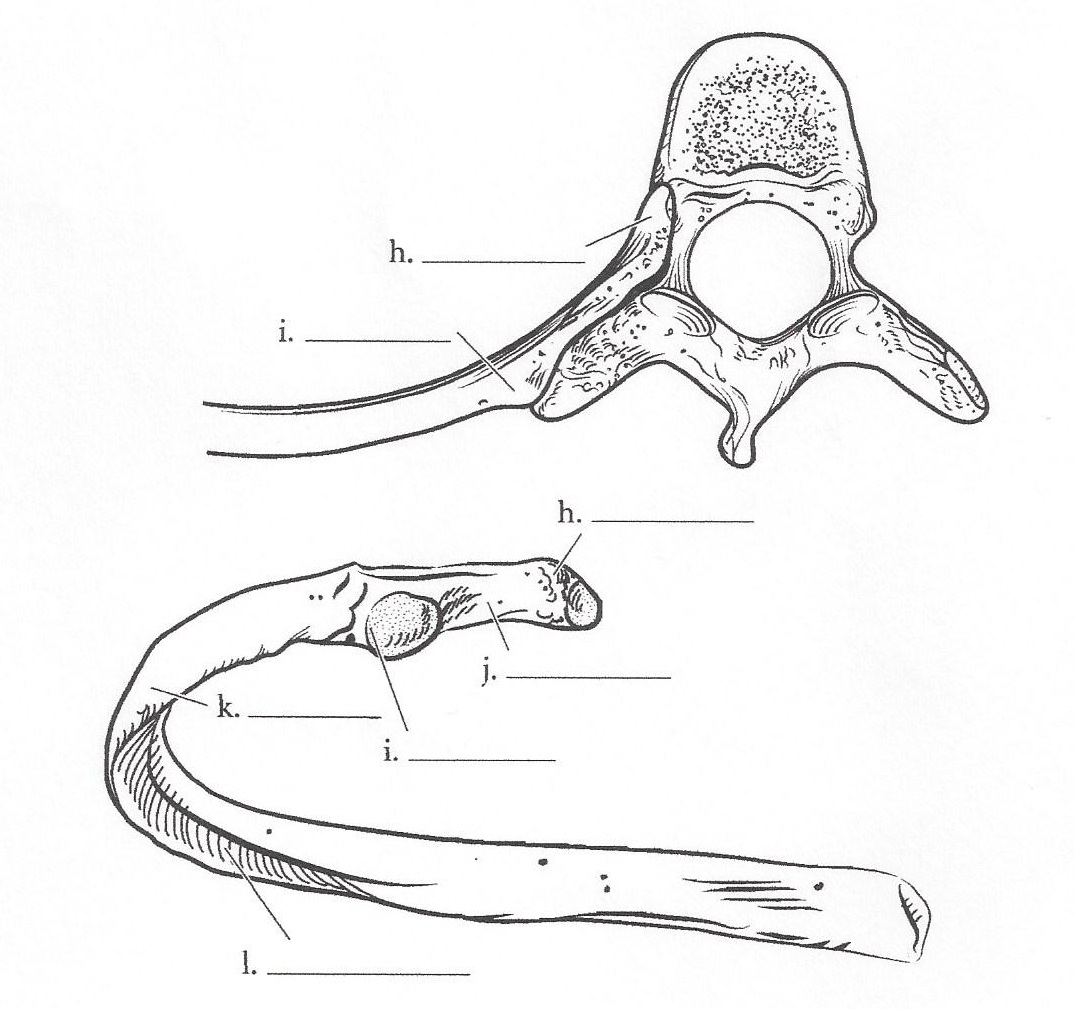
WHAT IS i ?
HEAD
TUBERCLE
NECK
SHAFT
How many pairs of ribs are found in the typical human?
12
5
10
8

What is the name of the part in green?
manubrium
glenoid cavity
xiphoid process
body of sternum

What classification of bone is the sternum?
Flat bone
Long bone
Short bone
Irregular bone

What classification of bones are the ribs?
Flat bone
Long bone
Short bone
Irregular bone
The _____________ is where the manubrium and body of the sternum meet. It is the most anterior point of the ventral side of the person.
sternal angle
sternal notch
manubrial angle
sternoclavicular joint
Rib number (a) joins the manubrium at the sternal angle.
Which bone is commonly known as the tailbone?
femur
coccyx
humerus
scapula

This blue portion of this image represents the __________ skeleton.
Appendicular skeleton
Axial skeleton
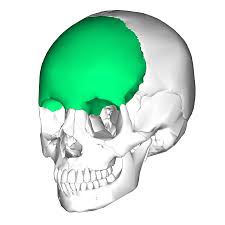
Identify the highlighted bone.
Frontal
Mandible
Occipital
Parietal
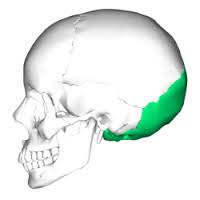
Identify the highlighted bone.
Parietal
Occipital
Frontal
Temporal
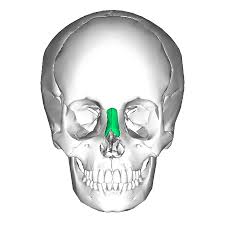
Identify the highlighted bone.
maxilla
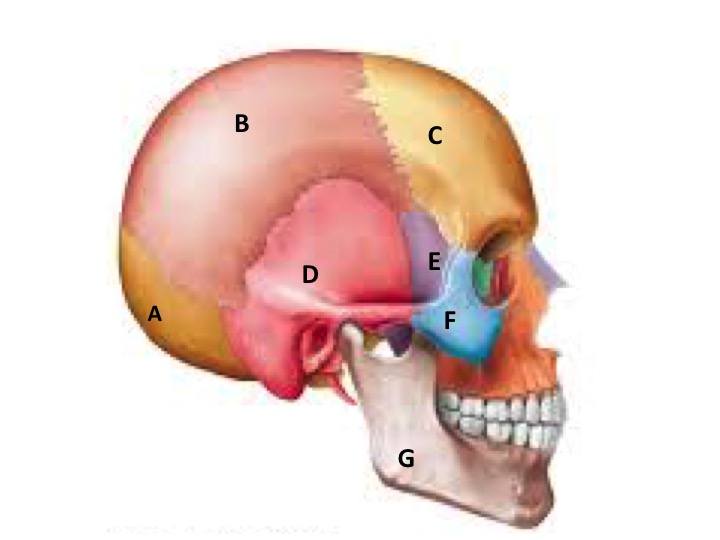
Identify letter F
temporal
sphenoid
frontal
zygomatic
Identify letter D
temporal
sphenoid
frontal
zygomatic
Identify letter B
parietal
sphenoid
frontal
zygomatic
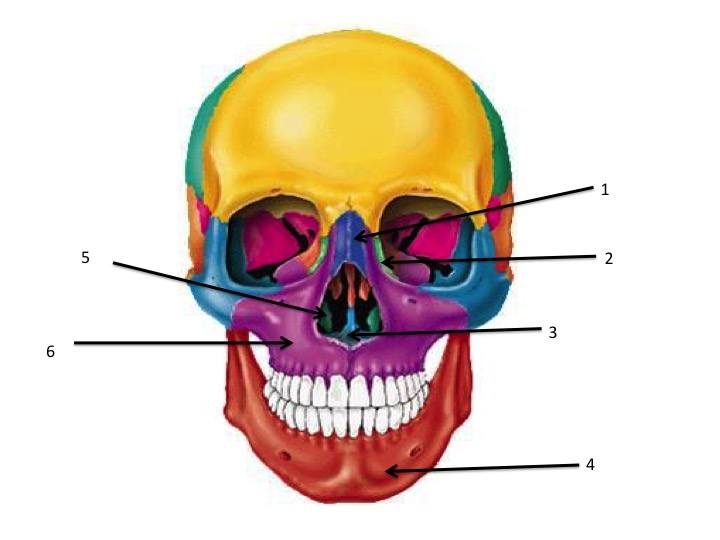
Identify #6
zygomatic
maxilla
vomer
mandible
Identify #4
zygomatic
maxilla
vomer
mandible

Identify #7
Coronal Suture
Squamous Suture
Lambdoid Suture
Frontal Suture

Identify #4
Transverse process
Vertebral Body
Identify #3
Transverse process
Vertebral Body

Which section of the vertebrae is highlighted?
thoracic
cervical
lumbar
sacral

Which section of the vertebrae is highlighted?
cervical
thoracic
lumbar
sacrum

Which section of the vertebrae is highlighted?
cervical
thoracic
lumbar
sacrum
Identify the jugular notch
Match bones of rib cage

true ribs

floating ribs

false ribs

manubrium

xiphoid process
Which of the following is NOT a bone area associated with the axial skeleton?
pelvic girdles
the skull
rib cage
vertebral column
How do true ribs differ from false ribs?
True ribs are attached directly to the sternum but the false ribs are not directly attached.
True ribs are not directly attached to the sternum but the false ribs are attached directly to the sternum
True ribs are not directly attached to the sternum but the false ribs are completely detached.
Which ribs are attached to the thoracic vertebrae?
none
some
all
What is the junction between the manubrium and body of the sternum; also called the sternal angle?
angle of Louis
jugular notch

