Wayground logo

Free Printable Worksheets

Font size

S
M
L
XL
Worksheets

Space Pre-test

Total questions: 83

Worksheet time: 54mins

Name
Class
Date
1.
The imaginary line running through the center of Earth.
a)
axis
b)
moon
c)
constellation
d)
orbit
2.
The rotation of Earth on its axis causes the pattern of _____.
a)
night and day
b)
constellations
c)
Earth's seasons
d)
the phases of the moon
3.

Earth's rotation take about ____________.

a)

48 hours

b)

24 hours

c)

one year

d)

three days

4.

One complete revolution of Earth around the sun takes about one _____________.

a)

year

b)

month

c)

day

d)

week

5.
Which term describes the time it takes for Earth to complete one circle around the sun.
a)
Rotation
b)
Revolution
c)
Kepler's 1st Law
d)
Barycenter
6.
Lasts 365 days
a)
Rotation
b)
Revolution
c)
Nutation
d)
Precession
7.
Earth's orbit follows an elliptical path.
a)
Kepler's 1st law
b)
Kepler's 2nd law
c)
Kepler's 3rd law
d)
Nutation
8.
When Earth orbits around the sun, it slows down when it is close to the sun. It speeds up its orbit when it is further from the sun. This is because the sun's gravity is stronger when you are closer to it.
a)
Kepler's 1st law
b)
Kepler's 2nd law
c)
Kepler's 3rd law
d)
Nutation
9.
Planets further from the sun have an orbit that lasts MUCH longer than planets that are close to the sun.
Pluto's orbit lasts over over 90,000 days.
Mercury's orbit lasts 88 days.
a)
Kepler's 1st law
b)
Kepler's 2nd law
c)
Kepler's 3rd law
d)
Nutation
10.

December 21 in the Northern Hemisphere is known as the

a)

Summer Solstice

b)

Winter Solstice

c)

Vernal Equinox

d)

Autumnal Equinox

11.

The Vernal (Spring) Equinox happens approximately on

a)

June 21

b)

December 21

c)

September 21

d)

March 21

12.

The Autumnal Equinox is also known as the first day of Fall. It happens on which date?

a)

June 21

b)

September 21

c)

December 21

d)

March 21

13.

An object that orbits another planet is called

a)

A meteor

b)

An asteroid

c)

A moon

d)

A star

14.

One orbit of the Moon around Earth takes about

a)

1 year

b)

365 days

c)

27.3 days

d)

1 hour

15.

The appearance that the moon is changing shapes during each month are called

a)

Phases of the Moon

b)

Spheres of the Moon

c)

Colors of the Moon

d)

Sizes of the Moon

16.
What is the term for Earth being in the center?
a)
geocentric
b)
heliocentric
c)
sun centered
d)
Galileo
17.
Which scientist found that planetary orbits were elliptical?
a)
Galileo
b)
Ptolemy
c)
Copernicus
d)
Kepler
18.
A model of the solar system in which Earth and the other planets revolve around the SUN.
a)
Heliocentric
b)
Geocentric
19.
A model of the universe in which Earth is at the center of the revolving planets and stars. This includes the sun revolving around the Earth. This model is no longer supported.
a)
Geocentric
b)
Heliocentric
20.
The Word "Helio" Refers To?
a)
Earth
b)
Mars
c)
Sun
d)
Juputer
21.
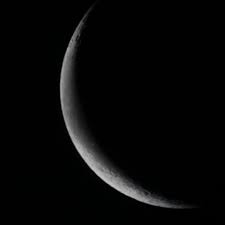
Name the moon phase
a)
waning crescent
b)
waxing crescent
c)
waning gibbous
d)
waxing gibbous
22.
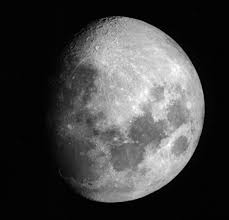
Name the moon phase
a)
waning crescent
b)
waxing crescent
c)
waning gibbous
d)
waxing gibbous
23.
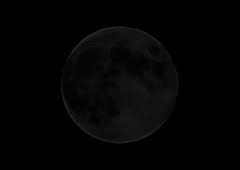
Name the moon phase
a)
First Quarter
b)
Last Quarter
c)
New Moon
d)
Full Moon
24.
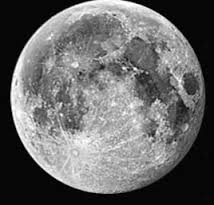
Name the moon phase
a)
First Quarter
b)
Last Quarter
c)
New Moon
d)
Full Moon
25.

The Earth tilts at ______

a)

90°

b)

23.5°

c)

56.2°

d)

24°

26.

Why is the Equator warmest?

a)

Because it is closest to the sun.

b)

Because it receives the most direct sunlight

c)

Because no clouds form here.

d)

Because it is far from the sun

27.

Which of the following best describes the tilt of the earth when it is summer in the southern hemisphere?

a)

The northern hemisphere is tilted toward the sun

b)

The northern hemisphere is tilted away from the sun

c)

The southern hemisphere is tilted toward the sun

d)

The southern hemisphere is tilted away from the sun

28.

What season is it in the Northern Hemisphere when it is fall in the Southern Hemisphere?

a)

Winter

b)

Spring

c)

Summer

d)

Fall

29.

What happens when the area in which you live tilts away from the sun?

a)

It is winter

b)

It is summer

c)

It is spring

d)

It is fall

30.

The path Earth follows revolving around the Sun is called ________

a)

Orbit

b)

Axis

c)

Equator

d)

Prime meridian

31.

What does it take the Earth one year to complete?

a)

tilting its axis north or south

b)

a revolution around the sun

c)

receiving energy from the sun

d)

a rotation around its axis

32.

A solstice event occurs when

a)

the sun's rays reach their highest or lowest point in respect to the equator

b)

the sun's rays shine most directly at the equator

c)

the Earth has it's longest period of daylight hours

33.

An equinox occurs when

a)

The sun's rays reach their highest or lowest point in respect to the equator

b)

The sun's rays shine most directly on the equator

c)

The Earth experiences the greatest period of daylight hours

34.

How many types of Solstices are there?

a)

4

b)

2

c)

1

d)

3

35.

Vernal equinox marks the onset of which season?

a)

Summer

b)

Autumn

c)

Spring

d)

Winter

36.

Vernal equinox marks the onset of which season?

a)

Summer

b)

Autumn

c)

Spring

d)

Winter

37.

All of the following are true about equinox events except

a)

the length of day and night are equal

b)

the sun's rays reach their highest point above the equator

c)

the sun's rays shine most directly on the equator

d)

they occur in March and September

38.

The autumnal equinox will occur for the northern hemisphere in

a)

March

b)

September

c)

June

d)

December

39.

The event pictured at number 4, in the northern hemisphere, is the

a)

summer solstice

b)

winter solstice

c)

autumnal equinox

d)

vernal equinox

40.

During the event pictured at number 2, which of the following would occur?

a)

The northern hemisphere would receive the most direct sunlight

b)

The northern hemisphere would experience the longest day

c)

The southern hemisphere would experience the longest day

d)

The sun's rays would be focused most directly on the equator

41.

The events labeled 1 and 3 are called

a)

solstices

b)

equinoxes

42.

In the northern hemisphere, the next event that would occur after number 2 would be

a)

the summer solstice

b)

the winter solstice

c)

the autumnal equinox

d)

the vernal equinox

43.
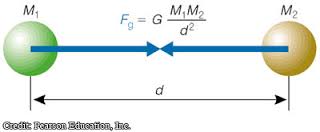
What states that "every object in the universe attracts every other object"?
a)
Law of Universal Gravitation
b)
Newton's First Law of Motion
c)
My mother
d)
Inertia & gravity
44.
Two factors effecting the magnitude of the force of gravity between 2 objects are...
a)
mass and distance 
b)
mass and matter
c)
distance and weight 
d)
weight and mass
45.
Complete the following statement: The farther away two planets are the _______ the gravitational force between them.
a)
more
b)
same
c)
dosen't matter
d)
less
46.

If the distance between 2 masses is increased then the force of gravitation between them will...

a)

increase

b)

decrease

c)

stay the same

47.
What is the darkest inner part of the shadow cone called, where a total eclipse can be viewed.
a)
Total
b)
Umbra
c)
Penumbra
48.
What is the larger outer lighter part of the shadow cone called, where a partial eclipse can be viewed?
a)
Partial
b)
Umbra
c)
Penumbra
49.
In order to have an eclipse, the Moon, Sun and Earth have to be?
a)
Below each other
b)
Above each other
c)
In alignment
50.
A lunar eclipse can occur only during the _________________.
a)
Full moon
b)
New moon
c)
Waxing moon
51.
A lunar eclipse can occur only during the _________________.
a)
Full moon
b)
New moon
c)
Waxing moon
52.
A solar eclipse can occur only during the _________________.
a)
Full moon
b)
New moon
c)
Quarter moon
53.
What does number 1 in the image to the left represent?
a)
Umbra
b)
Penumbra
54.
Which type of eclipse occurs when the Earth comes directly between the Sun and Moon?
a)
Lunar eclipse
b)
Solar eclipse
55.
What does number 2 in the image to the left represent?
a)
Umbra
b)
Penumbra
56.
Tides are caused mainly by what?
a)
Moon’s gravitational pull
b)
Sun’s gravitational pull
c)
Earth’s gravitational pull
57.
Most places on Earth experience about how many high and low tides in 24 hours?
a)
2 high and 2 low tides
b)
4 high and 4 low tides
c)
1 high and 1 low tides
58.
What type of tide occurs during a new and full moon?
a)
Neap tides
b)
Spring tides
c)
Normal tides
59.
What type of tide occurs during the first or third quarter moon?
a)
Neap tides
b)
Spring tides
c)
Normal tides
60.
If the Sun, Earth, and Moon are in perfect alignment, the Earth would have a _______ tide.
a)
Spring
b)
Neap
c)
Normal
61.
What color of star is the hottest?
a)
Blue
b)
Red
c)
Yellow
d)
Orange
62.
What is the name of the gas/dust clouds that form stars?
a)
Nebulas
b)
Protostars 
c)
Supernova
d)
Neutron Star
63.
What is the name of the largest stars?
a)
Protostars
b)
Supergiants
c)
Red Giants
d)
Dwarf Stars
64.
What is the name of the explosion at the death of a massive star?
a)
Supergiant
b)
Supernova
c)
Black Hole
d)
Nebula
65.
What word best describes our sun?
a)
Average
b)
Supergiant
c)
Dwarf
d)
Red Giant
66.
The H-R diagram is a graph that shows the relationship between ______________ for stars. 
a)
temperature and color
b)
temperature and brightness
c)
brightness and color
d)
distance and brightness
67.
Most stars are made of which elements?
a)
Hydrogen only
b)
Hydrogen and Lithium
c)
Hydrogen and Sodium
d)
Hydrogen and Helium
68.
A ________ is an object so dense with so much gravity that even light cannot escape.
a)
neutron star
b)
white dwarf
c)
blackhole
d)
black dwarf
69.
A supergiant might explode and become a_____.
a)
main sequence stars
b)
white dwarf
c)
supernova
d)
nebula
70.
In the diagram given, what happens as we move to the left?
a)
Stars Get Larger
b)
Stars get Colder
c)
Stars get Hotter
d)
Stars get Brighter
71.
As a whole, Giants are considered hotter than White Dwarfs.
a)
True
b)
False
72.
What are the the 3 types of galaxies?
a)
Spiral, Regular, and Elliptical 
b)
Spiral, Irregular, and Elliptical 
c)
 Milky Way, Elliptical, and Spiral 
d)
Milky Way, Elliptical, and Irregular 
73.
Our solar system is located inside a galaxy called the _____________.
a)
Local Group
b)
Milky Way
c)
Andromeda
d)
Constellation
74.
What is the best title for this picture?
a)
Birth of a Star
b)
Birth of a Universe
c)
Life Cycle of a Star
d)
Big Bang Theory
75.
Which of the following is evidence of the Big Bang Theory?
a)
Cavemen heard a loud bang at the beginning of time.
b)
The universe isn't moving
c)
The universe is expanding
d)
The universe is getting smaller
76.
Which of the following is NOT evidence of the Big Bang Theory?
a)
Abundance of Hydrogen and Helium
b)
CMBR everywhere
c)
Stars that are blue shifted
d)
the universe is getting bigger
77.
How did the discovery of Cosmic Microwave Background Radiation support the Big Bang Theory?
a)
It suggests that Hydrogen and Helium were the first elements to form.
b)
It confirms the age of the Earth to be around 5 billion years old.
c)
It supports the idea that the universe used to be hotter.
d)
It demonstrates that the universe continues to expand.
78.
Which statement best describes the age of our solar system and universe?
a)
Our solar system and the universe are estimated to be 5 billion years old.
b)
Our solar system and the universe are estimated to be 10 billion years old.
c)
Our solar system is at least twice as old as the universe.
d)
The universe is roughly 13.7 billion years old.
79.
The group of inner planets are known as:
a)
The Terrestrial Planets
b)
The Gas Giants
c)
The Outer Planets
d)
The Hallow Planets
80.
The group of outer planets are known as:
a)
The Terrestrial Planets
b)
The Gas Giants
c)
The Inner Planets
d)
The Rocky Planets
81.
Intense pressure in the protosun (protostar) caused:
a)
Fire in the Sun to start
b)
Helium to break down into Hydrogen
c)
Nuclear Fusion to start
d)
Nuclear Fusion to end
82.

What two objects do scientists study to learn about the formation of the solar system?

a)

Stars & Star systems

b)

Comets & Asteroids

c)

Comets & Meteoroids

d)

Asteroids & Distant Stars

83.

How did the bits of dust and gas that eventually formed the solar system behave while falling into orbit around each other?

a)

They collided and went spiraling in opposite directions.

b)

They expanded as they were pulled farther apart and eventually cooled.

c)

They created new gases that caused them to cool after interacting with each other.

d)

They ran into each other and stuck together due to gravitational and other forces.