wayground logo

Free Printable Worksheets

NEW

Font size

S
M
L
XL
Worksheets

Review Activity 3 - Periodic Table

Total questions: 50

Worksheet time: 43mins

Name
Class
Date
1.

The Elements in blue located to the right of the zig-zag line are called

a)

metals

b)

nonmetals

c)

metalloids

d)

noble gases

2.

The Elements in yellow located touching the zig-zag line are called

a)

metals

b)

nonmetals

c)

metalloids

d)

noble gases

3.

The Elements in red located to the left of the zig-zag line are called

a)

metals

b)

nonmetals

c)

metalloids

d)

noble gases

4.

Timmy is walking on the sidewalk at ACSHS and finds an unknown object. The physical properties he observes include: lustrous, malleable, and seems to conduct heat very well as the element was very hot to touch.

a)

Metalloid

b)

Non-metal

c)

Metal

d)

Space rock

5.
Which element is a metalloid?
a)
Titanium
b)
Selenium
c)
Potassium
d)
Polonium
6.

All of the following would classify an element as a metal except?

a)

Insulator

b)

Lustrous

c)

Malleable

d)

Mostly solid

7.

Sulfur is considered:

a)

Non-metal and Ductile

b)

Metal and Gaseous

c)

Non-metal and Brittle

d)

Metalloid and Malleable

8.

What is TRUE of the element located in Period 2 and Group 18?

a)

The element is a Non-metal

b)

The element is a solid and good conductor

c)

The element has 6 energy levels/shells

d)

The element is an Insulator and a gas

9.

Which group of the periodic table is composed of inert (not reactive) gases?

a)

alkali metals

b)

alkaline earth metal

c)

halogens

d)

noble gases

10.

Which of the following is an Alkali Metal?

a)

sodium

b)

scandium

c)

silicon

d)

sulfur

11.

Which of the following is NOT a Transition Metal

a)

copper

b)

aluminum

c)

gold

d)

zirconium

12.

Which of the following is an Alkaline Earth Metal?

a)

lithium

b)

boron

c)

calcium

d)

phosphorus

13.

Which of the following is a Halogen?

a)

carbon

b)

nitrogen

c)

oxygen

d)

fluorine

14.

Which of the following is NOT a diatomic element?

a)

Fluorine

b)

Hydrogen

c)

Helium

d)

Oxygen

15.

The Pnictogens is also called what?

a)

Boron group

b)

Nitrogen group

c)

Oxygen group

d)

Carbon group

16.

The Lanthanides and Actinides create which orbital?

a)

f

b)

d

c)

p

d)

s

17.

What atom matches this electron configuration?

1s22s22p63s23p64s23d10

a)

Zinc

b)

Copper

c)

Nickel

d)

Germanium

18.

What electron configuration matches an oxygen atom?

a)

1s22s22p63s2, 3p64s23d104p5

b)

1s22s22p4

c)

1s22s22p6

d)

1s22s22p63s23p64s23d1

19.

What is the electron configuration of Sulfur using noble gas method

a)

[Ne]3s1

b)

[Ne]3s23p3

c)

[Ne]3s23p4

20.

What is the electron configuration of Iodine?

a)

[Kr]5s24d105p6

b)

[Kr]5s24d106p6

c)

[Kr]5s25d106p6

d)

None of the above

21.

The electron configuration of an atom is 1s22s22p6. The number of electrons in the atom is

a)

3

b)

6

c)

8

d)

10

22.

What atom matches this electron configuration?

[Xe] 6s24f145d9

a)

Mercury

b)

Gold

c)

Platinum

d)

Thallium

23.

There are __ energy levels

a)

1

b)

2

c)

7

d)

8

24.

How many atomic orbitals are there in the p sublevel?

a)

2

b)

3

c)

4

d)

5

25.
a)
2
b)
8
c)
3
d)
13
26.
a)
12
b)
7
c)
8
d)
14
27.
Valence electrons are the...
a)
Innermost electrons
b)
Middle electrons
c)
Outermost electrons
d)
Any electrons
28.

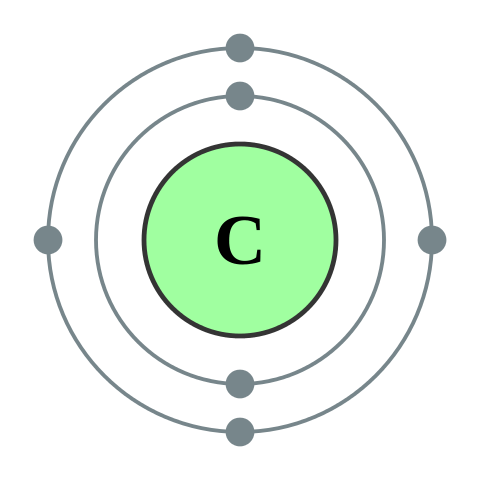
How many valence electrons does carbon have?

a)

4

b)

5

c)

6

d)

7

29.

USE THE PERIODIC TABLE

How many valence electrons does sodium have?

a)

1

b)

2

c)

3

d)

4

30.

USE THE PERIODIC TABLE

Find the element that has 5 Valence Electrons and 4 energy levels.

a)

Arsenic - As

b)

Selenium - Se

c)

Calcium - Ca

d)

Vanadium - V

31.
Elements in the same column of the periodic table always have the same # of _______ as one another.
a)
Protons
b)
Neutrons
c)
Electrons
d)
Valence Electrons
32.

Is this the correct Lewis Dot Structure for Boron?

a)

Yes

b)

No, missing electrons

c)

No, too many electrons

d)

No, dots are in wrong place.

33.

What is the goal of the Lewis Dot Structure?

a)

To determine the electron position.

b)

To show the element's valence electrons & bonding capabilities.

c)

To find the atomic mass of an element.

d)

To search for the number of electrons in an individual atom.

34.
What is an ion?
a)
A Charged Atom
b)
A Large Atom
c)
A Small Atom
d)
A Cute Atom
35.
Why are ions formed?
a)
To make our lives difficult
b)
Because atoms want 8 valence electrons
c)
Because atoms have the same number of protons and electrons
d)
Because atoms gained neutrons
36.
An atom becomes _________ when it gains electrons.
a)
Positive
b)
Negative
c)
Neutral
d)
Invinsible
37.

What is the charge of a sodium ion?

a)

+2

b)

+1

c)

-1

d)

-2

38.
Group 17 always has ions with a charge of 
a)
+1
b)
+2
c)
-1
d)
-2
39.
If an element has 3 valence electrons, what charge will likely form on its ion ?
a)
+3
b)
+5
c)
-3
d)
-5
40.
What charge will an Oxygen ion have? 
a)
+1
b)
-1
c)
+2
d)
-2
41.
Elements on the LEFT side of the periodic table will most likely form:
a)
Positive ions
b)
Negative ions
c)
Neutral Ions
d)
None of these
42.
Which particles change the charge in atoms when ions are formed?
a)
Protons
b)
Electrons
c)
Neutrons
d)
Kittens
43.
Which of the following will have a larger radius than Zinc?
a)
Gallium
b)
Aluminum
c)
Magnesium
d)
Strontium
44.
Which of the following will have a lower ionization energy than Scandium (Sc)?
a)
Helium (He)
b)
Titanium (Ti)
c)
Calcium (Ca)
d)
Magnesium (Mg)
45.
Which of the following will have a higher electronegativity than arsenic (As)?
a)
Carbon (C)
b)
Neon (Ne)
c)
Antimony (Sb)
d)
Germanium (Ge)
46.
As atoms of elements in group 16 are considered in order from top to bottom, the electronegativity of each successive element....
a)
decreases
b)
increases
c)
remains the same
d)
none of the above
47.
As you move down the periodic table atoms get bigger.  This is because ____________.
a)
The atoms have more mass.
b)
The atoms have more protons.
c)
The atoms have more energy levels
d)
The atoms have more nuetrons
48.
As you move across the periodic table atoms tend to get smaller because, ______________.
a)
the atoms have more mass.
b)
the atoms have less mass
c)
the atoms have more protons.
d)
the atoms have less electrons.
49.

The element with the lowest electronegativity in Period 3 is -

a)

Na

b)

Cl

c)

Ar

d)

Mg

50.
Which periodic group has the smallest atomic radius?
a)
Alkali metals
b)
Halogens
c)
Noble Gases
d)
Transition metals